Blogia

Buenos Aires Jaque Press, en inglés y español

The cars that save us, the cars that damn us...an opinion or a lament

Why is it that in the United States there is talk about the government getting together some $15 billion dollars to keep the cars flowing out of the factories? And why is it that in Argentina the government of Cristina Kirschner is pushing hard to also pump God-only-knows how many million to get new cars zipping out of factories and onto the (mostly badly cared for) streets and highways in the country? Why is it that in times of financial crisis the "solution" is to help the "big guys" and look with a eye of pity at the "little guys?"

President-elect Barack Obama is understandable concerned  about putting the crisis drunk automobile industry back on its feet. True, he places his conditions. No more posh salaries for executives who are not efficient. The top players should learn a new rule of ethics. Sounds nice. But Obama has not taken office yet. What will happen when he does, when the automobile lobbies question any serious reforms in the super free enterprize free-for-all of outgoing president George Bush?

More importantly: It is true that making cars means jobs for thousands of workers. Vast resources are required, it puts the economy into action.  But those cars also are the main causes of contamination, they crowd our streets and roads and throw their exhausts into nature's clean air...

Somehow it seems that even in times of crisis the solution is always seen in terms of helping out those sectors that have the most, those sectors which in one way or another contributed to the crisis.

Would it not be of interest to change the rules of the game: help society's poor, change the rules of the economic game so that big banks and financial institutions not be tempted to make money make money rather than satisfy the needs of the majority of the population? Spend those billions on improving hospitals, building schools and houses for the needy...Well, it was just a passing thought!  


Elida Vallejo:"Me encanta escribir, me relaja y me hace olvidar de los problemas---"

Elida Vallejo:"Me encanta escribir, me relaja y me hace olvidar de los problemas---"

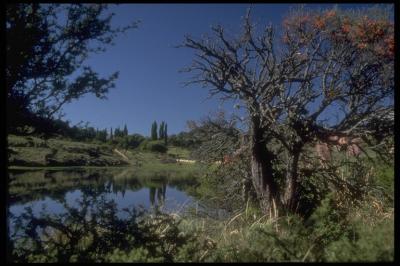
"Y las sierras perezosas que se / yerguen/cual rocas forjadas en el hiero,/ reflejándose a la vera de los /ríos, /el platinado verde de los cerros."    

(San Luís, poesía de Elida Vallejo)

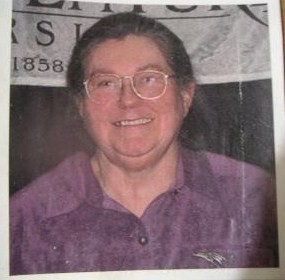
 Elida es una mujer de modalidades muy suaves pero detrás de sus inquietos ojos pardos descansa un sueño, el sueño de unir su amor por su amado San Luís, una provincia en el noroeste argentino, y su pasión por la palabra, por la poesía. Luego del reciente encuentro de escritores en Mar de Ajó, habló con Jaquematepress. Elida nació en El Pedernal, departamento Belgrano, San Luís, Argentina, el 4 de junio de 1932. El periodista se acercó a ella para conocer más sobre su poesía. Ella le entregó un pastal con una hermosa puesta del sol y estos versos:

"Estoy buscando las palabras

     agraviantes

que callé para no herirte.

Voy encontrando en el recuerdo

      nebuloso

todas aquellas, que no dije." 

 --Elida…lindo nombre…como San Luís…

 --Sí, claro, San Luís es una hermosa provincia.

 --¿Qué opinión merece la Marathónica de poesía y narrativa que se realiza aquí?

 --Es un encuentro magnífico porque participan personas de todas partes de Argentina. Pero más que un encuentro es un congreso porque han momentos de fraternidad, de creación y de aquí vamos a salir todos con muchos aprendizajes nuevos, con sabidurías nuevas.

 --Es decir, la cultura se presenta como una salida a los conflictos humanos…

 --Los poetas y los escritores van siguiendo los caminos de la palabra con pasión, con sus cuentos, su cultura, su pensamiento. Es mediante encuentros de este tipo que uno va descubriendo la patria, cuyos caminos van emergiendo en la medida en que uno va caminando…

 --¿Puedo preguntar algo que un hombre no debe preguntar a una mujer?

 --¿qué cosa?

 --¿Cuántos años tiene Usted?

 --Tengo 76 años de edad y a pesar de no tener título de maestra, mi vida ha sido una enseñanza general, pues vivo en una casa humilde en San Luís, tengo seis hijos, 17 nietos, 11 bisnietos, una familia enorme de la cual estoy muy orgullosa. Estoy orgullosa de nuestra lucha, de nuestra patria. No la dejaría jamás, por ningún motivo, y a pesar de haber viajado a diferentes partes del país tampoco dejaría jamás a mi amada provincia, San Luís, porque es muy bella, muy bella, es un libro abierto al mundo.

 --¿Fue la belleza natural de su provincia la que te llevó a la poesía?

 --Hasta unos pocos años yo no sabía nada de la poesía pero si sabía del canto de los pájaros. En un principio escribía pero simplemente para dar gusto a mí misma. No sabía nada de las reglas, no como componer una poesía.  Pero tiempo después asistí a un taller y allí aprendí las formas, cómo escribir poesías.

 --¿Qué sensación experimenta en el momento de componer una poesía?

 --Me encanta escribir, me relaja y me hace olvidar de los problemas que tenemos, los problemas que pueden surgir en la familia, en la provincia en la República Argentina. El pensamiento nuestro, de los poetas, es magia.

 --¿Cuáles son los elementos que de inspira a escribir?

 --Lo que veo especialmente, la belleza que me rodea en San Luís, todo en mi alrededor es tan bello, tan magnífico, las montañas, el mar, la pampa, observar los niños jugando…

Después, le mostró al periodista algunas de sus poesías, por ejemplo: 

Contactos:

Elida S. Vallejo: Don Bosco 1582, San Luís, Argentina (5700)

Tel: 02652 432981

Email: eldavali@yahoo.com.ar

Soñarás conmigo:

"Dibújame a la vera de tus ojos

    y llévame contigo.

Si por algo tus ojos lagrimean,

   llorarás conmigo...

 “Dibuja en tus labios la dulzura

   De mis besos tibios,

Si Morfeo te acuna entre sus brazos,

Soñarás conmigo.”

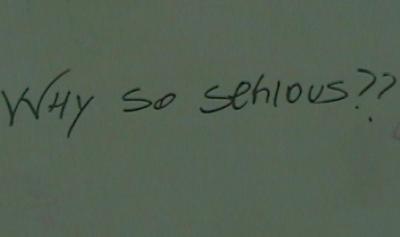
Why so serious?

Why so serious?

You're walking down a street, a thousand problems stabbing and pricking at you, and you turn the corner almost bumping into a homeless fellow picking through the trash for some bottles or paper to sell for a few cents, (this is Buenos Aires, not New York, and the streets still are filled with down-and-outs), you are wondering how long this financial crisis is going to last, (the one that is making stock markets in New York and London and Rio bounce up and down), whether there well be more war--as happened after the depression in the 1930's--and you are also trying to bring back to mind the lyrics of a song you once sang to your girlfriend, when right before your eyes you see a question scribbled on the wall in front of you:

Why so serious?

A good question, indeed. With no immediate answer. And yet...isn't it true that we often become so serious, so dramatic, so tragic minded that we complicate even the most simple situations?


Un largo fin de semana en Buenos Aires con cultura en las calles y plazas...

Los que pueden huyen de Buenos Aires cada vez que haya un fin de semana larga, pero para los que se quedan pueden disfrutar de un menú muy variado de actividades en las calles, en las plazas, en los museos, teatros y...

Por ejemplo...hoy y mañana se desarrolla el VIII Congreso Latinoamericano de Educación Intercultural Bilingüe, con la presencia de unos 600 participantes de 15 países de América Latimna. Los temas: formación y capacitación, participación indígena, autodeterminación y territorio, conocimientos indígenas, juventud y lenguas indígenas...Se realiza en el Centro Cultural Paseo La Plaza, Corrientes 1660 y hay más información en http://www.congresoeib.org

¿Le fascina bailar? Buenos Aires ofrece la Gran Milonga Nacional este sábado a partir de las 20 horas a lo largo de la Avenida de Mayo, desde Bolívar hasta Bernardo de Irigoyen, con tres escenarios, varias orquestas típicas de tango, incluyendo Los Reyes del Tango, la Orquestra del Maestro Alberto Di Paulo, el Sexteto Milonguero, la Orquestra Gente de Tango...cantantes y bailarines de alto nivel.

Antes, alrededor de las 16 horas, largan por tercer año consecutivo la Llamada de Candombe de San Telmo, desde Defensa y Avenida Independencia veinticinco comparsas, con dos mil artistas provenientes de distintos puntos del país y de Montevideo.

Comenzó el pasado martes el 5° festival "Buenos Aires Danza Contemporanea," con 14 obras. Jueves 17 horas: "Charla a propósito de Iris," con María Fux, Ana Kamien y Aurelia Chilemi en el Centro Cultural Recoleta; Viernes: "Ballet contemporáneo del Teatro San Martín, en el teatro Presidente Alvear, a las 16 horas; El sábado de 15 a 17 horas está el "Seminario y muestra de Joao Fiadeiro en el Centro Cultural San Martín; el domingo: "Laboratorio danza y artes visuales en el Centro Cultural Recoleta. El cierre y concierto se realizará en la Pista de baila DJ Nico Cota.

Las entradas son gratuítas hasta agotar la capacidad de las salas. Más información en http://www.buenosairesdanza.gov.ar


On unwanted children and mothers of multiple births...

You've been on a fast of sorts. You haven purchased the newspaper for a few days, unwilling to read about all the economic down-melting, those blood smeared bodies in India, the plans of president-elect Obama in the U.S.A. to use old faces to blow new wind, and the yesterday's murders and the day before yesterday's scandals and the rating of TV programs that deserve no rating at all...and so you read an article in the December 3 issue of the Buenos Aires daily, "Clarín" about undesired pregnancies...

According to a study carried out by the Buenos Aires Province Ministry of Health, 50% of births in public hospitals are undesired and unplanned and the result of chance and the lack of knowledge about birth control...young mothers whose partners failed to take the necessary precautions. Of the 12,018 mothers included in the survey, 43% used absolutely no anti-conceptive method; ten percent were single mothers and 21.6% were under 20 years of age. Of the mothers who frequently give birth once a year around three percent can neither read nor write...

Says Flavia Rainieri, head of the provincial program for mothers of infant children: "Couples don't talke about anti-concptive measures because that stirs up disagreements; religious beliefs arise in the couple due to what anti-conceptive method should be used."

In a society where poverty and lack of opportunities strikes especially at the impoverished sectors of the population, the explosion of unwanted children is a tragic social problem of dramatic consequences for the future. Yet the predominantly Catholic Church continues to pressure strongly against any form of birth control, against family planning and abortion. In Argentina a woman who gets raped is still obliged to give birth to her unwanted infant; in slums and poor neighborhoods mothers with barely enough means to survive themselves frequently have four, five or more children.

The problem of unwanted children should also be seen in the light of the unending violence that women suffer at the hands of women beaters, overly jealous husbands or lovers and the lack of protection provided them by the State. (Although Congress is discussing a measure now to protect women from varied forms of domestic violence).

What future lies ahead for those children? Most will arrived undernourished to adulthood, with only scant education, little or no skills, and the chances they have of finding a dignified place in society are practically non-existent. Isn't it time not only government but society, religious organizations, scholars, teachers, civil rights leaders and others interested in the genuine development of the country take hold of this situation to work out effective measures to protect the lives not only of the children but also of their mothers?

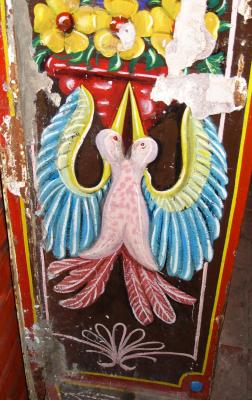
De repente un ave de dos cabezas

De repente un ave de dos cabezas

Y el ave de dos cabezas

mordió sus cadenas,

Y el preso de carne quemada

mordió sus cadenas

Y el enamorado de dos corazones

mordió sus dudas

Y la enamorada engañada

mordió sus ataduras

Y voló el ave

Y cayó el ave,

muerto por el cazador.


Human Rights Watch asks for a revamping of abusive practices

Among the many headaches President-elect Barack Obama will have to deal with when he takes office is what to do with the network of repressive measures spun by the Bush Administration in the context of the "war on terrorism." Many rights groups are already asking for a revamping of these measures. But there will certainly be strong pressure to maintain the counter-terrorism structure edified over the past eight years.
 
Among the groups demanding a revamp of present measures is  the Washington based Human Rights Watch (HRW) which has recently outlined 11 steps it considers Obama should take to reform U.S. counterterrorism practices. These include: "Closing the detention center at Guantanamo Bay, requiring the Central Intelligence Agency (CIA) to abide by the humane interrogation rules that apply to the military, and putting an end to renditions to torture."
In view of the upcoming debate on the issue of treatment of prisoners and how best to deal with the problem of terrorism, HRW’s recommendations are sure to be discussed inside and outside government circles. Since the issue of protecting basic human rights is sure to spark renewed discussion on how the struggle against terrorism should be carried out, it is of interest to contemplate the measures advocated by HRW, whose recommendations follow:
 

·       Close the military detention facility at Guantanamo Bay;

·       Abolish the military commissions and prosecute terrorist suspects in federal court;

·       Reject preventive detention (detention without trial) as an alternative to prosecuting terrorist suspects;

·       Reject the “global war on terror” as the basis for detaining terrorist suspects;

·       Issue an executive order to implement the ban on torture and cruel, inhuman, or degrading treatment;

·       End the CIA detention program;

·       Prohibit renditions to torture;

·       Account for past abuses;

·       Provide redress for abuse;

·       Repudiate Justice Department memos and presidential directives that permit torture and other abuses; and

·       Protect innocent victims of persecution abroad from being defined as terrorists.

More information on HRW views is available at::
http://hrw.org/english/docs/2008/10/29/usdom20099.htm


Will there be change or whitewashing when Obama takes office?

Lot’s of politicians talk about change while they are campaigning for office. Publicity companies--essential in getting politicians into office--do a good job in convincing voters that in fact with such and such a candidate there will be change. But usually there are only the most oblique descriptions of what the proposed change will really consist of, and little or no mention of how it will be carried out. The word is a bit confusing, to say the least, and not only politicians, but society in general seems to be very reluctant to alter the status quo unless things have gotten to the point of no return.

In the United States for many decades conservative Republicans and (theoretically) liberal Democrats have no doubt introduced change, but at the same time have been busy borrowing their opponents ideas, so that it is never really clear whether a politician tagged as "liberal" will act in accordance to the basic notions of liberalism and the reverse might be said of Republicans. T

The out-going Bush Administration, for example, is supposed to be conservative or rightwing. One of the notions dear to conservatives is the reduction of the role of the State. Yet in reducing taxes for giagantic corporations and spending millions on the unending war against terrorism, the government has not only stacked up a record deficit: it has directly bailed out many of those same corporations in view of the reckless policies financial institutions, banks and real estate interests--who saw in the reduced State regulations a hay day to pull in fabulous profits simply by "making money make money."

Obama, a patient and hard working politician, has gotten money from financial groups associated with Wall Street, courted Pentagon officers convinced that the war effort should be redirected towards Afghanistan, and is in the process of naming his functionaries--many of them associated with the previous presidency of Bill Clinton, along with some conspicuous Republicans and a number of financial advisors whose ideas are not exactly what one might call change oriented. Will these old faces be able to paint a new picture?

The first non-white president in the history of the country certainly will attempt to introduce measures such as a reform of the medical  insurance policies to provide health care to the millions of citizens who have no coverage whatsoever; policies that bring back the days of Roosevelt’s New Deal will no doubt also be introduced to deal with the problem of growing unemployment and improverishment of lower income groups; a more committed attitude will certainly be taken with respect to alternative sources of energy... But the question remains: will these attempts end up bringing any real changes to the country or will they be watered down--thanks to the powerful lobbys and the powerful pressure politics of the status quo?

Will the much talked about change genuinely modify aspects of the country’s economic, social and cultural behavior patterns or will the "changes" end up as a "whitewashing" of a system clearly in need of revamping? 

León Gieco cantará en el °11 festival solidario "Honrar la Vida" el 2 de diciembre

León Gieco cantará en el °11 festival solidario "Honrar la Vida" el 2 de diciembre

El cantante popular León Greco y otros artistas animarán el 11° festival solidario “Honrar la Vida,“ que se realizará el próximo 2 de diciembre en el Club Argentino de Quilmes, con canje de entradas por 5 alimentos no perecederos en la Casa de la Cultura, 12 de Octubre y Vélez Sarsfield.


Honrar La Vida


En esta ocasión actuarán León Gieco, Alejandro Lerner, Kapanga, Piero, Paz Martínez, D´mente, Trío Laurel, y Mariel Trimaglio, Axel, Guillermo Novellis (La Mosca), y Natalia Pastorutti, entre otros artistas.


El festival viene realizándose desde 1996 en distintos lugares y cuenta con el padrinazgo artístico de León Gieco, Piero y Alejandro Lerner.


Las entradas se canjean por un paquete de alimentos no perecederos en la Casa de la Cultura de Quilmes, ubicada en Sarmiento y Rivadavia, de lunes a viernes de 9 a 16, y ahora se agregó un nuevo centro de canje, que es la Dirección de Juventud del Municipio de Quilmes, ubicada en 12 de Octubre y Vélez Sarsfield, de 9 a 17.


Paquete 1

Paquete 2

Paquete 3


Quienes desean más información pueden comunicarse con la Dirección de Prensa del Festival: 4224-6827.


: arroz, polenta, harina, atún en lata y lentejas.
: fideos, arroz, azúcar, yerba y harina.
: aceite, azúcar, fideos, arroz y tomate en lata.
es un festival creado para colaborar con la importante obra comunitaria del Padre Luis Farinello, que gracias a la ayuda solidaria de muchas personas apoya a los que más lo necesitan con alimentos, ropa, enseres, viviendas, comedores y guardería infantil.

La biblioteca popular Macedonio Fernández de Villa Ventana inaugura un nuevo edificio

Las bibliotecas como la recientemente reinaugurada Biblioteca Popular Macedonio Fernández de Villa Ventana, Argentina, son "un lugar de encuentro para compartir el placer de la lectura...sueños de hombres y mujeres...urdimbre de deseos entrelazados, hebras solidarias de amor y trabajo," según el anuncio que festejó el 29 de noviembre la inauguración del nuevo edificio, calle Pillahuincó entre Cabecita Negra y Churrinche.


Actividades culturales y recreativas enmarcadas en este feliz acontecimiento:

 Ö        Domingo 30 de Nov. 19hs: “La Macedonia”: Poesía – Música – Escritores regionales 

Ö       Miércoles 3 de Dic. 15.30hs: “Pasó naranja” – Teatro musical infantil – Roberta Iannamico, Dulce Borrell y Jimena Grymberg  

Ö        Viernes 5 de Dic. 20hs: Narraciones de historias de la literatura universal para adultos – Jorge Mux 

Ö        Sábado 6 de Dic. 20hs: Espectáculo de ballet – Prof. Astrid Lagos y sus alumnas  

Ö       Domingo 7 de Dic. 19hs: “L.I.D.L.E” –Ensayo teatral abierto a cargo de Renzo Casali (Milán- Italia) y Gustavo Vallejos (La Plata-Argentina)   

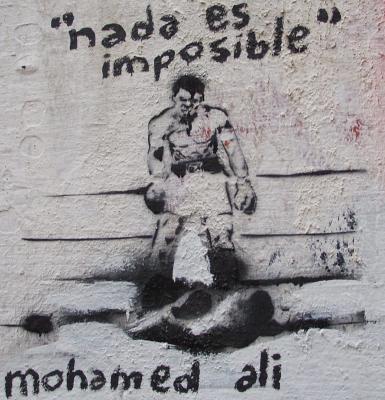
Nada es imposible y sin embargo...

Nada es imposible y sin embargo...

Nada es imposible,

Todo es imposible,

La noche se confunde

con el día, la luna con el sol,

lo blanco con lo negro

el amor con el olvido;

el tiempo con la añoranza

y nosotros lloramos

abrazando lo imposible,

tus lágrimas, mis esperanzas,

Seduciéndnos en la oscuridad,

Conociendo la tempestad,

Sabiendo que nada es imposible

 y sin embargo...y sin embargo...


Argentina considera una ley para enfrentar la violencia de género...¿hecha la ley, hecha la trampa?

176. Ciento setenta y seis femicidios en los que va de este año. Es una cifra impresionante. ¿Por qué tanta violencia doméstica? Claro, el país todavía no ha encontrado la paz, luego de la feroz dictadura de 1976, luego de hundirse hasta el piso con la deuda externa encima. Pero cabe insistir: ¿por qué tanta violencia contra las mujeres? Cada tres días muere al menos una mujer en la Argentina a manos de su pareja, ex-esposa, novio, es-novio o concubino...

No vamos a contestar esa pregunta en esta nota. Todas las preguntas exigen repuestas. Es una suerte que los seres humanos podemos preguntar. Lamentablemente, no siempre es posible encontrar las repuestas...pero sí algún lector nos puede ayudar en la tarea, aquí estamos. Entretanto, las novedades:

El senado acaba de tomar por lo menos unos pasos hacia la aprobación de un sistema legal que podría servir para enfrentar el problema de esta violencia, pero se sabe que las leyes son una cosa y la práctica otra.

Por unanimidad el Senado aprobó el 26 de noviembre un proyecto de ley de protección integral para prevenir, sancionar y erradicar la violencia contra las mujeres. En realidad, la medida es una repuesta a los compromisos asumidos en la Convención sobre Eliminación de Todas las Formas de Violencia contra las Mujeres, que el país ratificó hace 12 años.

En el proyecto se reconocen cinco tipos de violencia: física, psicológica, sexual, económica y patrimonial y simbólica. Y, según la información sobre el proyecto publicada por el diario Clarín, se describen seis modalidades: violencia doméstica, institucional, laboral, contra la linbertad reproductiva, obstética y mediática-

La iniciativa similar fue elaborada hace dos años por la diputada de la Coalición Cívica Marcela Rodríguez, con el apoyo de la kirchnerista Juliana DiTullio. El proyecto amplía la definición de la violencia e incluye entre las conductas sujetas a denunciarse aquellas que ocasionen daño emocional o que disminuyan la autoestima, como los tratos humillantes y vejatorios, vigilancia constante o frecuente, celos excesivos, intimidación o chantaje.

Como el año se acerca a su fin, no parece probable que el proyecto de ley sea aprobada por la ´cámara de diputados antes del receso...Habría que esperar al año 2009 para ver si en efecto la ley sale, y si en la práctica sirve para limitar la violencia contra las mujeres en el país de Eva Perón.

La avenida General Roca en Concordia pasa a llamarse

La avenida General Roca en Concordia pasa a llamarse

Este Sabado,  29 de Noviembre, se llevaró a cabo en la ciudad de Concordia, Entre Ríos, Argentina,  un acto de revindicación histórica: con la presencia del prestigioso historiador Oscvaldo Bayer,  la actual Avenida General Roca (conocida popularmente también como avenida costanera), pasará a llamarse Pueblos Originarios, gracias al impulsor de un proyecto iniciado por el actual Consejal del Pueblo, Profesor Paulo Tissoco, quien integra el grupo Por la Amistad de los Pueblos de America.

Desde hace años Bayer viene apoyando el movimiento que tiene por objetivo modificar los nombres de calles que recuerdan a personas que intervinieron directamente en el genocidio de los pueblos originarios.

 Bayer al realizar el descubrimiento de una placa, junto con dos personas de pueblos originarios, una perteneciente a la Coordinadora de Comunidades del Pueblo Charrua-CODECHA-de Entre Rios, y un integrante de una comunidad Mbya Guarani, de la Provincia de Misiones, declaró:

 “Los conquistadores impusieron la esclavitud de los pueblos originarios, cuando había que extraer el oro y la plata de este rico continente y, aún muchos años después, la persecución y el extermino de los aborígenes continuaría, cuando los gobernantes y grandes terratenientes quisieron apoderarse también de las tierras de los verdaderos dueños de estos hermosos paisajes." Luego agregó: “Actos como el de hoy preservan la memoria y se constituyen en un justo homenaje, tal vez algo tardío, a los hombres, mujeres y niños, que abonaron con su sangre la prosperidad de este país. No debemos olvidarlos, porque su herencia permanece viva en cada obrero, en cada trabajador, en cada luchador."

Más información: Secretaria de Comunicacion de la Coordinadora de Comunidades del Pueblo Charrua-CODECHA-Entre Rios.
0343-154585085

Do you remember them? Yesterday? When troubles seemed so far away?

Do you remember them? Yesterday? When troubles seemed so far away?

Quilmes: homenaje al elenco teatral de "Picnic...un río con historía"

El Municipio de Quilmes homenajerá a los integrantes del elenco teatral "Picnic...un río con historía," el jueves 27 de noviembre a las 20 horas en la Casa de Cultura de la municipalidad, Rivadavia y Sarmiento.


La Secretaría de Cultura y Educación, junto con la Subsecretaría de Cultura del Municipio de Quilmes, invitan al ciclo de homenajes y reconocimientos que se lleva a cabo los jueves de cada mes. En esta ocasión, los homenajeados serán actores que han interpretado la obra quilmeña “Picnic…un río con historia”, de Gustavo Castignola y Adrián Mulet. Esta obra recrea aquellos momentos que por décadas hicieron tan feliz a la ciudad de Quilmes. Según ellos “El río de la Plata, para nosotros los Quilmeños, fue desde siempre el río de Quilmes, punto de partida de una gran ciudad que no para de crecer, hagamos entonces justicia y rescatemos su antigua gloria”. 

Luego de siete temporadas ininterrumpidas “Picnic. . . un río con historia”  a través de teatro, música, coreografías y mucho humor recrea la historia de la ribera quilmeña, desde principios del siglo XX hasta nuestros días. Con ciento noventa y dos funciones se convirtió en el espectáculo preferido por el público quilmeño, con un record de más de 20.600 espectadores.

Todos los elencos fueron formados a través de un casting comunitario y en cada temporada formaron parte del mismo más de cuarenta actores, lo que significa que más de 250 actores  han pasado por el tradicional “Picnic”. Ellos serán los homenajeados que disfrutarán de su reconocimiento el jueves 27 de noviembre a las 20.00hs, en la Casa de la Cultura, sito en Rivadavia y Sarmiento.  

Más información en culturaquilmes@gmail.com

El Oeste dice no a la violencia

El 28 y 29 de noviembre se realizará el primer foro del Oeste sobre la no violencia, con talleres, paneles y mesas de debate, de las 14 a las 20 horas en el Complejo Recreativo y Deportivo de la Municipalidad de Morón, Santa María de Oro 3530, Castelar, "con el objetivo," según los organizadores, "de encontrar metodologías y herramientas que nos permitan superar el sistema actual de violencia." Más información en informes@forohumanista-bsas.org.ar


Slap! At the threshold of the door, time is never ending

Slap! At the threshold of the door, time is never ending

As time and patience fly  
 
Love buds, then awaits to die.  
 
Are we not all lost ghosts?  
 
Ghosts of our shattered selves,  
 
Ghosts of our invented selves,  
 
Ghosts of the loves we invent  
 
Before we die in the intent.  

Slap! The sharp sound of an open hand smashing the damp smoothness of a bare cheek, its sound reverberating from wall to wall in the semi- darkness of the room, then bouncing back again with a more soprano tone, only to fall off to nowhere with a dull thud. He did not expect the blow; neither did she. They gazed at each other in absolute silence: the silence of instant fury. A blotchy red toned spot emerged near his nose, gradually turning to a livid pink. Her hand trembled in spasmodic electric beats. The hand that had just previously advanced so lovingly over his body was now throbbing with pain; the cheek that had received the silky caress was now burning with the heat of a smothering coal.

Outside bickering voices mixed incongruently with sudden melodies; shouts, screams and cries filled the thick summer air and sought refuge in the nicks and crannies of lonely back streets and rubbed shoulders with the rumbling growl of traffic. Further off a shrill safety alarm screeched, the sound of a fist was heard crashing through a window and, still further away, the air vibrated with other slaps and kisses and the rhythmic thud of angry or forgiving heart beats, mitigated only by the soft cooing of lovers and pigeons.

The slap had lasted but a second, yet seemed an eternity and a half. It came and went as a blink, as a radiating star dying away before reaching the observer’s eye. The movement had burst out from her most inner self, much like the “big bang” that millions of light years before had set the universe on its ever expanding course.  The words that followed, ending the seemingly eternal silence, shot out like rapid machine-gun fire. They were off-key choral arrangements unable to find a reason for their existence. Everything had been expressed in that slap. The cosmos would continue on its way. So would she. So would he. In its primitive physicality the slap had found meaning in a void that had developed between the man and the woman.

With a drive like that which had sent the woman’s open hand to her companion’s face, she stood up and attempted to place the slap into her memory chest. She advanced towards the threshold, the threshold dividing her confused feelings and the threshold of the door leading to the open air outside. But she remained there in the limbo, unable to find her way out of it. Something kept her there, in that no-man’s land between the room and the clamorous street. She could not visualize it, there were no words with which to express it, and even her memory was of no avail in resolving her impasse.Suddenly a ray of light from early morning moonlight outlined her face, highlighting her gently upturned nose and casting shadows over the depression that shielded her eyes. She imagined the moon’s illumination to be a voice and turned to reply, but it was the man, now on the outer edge of the threshold, who spoke first:

 “I dreamt I held you in my arms but your body was that of a silvery pigeon.”

A very slight smile broke over the edges of her lips:

 “And I said no.”   
 
“I asked but for an instant of love. Remember? Time without time but time enough for love to caress and heal and propose; but an instant, the thrush of a bird’s wing, the song of a lark at dawn, the instant but eternal lasting of an orgasm.”

Now her left foot was on the point of passing through the threshold and there was a unknown glow of confidence in her eyes when she replied:

“I told you no because if there is a once, there will be a twice and a thrice. If you recall the candle, our candle of love, flickered not once, not twice; it waned in greater and lesser intensity many more times and burned its way to extinction. Candles always go out. So do love affairs.”  
 
He advanced his right foot to the middle of the threshold, nearly touching hers, but an unaccustomed rigidness seemed to knot his shoulders. His voiced sounded as if echoing from a deep well, seductive but aware of its prompt defeat:

 “Darling, remember how we softly entered each other...how our bodies meshed, twined and bubbled in sweat. We were caught in a tidal wave of love, an erupting volcano so impressive we will never forget its bright embers.”

“So what? After the waves crash there is always quietness. When the volcano has erupted there is only silence and destruction."

“Perhaps It never happened, perhaps our love was but a dream. Or a wish in the midst of a tropical storm that blew over and left us staring at each other from opposite sides of a dried up salty sea.”

Now the moonlight danced upon her face playfully and her other foot had begun passing through the threshold.

“It was more than a dream. We faced each other from opposite sides of dampened bedding. Perhaps it didn’t happen but it might have. And if it happened once it would surely happen again. You were there hovering over me with a bottle of sherry in your hand, an impish macho smile breaking over your teenage man’s face. Then I slapped you. That was all. That was my will. That was all.”

“And I touched you, my body going stiff and soft all at once. I’m transgressing, I thought. Is it wrong that I feel so free and strong at the same time? Is my freedom your slavery? No responded my inner voice. You have gifts to give her. Give them to her! Is it wrong for a lover to give? Why is it so difficult to take the initial step?”  
 
She did not answer. Or perhaps she answered in silence. Both of her feet had now noiselessly crossed the threshold and the rest of her body followed obediently as the moon played games with the image her figure reflected on the now opened door of dark oak. Without replying and casting no look back, she transgressed the threshold and vanished into the cover of night.  Shortly thereafter the moon  faded  away behind the nearby weeping willow tree that guarded the entrance to the house.

The man remained there in the threshold statue-like for a long instant, his lips quivering. Perhaps he is still there.  


Nilda Etel Deluca: su poesía y su voz en "Compartiendo FM 89.7"

Nilda Etel Deluca: su poesía y su voz en "Compartiendo FM 89.7"

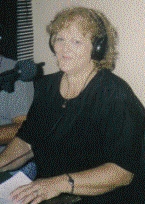
Su voz sale suave, profunda y segura de su interior, mirada firme. Nilda Etel Deluca escribe poesías románticas, tiene un programa de radio en la ciudad de Quilmas, Argentina. Durante un receso en el reciente Maratón de Poesía y Narrativa realizada en la ciudad de Mar de Ajó, Jaquemasete se acercó a ella para conocer un poco más sobre la vida de una mujer con alma de poeta que a la vez es conductora radial. Nació en barrio porteño de Parque Patricios pero luego de casarse se mudó a Quilmes…

--Después de nuestro casamiento tomamos la decisión de vivir en Quilmes porque si uno elige un lugar para vivir es para siempre.

Ella es así, de convicciones sólidas, franca, de carácter alegre y se disimula bastante bien sus penas.

--¿En qué momento de su vida apareció la radio?

--Fue a través de la poesía, sabe, en un café literario. Conocí a un señor que me dijo que mi voz era muy buena para la radio y como tenía ese señor un programa de radio, de tango, folklore y poesía, me invitó a formar parte del programa, pues necesitaba una voz femenina, para la parte romántica, y yo acepté el desafío en total éramos tres.

--Parece haber sido una muy buena oportunidad.

--Sí…

Por un momento, apenas, una sombra parecía oscurecer su rostro, luego continúo:

--Mi esposo ya había muerto. Yo tenía un interés especial por la escritura romántica, había escrito muchas poesías dedicadas al hombre que me acompañó durante 35 años, a mi esposo. Estaba la melancolía, la nostalgia, todavía estaba elaborando el duelo. El programa fue muy bien recibido. A los seis meses ya teníamos  un programa en San Telmo, en la AM 850, con un alcance bastante importante., tango folklore y romántico

--¿Qué pasó después?

--El hombre que me invitó a formar parte de su programa, se enfermó. Su programa se llamaba "Acariciando recuerdos." Sufrió luego un ataque y murió. No nos dimos  por vencidos. Con mi otro compañero, armamos otro programa distinto, que se llama "La Balsa." En principio era un naufragio, estábamos muy solos. El programa comenzó el 11 de septiembre, en el año 2001, el mismo día del ataque  las Torres Gemelas en Nueva Cork. ¡Peor imposible! De todos modos, con el paso del tiempo nos empezaron a conocer. Fue entonces que apareció mi amiga Chany Súarez, una gran cantante folklórica, nos llamó, y nos invitó a visitar la casa de su amigo Lito Nebbia gran músico y creador de la canción “La Balsa.” Nuestro programa tiene dicho tema como  cortina musical.

Fue en la casa de Lito donde bautizamos "La Balsa."CHANY SÚAREZ y  LITO  NEBBIA : Los  padrinos.

A partir de este año 2008, mi compañero Ricardo Morén, por sus ocupaciones se desvincula del programa quedando yo sola como conductora.

En estos últimos años volvimos a Quilmes y la radio que emite mi programa se llama.”Compartiendo FM 89.7. Es la radio de la “Fundación Padre Luis Farinello.”

--Imagino de música, de poesía…

--Música, arte, un poco de todo. Los músicos siempre necesitan otro trabajo para poder vivir, para no dejar sus sueños a un costado. Tienen que tener un trabajo, o bien una jubilación.

--¿Qué sensación tiene como locutora de un programa de radio?

--Le debo hacer una pequeña corrección porque no soy locutora sino conductora de radio. La diferencia tiene que ver con un diploma que no tengo. Pero me siento muy bien haciendo mi trabajo en la radio. Además desde niña he escuchado la radio con muchas ganas. Desde muy pequeña yo y mis amigas tuvimos los sueños con la radio; la disfrutamos, la ilusión y la magia que asociamos con la radio he mantenido hasta hoy. Es mágico, es una ilusión. Imaginar cómo es estar dentro de una estación de radio despierta la imaginación, especialmente la de los niños. Ahora tengo más experiencia y por eso puedo estar más tranquila frente a un micrófono, pero igualmente disfrutar mucho de lo que hago y mi experiencia con la poesía me ayuda mucho. Una de las poesías de Nelda se llama "La Radio," que a continuación publicamos:

La Radio 

En un paraíso de muros alfombrados

frente al cristal donde las manos actúan

de puente y me unen al operador,

sentada frente al micrófono en este mundo

aparte o de cuentos, me convierto en un duende

viviente con alas de mariposas o de gran águila.

Es donde vuelco esperanzas con escritos

que ocuparon mi querido tiempo de soledad. 

Así recluída dentro de un pequeño espacio,

al prenderse la luz roja, brotan como torrente

mis palabras en dichos, reseñas y poemas.

Cambia la monotonía y me convierto en

excelsa pirámide a la vida. 

La Radio.

Ese lugar mágico y novelesco que ampara tu

soledad junto a la mía, nos convierte en amigos

porque aúna nuestros sentidos, trasmisores

de intensos sentimientos.

Si logro esto …¡que bueno!...cautivé tu tiempo.

Me pasa lo mismo al escuchar la radio, con quien

me informo, sueño, delito y cultivo diariamente

con enseñanza de vida. 

___________________________________________________________

La página de la fundación es: http://www.fundafar.org.ar       Aquí

Tel:011- 4.115 2099   Tel. de Nilda Deluca: 011-4.254 0032 

___________________________________________________________


Journalist Mary Hamilton has received Book of the Year Award

Journalist Mary Hamilton has received Book of the Year Award

Former York Gazette and Daily journalist Mary Hamilton has been awarded the Book of the Year Award, American Journalism Historians Association, 2008, for her recently published book: “Rising from the Wilderness: J.W. Gitt and his legendary newspaper, the Gazette and Daily of York, Pa.”  A painstaking work of investigative journalism the book is about the newspaper’s no holds barred editor, J.W. Gitt, who was state chairman of the Progressive party in Pennsylvania when the Gazette and Daily was the only commercial newspaper in the United States that supported the Henry Wallace campaign, a very difficult task in view of the predominantly conservative environment of York Pennsylvania during the 1960’s

“It was in fact a very liberal newspaper, published in a very conservative community," Hamilton told Jaquemate. "Gitt felt very strongly that the main purpose of the paper was to educate its readers. He thought that if he continually brought to light discrepancies or policies of the United States, such as the war against Vietnam, the public would comprehend those situations better. However, I must admit that he ended up being pretty discouraged. He felt towards the end of his life that the paper had had very little impact.”

She added: "The problem in small towns in the United States is that most of the news media, not just the newspapers, is in the hands of the conglomerate media firms, for whom the bottom line is making money, not going against the wind."

Those readers who are interested in ordering the book may do so by contacting the publisher: York County Heritage Trust, 250 East Market street, York, Pa. 17403.

Web: http://www.yorkheritage.org

You can contact Mary A. Hamilton at: mahamilton@mailstation.com


’ 


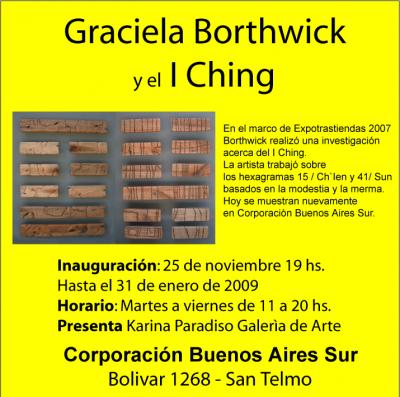
Graciela Borthwick expone obras sobre I Ching

Graciela Borthwick expone obras sobre I Ching

A raíz de la Expotrastiendas 2007, la artista porteña Graciela Borthwick inició una investigación sobre hexagramas 15/ch'len y 41/sun, basados en la modestía y la merma. El resultado se podrá ver con una exposición que se inaugurará el 25 de noviembre a las 19 horas en la Corporación Buenos Aires Sur, Bolívar 1268, San Telmo, presentada por Karina Paradisco Galería de Arte. La exposición continuará hasta el 31 de enero, martes a viernes de las 11 horas hasta las 20:00hs.