Blogia
Buenos Aires Jaque Press, en inglés y español

Revista (Magazine)

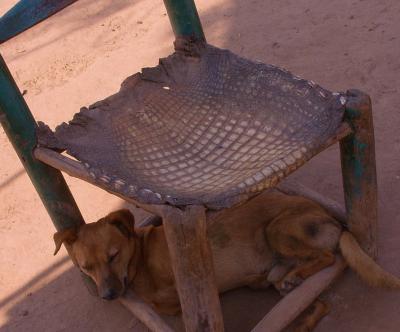
It's a dog's life...why can't men live like us, find and old chair to rest under?

It's a dog's life...why can't men live like us, find and old chair to rest under?

At last I have found my place in life, under this chair. Life is but a dream, they say? Really? To be or not to be, that is the question. Men! What brutes they are! Always fighting and pushing and getting their hands dirty with oil. What do they want oil for? It’s dirty and messy. All their bombs and guns and skyscrapers and pollution, and contamination. Just imagine. They should find old chairs like this one and lead a dog’s life. That’s what they should do. Instead they spend their life times talking about how to make more money, how to get people to buy useless things, how to build weapons. Why? If we get mad we blare our teeth, growl a bit and then it is over. But those humans! They never stop killing each other. They should learn how to lead a dog’s life! 

Palabras, palabras nacidas en el viento

Palabras, palabras nacidas en el viento

Palabras,

  palabras

   palabras cantadas,

     palabras intentadas,

          palabras provocadas, 

                 palabras reconstruídas,                   

                    palabras eróticas,

                        palabras rotas,                      

                           estropeadas,

                         estropajosas,

                              estridentes,

                                  estrujadas

                                      palabras estupradas

Infladas en el silencio,

   en la nada,

       susurradas en vigía

             violetas, humedecidas

                manchadas,

                      manchadas y rancias,

                         Manchas.

                          Manchas en el alma.

                         Manchas en tu sábana.

                             Manchas, sin sonido.

Palabras  grises,

             sucias,

                 arcaicas,

                    nacidas en el viento,

                              en el crepúsculo,

                                   Palabras de amor nacidas en el viento.

René Villar, amante de la poesía oral

"Se fue hacia los dioses," dice Susana Rosas de René Villar en un homenaje que, bajo el título de "Hypris, une algunas de las notables poesías del escritor.   Aquí publicamos algunos versos de René:

Viaje:

Artaud

Y sus doce apóstoles

Seopio sin

Palabras sin

Rosatros volvían de los vientos

Hueso por hueso

La noche que exhibe

Tantos dioses crecen

Con el vino con

La piel en

Cuerpo Artaud

(estaba borracho)

De templos lamiendo

Cuchillos reyes muertos

Endeleble:

          Sombras

Que se inclinan

   Una y otra vez en

   La caverna

Ancestral

De mis diluvios

   Anteriores, para

   Lavar la lepra

Indeleble

   Del amor

De qquel rostro

   Eternamente

   Adolescente.

Gold and money and glaciers and icebergs (a point of view)

Gold and money and glaciers and icebergs (a point of view)

They say that everything that shines is not gold. There’s a bit of truth in that. And gold tends to turn people’s heads around. Even at the expense of what Nature has given us. In Argentina there is gold and there also are glaciers and icebergs. Following a rather perverse process of reasoning, you might argue that the icebergs are nice to look at but don’t bring in much money for the provinces which house them.

Yet, it takes but a small dose of imagination to figure out why the national government has turned thumbs down on a law--previously approved in Congress--to protect the glaciers at the southern tip of the country from the cynide and other chemicals the gold diggers splash on Mother Earth's soil  to extract the much sought after nearby gold.

It seems that when companies such as Barrick Gold--the world's biggest gold mining company, with 27 mines around the world--say they want to exploit gold resting quietly underground, Argentine provincial governors think of money rather than the environment and talk to national government authorities and argue that it would be very important to let the companies exploit the precious mineral because it would bring in a lot of needed income.

The damage to the environment? Well, but just think about the gold that can be exploited. Besides, those ecological groups exagerate things....

How much money the mining companies actually leave local provincial governments is actually quite relative, because they are usually given very generous tax relief and exonerated from paying export duties. It goes without saying that the gold leaves Argentina instead of staying as a national asset. Curious indeed in view of the country enormous efforts to pay off its debts to international banks and financial institutions...

We have not been able to verify the affirmation by Congressman Miguel Bonasso that Barrick Gold was set up in part by weapons dealer Adnan Khashoggi with the helping hand of George Bush, father. Nevertheless, and in the light of the present international financial crisis, it is clear that too often  "the top players" get their niche on the market by means John Stewart Mills would probably not approve of. The laws of business only too often are at loggerheads with the laws of nature.

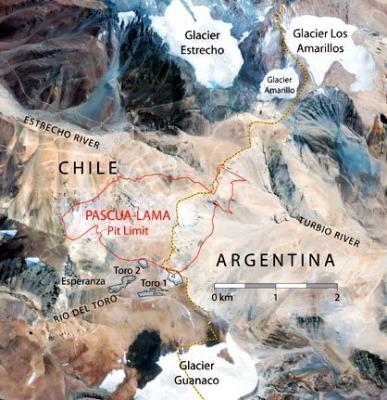
You don’t have to be Sherlock Holmes to understand why precious metal mining projects, such as the Pascua Lama bi-national project, are so strongly defended by establishment politicians and so strongly opposed by local residents and environmentalists. The latter, in both Chile and Argentina, have charged that the mining operations would negatively affect the glaciars in the area. Furthermore, for local residents, the use of noxious chemicals to extract the gold--plus enormous quantities of water--constitute a genuine threat for their well being.

Las frases de diciembre

1) "El infierno no termina cuando se cierran las puertas del campo de concentración y los hornos se apagan: hijos, padres, hermanos, familiares, amigos de los desaparecidos--viven esa segunda parte del infierno que crepeta en la memoria y no hay modo de apagar." Juan Gelman, poeta

2) "Cuando los afganos se den cuenta de la superioridad del modelo de democracia occidental y sus beneficios fluyan por cada esquina del país, el caminio de los talibán se verá arrastrado a los márgenes de la historia." George Bush, presidente de los EE.UU.

2) "Ser marxista hoy es creer en la justicia, en la igualdad, en la fraternidad. Creo que el marxismo de Marx, valga la redundancia, es una ccontinuidad de la Revolución Francesa...En tanto y en cuanto el hombre explote al hombre, el marxismo tendrá vigencia." Juan José Manauta, escritor.

3) "En Afganistán, una fuente de Fisk que nunca--jamás--se ha equivocado me informa que existen al menos 20 de estos centros de tortura funcionando en el país, y seis de ellos están en la provincia de Zabol."  Robert Fisk, periodista inglés.

4) "Terminemos con el puterío y empecemos a hablar de fútbal." Juan Román Requelme, jugador de Boca Juniors.

5) "Earth is absorbing too much solar energy and heating up. Rather than fiddling with hybred cars and funny-looking lightbulbs, why not just build a planet-size parasol to shad us? Or a forest of carbon scrubbers to cleanse heat-trapping gases from the air?" Editorial in the November issure of Scientific American.

6) "Siemens está cerrando un doloroso capítuo en su historia, con un esfuerzo sin precedentes en los últimos años. La Compañía siempre tuvo exigentes normas internas, pero se falló en el deber de vigilancia. Por propia iniciativa, Siemens denunció los hechos e invirtió 1225 millones de dólores en su investigación, implementando al mismo tiempo un riguroso sistema de transparencia y control, que aspiramos sea referente en el mundo empresario." Aviso publicado por Siemes en Página 12 el 21-12-08 a raíz de denuncias de multimillonarias actos de corrupción comercial.

7. "Tenemos un procedimiento penal horrible, con defectos estructurales, y una tradición burocrática en la Justicia..." Raúl Zaffaroni, ministro de la Corte Suprema argentina.


Why so serious?

Why so serious?

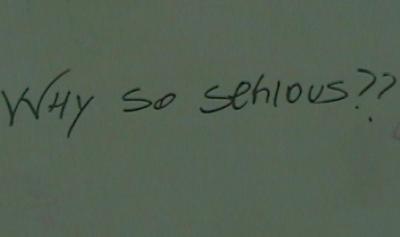
You're walking down a street, a thousand problems stabbing and pricking at you, and you turn the corner almost bumping into a homeless fellow picking through the trash for some bottles or paper to sell for a few cents, (this is Buenos Aires, not New York, and the streets still are filled with down-and-outs), you are wondering how long this financial crisis is going to last, (the one that is making stock markets in New York and London and Rio bounce up and down), whether there well be more war--as happened after the depression in the 1930's--and you are also trying to bring back to mind the lyrics of a song you once sang to your girlfriend, when right before your eyes you see a question scribbled on the wall in front of you:

Why so serious?

A good question, indeed. With no immediate answer. And yet...isn't it true that we often become so serious, so dramatic, so tragic minded that we complicate even the most simple situations?


Do you remember them? Yesterday? When troubles seemed so far away?

Do you remember them? Yesterday? When troubles seemed so far away?

Slap! At the threshold of the door, time is never ending

Slap! At the threshold of the door, time is never ending

As time and patience fly  
 
Love buds, then awaits to die.  
 
Are we not all lost ghosts?  
 
Ghosts of our shattered selves,  
 
Ghosts of our invented selves,  
 
Ghosts of the loves we invent  
 
Before we die in the intent.  

Slap! The sharp sound of an open hand smashing the damp smoothness of a bare cheek, its sound reverberating from wall to wall in the semi- darkness of the room, then bouncing back again with a more soprano tone, only to fall off to nowhere with a dull thud. He did not expect the blow; neither did she. They gazed at each other in absolute silence: the silence of instant fury. A blotchy red toned spot emerged near his nose, gradually turning to a livid pink. Her hand trembled in spasmodic electric beats. The hand that had just previously advanced so lovingly over his body was now throbbing with pain; the cheek that had received the silky caress was now burning with the heat of a smothering coal.

Outside bickering voices mixed incongruently with sudden melodies; shouts, screams and cries filled the thick summer air and sought refuge in the nicks and crannies of lonely back streets and rubbed shoulders with the rumbling growl of traffic. Further off a shrill safety alarm screeched, the sound of a fist was heard crashing through a window and, still further away, the air vibrated with other slaps and kisses and the rhythmic thud of angry or forgiving heart beats, mitigated only by the soft cooing of lovers and pigeons.

The slap had lasted but a second, yet seemed an eternity and a half. It came and went as a blink, as a radiating star dying away before reaching the observer’s eye. The movement had burst out from her most inner self, much like the “big bang” that millions of light years before had set the universe on its ever expanding course.  The words that followed, ending the seemingly eternal silence, shot out like rapid machine-gun fire. They were off-key choral arrangements unable to find a reason for their existence. Everything had been expressed in that slap. The cosmos would continue on its way. So would she. So would he. In its primitive physicality the slap had found meaning in a void that had developed between the man and the woman.

With a drive like that which had sent the woman’s open hand to her companion’s face, she stood up and attempted to place the slap into her memory chest. She advanced towards the threshold, the threshold dividing her confused feelings and the threshold of the door leading to the open air outside. But she remained there in the limbo, unable to find her way out of it. Something kept her there, in that no-man’s land between the room and the clamorous street. She could not visualize it, there were no words with which to express it, and even her memory was of no avail in resolving her impasse.Suddenly a ray of light from early morning moonlight outlined her face, highlighting her gently upturned nose and casting shadows over the depression that shielded her eyes. She imagined the moon’s illumination to be a voice and turned to reply, but it was the man, now on the outer edge of the threshold, who spoke first:

 “I dreamt I held you in my arms but your body was that of a silvery pigeon.”

A very slight smile broke over the edges of her lips:

 “And I said no.”   
 
“I asked but for an instant of love. Remember? Time without time but time enough for love to caress and heal and propose; but an instant, the thrush of a bird’s wing, the song of a lark at dawn, the instant but eternal lasting of an orgasm.”

Now her left foot was on the point of passing through the threshold and there was a unknown glow of confidence in her eyes when she replied:

“I told you no because if there is a once, there will be a twice and a thrice. If you recall the candle, our candle of love, flickered not once, not twice; it waned in greater and lesser intensity many more times and burned its way to extinction. Candles always go out. So do love affairs.”  
 
He advanced his right foot to the middle of the threshold, nearly touching hers, but an unaccustomed rigidness seemed to knot his shoulders. His voiced sounded as if echoing from a deep well, seductive but aware of its prompt defeat:

 “Darling, remember how we softly entered each other...how our bodies meshed, twined and bubbled in sweat. We were caught in a tidal wave of love, an erupting volcano so impressive we will never forget its bright embers.”

“So what? After the waves crash there is always quietness. When the volcano has erupted there is only silence and destruction."

“Perhaps It never happened, perhaps our love was but a dream. Or a wish in the midst of a tropical storm that blew over and left us staring at each other from opposite sides of a dried up salty sea.”

Now the moonlight danced upon her face playfully and her other foot had begun passing through the threshold.

“It was more than a dream. We faced each other from opposite sides of dampened bedding. Perhaps it didn’t happen but it might have. And if it happened once it would surely happen again. You were there hovering over me with a bottle of sherry in your hand, an impish macho smile breaking over your teenage man’s face. Then I slapped you. That was all. That was my will. That was all.”

“And I touched you, my body going stiff and soft all at once. I’m transgressing, I thought. Is it wrong that I feel so free and strong at the same time? Is my freedom your slavery? No responded my inner voice. You have gifts to give her. Give them to her! Is it wrong for a lover to give? Why is it so difficult to take the initial step?”  
 
She did not answer. Or perhaps she answered in silence. Both of her feet had now noiselessly crossed the threshold and the rest of her body followed obediently as the moon played games with the image her figure reflected on the now opened door of dark oak. Without replying and casting no look back, she transgressed the threshold and vanished into the cover of night.  Shortly thereafter the moon  faded  away behind the nearby weeping willow tree that guarded the entrance to the house.

The man remained there in the threshold statue-like for a long instant, his lips quivering. Perhaps he is still there.  


Tangalanga hits 91 as if it were 19 and is about to call you

Tangalanga hits 91 as if it were 19 and is about to call you

There are now few people in Buenos Aires who don’t know Mr. de Rizio, that is, Dr. Tanglanga, and you might even have received a call recently from some guy messing up your Sunday afternoon nap with a serious sounding hoax and a very generous and well delivered handful of earthy insults. You’d think he’d give up on his youthful pranks, because on November 22 he’ll celebrate his 92nd birthday--but not in the least--he do it with yet another show! The doctor has won fame (we can leave the glory aspect of that expression out for the moment) throughout Latin America for this phoney phone calls, during which he pummels dry verbal insults against inept or unscrupulous service providers, for example, quak healers, tarot card charlatans, butchers with lazy thumbs, builders who don’t think the sky is the limit.

Dr. Tangalanga hasn’t had the kind of love ups-and-downs that most people nowadays have, as 66 years ago he married his neighborhood girlfriend, a woman who has stayed quietly in the background. Way back in the 1960’s he was yet another executive at Colgate-Palmolive company. A few years later, bedridden with hepatitis, he discovered how fun and healthy it could be calling anyone in the telephone book and posing as somebody he wasn’t, insulting them, then calling back to sort of make up...His deadpan approach and gravitas as he spouted pure nonsense caught on rapidly. Before long record companies were hard after him--he has a trio of books published and some 41 cassettes or CDs.

of tango records looking for a bogus recording called, "How Deep Can the Ravine Be if the Frog Climbs it at a Trot?" Nobody could locate that, so the collector and his wife agreed to take it up with other tango buffs. Dr. Tangalanga’s punch line: "Yes, all  of them will have to come together and asphyxiate themselves." The collector’s wife: "Of course, of course."

There is a social aspect of the prankster’s activities. For many years he spent tow or three days a week as a volunteer visiting people in hospitals. He says his telephone calls has helped keep him healthy--he has suffered numerous sicknesses.

Besides working from time to time at weddings or anniversaries, he has one big yearly show...although he has let it be known that the last has arrived, he certainly will organize something for his upcomming birthday. If you want to check out his activities, you might write Matt Moffett at matthew.moffett@wsj.com or página oficial de Dr. Tangalanga at http://www.tangalanga.com


Pissing on the street,when the urge comes

Pissing on the street,when the urge comes

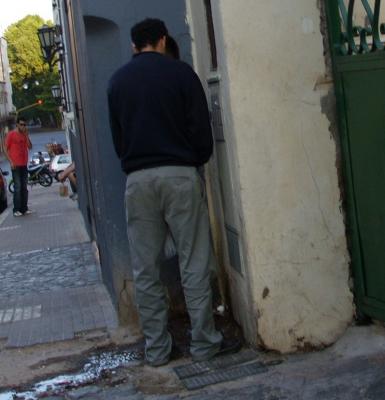
Just imagine a city like Buenos Aires, millions of souls, each with their own tragedies, comedies, hopes, fears, and urgencies. Among those urgencies is one common to both men and women: urinating. If you look like a fairly decent fellow, with enough money in your pocket to buy a coffee or a sandwich, you just go in and do what you have to do, where you are supposed to do it, and usually you can do that with no hassle. But if you are poor the owners of cafés and bars will look at you in disdain and perhaps send you someplace else to dischage that liquid pressing to be liberated. Or maybe, if you’ve had one too many the night before, you just don’t think about what is proper. You open your zipper at the nearest fairly excluded niche or street corner. No reason to get pissed off. But...why can’t the city provide public bathrooms?

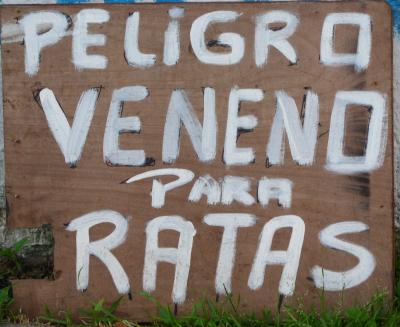
Veneno para ratas en una plaza pública

Veneno para ratas en una plaza pública

El dos de noviembre, primavera en Buenos Aires, sol tibia y brillante, parejas caminando mano en mano, besándose con la inocencia de los enamorados, poesía en el aire y en el corazón, la guerra de Bush un lejano eco, y de repente encontramos este cartel en el barrio colonial de San Telmo, en una plaza pública, habitada por niños, desocupados, perros, gatos...lugar de descanso para turistas...

Las frases de noviembre

1. "Amo la naturaleza, amo la música de Bach, amo al árbol, al viento, al caballo." Atahualpa Yupanqui. Del mismo cantante argentino:"El día que yo me vaya para el gran silencio, quisiera constituirme en lo anónimo. En un ser desconocido, sin nombre, sin imagen. En una copla errante." En otro momento dijo: "Hay algo que me preocupa profundamente: Díos, en verdad, ¿creerá en mí?"

2."My years of experience in training and maintaining the human voice have convinced me that the practice of the art of breathing is beneficial to the health of the whole person, regarldess of career or activity." Nancy Zi

3. "Al parecer, tengo muchas personas dentro de mí. ¿Sabes a lo que me refiero? Si las entiendo, me siento terriblemente parecida a ellas cuando las estoy haciendo...pensando, uno se convierte en la persona, si uno piensa con suficiente intensidad. A veces es bastante raro, tú sabes. Eres eso, durante un buen tiemp, y luego no lo eres..." Edith Evans, actriz

4. "La democracia es el caldo de cultivo al comunismo. Y este gobierno repudia al comunismo." Dictador Pinochet, cuando ostentaba el poder en Chile

5. "El agente Fdevnen Faupette figura como agente regional de la DEA en Santa Cruz. Y en misión diplomática de la Embajada de EE.UU. realizó viajes a Trinidad y Riberalta con el objetivo de financiar a los cívicos comprometidos con el golpe de Estado civil." Presidente Evo Morales de Bolivia, acusando los agentes de la DEA de participar en el intento de golpe contra el gobierno de Morales en Septiembre.

6. "La unidad de la retórica moralizante emitida sin límites por los dirigentes y los medios de comunicación de Estados Unidos en los últimos días no es digna de una democracia madura. "  Susan Sontag en Le Monde 17-9-2001.

7. "El dilema en Guantánamo radica en que se hicieron detenciones arbitrarias, se practicaron torturas y a la vez existen indicios de que al menos la mitad de los detenidos estuvieron involucrados en actividades terroristas. Sin embargo, se llegó a estas pruebas violando los derechos fundamentales, entonces esas declaraciones no resistirán el test de una corte federal norteamericana...Hay tres aspectos fundametales en el marco de la llamada guerra contra el terrorismo que la próxima administración tendrá que rever: la clausura de Guantánamo, una orden del Ejecutivo que elimine toda técnica de tortura y que se atenga a las leyes internacionales y, por último, en los casos en que hay presencia de tropas en otros país, como  en Irak y Afganistán, que Estados Unidos sea más responsable y transparente con las investigaciones por los hechos que están fuera de lo permitido." José Miguel Vivanco, director de Human Rights Watch.(Página 12, 5-11-2008)

8. "A revolution is not a dinner party, or writing an essay, or painting a picture, or doing embroidery; it cannot be so refined, so leisurely and gentle, so kind, courteous, restrained and magnanimous. A revolution is an insurrection, an act of violence by which one class overthrows another." Chairman Mao in "Little Red Book"


La respiración de una rosa

La respiración de una rosa


Observamos una rosa:

buscando el sol,

derrochando su perfume,

ocultando sus rudas espinas.


Observamos una rosa:

Se flagela en el viento,

agitando metáforas lúdicas,

creyendo ser imagen y forma

del amor eterno,

inocente y puro!


 A la sombra,

de noche, oculta, prepara ella

el ataque mortal

contra su amante

penetrándolo

una y otra vez

 con sus filosas y venosas

espinas,

 albergadas

debajo de sus plácidos y pacíficos

pétalos de seda.

The Election: an unreal but possible conversation

The Election: an unreal but possible conversation

Mary doesn’t agree. She’s in the kitchen now, looking for the glasses. As she puts them on the tray she raises her voice a bit so John and Jim can hear her. "I can’t make up my mind between the two and I keep asking myself why there are only two candidates." That’s a God damn weird question to ask, thinks John. "Imagine what this country would be like if there were half a dozen or more, like in Italy or Argentina." Jim is looking out the window at the bright coloured autumn leaves. "If you ask me, the sooner this is over the better." He doesn’t seem to be in a very talkative mood.

They are long time friends, a kind of trio, having gone to school together, and, well, John and Mary have been married for 15 years. Now they’re having a snack and pondering what to do on  election day. It only happens every four years, but there are months and months when the radio and the TV seem to find nothing better to do than to repeat the presidential candidate’s speeches, flash their spot advertisments and fill the viewer with patriotic pride. Thank God we’ve got a democracy, so go out and vote for the best man. That’s great, thinks Mary, but what do I do if I don’t agree with either of them?

Now she is returning with the tray and the glasses and snacks. She glances at her husband the way she always has for the past 14 years and continues her train of thought. They’ve had their ups and downs but have managed to keep together on the basis of mutual tolerance for what each considers untolerable.

"Don’t you agree? I mean we’re a big country, the most powerful in the world, the living example for people around the world, and we only have two candidates. Aren’t there others out there with ideas on how to straighten things up? Besides, once they get into office..."

John moves a bit uneasily in his sofa chair, then says: "I wish I hadn't stopped smoking."

"You mean you want to go back to your old habit?"

"Not really, it's just this kind of conversation gets on my nerves."

"You mean politics?"

"Yea."

"Well, we live in a democracy, don't we?"

"I guess so, although you sometimes wonder."

"About what?"

"About how democratic things are. And I'm not alone. There was this CNN survey that says 58% wonder whether there will be funny business in the vote counting."

"The thing is they put in all these fancy computers but that doesn't guarantee too much, in my opinion."

"I agree with you there. But I insist: the problem is there are only two and who knows what is going to happen once they swear in."

"I bet there are a few others, but nobody knows about them. Anyway, I wouldn't be so negative. I mean at least we can vote. There are countries where you can't, where a dictator decides everything for you,"

"There's no dictator here but there's money and the market and lobbies and the way people act when they want to get votes and what they do later..."

"You think you can't trust politicians? Our society is based on trust, isn't it? I mean even the dollar bill says "in God we trust."

"Even so some guys say the believe in God but get us involved in wars nobody wants and use not very Cristian tactics, such as abuse of prisoners..."

"Oh come on! You probably read that in a liberal newspaper."

"Didn't they change the wording to make certain practices legal?"

"This is getting out of hand! We elect our presidents or senators or whatever and entrust them to do the best for us. That's the way the system works. And if you ask me it has worked quite well up to now. Anybody can make mistakes. You have to see the essence."

"The essence? That's precisely what makes me feel so weather beaten. I'm afraid something has eaten away that essence."

"What?"

"I wish I knew! Hey! That's enough! Let's have a bite to eat."

"I'll take you up on that...but remember to vote..."

"It's not a question of memory...it's...I really don't know what it is...I just hope and pray whoever gets elected will be able to...oh, forget it! Let's eat!"


Mar-a-thónica en Mar de Ajó del 12 al 15 de noviembre

De repente, entre las olas de mar, aparece un poeta de pelo enmarañado, ojos liquídos, voz endulzada y, citando las palabras de René Villar, "la criatura de la inmortalidad ataca por la espalda," anuncia que se acerca la fecha para la Marathónica de Poesía y Narrativa 2008, de Mar de Ajó, de 12 al 15 de noviembre, organizada por la Fundación de Poetas "René Villar," Filial Mar de Ajó, Grupo EPOCA y el Taller Literario Centro Cultural Zona Sur de Mar de Ajó. El evento convoca poetas del país y del mundo y se realizará en el Hotel Latinoamericano, avenida Costanera 27.
Las actividades incluyen: mesas de lectura, presentación de libros, evocaciones, ponencias, homenajes, micrófano abierto, espectáculos musicales, charlas, módulos de venta de publicaciones, libros, etc, presentaciones de revistas, fanzines, etc, exposición de artes plásticas, videos, café literario, performances, reproducciones sonoras, exposiciones sobre el Mapa poético y narrativo nacional.

Informes:
 

T.E.: (02257) 420254 / 422878  
e-mail:
info@hlatinoamericano.com.ar 
web:
www.hlatinoamericano.com.ar
 

Rubén Gómez 
e-mail:
fundaciondepoetasmda@yahoo.com.ar 
o al T.E. (02257) 421467 de lunes a viernes de 9 a 13 hs


¡Inventos argentinos en el Centro Cultural Borges!

¡Inventos argentinos en el Centro Cultural Borges!

¡Inventos argentinos en el Centro Cultural Borges!

¡Inventos argentinos en el Centro Cultural Borges!

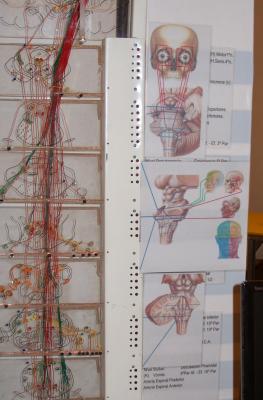
Si bien la ciencia y la tecnología van mano a mano en el proceso de desarrollo humano, Argentina no ha tenido nunca una política coherente para sus científicos, sin hablar de sus inventores. La ciencia sigue a la zaga en todos los presupuestos nacionales, como si fuera cosa de poco interés para los gobernantes. ¡Inventos! Se habla de la birome, inventada por un inmigrante húngaro, el colectivo...y unas cuantas cosas más. Muchos científicos--muchos educados bien y gratuitamente en las universidades nacionales--forman parte del llamado "brain drain," buscando destinos en los países "desarrollados" en los cuales universidades y laboratorios los reciben con buenos sueldos y oportunidades de desarrollar sus conocimientos.

En este contexto, la exposición de produtos innovadores que se realizó en el Centro Cultural Borges fue un esfuerzo digno de mención.

 "La ciencia, la tecnología y la innovación son claves para el desarrollo económico y social sustentable de nuestro país," dice un texto de Dra Ruth Ladenheim, secretaria de Planeamiento y políticas en Ciencia, Tecnologíoa e Innovación Productiva, y Dr. José Lino Barañao, Ministro de Ciencia Tecnología e Innovación Productiva. anunciando el evento. "Es fundamental construir un modelo que conjugue, a un mismo tiempo, inclusión y conocimiento," concluyen.

Hubo en la exposición 1.816 productos presentados,de los que seleccionaron unos 250 para la exhibición. Otros 330 fueron incluídos en el catálogo.

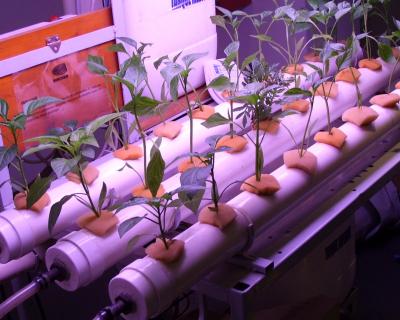
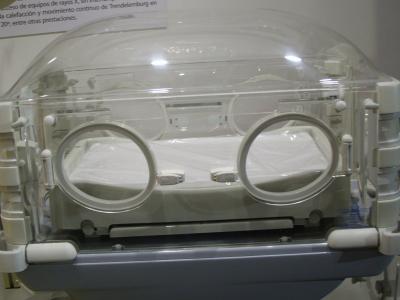
Algunos inventos dignos de mención incluían el Thermosum, un termo que calienta y mantiene la temperatura del agua a partir de la energía solar; To-Chi, una versión argentina de la tecnología touchscreen, una pantalla que se activa al tacto; pequeños robots que se postulaban como la solución para manipular elementos peligrosos;una campera con una pantalla solar que transmite energía a un cargador ubicado en uno de los bolsillos, compatible con celulares;SevitacD, para personas con sordera severa, un aparato que se coloca en el dedo índice y amplifica vibraciones; vigía de siembra, una herramienta para el agro que facilita la siembra...


¡Inventos argentinos en el Centro Cultural Borges!

¡Inventos argentinos en el Centro Cultural Borges!

Ferroclub Argentino is busy refurbishing trains and railroad history

Ferroclub Argentino is busy refurbishing trains and railroad history

Back in the 1990’s and thanks to the bright idea of former Argentine President Carlos Menem, lots of train cemeteries began to pop up across the country, tracks gathered weeds and stations began to crumble apart. And then with the present administration there was the pie-in-the-sky talk  about construction of the so-called "bullet train" uniting Buenos Aires, Rosario and Córdoba. But let’s be more pratical...

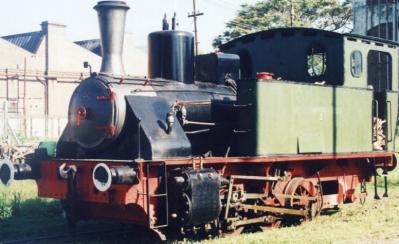
Some train fans calling themselves the Ferroclub Argentino rubbed heads with the Museo Nacional Ferroviario and now they are busy at work preserving not only old documents, artefacts, but also locomotives and wagons. Oh. If you haven’t yet heard of them, you might have seen some of the old trains in movies such as "Evita" and "Seven Years in Tibel." In fact, a handy $50,000 some thousand dollars was generated that way.

If you’re interested in seeing the trains and some of the work being done on them, you might stop by the defunct Remedios de Escalada and climb aboard vintage wooden passenger cars, sau the 1925 British Midland RY or the luxurious Argentine Ferrocarril Sud of the same year. There are steam diesel locomotives from Europe and the U.S., and antique dining car serving refreshments and even a mini-train for kids.

Going back a bit in history, we find the first Argentine train line opened in September of 1857, a 13 km route from near what is now the Colon theater to the Flores neighborhood. Sixty years later the Argentine rail system was one of the largest in Latin America, coinciding with the repression of indigenous popularions in the interior and the boom of what has been called the "Belle Epoque." The British played a key role in the development of the lines and that served to facilitate exports to that country--you can still see the remains of that in the names of many communities and train stations...and the sports activities such as soccer, cricket and golf that accompanied the British railway builders.

When General Juan Domingo Perón came to power in the mid 1940’s, the railways were nationalized and placed under the management of the Ferrocarriles Argentinos. That led initially to a great spurt in track mileage, swelling to 45,000km. However, subsequently and thanks to "neo-liberal" think tanks and World Bank recommendations, President Menem began to tear the industry apart, favoring truck transportation but failing to build the necessary highways. Deficits continued to rise, costing the state around $400m per year in the 1990’s just to maintain what was left of the system...and ghost towns grew up in previous prosperous towns criss-crossed by the trains.

Since then there has been a steady deterioration of the service, essential for workers and a source of livlihood for countless small towns across the country. Current President Cristina Kichner has repeatedly expressed her desire to reverse this process and some six billion pesos have been alloted to improve transport in the 2009 budget...but only time will tell whether the once effecient and active railways can come back to life.

Feliz día de la madre, madre tierra...

Feliz día de la madre, madre tierra...

Son signos en las paredes,

     suaves suspiros, zarzamoras maduras,

        lobos exaltados bailando el 2 por 4,

           soldados abrazados a la tierra,

            antiquos imperios cubiertos de pétalos,

              primaveras, tulipanes, begonias, rosas

                niños con rostros de sandías abiertas al sol,

                   besos impregnados en voraces cementerios;

                       son cantos, coplas al viento, romerías de frutas prohibidas

                           son manos anónimas aniñadas que escriben al anochecher,

                               es el amor, motor, causa, comienzo y fin

                                   es la madre, la madre tierra envuelta en su ajuar.