Blogia

Buenos Aires Jaque Press, en inglés y español

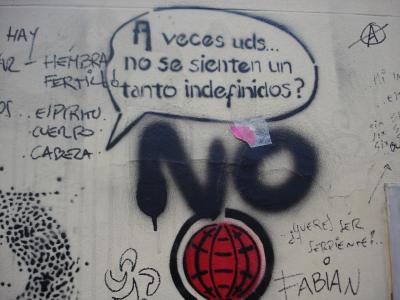
¿A veces usteds no confunden pies con manos?

¿A veces usteds no confunden pies con manos?

    Es realmente comfortante cuando un ser solitario encuentra en una calle igualmente solitaria un escrito que da cuenta de cuán absurdo es la existencia. ¡Realmente! ¿Tiene sentido vivir? A ver. Don Pedro es de pensamiento positivo. Es católico, contrario al aborto, hace el amor en la oscuridad, no le parece bien la eutanasia, dice que el marketing es la bendición de Díos y opina que trabajar dignifica.

     ¿Tiene sentido vivir?

    La pregunta es de María Petrona, a pesar de su apellido, ella es una ampliamente dotada moza de 20 años, atea, amante de una mujer 40 años mayor, practicante de artes marciales, estudiosa de la vida sexual de las hormigas, auto-empleada.

      --¡Por supesto! ¡Qué pregunta más tonta!

     --Y...no sé. Allí en aquella pared alguien ha escrito: "¿a veces uds no se sienten un tanto indefinidos?

      --¡Basta! Somos los servidores de Díos y Díos sabe que la vida tiene sentido. No debemos nunca ser indefinidos.

     --¿No? ¿Te das cuenta? El autor de la frase se tragó el signo de pregunta antes de 'a veces,' y ese lapus ciertamente agrega un elemento de indefinición.

     --María, María, me estás cansando con tus preguntas y postulados redículos. La vida tiene sentido. Lo que no tiene sentido es discutir si tiene sentido o no.

     --¡Ah sí! Bueno, ahora creo que entiendo, un poco.


Cristina Santander: "What I seek is constancy, a method, investigation."

Cristina Santander: "What I seek is constancy, a method, investigation."

       Cristina Santander'’s art gallery invites the curious minded to rid themselves of their prejudice, open up their senses and prepare for a unique and never-to-be repeated experience. Cristina says: “I am a painter: I express myself by means of colour.”           

     True. On glancing at the paintings which hang at the entrance of the atelier, the visitor gets the feeling that Cristina adds warmth to the colours that flow from her brush.  Rosa, the maid who kindly opens the door, tells the visitor that Cristina is busy but he can wait over there by that table nearby which a student is carefully working on some sketches. While he waits, the journalist examines some of Santander’s paintings. His attention is drawn by the powerful glances that he receives from the figures on the canvass, as if there were a dialectical relationship uniting form and content…Steps can be heard from the stairs…  

     “What a beautiful house!”     

     “It goes back to 1930, when it belonged to the Moneta family. I bought it three years ago to set up my painting and drawing atelier, really an ideal place to work because there is a lot of natural light and the high walls facilitate the exhibition of my work. I work a lot, but when I return home I have this special feeling.”      “At what age did you realize that painting would be your vocation?     

     “At around five, I believe. At 12 I began with my first teacher, Chola Dantiacq. When growing up Alicides Gubellini was my neighbour; I met many artists who visited him. I was enthralled watching Gubellini paint and model. My family was perceptive to art. But actually I come from a family of musicians. My uncle, Manuel Santander, was a composer, my father a director and jazz trumpet player; my uncle was also a director; my mother’s sister, Helen Jackson, was known as a ‘Lady-Crooner.’  I entered from primary school directly into the Buenos Aires School of Fine Arts and then concentrated on painting and engraving. I had great teachers, including López Anaya, Aída Carballo and Ideal Sánchez.. Later on I studied at the legendary “Atelier 17” under Stanley William Hayter, an English artist who experimented with simultaneous colour stamping. He was also a true innovator in engraving.     

       “At what age did you begin showing your work?”     

      “In my teens. When I was 15 Romero Brest, the Director of the Di Tela Institute, organized an exhibition called ‘From Prilidiano Pueyrredón to our days.’ I was the youngest expositor. I was lucky enough to begin my artistic career when Argentina was going through a period of euphoria in painting.    

      “ ¿When was that?”    

       “ We’re talking about the decade of the 1960’s, a very productive period. When I entered the Fine Arts school there was an a movement in favour of innovation among the students, in which I participated. In fact, I even became vice-president of the Student Centre.    

      “Oh.”   

      “And if I wasn’t president it was because of being a woman! Anyway, that experience allowed me to mature as a student and also in terms of my social awareness. The problem of the plastic artist is that he or she works cut off from society. That is not the case of theatre, nor is it of dance where you work in a team with a director, a choreographer and in the case of music there’s the director. It is impossible to create without social sensitivity. I’m not talking about socialist realism but rather of Pablo Picasso and Guernica, without a doubt the most socially compromised work of the XXth century.    

     “How did your career continue?”    

      “In 1968 I won the ICIZA Bienal, a very important prize that open the doors of Spain for my artistic work. Later I won the Julio Le Parc, one of the internationally most well-known awards. Later I was mentioned as one of the 10 most outstanding Argentine painters, and Jeanette Arata de Erize, president of the Mozarteum, was a member of the jury. It was thanks to that entity that I was able to stay at the ‘Cité des Artes,’ and adroitly the Mozarteum supported André Malreaux’s project aimed at creating a building housing the artist’s Ateliers bringing together artists from all over the world.  Argentina was represented in the initiative.    

      “But not officially, I suppose.”    

      “No, unfortunately, it was not invited at the official level. But I was able to work for the Atelier 17. I deeply hope that the governments in power recognize how important culture is for the country. We need economic backing, budgets for purchasing works of art, that artists not have to donate the results of our efforts to the museums, that the Law of Patronage enable businesses to invest in art. It is a cultural rather than a political problem. It is necessary that people in power have a cultural background.”     “Could you explain that idea in more detail?”    

      “What is lacking is artistic pride. We should imitate Brazil, a country that is not only proud of its soccer players but also provides funds for creative activities. When Argentina’s numerous presidential delegations travel, does an artist accompany them? They take hairdressers, advisors, sportsmen, friends, neighbours but artists…not a single one! We artists travel alone and with the wink of God!     

      “Nevertheless, there seems to be much artistic activity in the country.    

       “You might say there is hunger for art, but no money for it. The important international expositions do not come to Argentina because there is not Money to finance them.”    

       “How did your studied abroad influence your work?”    

       “France made an exception of me in granting me a scholarship to study in Spain and I stayed at the Velázquez palace, which belongs to the French Ministry of Culture. It is a magnificent place and includes people of the highest artistic level; also well trained investigators. Art grows when it is seen.”    

       “Is it true that there are several tendencies in the Argentine plastic arts?”    

        “I really don’t know. Sometimes the Río de la Plata school is mentioned, but it is based on the school of an Uruguayan, Torres García. There are many good artists here but in general they follow the international artistic tendencies. Without a doubt globalization has brought with it depersonalization and lack of local focus. A category that has lately become popular is the ‘Art Market’ and its concomitant Art Fairs. That brings up the question of prices. How much are Mexican paintings worth, works that have achieved the governmental backing? What is the price of a Frida Kahlo painting? More than three million…and a good Argentine painting…? No Argentine painter—not even deceased artists such as Berni—get such high prices.”   

       “Are there important centres of artistic activity outside Buenos Aires?”    

      “Yes. Last year, for example, I found a marvellous nude by Victorica in the new Neuquén Museum Fine Arts Museum. The director, Oscar Smoljen, rescued it from the basements of our Buenos Aires Fine Arts Museum. Sometimes a confused director converts the Museum in his private feud and artist’s painting are hung or taken down in accordance to personal taste or the going fashion.  In art it does not matter what one’s personal taste is, whether one likes Picasso or not.     

     “Is it difficult for an artist to become known?”     

      “Where? In Argentina? Abroad? That has always been and will continue to be difficult. Sometimes those who ‘arrive,’ the best known, the most popular or market blessed painters disappear into oblivion. Who were the well-known artists when Van Gogh whined away in cafés? Who won the Venice Bienal two years ago? Twenty years ago Televisión Española interviewed me for the program “300 million” which was broadcast to Latin America. So was Sábato. But this does not happen in Argentina. There are interviews with artists on cultural channels but they don’t get to homes, to housewives, to maids, the man in the street. I’m sure that more than one would very happily go to see ‘Big Brother’ or ‘Tinelli.’ Those who are obsessed with the ratings should dedicate themselves to more than just filling their pockets; they should do something for others.”    

      “You began painting nearly 50 years ago? How do you see your work in retrospect?”    

      “I don’t look back. I don’t want to be Lot’s wife. What I seek is constancy, a method, investigation. I have enriched my roots by studying the great Spanish artists.”    

      “Do you use any particular technique, Zen concentration…?     

       “It takes deep concentration. I don’t use incense, I don’t breathe deeply, I don’t put myself in Alpha, I don’t meditate day and night…is that Zen? The mechanism of creation cannot be explained with words. Some people are gifted from birth. One is born an artist. You don’t become an artist: there is raw material which is worked, developed, polished and an attitude which bears fruit only after a lot of work. Since I was a child I have spent hours drawing, painting. Nobody forced me to, it was in me. What is important is to follow one’s own feelings. I love fashion but that is something else. One must seek one’s own image, identity; we Argentines must try to find our own artistic identity. But you can’t do that just painting a poncho!” 

       “Hmmm…”   

      “The thing is the world is alienated and alienation is incapable of balancing things. So if the critics tell artists what they should do it would be as if the egg were to tell the hen when to cluck. Another problem has to do with the schools, the crisis in the system of education. As a teacher, I have discovered that students can scarcely handle the spoken word. Language is of fundamental important. It is an abstraction which allows us, by jeans of a word such as ‘table’ to think about style, wood, iron…    

     “How do subjects appear?”    

      “There are several subjects I love: the figure, movement, plants, a flower, how the Chinese plant, imitation of Nature, not Nature itself. I am very much interested in the subject of space, for example, light. Modern painting tends to be more conceptual than formal. I’m not saying that is good or bad. Everyone has his own  taste. But be that as it may, a work of art cannot be obvious. It must contain mystery, something which attracts…something which must be revealed rather than shown.”    

     “You mean art must provoke?     

      “And something else: move. If one wants to provoke it is not necessary to walk on the streets as Adam and Eve. I don’t want people to say I am a woman of the Middle Ages, indeed a marvellous period in which also many inventions were made. If you don’t believe that, go ask Leonardo!”    

     “Has one of your paintings marked a turning point in your career?”     

      “I cannot speak of only one. I believe that should be left up to those who see my paintings.”

      Contacts:  Cristina Santander:  Fax: (54-11) 4803-9552   /  4803-5561     

 e-mail: cris@cristinasantander.com.ar     Web:    http://www.cristinasantander.com.ar  

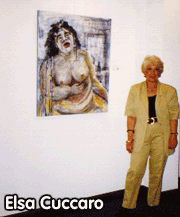
Elsa Curraro, pintora: "yo siempre he sido una enamorada del impresionismo pero..."

Elsa Curraro, pintora: "yo siempre he sido una enamorada del impresionismo pero..."

     A la hora de mi llegada, los parroquianos del Centro Cultural Malvinas en la ciudad de La Plata, Argentina,  no estaban a la vista; seguramente estaban escondidos en sus casas tomando mate. El taxista en cambio manejaba como un “stunt man” de Hollywood. Me dejó en la esquina y con un despliegue impresionante de motores y ruedas desapareció como había llegado. Enseguida ubiqué la casa de Elsa Cuccaro: una vivienda antigua rodeada de construcciones más modernas, frente a una plaza soleada.  Toqué el timbre mientras iba repasando las preguntas.

               --Buenas tardes...¿Llegó bien?

               La pintora apareció en la puerta, con un vestido largo de algodón.

              --Sí, ningún problema, bueno, excepto la velocidad del taxista.

              Mientras el diálogo encontraba el modo de avanzar, nuestros pies tocaban el sendero rústico de un pasillo abierto. Elsa me hizo pasar primero a un salón que olía a cemento y ladrillos.

             --Lamento no poder recibirlo mejor... Esta es la futura sala de exposiciones...pero tuve que parar la obra debido a la crisis económica... 

             No hacía falta explicar nada más.  ¿Cuántos proyectos, cuántas obras han quedado a mitad de camino durante el último año en Argentina?

             Después entramos en el living, repleto de pinturas y objetos extraños, iluminado por la luz que caracteriza las plantas bajas de las construcciones de la década de los años 20. Efectivamente, la casa data del año 1926. Cuando su padre la compró, la calle estaba adoquinada como para coches a caballo. Enfrente, el ejercito mantenía una unidad de infantería y más allá había un taller de la compañía de tranvías.

             --Estoy reformando la casa... ¿Quiere tomar algo?

             Elsa puso el termo sobre la mesa. Lancé la primer pregunta:

             --¿Ha vivido siempre en La Plata?

             Nací aquí, sí, pero he vivido en otros países también, en España, en Italia, y aquí en Argentina he vivido en Rosario por un tiempo, también en Mar del Plata.

             --¿Hay otros pintores en su familia?

              No. Mi padre era Calabrés y mi abuelo siciliano pero no pintaban. Mi abuelo era carpintero, bastante conocido. Sus hermanos emigraron a los Estados Unidos de Norteamérica y se convirtieron en millonarios. Pero los que vinieron acá....¡pobres! ¡Ja, ja, ja! Mi padre era topógrafo y trabajó en diarios de La Plata...Ahora el oficio casi no existe. Nosotros vivimos entre dos culturas, la del país de origen y la de Argentina, donde vivimos.

             --¿A qué edad comenzó a pintar?

              En realidad empecé cuando iba visitando a mis dos tías solteras que vivían afuera de la ciudad. Los domingos las visitaba. La gente grande jugaba a los naipes todo el día y yo por allí jugaba pero también tomaba un lápiz y un papel y dibujaba. ¡Las cosas que uno dibujaba! Y después, claro, también lo hacía en el colegio, durante las fechas patrias, en los pizarrones, pero en mi casa no. A los 10 años empecé en Bellas Artes, un ciclo especial que se llamaba el ciclo básico infantil. Estamos hablando de fines de la década de 1940.  El colegio quedaba un poco lejos. Si yo tomaba el tranvía no podía llevar los materiales, entonces me iba caminando y me compraba una carbonilla, una hoja de papel y gofio. ¡Iba comiendo gofio por la calle! ¡Ja, ja, ja! El gofio era un polvito muy rico y así fui a Bellas Artes y seguí...Quiero mostrarlo esta maqueta. La hice este año en un curso con Milan David, un checo. Hace mucho que no hacía escenografía. En el curso trabajamos sobre la desmitificación de los mitos griegos. Cada uno tomaba un mito. Yo tomé a Perseo, el hijo de Zeus, que mató a Medusa (un monstruo cuya mirada convertía a los hombres en piedra). No hice el proyecto para una sala normal, sino para una fábrica. Se me ocurrió montar un espectáculo en una fábrica abandonada...ah, las fotos. (Se refiere a unas fotos colocadas en la parte más alta de la maqueta. Abajo se ven muchas figuras diminutas, trabajando en la fábrica) Son de unos emires árabes, que serían los dioses. Dan un toque de actualidad.

                --Entonces no sólo ha pintado y dibujado: ha hecho trabajos de escenografía también...

                Yo estudié primero artes plásticas y luego, ya más grande, estudié escenografía en una escuela de teatro y después estuve trabajando en teatro, en la Lechuza aquí en La Plata, un teatro que tiene muchos años de tradición. Pero durante 31 años yo trabajé aquí en la Policía...

                ¿Perdón?

                Sí, como dibujante. Era jefa de identikit, dibujante de rostros, de retratos, y eso me daba un sostén económico. Mientras tanto estudiaba, tuve un hijo, me separé y cuando uno quiere recordar ya hizo un montón de cosas. Yo entré como personal técnico, tenía jerarquía. Está el escalafón profesional, los médicos por ejemplo, y el escalafón técnico que, como en mi caso, son los que tienen la especialidad de la fisiognomonía, y después está el escalafón propiamente de comando, digamos, los canas-canas.

--¿En qué época?

               Y, fue entre 1960 y 1991. Cuando me jubilé, me fue bien. Hubo un congreso en Génova al cual yo mandé un trabajo. Fue reconocido por la Sociedad Científica de la Universidad de Génova. Luego, ya jubilada, me mandaron a un congreso de fisiología, un regalo por los 30 años de trabajo...terrible. Bueno, son experiencias de vida. Ahora me río. Pero luego me dediqué al taller y a trabajar, asistí a congresos, fui a Francia...recién ahora estoy más tranquila.

               --Y ahora qué sucede?

               Ahora estoy evolucionando. Yo siempre he sido una enamorada del impresionismo pero con el tiempo uno trata de ser más prolijo, de sugerir cosas.

               --Imagino que en la escuela no era tan realista...

                Yo estuve en una escuela muy figurativa, en los años 60 y 70.

                 --Pero hacía retratos para la policía. Yo preparaba gente, enseñaba la anatomía del cráneo y después todo lo que es expresión en el rostro.

                 --Un fuerte contraste.

                  Sí, es un contraste. ¿Cómo puede un artista plástico trabajar en la policía? Lo que pasa es que yo por necesidad trabajé en una dirección, era dibujante y después se abrió el curso de formar retratistas para toda la provincia de Buenos Aires. Entonces, yo apliqué la plástica a la actividad de la policía.

                  --Debe haber sido una experiencia fuerte.¡Ah! Ahora me gusta otro tipo de trabajos. Elsa pone sobre la mesa una serie de fotos.

                  --Este es el pueblo de mi padre, en Italia. Pinté un mural allí. Fue una experiencia increíble, hice también poemas ilustrados, la gente me compraba cuadros. Después estuve tres meses en Galicia, en este lugar que ahora está petroleado. ¿Sabe una cosa? Los lugares influyen sobre mí, totalmente. Estoy en Galicia y pinto pasajes de Galicia, estoy en Italia y pinto pasajes italianos. Ahora trabajo con técnicas mixtas, buscando elementos nuevos, con afiches. Me gusta modificar cosas, trabajar con cartones de propaganda...

                     Hubo un momento de silencio. Yo tomé el mate y pensé en los contrastes. España, Italia, Francia, los retratos, la chica de 10 años comiendo gofio, los cambios, el centelleo de los rayos solares que lograban a penetrar en el living, los delgados dedos de la pintora.

                   --En vez de pagar un curador, yo cargaba mi propia obra cuando fui a España o a Italia. Pero para entrar en los grandes catálogos la historia es otra. Hay que tener 30 años de trabajo continuo, muy ligado a los críticos de turno, poner mucha plata, es bravo el ambiente. Hay muchos pintores como yo que no logran vender sus obras y se dedican a la enseñanza. A veces pintar sirve a una necesidad espiritual, pero uno no puede vivir sin pintar. Es cierto que estuve trabajando en la policía pero durante toda mi vida lo que ha predominado es el arte.

                 Y sigue. Ahora está dedicada a las reformas de su casa y del salón de exposiciones.

                --Mi padre era un obrero y sacó un préstamo de 30 años en la década de 50 y compró la casa. (Ahora, ni hablar) Mi madre no estaba muy de acuerdo pero él hizo algunas refracciones, bajó los techos, hizo interconexiones entre las habitaciones. Faltó hacer un cuarto para mí. ¡Yo dormía en un sofá, en el comedor!

                 --¿Y el amor?

                 --Soltera toda la vida. Siempre me he vinculado a hombres separados. Conocí al padre de mi hijo en 1960 en una escuela de periodismo. Pero como yo tenía 19 años tuvimos que ir a México, pero casarme: nunca. Otras parejas, sí, pero casarme nunca.

                 Me puso varias fotos de sus pinturas en la mano y llamó a un taxista conocido. Esta vez el viaje a la estación se sintonizaba con la pereza dominguera de La Plata. Elsa volvió al living, quizás para limpiar los platos de la mesa, tal vez recordando la frase de su padre cuando trataba de tranquilizar a su madre: “yo no me equivoqué al comprar esta casa.” Tampoco se equivocó Elsa Cuccaro cuando eligió la pintura.

Macri Kicks Off a Match with Kirchner

Macri Kicks Off a Match with Kirchner

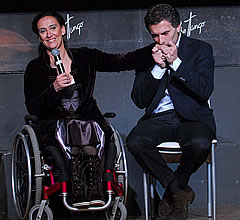
          Buenos Aires--The results sounded more like a low-keyed basketball game than a soccer match, yet when the votes were counted here recently (June 24th) Mauricio Macri outscored the Federal Government’s Minister of Education, Daniel Filmus, by 60 to 40.      Macri, a youngish millionaire, son of a controversial business magnate who had stacked up fame and glory making Boca Argentina's most winning soccer team, not only captured Buenos Aires: he appeared to kick off what looks like a no-holds-barred race for the country’s presidency in the approaching October 26th struggle for the "Pink House."      His victory also suggests the emergence of business as active protagonist in hemispheric politics at a time when “progressive” or “populist” programs here and elsewhere in Latin America seem to be running out of steam.     Macri—whose family has interests in a vast array of business operations, that run from the “Sevel” automobile manufacturing company to the “Sol” highway building firm and “Intron,” the company that takes pictures of traffic infringements—has made no secret of his intention to re-install neo-conservative politics and economics at stage center.       Due to sustained 8% economic growth over the past four years, and vigorous defense of human rights, the government of Peronist Néstor Kirchner has enjoyed so great popularity that up to now it has not had to deal with any sizeable opposition. Yet lately a number of warning lights have appeared to cloud the government's popularity: incipient inflation, a potentially explosive energy crisis, political in-fighting and the particular personal style of leadership used by President Kirchner.      Not only has Macri’s victory tossed firewood to kindle the country’s political heat: in the southern province of Tierra del Fuego a center-leftist candidate, Fabiana Ríos, snatched an unexpected victory for the governorship. Suddenly, Kirchner’s rather loose knit forces appear faced with a two pronged opposition: from the right under Macri’s inspiration and from the center-left with a series of dissidents disenchanted with Kirchner.      Even before running for mayor of this mushrooming urban metropolis, Macri had considered the possibility of participating in the presidential race. That interest was clearly expressed barely a day after his victory: "We are going to take our time to study what we can do to consolidate national politics," he confessed in an interview in "Clarín" on June 26. Assuming his role as de facto opposition leader, he also explained that a victory of conservative forces in the presidential elections is on the books if diverse opposition candidates force a run-off in which they could then join forces.          Macri constructed his victory brick by brick with solid marketing techniques and a "non-ideological" approach to public affairs, appealing to large numbers of “porteño” voters tired of long winded politicians prone to more promises than solutions. His slogan was "less talk and more action." Boosted by his charismatic appeal, he went from neighborhood to neighborhood explaining his proposed policies, accompanied everywhere by his also charismatic vice-mayor candidate, Gabriela Michetti, confined to a wheel chair due to an accident.             His supporters covered the city with posters reading “Buenos Aires is going to be great” and “more free education” “more free medical care,” plus others related to garbage collection and public safety.  Although he was conveniently unclear on the specifics of these programs, his social-economic position and his clear inclination for neo-conservative economics suggest that when he takes office in December he will inaugurate a “rationalization” program aimed at dealing with featherbedding and making public services more efficient.  That appeared to be the essence of slogans such as a return to “the work ethic” (la cultura de trabajo), which most interpret as a campaign against feather-bedding and the introduction of market-made clippers to whip social programs down to size. Trade unions, leftist political groups and diverse social forces are already holding their breath and preparing for what is presumed to be an inevitable confrontation with Macri takes office next December. However, others believe the new mayor may lean towards the lenient side to forge alliances aimed at eventually capturing the “Pink House.” The generally pro-government “Página 12” ventured the following analysis: time will tell whether Macri’s administration becomes “the stereotype of a rightwing leader or whether his common sense or the limits placed on him by society lead him elsewhere.” There is a sort of unwritten rule in Argentina and Latin America under which the rightwing—which controls the basic resorts of power—must assume progressive postures in order to get into power. Once elected, however, they respond to the pressure exerted by foreign investors, powerful local interests, the Catholic Church and the military establishment.  This would appear to explain the course of events in neighboring Uruguay and Brazil, where in spite of progressive rhetoric no measures have been taken to substantially alter the economic status quo. The exceptions in the present context appear to be Venezuela and Bolivia, where the State is assuming an increasingly important role—especially in the field of energy and natural resources. During the Cold War the rightwing was backed up by Washington’s anti-communist policies and managed to get political power by means of military coups. U.S. policy has subsequently taken a clearly business bent and this is being reflected increasingly through the appearance of business figures on the scene to challenge the progressive governments, usually un-experienced in administration. In Argentina during the 90’s Peronist Carlos Menem got into power with populist slogans, but once installed he re-directed policies towards openly neo-conservative targets—selling off State owned companies, an artificial one to one exchange rate, etc. Across the Andes mountain chain, Chilean millionaire Sebastián Piñera, has said “adios” to followers of former dictator Pinochet and now represents an increasingly potent rightwing alternative to Socialist President Michelle Bachelet. One of the more picturesque examples of the businessman made politician is Ecuador’s wealthy Alvaro Noboa, who was three time presidential candidate and self-declared champion against corruption. In the country’s last presidential election he won the first round against left leaning Rafael Correa but lost in the run-off.  The problem neo-conservatives face is how to introduce modern market economics in societies suffering from age-long structural deficiencies and simultaneously deal with the difficulties confronted by vast sectors of the population forced to eek out an existence under conditions of extreme poverty, marginalization and lack of education. The neo-conservative formula is based on pumping up exports and giving tax and other incentives to foreign investors. This produces the appearance of prosperity in reduced sectors of society but the “drip down” is insufficient to significantly alter the situation of the majority. It also seriously encroaches on local cultural traditions and endangers natural resources, according to those who question the neo-conservative model of development. 


¡Bienvenidos a Buenos Aires Jaquemate Press!

   Estimado lector: queremos saber tu opinión sobre las entrevistas, artículos, cuentos y otras notas que publicamos en esta revista. Pueden efectuar tus comentarios en el espacio correspondiente luego de las notas, o mediante e-mail:   hopalfred@gmail.com


Hugo Alcaraz:“Como dijo José Hernández, hay que cantar opinando…”

“El indio y el gaucho fueron víctimas del mismo proceso de devastaciónpara un proyecto de nación ajena.” --Gerardo Vallejo— 


      Es un Domingo, 10 de la mañana, el mate amargo  estimula el paladar y en los estudios de Radio Nacional, en una de las más conocidas calles céntricas de Buenos Aires, Hugo Alcaraz parece un escrutiñador perdido entre un montón de papeles. De golpe aparece la luz roja en la cabina del sonido y Hugo pone los audífonos, agarra el micrófono y escucha un oyente que opina que hay que guardar contra la comercialización del folklore.


--¿Cómo? ¡Licenciado en sociología y locutor de radio!


            Es el periodista, pues ha terminado el programa de FM 98,7.


                        --Sí, yo soy sociólogo, periodista y locutor nacional. Hace 32 años que estoy trabajando en la radio privada y estatal. Mi tema fuerte es el Folklore argentino y latinoamericano. Pero como sociólogo yo engancho el tema del Folklore con la problemática de la identidad. Me preocupa porque me parece que el argentino—especialmente aquellos ciudadanos que viven en las grandes ciudades—Buenos Aires, Gran Buenos Aires, Rosario, Córdoba—porque su identidad no está muy clara.


--¿Por qué?  


--Porque  ha habido un proceso de “dis-culturalización” mediante los diversos gobiernos que hemos tenido desde 1810 en la cual se le ha negado a la gente su cultura originaria. Los gobiernos siempre han mirado de Buenos Aires hacia fuera. Nunca desde Buenos Aires hacia adentro. Pero se ha podido conservar la identidad cultural en el interior del país, en las ciudades pequeñas, en las provincias con mucha tradición cultural, incluso en las provincias bi-lingues como Corrientes o Santiago del Estero (donde hay 14 departamentos en los cuales se habla el quechua).


--¿Se encuentra el país en una etapa de recuperación de su identidad cultural?


--Yo creo que muy lentamente estamos recuperando nuestra identidad, por supuesto también con algunos pasos hacia atrás. Lamentablemente, desde lo comercial se confunde a la gente diciendo, por ejemplo, que algunos de los artistas de Folklore que se presentan en los festivales son artistas auténticos, o que hace Folklore auténtico cuando en realidad lo que hacen es música melódica.


--¿Melódica?


--Sí. Sucede que aquí en Argentina y también en todas partes de América Latina existe un género de música que se llama melódica. Aquí ha sido prácticamente borrado del mapa y en su reemplazo se ha impuesto alguna manifestación seudo-folklórica. En realidad, no es más que música melódica combinada con algunos ritmos que parecen ser de origen folklórico.


--¿En su opinión cuál es la causa de esta situación?


--Supongo que se debe a la comercialización. Hace poco tiempo, digamos hace unos 10 o 15 años, las únicas grabadoras de discos aquí en Argentina eran casi todas empresas multinacionales. Había muy pocas empresas nacionales  u las que existían eran más bien filiales de multinacionales, como Phillips, CBS Columbia, etc. ¿Cuál era la idea de esas empresas? Traer música ya amortizada desde sus propios países y si intentaban favorecer el folklore nacional era mediante material de corte comercial, sin un contenido folklórico auténtico.


--¿Cómo se puede hacer para evitar este proceso de comercialización?


--Es muy difícil, muy difícil. Como habrá escuchado en el programa, los grandes festivales de folklore están contaminados y muchas veces digitados por las grandes empresas multinacionales de grabación de discos, o en algunos casos por algunas empresas nacionales fuertes. Es muy difícil luchar contra eso. Sin embargo, tenemos por ejemplo en nuestra Radio Nacional FM 98,7 el programa “radio nacional folklórica” en la cual se da lugar a todas las manifestaciones de folklore auténtico. Entonces, una forma de luchar a favor de la cultura nacional sería a través de todos los medios de difusión del estado, la radio nacional, las radios en las municipalidades, las radios en las universidades en diferentes partes del país. Sería importante que la Secretaría de Cultura ponga en movimiento un sello discográfico, como se ha hecho en la provincia de Buenos Aires. Pero eso hay que hacer a nivel nacional y con el apoyo de la Secretaría de Cultura, editando a los artistas de calidad cuyos discos no tengan un contenido comercial. De todos modos, durante los últimos años ha habido un surgimiento—siempre algo ambiguo, claro, pero un re-surgimiento de la cultura nacional.


--¿Cómo influye el folklore en la formación de la identidad nacional?


--La palabra folklore significa saber popular y ese saber está presente no sólo en la música, sino en cuentos, supersticiones, leyendas, comidas y actividades tradicionales. Aquí en la Radio Nacional tratamos de dar cabida en nuestra programación a todas estas expresiones de cultura popular. La música folklórica tiene  además una característica especial: refleja lo que pasa en todo el país. Representa frecuentemente un testimonio que sintetiza lo que sucede a muchas personas en diferentes zonas del país. Lo dijo José Fernández y lo repetía Atahualpa Yupanqui: “hay que cantar opinando.” Es decir, dando una opinión sobre la realidad, sobre lo que pasa a los argentinos que habitan las zonas más postergadas del país. El folklore comercial no lo hace—habla del amor y temas de moda pero no de la realidad.


--Es cierto.


--A lo largo de la historia del folklore ha habido grandes poetas que han escrito grandes poemas con contenido social, por ejemplo, Yupanqui y más recientemente el también fallecido Armando Tejado Gómez, Hamelt Quintano, Jaime Dávalos, Esteban Agüero…grandes poetas que han escrito poesía en el más puro sentido de la palabra, canciones con un hondo sentido popular.


--¿Es la poesía un rasgo importante de la cultura popular?


--En las diversas regiones del país la poesía es fuerte, aunque para algunos no es tratada como corresponde. En realidad, es algo así como dijo Antón Chejov “pintar una aldea y pintar el mundo.” Es decir, en la realidad de un pueblo uno puede comprender la realidad del país.


--¿Cómo son sus programas en Radio Nacional?


--En este momento tengo dos programas: “Todas las voces, todas,” que toma su nombre de una frase de Armando Tejada Gómez, “todas las voces, todas, todas las manos todas…” que está abierta para todas las voces de América y se difunde todos los jueves desde las 22 hasta medianoche. Tengo una gran colección de música folklórica y popular y por lo general cada programa difunde la música de un país, aunque también hay información sobre la economía, la política y la situación social. Luego, los domingos de 10 a 12 horas tratamos de dar lugar a autores, compositores y artistas que no están en la corriente comercial. No aceptamos propuestas comerciales. Aquí rescatamos lo que tiene que ver con nuestra cultura, con la identidad nacional, con los testimonios, con los artistas, hay notas, entrevistas, intercambio con los oyentes. 


            --¿Se difunden los programas por todo el país?


            --Lamentablemente, por ahora se difunde únicamente en FM y por lo tanto el alcance está limitado a capital federal y algunas zonas de la provincia. Es increíble, pero tampoco estamos en la web. Espero que dentro de poco sea posible armar un espacio en Internet para que nuestros programas puedan llegar a personas en todo el país. De todos modos, me encantaría que las personas que tengan alguna duda o inquietud se pongan en contacto con nosotros.

El programa de folklore de Hugo Alcaraz se difunde por Radio Nacional, FM 98,7 los domingos de 10 a 12 horas y “todas las voces, todas” los jueves de las 22 a 12 horas.


Contactos: e-mail: hugoalcaraz@gmail.com

Teléfonos 4394-1003 y

4999-0987 (solo en el horario de los programas)


Human Rights Watchs Asks President George Bush to Shutdown of Guatanamo Bay Prison

     Human Rights Watch wrote President George Bush  June 22, 2007, asking him to shut down the Guantanamo Bay detention center in Cuba, where  approximately 375 men are being held without charge. 

     In the appeal the HWR points out the the military commissions--which allow the use of evidence obtained through cruel and inhuman interrogation techniques, and disregard basic confrontation rights that are written into the US Constitution--were first announced in November 2001 and have convicted just one person – David Hicks – by guilty plea. Hicks was given a nine-month sentence and returned to his home in Australia." (That is, the only prisoner to be convicted, tried and sentenced was a non-arabic detainee.)

    "Dear Mr. George Bush," the letter begins, "We were pleased to hear the White House reiterate yesterday its desire to close the Guantanamo Bay detention center. In the words of former Secretary of State Colin Powell, we urge you to do so “not tomorrow, but this afternoon.”  
 
    The letter asserts that the failure to close the jail  "has directly undermined US efforts to end terrorism. The loss of moral high ground caused by the ongoing detentions at Guantanamo has been a boon to terrorist recruitment. It weakens public cooperation with law-enforcement efforts, which is far more important for cracking terrorist conspiracies than squeezing bits of information from suspects in the interrogation room years after they were captured. As Colin Powell aptly stated, Guantanamo is 'doing far more damage than any good.'  
 
   "We are concerned, however, by your spokesperson’s suggestion that certain steps need to be taken before the camp’s closure, including setting up military commissions in the United States, and repatriating those who have been cleared for release. Neither of these is a legitimate reason for keeping open a detention center that is undermining the important effort to curb terrorism."  
 
    "US federal courts have proven far better equipped than the military commissions to fairly try and convict those persons who have committed terrorist acts. In the past five-and-a half years, the federal courts have successfully prosecuted and convicted hundreds of persons for terrorist offenses, including dozens for terrorist acts committed abroad. By comparison, the military commissions, which were first announced in November 2001, have convicted just one person – David Hicks – by guilty plea. Hicks was given a nine-month sentence and returned to his home in Australia."  
 
   It is also highly likely that military commissions – which allow the use of evidence obtained through cruel and inhuman interrogation techniques, and disregard basic confrontation rights that are written into the US Constitution – will face constitutional hurdles if carried out in the United States. Rather than going through the costly and likely futile effort of setting up an entirely new judicial system, the US government should try detainees accused of criminal offenses in the system that already has proven to work.  
 
     Moreover, there is no reason why the detainees who have already been cleared for release or transfer cannot be repatriated from the United States, rather than from Guantanamo. As you are well aware, some of the detainees, including more than a dozen Chinese Uighurs, have been cleared for release for years now, but remain at Guantanamo Bay. The United States rightly concluded that the Uighurs cannot be forcibly returned to China due to their credible fear that they will be tortured there, and no third-party country has yet been willing to accept them. There is no justification for postponing the closure of Guantanamo until after the United States finds a solution to a problem that it has been struggling with for years.  
 
    In sum, we urge you to close Guantanamo, quickly, and ensure that those currently detained there are provided their basic rights as required under international law. In so doing, you will put an end to what has become a blot on America’s reputation around the world, and help restore the moral authority needed to effectively fight terrorism.  

Sincerely,  
 
Kenneth Roth  
Executive Director  


Metáforas bellas e inquietantes insertadas en cuerpos cargadas de partituras de libertad...

Metáforas bellas e inquietantes insertadas en cuerpos cargadas de partituras de libertad...

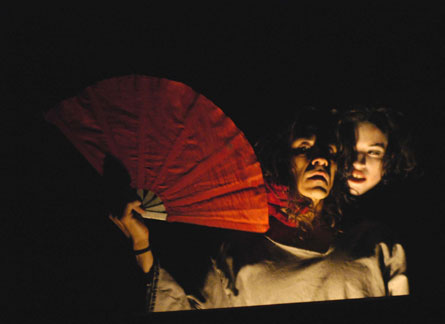
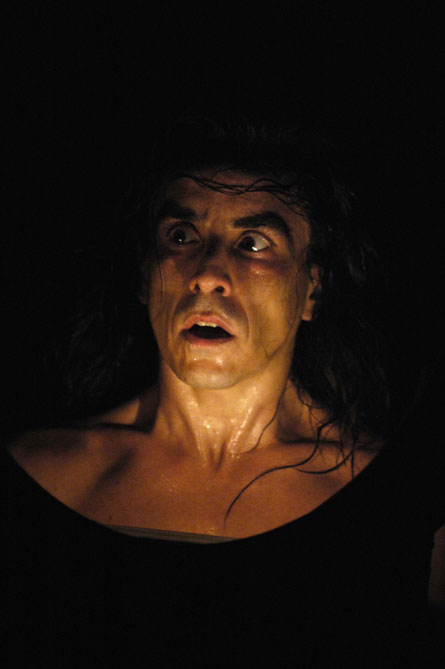
    En un sueño una imagen se fusiona con otra sin tener que limitarse a ninguna estructura pre-establecida. Luego, al despertarse, uno intenta unir y poner algún sentido a las secuencias mediante la narración y la lógica del lenguaje. Algo así sucede con el espectáculo  "Del otro lado del mar" de Omar Pacheco.

   Los cuerpos bailan con cada hueso y músculo, hasta con los ojos, entre luz, sombra e incienso, gozando de una libertad bella, excepcional, única. El punto de partida es ritual, ceremonial, expresada a través de un increíble ir y venir de  figuras oníricas que aparecen, disaparecen y se transforman en espacios siempre cambiantes, arriba, abajo, a un costado o casi en las narices de los espectadores, con inquietante velocidad.

     "En esta búsqueda," dice Omar, "se vincula al cine, en su caloración del campo escénico, costruyendo multiplicidad de espacios en tiempos reducidos irreales e inhabituales en el teatro, y en el uso de la fragmentación, el cambio de planos y de ritmos como recursos narrativos."


Del otro lado del mar de Omar Pacheco

Del otro lado del mar de Omar Pacheco

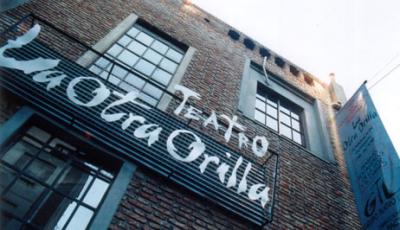
    "El futuro no es más que mi próximo deseo." La frase rebota contra las paredes en La otra orilla. Inquieta. Conmueve. Povoca. Pero en el espectáculo de Omar Pacheco las palabras constituyen apenas un condimento. "Mi propuesta busca instalar al espectador en un espacio inhabitual," dice el director, "sin definición temporal, para vulnerar su resistencia intelectual y apuntar directamente a la percepción y a sus sentidos."

Teatro la otra orilla de Omar Pacheco

Teatro la otra orilla de Omar Pacheco

 Gral. Urquiza 124, Buenos Aires, Argentina.

e-mail: grupoteatrolibre@laotraorillateatro.com.ar     /    centrodeformacion@laotraorillateatro.com.ar 

Web:   http://laotraorillateatro.com.ar


On how making a lot of dough doesn't mean too much for the poor...

On how making a lot of dough doesn't mean too much for the poor...

     Argentina has had Chinese style GNP growth patterns over the past few years, over 8 percent while high rise luxurious apartment buildings are growing like mushrooms in well-to-do neighborhoods and you can hear the sound of drills and hammers and smell freshly grilled  meat near construction sites.

    And, well, if you are an optimist, or a government supporter, you might blow up your chest and assert, as the Ministry of Economy did recently, that over the past four years unemployment dropped from 20.4% to 9.8%; poverty (incomes of 912 pesos or less) from 54% to 26.9% and abject misery (incomes less than $428)  from 27.7% to 8.7%.

     Looking a bit deeper, though, you might discover that 57% of today's unemployed come from sectors that could be loosely be defined as "middle class." What's the angle? Well, most of the new jobs are menial and bad paying: lower class economic groups accept them; the middle class doesn't.

       The middle class complain but are able to say no to a job paying $800 pesos, for example, but that's not the case of the poor: "They have to accept any job offered them and at whatever wage," says Julio Godio, Director of the Instituto del Mundo del Trabajo in Clarín June 19th, "because they have not other option. That is the real situation in Argentina today."

Cosas de capitalismo a ultranza...

Cosas de capitalismo a ultranza...

     En este mundo de los super negocios una táctica cada vez más común es la sobrevaluación de activos en detrimento de los pequeños (y no tan pequeños) inversores.

    º El más conocido: a fines de 2001 Enron, una empresa energética de E.E.U.U., admitió haber declarado U$S586 millones de más en beneficios desde 1997. Hubo un juicio y la empresa quebró con deudas por U$S32.000 millones. 

    º Alrededor de un año después WorldCom, también de EE.UU, destacado líder en telecomunicaciones, logró el record de quiebras con fraude: en 2002 admitió haber inflado su balance en U$S 3.800 millones. Luego del juicio, su valor bajó de U$S 115.000 a U$S 1.000 millones.

     º  La empresa italiana Parmalat, dedicada a la comercialización de productos lácteos, comenzó a tener dificultades en 2003 cuando se informó que hubo una sobrevaluación de sus activos de U$S 5.000 millones. El juicio demostró deudas por U$S 14.000 millones de euros.


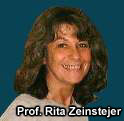
Rita Zeinstejer: Blogging Gets People Together

Rita Zeinstejer: Blogging Gets People Together


     Prof. Rita Zeinstejer, an EFL teacher at the Asociacion Rosarina de Cultura Inglesa  in Rosario,  eases herself into a chair to relax after an exhausting lecture on blogging. A journalist approaches her gingerly, tape recorder in hand, a pen playing between his fingers and an inquisitive twitch twittering on his lips.

"Pardon me...are you Rita Zeinstejer?"

"Yes..."

"Well, I wonder if we could chat a bit about your work."

"Certainly."

"I understand you use blogging to teach English. Could you explain?

"I am proud to belong to a community of practice that is called "Webheads in Action," which is made up of a group of teachers from all over the world who get together regularly to talk about different topics connected with Computer Mediated Communication (CMC) and ICT, that is, Information and Communication Technology, the use of the computer for language learners. What makes this community exciting is that all members interact, ask and answer questions in a very generous way."

"I see...but how did you get into blogging?"

"I learned about blogging working with this group and owe practically everything I know to them. "

"What about your own blog?"

"Actually, I have several but the one I created for my students has to do with teenage topics. They talk about what they like to do during English classes, their outside activities; now they are talking about what happened in London. They know that they can say what comes to mind and share their ideas with others. That way they learn sociology and language at the same time, applying their language to meaningful situations. A blog is an interactive means to communicate with other bloggers, as threaded discussion is open: students can post their comments in other blogger' sites, they can share links, they can get experts to visit their blogs and leave their comments. This interaction allows for critical thinking, increases students' interest, and fosters ownership and learning by receiving input and insight from others."

"Your other blogs?"

"I have also created a blog for a group of teachers in Rosario doing research on the teaching of English by computer. We meet once a month and have been working on voice messages, an innovative tool that allows the recording, sending and receipt of short vocal messages. This is a new and very promising feature of computer learning."

"Have you noticed much resistance?"

"From teachers, mainly. It's easy to coax students to blog but teachers are much more reluctant."

"Why?"

"Well, on the one hand it is a time consuming activity and on the other teachers are reluctant to spend time on something for which they lack adequate skill."

"What is the biggest advantage of blogging?"

"Woh!"

Rita thought for a minute, while the interviewer allowed his imagination to stretch towards some unknown point.

"Perhaps you could mention the possibility of getting people from all over the world to communicate, to find new friends. What is the purpose of learning English if you can't communicate? Teachers tend to focus their attention on grammar, vocabulary, phonetics and forget that the main use of language is to communicate with others."

"A sort of globalized communication forum."

It seemed time to end the conversation and click into a blog, to explore and find out what the world of blogging is really about. But before the silver haired man clicked off his recorder, Rita Zeinstejer looked up saying:

"You know what? I'm a bit of a black sheep. While others spend their time correcting mistakes, I try to help my students to achieve, to get their messages through." 

It's easy to contact Rita. Just put her name on an internet search engine. Her own page is 

http://www.zeinstejer.com  
Email: rita@zeinstejer.com 

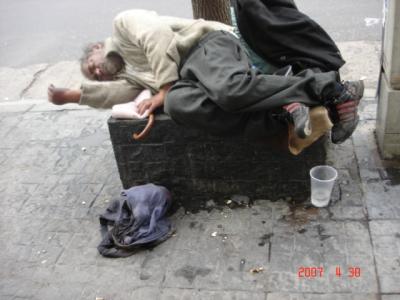
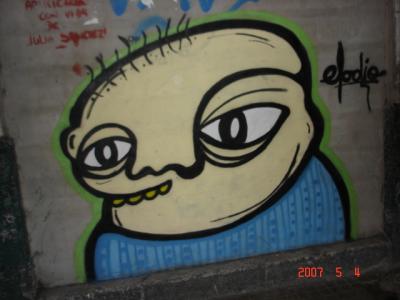
Habla la calle y dice lo que dice desde el corazón...

La calle habla, respira, canta y nosotros la escuchamos, sabiendo que las paredes siempre tienen alma.  
 
º Con presos políticos no hay  
democracia.  
 
º Que la torta se da vuelta, que  
los ricos coman mierda, mierda...  
 
º Te están Kagando otra vez.  
 
º No violencia es fuerza.  
 
º Pucho y Totona se aman para  
siempre.  
 
º Pobreza es violencia, la  
desigualdad general violencia.  
 
º Con presos políticos no hay  
respeto a los derechos humanos.  
 
º Racing te quiero  
 
° Si el amor se cae, todo alrededor  
se cae.  
 
° Sos mi chica ideal.  
 
° Justicia por los pibes de  
cromañong.  
 
° Buenos Aires tiene Lepra.  
 
º Te quiero y amo  
 
º Sos la razón de mi vida  
 
º Las urnas diluyen lo que la lucha  
construye  
 
º Fuego al estado y al capital  
 
º Monos en bolas  
 
º Un solo puño contra la represión  
 
 
º Ema y Jésica  
 
º Te quiero y te amo  
 
º Dale globo  
 
º Sólo el amor salvará este mundo  
 
º Here, there and everywhere  
 
º¡Saquen sus rosarios de nuestros ovarios!  
 
º Liberación nacional y poder  
popular.  
 
º ¡Muerte al estado!  
 
º ¡Revolución ya!  
 
º ¡Ni Díos, ni alma!  
 
º Todo estado es represor.  
 
º ¡Despenalización del aborto ya!  
 
º Aborto libre y gratuito  
 
º María: ¡Te amo, te adoro!  
 
º ¡No al IMF! ¡La patría no se negocia!  
 
º Mucha polícia, poca diversión.  
 
º Aumento salarial.  
 
º ¡Dale globo!  
 
º ¿Qué les pasa?  
 
º ¡Nunca más 1976!  
 
º ¡No lea más Clarín!  
 
º Tome tang  
 
º Lori: ¡Te amo!  
 
º ¡Usá forro!  
 
º ¡Revolución!  
 
º Sí al voto optativo!  
 
º ¡Por la derrota del imperialismo!  
 
º ¿Díos? ¿Està allì?  
 
º ¡Basta de persecución a Esteche!  
 
º Las borrachas de San Telmo  
 
º Te quiero con ternura,  
Te quiero con locura,  
Pero más te quiero  
Con una pieza oscura.  
 
º Algunos nacen con suerte, otros  
en Argentina.  
 
º El cielo, las estrellas en el  
campo, y las espinas en el  
medio de mi pecho.  
 
º ¡Fuera yankees de Irak!  
 
º ¡La abuela no miente!  
 
º ¡A Diego lo mataron la policía!  
 
º El cielo nubla cuando no te veo.  
 
º ¡Dicen que llueve y la prensa  
nos mea encima!  
 
º Andrea: ¡Te amo!  
 
º ¡Patria sí! ¡IMF no!  
 
º Gastón: ¡vas a ser mío!  
 
º Pibes chorros  
 
º Haga vida sana: fume mariguana  
 
º ¡Comunismo!  
 
º A veces hay que mentir,  
A veces ha que decir la verdad.  
Otras veces hay que matar,  
perdonar, y otras veces hay que  
olvidar y reir.  
 
º ¡Sos mi único heroe en este lío!  
 
º No a la ley federal de educación  
 
º ¡Libertad a los presos por luchar!  
 
º Respeten los derechos de los niños a expresarse  
 
º Tu poder es tu conciencia  
 
º Biblioteca popular de Barracas:  
comisión por la memoria, la  
verdad y la justicia  
 
º Robo putas  
 
º ¡Patría, pan y poder al pueblo!


Never to Old to Love

   After living 111 years Tomoji Tanabe doesn't have too many hairs left. He's the world's oldest living man, but there's a woman, also Japanese, called Yone Minagawa who is 114 and going on 115. We don't know whether they know each other. But just for the fun of it we might imagine the following conversation, maybe on the beach of some vacation resort with a view of one of those famous Japanese volcanoes.

   "Hi there! My name is Tomoji. What's yours?

   "Don't be rude young man. What business is it of yours to know what my name is?

   "Well, I just saw you lying on the sand and, well, I thought you might want to share a bit of small talk with an old fuddy-duddy like me."

   "You fresh little youngster! Go back to where you came from!" 

   "You think I'm young looking? Thanks! I'm 111. How old are you?

   "Women are not supposed to reveal their age."

   "Oh come on! That might be the rule up to 100 but I imagine you must be..."

   "One hundred and fourteen."

   "Woh! Really? This calls for a celebration!"

   "Celebrate what?"

   "Your age, life, love..."

   "I don't go out with men anymore."

   "Why not?"

   "Love used to be a many splendid thing, as the song goes, but I'm beyond all that now."

   "It's never too late to give it a try."

   "Yes it is."

    "Look I had nine wives. The first ran off with a millionaire. The second died of a heart attack. I couldn't get along with the third, fourth and fifth, so I went to the courts. The sixth, seventh and eighth  were  were killed when the Americans dropped those atomic bombs on us and the nineth died happily of old age."

    "I'm sorry."

    "It was horrible, I mean the bombs."

    "I know. I lost three of my ex-husbands too in the mushroom."

   "You see, we've got a lot to talk about...and a lot to celebrate...after all, look at the sad state of affairs in the world and yet here we are...."

   "I don't want to talk about it. I just want to look at the moon and eat fish."

   "That's great! My favorite passtime is reciting poems in the moonlight...Come on! Be a good sport! Why don't we get together tonight? I've got some sea weed and baby shark at my place...and a magnificent view of the moon from my balcony."

   "O.K. I give up. But no funny business."

   "I think I'm falling in love Yone."

   "With the moon?"

   "No! With you!"

   "Silly man! We can love the years we've lived but nothing more."

  "They say love is like wine: the more aged, the better."

  Yone is moved. She bends slowly towards Tomoji and kisses him on his chapped lips. They embrace there on the sand. The sun is setting. The moon has not come out from hiding yet.  Their bodies remain tangled together on the beach, motionless but in peace as the first mysterious beams of the moon caress their remains.

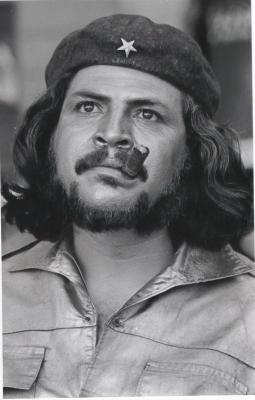
Rubén Pérez: Un Che que entra en la piel del único Che.

Rubén Pérez: Un Che que entra en la piel del único Che.

“Busco las pequeñas cosas para emocionar al espectador para mostrar que mientras debatimos, e incluso mientras nuestros países se van a la ruina, la vida continúa…” --Abderrahmane Sissako—

Buenos Aires no deja de sorprender. Bolsas de basura en las esquinas. Hombres, mujeres y niños pasando las manos entre botellas rotas, pañales descartados y fruta podrida, a la espera de encontrar un pedazo de pizza o materiales para revender. Señores insertados en trajes de última moda, al mando de coches de última moda…y un hombre que aparenta ser la imagen y semejanza de Ernesto Che Guevara. El periodista lo sorprende preparando un habano.

--¿Una pregunta, señor, quiero saber si usted es…?

--¿Si soy Che Guevara?

--¡Me robaste la pregunta!

--Los revolucionarios no roban.

--Sí, sí, entiendo, pero…¿es usted el Che?

--Soy UN che por nacimiento, convicciones y también por cojones.

--¿Cojones? ¿Es usted Español?

--¡No! Estuve en España con mi espectáculo sobre el Che. Ahora he vuelto a Argentina para presentarlo en el Glow Concert Bar de la calle Corrientes.

--Entonces, usted es actor.

--Sí, solo un actor. No podría ser aquel ser único e irrepetible, que dentro de esa pequeña palabra se transformara en el símbolo de las luchas contra todas las injusticias en cualquier lugar del mundo. No soy ni la sombra de ese Che.

--¿En la conciencia de los revolucionarios como usted, existe la re-encarnación?

--No, pues después de la muerte no hay nada.

--Si usted es una réplica, favor de explicar un poco sobre su propio pasado y cómo llegaste a construir éste che.

--Insisto, lo único que soy es un simple actor, que moldea su herramienta de trabajo (mi cuerpo) según las circunstancias que necesite el personaje, en este caso uno que por su peso específico genera un mundo de sensaciones que a mi como estudiante de los comportamientos humanos siempre me causo gran interés, lo cual derivó en investigación y construcción al mismo tiempo, hasta el presente.

--¿Cuales son algunas de las preguntas más frecuentes que la gente le pregunta cuando trabaja en la calle?

-- Si al che lo traicionaron, si pertenezco a alguna organización, o si conozco a Fidel, son algunas que recuerdo en este momento.

--¿Puede contarnos un poco sobre su formación en el arte teatral?

-- Soy un actor nacido con la necesidad de comunicar y abonado a la creencia de realizar, es decir, mi método es ‘¡lo hacemos!’

--¿Cómo se hace para entrar en la piel de un personaje como Ernesto che Guevara?

--Aceptando de antemano los riesgos emocionales.

--¿Cómo ha sido su labor de investigación para la elaboración de este espectáculo?

-- Como decía anteriormente, la necesidad de hacer sumados a la inquietud natural, terminan en una propuesta sensitiva. Yo expongo el trabajo que logro con las herramientas en el tiempo y lugar que dispongo. No sé muy bien cual es el formato pues no tengo anteriores referencias, solo pienso en despertar las sensibilidades del que puede ver ,oír, oler, tocar y gustar. Recién después de este hecho podemos empezar a hablar de investigación; antes es búsqueda.

--¿Los detalles sobre la puesta en el glow concert bar?

--Los detalles son un secreto de estado, solo puedo adelantarle que serán revolucionarios. De todos modos, estaré en el Glow Concert Bar de la calle Corrientes a partir del día 10 de agosto, todos los jueves y viernes, a las 20:00 horas.

Contactos y reservas: Tel: 4942 4453.

Web: http://www.elchevive.org
e-mail: psproducciones@hotmail.com

Dos escritores muertos pero geniales se encuentran en Buenos Aires

      "Fuera de Europa es en la Argentina donde Franz Kafka encontró en Jorge Luis Borges a su espiritu hermano, el primer difusor de sus trabajos en el mundo de habla hispana..." dice Josef Cermak, miembro fundador de la Sociedad Kafka en Praga.

     Entonces, organizar un seminario sobre los dos escritores tiene una lógica de hierro. "Dos escritores indisolublemente unidos a sus ciudades," dice el programa de "Praga en Buenos Aires, de Kafka a Borges, organizado por el Gobierno autónomo (casi) de la ciudad de Buenos Aires y la Fundación Internacional Jorge Luís Borges, junto con la Sociedad y Centro Franz Kafka de Praga.

     El programa:

     19 de junio:

10:00 horas   inscripción y apertura;

12:00 horas  Mesa con Rolando Costa Picazo, "Buenos Aires en la poesía de Borges;" Josef Cermak: "Praga en el tiempo y en la obra de Franz Kafka;"

14:30 horas, Mesa 2, Petra Nichtburgerova: "Walter Benjamin--una interpretación judia de Franz Kafka." Susana Celia: "Los caminos de la ficción en Borges y Kafka."

16:30 horas, Mesa 3, Radek Vesely: "El cícculo de Max Brod y Kafka." Santiago Kovadioff: "Presencia de lo judio en Kafka y Borges."

     20 de junio:

10:00 horas. Documental: "Borges para millones" de R Wulicher. Documental: "El Sr. K" de T. Bauer;

12:00 horas. Mesa 4. Amost Lustig: "La diferencia entre vida y literatura." María Kodama: "Entorno a Borges." Jan Jindra: "Los viajes de Kafka;"

14:30 horas. Mesa 5. Alina Diaconú: "La noción del 'doble' en Borges y Kafka." Mariana Houskova: "Borges en traducción."

     21 de junio:

10:00 horas. Documental: "La metamorfosis" de A. Worcel. Documental: "Los libros y la noche" de T. Bauer;

12:00 horas. Mesa 7. Santiago Sylvester: "Borges-Kafka o Pierre Menard lector de la Carta al padre;" Josef Cermak: "Kafka como 'enemigo' del Estado;"

15:00 horas. Cierre y Coro Trilice.


Un rayo de luz sobre una sombra

Un rayo de luz sobre una sombra

    Le parecía muy raro lo que pasó ese día. Volvía una y otra vez sobre el suceso, días, meses y años después, sin entender nada. ¿Debemos entender todo? No. Pero somos curiosos, pensamos, buscamos el por qué de las cosas, no aparece la explicación,  cerramos los ojos, rogamos, fumamos, tomamos café, conñac, y luchamos contra nuestra ignorancia.

     La sombra estaba allí, extendiéndose sobre la tierra, su existencia no estaba en duda, la tarde la hacía cada vez más larga y nada perturbaba el silencio pulcro e inpenetrable que imponía su sello en el lugar. Sentado sobre un tronco, Milo Saenz descansaba, el serrucho sobre sus piernas. Con una mano secaba el sudor que corría de su frente.

      Mantenía los ojos clavados en la sombra del pino, erguido, sólo y único en medio del bosque de cerezas. Pensaba en un país lejano, imaginario, poblado de hombres y mujeres enamorados que cantaban en todos los ámbitos: en la cocina, en la calle, en las oficinas,en los baños, en los basurales. Comenzaba a imaginar rostros, olores, palabras imposibles de pronunciar, cantos, una mano suavemente húmeda que aquietaba la tensión en su piel. Abrió los ojos sobreexitado y giró la vista hasta captar la imagen de la sombra. ¡Estaba partida por un rayo!

     Huyó aterrorizado pero en su apuro hizo un mal movimiento y se cayó sobre el borde de la sombra. Intentaba levantarse pero la pierna derecha no respondía. "¡Mierda!" Preso del espanto, pidió socorro. En vano porque el silencio cubría todo. El dolor de la pierna rota le hundía en un sin fin de especulaciones. ¿Cómo volver? El libre movimiento del cuerpo es hermoso, es la ilusión de la libertad, pero ahora era prisonero de su propio cuerpo. La palabra, esa invención humana tan antigúa como bella, tan útil para expresar los sentimientos, para organizar las tareas, para enseñar a los niños, no le servía para nada. Sus gritos se perdían en el silencio más absoluta que le rodeaba. 

     Habrá sido por el particular ángulo del sol detrás de las montañas cercanas, o por algún motivo ajeno a nuestra comprensión, no sabemos, pero el rayo se agrandaba lentamente hasta iluminar las piernas del hombre. Es cierto. Hay quien identifica la luz con alguna fuerza divina, la sombra con los poderes del mal. Nosotros no sabemos, nos mantenemos al márgin de la disputa. Claro está, con la inquietud en la conciencia. 

    Un repetino soplo de viento cálido despertó el hombre de su ensueño. Se puso de pie, como si no hubiese lastimado la pierna, agarró el serrucho con fuerza y corría sobre el dibujo que dejaba el rayo. Corría y corría porque el rayo parecía no terminar nunca. Ya cuando el sol hizo un guiño a la luna seguía corriendo. Todos sus sentidos parecían abrirse de par en par. Lloraba, cantaba, sonreía, hablaba, gritaba de puro placer, cortaba las yerbas salvajes al borde del sendero de luz, y seguía su corrida.   

First Annual Jaquemate Writing Contest

First Annual Jaquemate Writing Contest

We are happy to announce the First Annual Jaquematepress Writing Contest, open to original, thoughtful and provocative pen pushers around the world willing to express in prose, poetry and essay what most concerns them in today's topsy-turvy world.
º Essays should not exceed 800 words. They should be original and unpublished  and  demonstrate fresh, clear thinking expressed in superior quality writing.
º Short stories should not exceed 1,500 words and likewise should be original and unpublished. All styles and approaches may be used.
º Up to four short poems or long verse of less than 500 words may be sent, also original and unpublished.
                               The Award
We'll select a winner and a runner-up in each category. The award for the winners will be an interview for publication in "The Buenos Aires Jaque Mate Press" along with the publication of the piece in the magazine.
Both winners and runners-up will receive Jaquematepress certificates of merit.
                                    Entries
will be accepted through October 31. The winners will be announced by November 31. Please send submissions to:
alfshopkins@yahoo.com.ar  Each entry must include author's name, address, phone number, e-mail and a short biography. For any further questions please contact us at alfshopkins@yahoo.com.ar

The Argentimes, a free newspaper that "aspires to give a voice to those who are ignored."

The Argentimes, a free newspaper that "aspires to give a voice to those who are ignored."

 “Time will reveal everything. It is a babbler, and speaks even when not asked.”
                                                                                     --Euripides--

“It’s hard to believe that after only ten (slightly debauched) weeks in Argentina we have launched our first editionof the Argentimes,” say editor-publishers Lucy Cousins and Kristie Robinson. “When we first made our decision to move out here—over cocktails in London a year ago—we never envisaged we would find such enthusiasm and support for our project.”

Lucy is from Australia, Kristie from the United Kingdom. Their journalistic paths crossed in Bolivia, where they also experienced the thrill of setting up an English language paper. Lucy had been doing travel journalism for Condé Nast Traveller Magazine, while Kristie had been free lancing and doing press activity for CAFOD, an international development charity.

“With more and more newspapers falling into fewer and fewer hands, many mainstream papers have become vehicles for consumerism rather than addressing issues of social importance,” twenty seven year old Kristie explains. “In response to this THE ARGENTIMES aspires to vie a voice to thosw sho are ignored by large publications so that their views can be heard, and their stories told.”

The two editors recently met with this reporter in a San Telmo bar to talk about their experiences and expectations. The TV screeched and groaned with a world cup soccer match and the waiter was late to come, but once his he managed to take his eyes off the tube brought some steaming coffee. That served as an “ice” breaker.

“How’s your coffee?”
“Fine, just fine,” said Kristie, who lives nearby. “It’s always fine here.”
“But I image it tastes differently from coffee in London...”
“Perhaps. I love coffee in London. It’s just that it tastes different here, that’s all I can say.”
“Well...let’s go from coffee to ‘The Argentimes,’ which I understand is targeted towards youthful readers.”
“Yes indeed! said Lucy. Kristie and I met in Bolivia three years ago. We were working on an English language newspaper there, a very hands on project. Later, after travelling, we met up again in London.”
“How did the ‘Argentimes’ get started?”
“Well..” Kristie exchanged glances with Lucy and then explained: “we were not exactly dissatisfied with our careers in London. It was just that we felt like cogs in a big machine. And in talking together we realized we didn’t have the kind of job satisfaction we had had in Bolivia, getting out a newspaper from start to finish, involving every aspect, making decisions, not exercising power but having some influence on our readers. So there we were, talking over cocktails in London. Actually, moaning and groaning. That was about a year ago to this day. So we just kind of said: ‘well, we’re not really happy with what we are doing...why not try Latin America.’ The idea just appeared. I don’t really know how. And we thought of Argentina because we’d both been to the country separately and loved it. Furthermore, there wasn’t anything around like what we had in mind. ‘Time Out’, the ‘Buenos Aires Herald’ but nothing in between.”
“So you said: ‘Hey! Let’s set up a newspaper!’”
“That happened about a week after talking about the idea,” Lucy put in, “and just mentioning it around in almost no time we had a graphic designer...things seemed to be charging forward. And then when we came here everything seemed to fall in our laps.”
Kristie took a last sip of coffee and then reaffirmed her companion’s statement. “Yea, that’s right the ball had started rolling and we couldn’t stop it. And free! It’s a free newspaper, backed up by advertisements but free and will remain free.”
“That sounds like a lot of work,” suggested the reporter.
“Quite a lot of work,” said Lucy. “Actually, we didn’t think we would get any ads for our first edition but we did. That was a very good start.”
“You see, we’ve been doing a lot of leg work,” explained Kristie, “contacting people, preparing press releases, having coffee, chatting with people, visiting language schools. We’ve found that people really love the idea, especially young people, not just tourists passing through, but young people...we’ve gotten around 50 e-mail responses, mainly from Argentines saying things like ‘I’m trying to lear English. Where can I get a copy?"
“Do you only print the newspaper or do you also put it online?”
“We always wanted a printed version rather than a wb site,” responded Kristie. “You’ve got endless resources on the net, sites for people who travel through a country, anything you want. But we thought it would be better to offer something tangible to read on a bus, in a bar, something different.”
Lucy arranged her curly bangs while adding: “Of course we will eventually put post it on internet so people from other countries can see it. But what interests us is to have it in printed form, to read it, pass it on to someone else.”
“What kind of feedback have you received after the first edition?”
“It has really been crazy,” was Kristie’s response. “We talk with people and the paper grows, really amazing. People say things like: ‘thank you for coming to Argentina!’”
Lucy: “I received an e-mail from a friend today. He’s in Canada and has a friend who has just returned to Argentina with the Argentimes. I don’t know how that happened. But its fantastic. People love it and its free and enables people to practive English.”
“Can you keep it going just with advertisements?”
“It’s basically young people we want to reach and they respond very well. They want to connect up with each other and that is a way of getting the paper known. If we make it attractive for young people, the rest will follow,” said Lucy.
“But do you think you can keep it free?”
“Certainly,” answered Kristie. “We have tripled our ads between the first and 2nd edition so it is logical to suppose that by the 4th or 5th we might even break even. Our fund raising campaign was also important. We raised enough to sustain the paper for the first few editions. We are not backed by anyone, we have no sponsor, we are independent. We operate for the time being with the money raised in the campaign, plus money from our own pockets. Many of the articles are contributed by Argentines.”
“You don’t pay for the articles you publish?”
“We do have a team consisting of myself (Kristie) and Lucy, a staff writer and two interns and Amy Wallace, from Ireland, who has been an integral part of the design team at the Dublin based agency ‘Originate Design’ for the past two years. Lucy and I do most of the news round ups. We try to include at least one importante article in each edition. Then we’ve got columnists who contribute freely, travel pieces, things of that sort.”
“Do you edit the material contributed by Argentines?”
“Yes we do,” said Kristie, “but not everything. I really like to include things where the writer has perhaps not used the right word but it makes sense. We only edit to make sure the idea is understood.”
Lucy: “We like the fact that there are many different voices. As soon as the idea of the paper was born we said we’d love Argentines to write for us. We didn’t want to put ourselves in the position of talking about Argentina; rather we wanted Argentines to do so. Furthermore, there are ideas that we never would have imagined writing about, things we know nothing about in view of our short stay here (three months).”
“How do you perceive the news market in Argentina compared to that in England and Australia?”
Lucy answered first: “I think it is quite difficult to answer that in view of the fact that we seem to be the only ones doing this kind of newspaper. The way others produce the news here in any event is not really relevant to what we do, so we have nothing to compare to.”
Kristie: “And also the news in our publication is not really news. By the second day of publication it becomes completely out of date. The news element is just a round up, stories that we consider important to our readers, commentaries on the news rather than origianl pieces of journalistic work.”
“Are there many alternative newspapers or magazines in England and Australia?”
“There are in fact quite a few alternative publications. One is called ‘Balk’ and is directed towards young people. It also takes a stand on the war in Irak because the paper feels that there has been little reflection in the mass media of what young people feel about the war.”
Lucy added: “We meet every second Thursday with a large group of Argentines to talk about the news and politics and one thing that strikes me is that there is a lot of passion involved in politics here. We don’t see that in Australia. I suppose people read the mass media papers to get their opinions but here they discuss over coffee, walking down the street...politics is alive here. Everyone wants to have an opinion and they do.”
“Do you agree Kristie?”
“Yes. It is refreshing compared to what happens in the U.K. People actually do read and discuss politics here. Perhaps it is because the crisis here is more recent but it seems to me to be more a part of the way of life here and I love that about Argentina.”
“What do you think about Argentina in general?”
Lucy: “Argentina is a beautiful country with spectacular scenery and many places of interest to visit. By becoming the in-country resource for travellers—with the most up-to-date travel advice and recommendations available—and encouraging eco-tourism in diverse parts of the country, THE ARGENTINES aims to help boost the local economy throughout the country, while giving travellers a unique experience.”
Kristie: “I love being here and I love the Argentine spirit. It is a fantastic city, with its bars and restaurants and really great people. Argentina has everything you could possibly want. It is all new to me. Living here and making friends has been much easier than I had expected. I had an idea about what things were like before coming but what has impressed me is the people, how friendly and cooperative they are.”
“Do you have any last comments for your readers?”
“What is of most value to us is to receive people’s feedback,” said Lucy with a broad smile. Kristie put the finishing touch: “If someone picks up the newspaper and likes it, why not let us know? The way to keep grounded is to hear what people think.”

The Argentimes contacts:
Web: http://www.theargentimes.com
Email: editor@theargentimes.com