Blogia

Buenos Aires Jaque Press, en inglés y español

Los gestos y la crisis

Los gestos y la crisis

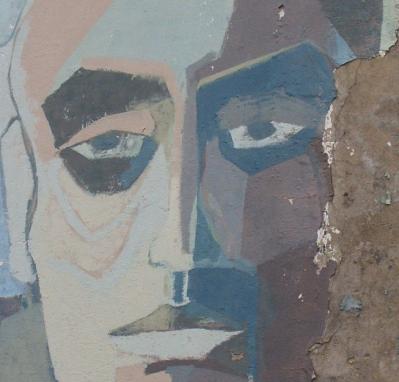
El hombre arrastra la basura en Barracas, un barrio a 10 minutos del centro de Buenos Aires. En Nueva York los rostros de los que juegan al casino, perdón, los que certifican sus ganancias y pérdidas en la bolsa de valores van modificándose según los vaivénes del mercado. Así la gestualidad manda su señal a los rincones más remotos del planeta. La cara del Presidente George Bush el 11 de septiembre, luego con el "crash" del mercado; el aire adusto de directora de colegio de Angela Merkel; la media sonrisa fellinesca de Silvio Berlusconi; las tomas conjuntas...en fin, y las noticias a pie de página donde uno se da cuenta que los muy deprimidos operadores de finanzas toman mercidos descansos en lujos resortes, a la espera de la intervención del Estado para salvar la economia, especialmente las finanzas de quienes no hace mucho abogaban contra el Estado...parece que a veces el Estado es úntil...

Power, that seductive illusion that attracks and traps

Power, that seductive illusion that attracks and traps

Let's face it. "The times, they are a changing," as the song goes. And the endless grappling for power goes on, endlessly. Let's take the U.S. elections as a starting point. Wasn't it Senator Barak Obama who said President George Bush's invasion of Iraq was wrong, that the unilateral approach to foreign affairs should be replaced by dialogue? That's what he said before and as the presidential campaign was getting underway. Not a few U.S. voters, and those who don't feel represented by either the Democrats or the Republicans, began to perk up their ears and think: well, maybe this guy is going to be different.

But power has a foundation that is very difficult to alter without causing the whole structure to come crumbling down. Not strange then that even the more critical voices begin to change once the illusion of power appears on the road map.

As long ago as last June Obama made it clear that he was not going to do anything to damage one of the traditional rallying points of U.S. foreign relations: Israel. In a speech on June 4th he assured anyone who might think otherwise that he considers Israel to be "sacrosanct" for Washington, and he even went so far as to mention an aid package of $30 billion to maintain the sacrosanct relationship.

Then there was a gradual erosion of the notion of "dialogue" for a more aggressive approach, more in line with traditional Democratic party think tanks. As the campaign began to heat up, with insinuations on the part of Republican candidate John McCain that Obama lacked experience or was even soft on terrorism, there was a gradual but evident change. For example, during the first TV campaign debate and in the context of the conflict in Georgia, Obama first criticized both parts (that is, Georgia and Russia) and called for a cease fire; later, in line with the more traditional Democratic veterans of the Cold War, he began to say Russia had acted without justification; and he ended up pulling the basic line in Washington of support for Georgia against Russia.

Although he has continued criticizing the war against Iraq, the Democratic party candidate has repeatedly stated (in line with certain Pentagon officials) that the real conflict was in Afghanistan and Pakistan, suggesting a shift of anti-terrorist military efforts from Iraq to those countries accused of housing Ben Laden militants. The traditional U.S. foreign policy since the Cold War has been to strongly support so-called "friendly" nations (which frequently are far from democratic). Under Bush this notion was turned into the "axis of evil," and a sort of Hollywood notion of good guys and bad guys. Pakistan has long been on the list of  the "good" or "friendly" nations, in spite of having rather undemocratic regimes and having the atomic bomb...

As Obama approaches power the drift towards the traditional thinking pattern will no doubt continue. If Bush, an arch-conservative, has introduced the most interventionist policies in decades to "save" the very financial interests greatly responsible for the present financial crash, it is reasonable to conclude that once in power Obama will also have to accomodate his more daring reforms to satisfy the demands of the "establishment." Thus, power seduces but more frequently than not ends up turning rebellious reformers into obedient servants.

Walter habla sobre la situación en un barrio carenciado de Buenos Aires

Transitar de un barrio de Buenos Aires repleto de rascacielos, jardines, plazas llenas de árboles, Palermo, por ejemplo, a otro, por ejemplo un barrio carenciado de Barracas, en la misma ciudad, que se extiende hacia el riachuelo con casas frágiles construídas sobre terrenos ocupados, calles si pavimentar, sin presencia policial, sin plazas, sin recolección de basura, sin los servicios más elementales, es ir de un mundo a otro en una misma ciudad. Sobre esa situación habla Walter, un habitante de la villa.

Ella es tu sombra, es tu ser oculto, oscuro, gris, es la espera de un destino no deseado

Ella es tu sombra, es tu ser oculto, oscuro, gris, es la espera de un destino no deseado

Te mira al pasar,

Sombra oculta y gris,

Nostalgía pagana,

Mujer de barrio once,

Te mira al pasar:

Venas palpitando

Te mira al pasar.

Tango de ayer

Ligera sombra de hoy

Te mira, te mira

Al pasar, te mira.

Más allá del 12 de octubre y una calle que ya no se llama Roca

Más allá del 12 de octubre y una calle que ya no se llama Roca

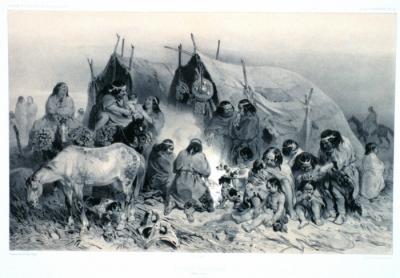
En argentina hay calles y monumentos al General Julio Argentino Roca, como si fuera un heroe. Pero se sabe también que el así llamado "Campaña del Desierto" de Roca exterminó pueblos indíginas para entregar la tierra a amigos y familiares. Luego de tomar nota de este triste pasado histórico, el Consejo Deliberante de Rojas, en la provincia de Buenos Aires, ha decidido cambiar el nombre de la calle "Roca" por el de "Pueblos Indígenas."

En los fundmentos del proyecto, se dijo que la Campaña del Desierto del General Roca "significó uno de los momentos más bochornosos de nustra historia nacional, por el etnocidio y el genodicio que se perpetró contra ’nuestros hermanos los indios’ (como los llamó San Martín) al solo efecto de robarles sus tierras para otorgarlas a unos pocos propietarios"...y "en el término de 27 años, el Estado regalase o vendiese a precios irrisorios 41-787-023 hectáreas a 1843 terratenientes vinculados por lazos económicos y familiares a los diferentes gobiernos que se sucedieron en aquel período. De resultas de ello, cincuenta familias llegaron a ser propietarias de más de cuatro millones de hectáreas de más de cuatro millones de hectáreas en la provincia de Buenos Aires." En el proyecto, según publicó Osvaldo Bayer, Página 12, el 11 de octubre, "Por ley especial se premió al general Roca con 15.000 hectáreas que se agregaron a las 50.000 que ya se le habían otorgado."

Como se sabe, los vencedores siempre escriben la historia de su manera. En el caso de la Conquista del Desierto, además de reescribir la historia, robaron la tierra a los vencidos  para repartirla entre amigos y familiares.

A propósito...¿No es momento para reflexionar sobre el verdadero significado del 12 de octubre, fecha que se llama ’día de la raza,’ que también marca la conquista de América y el sometimiento de los pueblos originarios al genocidio y a la más cruda discriminación racial y social?

En medio del crash, unas cifras que dan para pensar...

En medio de la crisis financiera más grande desde el crash de 1929, los medios de prensa y los políticos hablan como si fuera el problema de todos...cuando en realidad es un asunto de un grupo muy reducido de operadores que durante años han hablado contra la intervención del Estado y ahora aprovechan la intervención gobernamental para...

Según Michael More los "estdounidenses más ricos... tienen más que los 150 millones de estadounidenses de abajo. Cuatrocientos estadounidenses ricos tienen más guardado que la mitad de todo el país. Su valor neto combinado es 1,6 billón. Durante los ocho años del gobierno de Bush, su riqueza se ha incrementado por casi 700 mil millones, el mismo monto que ahora están demandando que les demos para su ‘rescate’. ¿Por qué mejor no gastan la plata que ganaron con Bush para rescatarse a sí mismos? Aún contarían con casi un billón de dólares para compartir entre ellos. ¿Por qué razón se nos ocurre dar a estos barones rateros más de nuestro dinero?”

Mike Lupica, columnista del New York Daily News, agrega otro concepto cuando escribe: “En momentos de crisis el liderazgo del país es una vergüenza... Hablan de miles de millones y billones a gente que se está ahogando en deudas de tarjetas de crédito, que no logra conseguir préstamos para ir a la universidad, y menos pueden pagarlas, que ya no tienen con qué pagar la nafta para sus coches... Ya nadie les cree más”.

Según la revista  Mother Jones, la campaña del republicano John McCain’s incluye un grupo de por los menos 83 personas que han trabajado recientemente para la industría financiera, cuyos clientes incluyen la aseguradora en crisis AIG, Lehman Brothers, Merrill Lynch, Fannie Mae, Freddie Mac, y Citigroup....

Asimismo, el guru económico de McCain es is Phil  Gramm, vice-chairman del banco de inversiones UBS, que según el web site Politico.com aceptó  más de $18 mil millones de operaciones altamente riesgosas...

¿Y el candidato Barak Obama del partido Democrat, supuestamente progresista? Durante tiempo ha confiado como asesor económico en UBS chairman Robert Wolf. Además, durante un encuentro de emergencia la semana pasada para tratar el tema de la crisis, cinco de las nueva especialistas que le ayudaría en encontrar repuestas a la crisis jugaron roles importantes en la crisis que ahora pretenden arreglar:

** Ex secretarios del tesoro de Presidente Clinton Robert Rubin (ahora un ejecutivo del Citigroup) y Lawrence Summers.

** William Daley, que deseñó proyectos durante la administración Clinton acuerdos como la NAFTA y ahora es un ejecutivo importante en J.P. Morgan Chase.

** Gene Sperling, un asesor clave de Clinton que abogó por la deregulación de las normas que regían las operaciones de Wall Street.

** Paul O’Neill, antes Secretario del Tesoro del Presidente Bush.

Si bien figura economista Joseph Stiglitz, Obama se encuentra bastante fuera del contexto de los demás asesores que no distan mucho de los especialistas conocidos en el "mercado."

Entonces, todo parece indicar que los mismos grupos financieros que aprovecharon de la teoría de la "libertad del mercado" ahora cuentan con el Estado--con multimillonarias intervenciones--para solucionar la crisis que ellos mismos causaron. Y a pesar de algunas medidas para sauvizarla,  quienes no especulan, los que trabajan y pagan sus impuestos serán los que pagarán los costos de la crisis.

Third party candidates lie in wait in the U.S. presidential election

Although politics in the United States traditionally divides into supposed liberal verusus conservative oposites, reality—as usual—is a bit more complex. Actually, aside from Democrat Barak Obama and Republican John McCain, there are six other presidencial candidates in the race for the presidency.


Most of these candidates are actually conservative o liberal splinter groups and they are treated with complete disdain by the mass media, in view of the notion that only a two party system can operate effectively in accordance with the country’s history and tradition.

Although this year's elections appear to offer more clear choices--a progressive minded Democratic candidate representing a minority group versus a somewhat non-conformist conservative of  traditional background--once in power the differences between Democrats and Republicans tend to be fogged over.


The outsider parties are generally referred to as third party candidates. Sometimes they have played a significant role in shifting the focus on issues the two major parties have ignored.


Here are the off-beat parties and their candidates.


Constitution Party: (rightwing sonservative) For this party the 2008 Third Party Candidates contesting for the elections are Chuck Baldwin, Jim Gilchrist Don Grundman, Alan Keyes, Bryan Malatesta and Diane Beall Templin

Green Party: (progressive)
Jared Ball, Elaine Brown, Jesse Johnson, Paul Kangas, Jerry Kann, Cynthia McKinney, Kent Mesplay, Ralph Nader, Gail Parker, Rebecca Rotzler, Average Joe Schriner and Kat Swift are the Green Party US Presidential Candidates.

Libertarian Party (rightwing) The Libertarian party US Presidential Elections 2008 candidates are Jim Burns,
Dave Hollist, Dan Imperato, Bob Jackson, Mike "Jingo" Jingozian, Steve Kubby, Alden Link, Robert Milnes, George Phillies, Wayne Allyn Root, Christine Smith, Ed Thompson.

Prohibition Party: (rightwing)
Gene Amondson and Earl Dodge are the Third Party candidate from the Prohibition Party contesting for the US Presidential Elections 2008.

Socialist Party: (socialist)
Stewart Alexander, Bruce Burleson, Eric Chester, David Frey, Evan Gelobter, Norma J. F. Harrison, Stanley Hetz, Linda McKinney, Brian Moore, Dusten Retcher, Constantino "Tino" Rozzo, Dwight Welch are the US Presidential Elections 2008 Socialist Party candidates.

Although none of these candidates have the slightest possibility of winning, they may be decisive in tilting the scales towards Obama or McCain—who are actively courting them. An important number of voters are also described as “independent,” although that term sheds little light concerning their voting preferences.

Susan Cocimano:

Susan Cocimano:

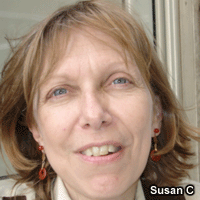
You think of so many things before an interview, don't you? What questions to ask, what information you want to obtain...Sometimes also phrases flash through your mind. Such as this one by James Joyce: "The artist, like the God of creation,remains within or behind, or beyond or above his handiwork, invisible, refined out of existence,indifferent, paring his fingernails.” With those words ringing in his ears, the journalist approached Susan Cocimano, an Argentine who uses acting to teach English.

“Hello!”
“Hi!”
“I’m looking for a blond Argentine drama teacher.?
“Oh, really? Here I am!
“Well, Susan, I would like to ask you a few questions about your work.
“Fine.”
“Well, to begin with, who is Susan C.?
“Aha! That’s quite a question, isn’t it? I’d say that I’m a person who likes very much to discover, to feel out things and develop possibilities. I like creativity...”
“The question sounds simple but....”
“It’s difficult to answer...I like to search for ideas not only in myself but in others, to help them discover how creative they can be.”
“I imagine that’s what you do in your workshops...Are you Argentine?”
“Yes. I was born here but then lived abroad for many years.”
“I see.”
“For many years I travelled to many different countries...It’s funny because lately I’ve been thinking about my life as a big puzzle.”
“A puzzle?”
“Yes. And all the bits and pieces of the puzzle are in different countries and every now and then I like to stop and try to put the pieces together. So I dwell on the bits of my life I left in some other country. Then I need to go back to that country to join the pieces to the main puzzle.”
“So life is a puzzle.”
“You could say that. A bit complicated but...”
“Does the idea of the puzzle also apply to your work in theatre?”
“Certainly and that is why I like to find out things, what happens to people in different situations, what happens to me also, and to re-discover this unending puzzle...well, I suppose it will end some day.”
“Your bits and pieces seem to be a bit scattered around...”
“Yes, quite dispersed and that’s why I need to go back now and then to try to put the pieces together.”
“How did you get involved in theatre?”
“It began when I was very young, about 15 years old.”
“In Spanish or in English?”
“In English, in English! There was an audition in a school where I was studying and I got the part. That experience made me realize how much in common I had with theatre.”
“With the character you played or with theatre itself?”
“With theatre. I was happy to be able to develop my character, but I discovered how enthralled I was with theatre. Theatre is about showing, but not showing everything and that’s the way I am too.”
“Did you ever think about going professional?”
“No.”
“Never?”
“I thought about getting involved with theatre to use it in my teaching experience.”
“You mean as a teaching tool?”
“Yes. I like the idea of bringing out what people have inside. In fact, at one point I said to myself: ‘I want to become a drama teacher.’ And that’s what happened.”
“And now you’re 21 and...”
“Ha! Ha! Ha! And now that I’m of age (men are not supposed to ask women about their age) I’m able to put things together. And, well, why do acting on the one hand and teaching on the other? So I eventually put them together.”
“Which do you prefer?”
“I like both, although I haven’t acted in a long time.”
“Where do you teach acting?”
“At bi-lingual schools. At one point I was the head of a secondary school and I introduced drama into the curriculum.”
“Where was that?”
“At Colombia school (in Buenos Aires) and that was a very interesting experience because as headmistress I was able to develop a serious program of drama. Later I went on to teach also at the primary level.”
“Do people respond well to your proposals?”
“Yes, quite well, although at first they tend to be quite tense. Theatre is such an overwhelming thing! I’ve even seen people run out the door just as the class was beginning. You have a group of 30 persons and you turn to do something and several have slipped away.”
“Because of stage fright?”
“I suppose. I always say before people run away that if they like it they should get involved in some aspects, not necessarily acting. I have a beautiful anticdote about this from when I was teaching at a primary school. The very first day a fifth grader came into the class and almost immediately hid behind a column.
“He was the shy type.”
“Yes and for several classes he was hiding there and it was impossible to get him to participate. I thought to myself: ‘if he wants to hide, let him hide.’ All of the rest of the children were working and improvising and having fun. Then one day they were doing an improvisation and the place of action was a train station. I said: ‘I think we need some sound effects.’ From behind the column I heard this fifth grader going ‘chu-chu-chu-chu’ and for the following three months he did all of the sound effects. It took him a whole year but eventually he agreed to do a small part.
“How did he do?”
“Fine. I worked with him until he graduated from high school. At the end of the year play he was one of the main characters. This is how I deal with stage fright. He got involved from another point of view and it was wonderful to hear his sound effects.”
“Would you say that people fear revealing their secrets?”
“I believe so and that’s why I try to work on getting rid of inhibitions. This is what happens in theatre. You go to a class and want to be an actoress and you think you have to open up your heart and pour out all the terrible things that have happened to you.”
“But there is more than that involved.”
“Exactly. You have to learn how to control your emotions and use them when you want or need to.”
“That is, theatre is an art.”
“That’s right. Lots of people think ‘I’ve got a problem so it would be good for me to do theatre.’”
“What are you doing at the moment?”
“I’m doing a lot of theatre training and then if a school or a group is interested in studying darma technique they contact me at my web page.”
“That makes you something of a theatre free lancer.”
“Yes, indeed, and that gives me a lot of freedom to decide how and when to organize workshops or courses.”
“What about the future?”
“Well, I’d like to travel a lot, to continue developing the workshops and the things I do to share my knowledge with others. That brings me back to the bits and pieces, doesn’t it?”
“One last but daring question: are you free and available?”
“Ha! Ha! Ha! I don’t remember ever having been asked that! I don’t know whether I am free and available but I am very comfortable and, well, I don’t like sharing my bathroom with anyone!”

Contacts: Susan at email: susan@crearcreate.com.ar
Web: http://www.crearcreate.com.ar/English/about/htm


EMPOWERING TEACHERS
By Susan Cocimano
Much has been said about the advantages of Applied Drama, so it is not my intention to delve into it. Yet I cannot help asking myself: Are teachers really aware of these advantages? And if they are: Do they ever apply drama in their daily plans? I am a firm believer that applied drama will be truly effective and unfold all its potential if teachers are able to grasp, understand and incorporate the philosophy of this practice.
“Much of the confusion which teachers have in regard with drama lies in the fact that it is so intransient. They can hear when a musical instrument is tuned properly; they recognise the need for this and it’s as easily apparent when the tuning is wrong. The same applies to paint and clay where it is easy to perceive wrong mixing of paints, wrong size of brush, etc... In drama, the equivalent of too liquid paint or badly tuned instruments is not easily apparent and one of the first essentials for teachers is that they learn in dramatic terms how to mix the paints” Dorothy Heathcote
In order to do so, those interested in using drama techniques, as a resource in their teaching, must go through the process and the experience themselves. Otherwise they will not be able to convey what they want to achieve or even empathise with the learning process of their students.
I find that teachers are willing to apply drama techniques, they go through an infinite number of seminars, which they love; yet they are overcome by fear the moment they have to put this into practice.
They choose to remain with traditional and well-known resources (very valid and valuable indeed). They remain with what they have, with that which makes them feel safe. They stay away from a whole variety of new options that would not only open possibilities to their students but also to themselves. They shy away from developing Creativity, Curiosity and Connecting.
Creativity means daring, spontaneity
Curiosity means investigating, discovery
Connecting means finding common grounds, cause and effect, action and reaction.
Of course all this means Commitment. (Yes, feelings are involved since they are the basic conception of dramatics)
Teachers feel they have to choose.
They feel it’s either one thing or the other.
They feel they cannot cope with this bubbling baggage.
How will they control it?
Well, for one thing, start by trying the 4 C’s above.
It’s not one thing or the other. It’s one thing AND the other.
It’s Complementing -and here we have an extra “C”.
As a teacher trainer in applied drama, I see this with my students. I see how they open up, become aware, discover, create, come up with original ideas, intelligent plans and adequate use of the tool. Yet when the time comes to put this into practice, they prefer not to. They deny themselves the satisfaction of seeing the results of their own creation, the joy this resource produces.
Drama is ever so demanding because it not only requires the 4C’s. It requires Knowledge, Love and Passion.
How can we, teacher trainers/drama specialists contribute to make this change possible ?
How can we help overcome fears regarding drama ?
How can we empower them ?
Teaching them how to use this tool is not enough. Insisting on the wonderful results is not enough. Showing how it is done is not enough.
We need to accompany them during this process, supervise their work, invite them to reflect, contain and reassure them; our teachers will come to understand, love and enjoy this resource. They will realise that they needn’t choose anymore, only add and complement. I will once again quote Dorothy Heathcote in this respect:
“Following this real knowledge of the medium, we can feed to teachers the necessary techniques, knowing that they will not be misled into using those techniques blindly because they achieve results acceptable to headmasters, parents, etc, but will use them as and when required, and not lose sight of their aims for the particular class which they are concerned”
This is a necessary step for our teachers to grow, find their own style and finally let go of our hand.
Bibliography
Heathcote, Dorothy: “Drama as Challenge” (from Uses of Drama). Eyre Methuen Ltd
Susan Cocimano
Drama Teacher, Psycho-dramatist and Actress, she has taught inkindergarten, primary and secondary.
She specialises in Drama and Creativity, two resources that enable thepossibility of expanding the essentials and enriching the personal spirit.
Teacher trainer and former Head of English at secondary level, she designsand conducts workshops for teachers and for all those interested in feeling better and wanting to learn through drama and creativity.
Her experience in theatre is vast (stage manager, set designer, assistantdirector). As an actress, she has covered and enjoyed a wide variety of roles.
As a Director, she has worked both with children and adults.
Susan enjoys painting and has recently illustrated a book for the Bumble Bee series of Mitchell publications
• SEAL and SEAL-Argentina member
• SAP committee member ( Sociedad Argentina de Psicodrama )
   ND member (National Drama, UK)

Todo es natural en Uribelarrea...menos las bolsas de plástico...

La cultura vasca se mantiene viva en los pies de sus habitantes

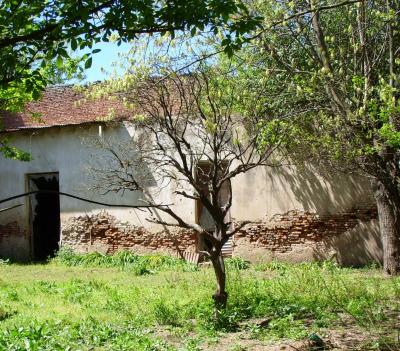
Una casa abandonada marca la lucha de un pueblo...

Una casa abandonada marca la lucha de un pueblo...

Don Miguel Nemesio de Uribelarrea fundó el pueblo que lleva su nombre en 1890, y tuvo después un crecimiento importante como colonia agrícola, polo lechero también, y en su esplendor en la década de 1930/40 contó con un muy bien servicio de trenes. Lamentablemente, el Presidente Carlos Menem compró la idea de convertir la extensa línea de trenes en Argentina en historia y el resultado fue nefasto para Uribelarrea--y para muchos otros pueblos del interior--pues los trenes generaban mucho trabajo y además a la falta de caminos directos el pueblo quedó aislado.

Hoy el pueblo trata de resurgir gracias al turismo, pero casas como en la foto demuestran de qué manera el pasado se infiltra en el presente. De todos modos el amor por la educación nunca desapareció: la escuela agrotecnica Don Bosco,que se fundó en 1894, sigue educando jóvenes para el campo. Además en este pequeño pueblo se filmaron muchas películas, entre las cuales figuran Evita, Juan Moreira, y El Viejo Ucha. Gran parte de las casas mantienen el estilo de hace más de cien años, un estilo que se inserta perfectamente en un estilo de vida completamente integrado a la naturaleza.

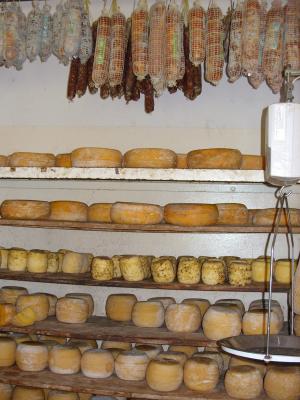
Si de quesos y fiambres se trata...

Si de quesos y fiambres se trata...

Los quesos en el pueblo de Uribelarrea, poblado por inmigrantes vascos, son ricos y naturales, sin químicos ni colorantes.

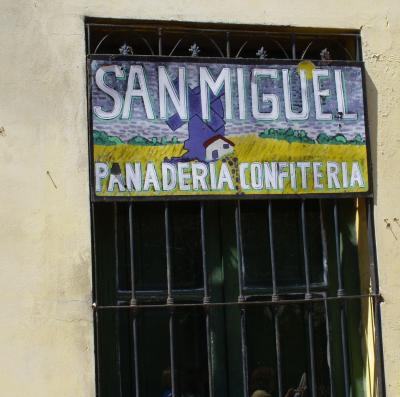
Pan a horno de barro, caliente, auténtico y...

Pan a horno de barro, caliente, auténtico y...

¡En Uribelarrea los exigentes compran el pan recién hecho aquí!

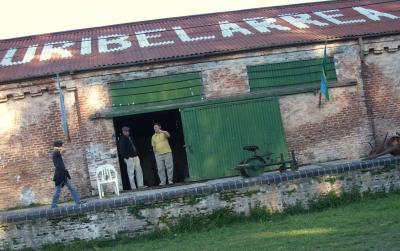
La estación del ferrocarril en Uribelarrea, ahora un museo...

La estación del ferrocarril en Uribelarrea, ahora un museo...

¡Menem lo hizo! Ahora la estación en este pueblo a 45 minutos de Buenos Aires es un museo gratis, que muestra herramientas y un curioso invento argentino....

Elda Parra, cuentista de Cañuelas

Uribelarrea es un pequeño pueblo de menos de mil habitantes a unos 45 minutos de Buenos Aires, un lugar bucólico, con hermosas pero humildes casas construídas alrededor de 1890, poblado por imigrantes vascos, dejado a su suerte luego de la discontinuación del servicio del tren, con un inédito amor por la cultura. Ayer, bajo el sol sonriente de primavera, durante un acto artístico en la plaza, la escritora Elda Parra, del pueblo cercano de Cañuelas,  exhibía algunos de sus trabajos, lista para charlar amablemente con quienes expresaban interés por la literatura. Cuando se acercó este cronista a su puesto, le entregó una copia de "La Rosada," un cuento que ganó el primer premio del Cértamen Literario 2007 de la Biblioteca D.F. Sarmiento. Aquí publicamos el relato de Ela Parra:


                                                                                La Rosada

Heredero.

Único heredero.

El abuelo materno lo habí elegido.

La vieja quinta deseada por los familiares le pertenecía.

Al recibir la noticia del deceso, reservó pasaje, canceló entrevistas, dio las últimas instrucciones, organizó el equipaje de mano, se despidió de los conocidos y partió hacia el aeropuerto de Barajas. Completó los trámites adueneros, compró diarios argentinos para interiorizarse de la situación del país mientras tomaba café y esperaba la salida del vuelo noctorno.

En Ezeiza nadie lo aguardaba, contrató un remis para hacer la etapa final del viaje, en la que reconoció pocos lugares y evocó otros. Dos décadas ausente, pocas cartas, algunas fotos y varias tarjetas no eran suficientes para ubicarse en tiempo y espacio.

Con el llavero en la mano vio cómo el auto se alejaba leventando una nube de tierra. Sobresaltado, abandonado a su suerte pensó que la herrumbre visibel le impediría la entrada, la cerradura del portón se resistió al primer intento y cedió al segundo. No ocurrió lo mismo con la de la puerta principal, que, como engranaje recién aceitado se activó al instante.

No se atrevió a cruzar el umbral. Dejo que entrarán la luz y el  aire. Dejo que llegaran a sus oídos los teru teru pidiendo agua en vuelo. Dejó que aromas olvidados como el de las magnolias y las violetas lo sedaran. Lo acompañaban las ranas que buscaban alivio entre las calas. Apoyó las manos en las paredes descascaradas, sintió cómo se desmenuzaban entre sus dedos las capas de pintura. Acudieron a su mente imágenes, el carretón del herrero, los aprendices y, forjado en hierro, el nombre de la quinta, La Rosada. El abuelo, pocas veces verborrágico, intercalaba órdenes para qaue iz<aran la estructura hasta colocarla en la cima de los pilares de entrada, le oí decir, Lo elegí porque soy como un presidente en un país...Ejerzo el nepotismo, pero no serán mis sucesores ni los inútiles de mis hijos, ni los crápulas de mis yernos, ni mis hijas, porque esto no es para mujeres...La primera mano de las paredes la prepará con cal y sangre de los animales sacrificados en la segunda yerra.

El ladrido lejando de un perro junto a fuerte olor a humedad y al polvillo que se percibía en el haz que entró por la puerta abierta, lo volvió a la realidad. Parpadeó varias veces para habituarse a la semioscuridad, a la vez que avanzaba hacia los estantes atiborrados de libros. Imágenes como relámpagos lo bombardeaban, el abuelo en el sillón murmurándole al oído, El secreto está en el séptimo estante entre el 'Facundo' de Sarmiento y 'El Matadero' de Echeverría.

Suplantándolo por 'Amalia´ de José Mármol y la ´Bases para la Organización Política de la Confederación Argentina´de Alberdi.

Mentando a ´Juvenilia´de Cané y el ´Prometeo y Cía´de Wilde.

Aquello que siendo niño le parecía un juego, ya adulto y lejos del país perduró como un misterio, el momento de develarlo había llegado.

Descorrió los pesados cortinados, al entrar la luz a raudales aplicaría la teoría elaborada, si había un enigma, la solución estaba en el estante sé´ptimo, porque los datos que le diera el abuelo indicaban en ese estante, la derecha o la izquierida, nunca el centro.

Ubico el estante, contó los libros en ambos sentidos para confirmar que no había error, doscientos diecisiete, concentrado en el conteo no prestó atención a títulos, grosor, color o colección. Recontó hasta llegar al libro número ciento nueve, apoyó el índice para retirarlo, leyó su título, "El pozo"  de Onetti. Él se lo había enviado al abuelo para el nonagésimo cumpleaños recomendándolo como el cuento perfecto. Lo escoltaban "Historia universal de la infamia," de Borges y "Eureka"  de Poe. ¿Era casualidad o era una clave? El estupor lo invadió. Ejerció presión, retiró el libro, esperó conteniendo la respiración, nada sucedió. Aliviado dejo salir el aire contenido, en ese momento los estantes del primero al séptimo, en bloque giraron como una puerta, el tope fue la pared derecha de igual dimensión, el espacio reducido sofocaba, la pared del fondo de alabastro, como fuera una gigantesca araña que teje su tela, mostraba surcos suaves que fueron profundizándose hasta agrietarla y deshacerla en una mirada que alfombró el piso, gritó y el grito recorrió la casa retumbando en las paredes, multiplicándose en los ambientes hasta llegar a ser un eco remoto.

La pared derrumbaba dejaba al descuibierto una puerta con aldaba, sin cerradura.

Heredero.

Único heredero de La Rosada y el arcano familiar.

Elda E. Parra

¿Un mar de dólares pueden curar el enfermo?

      Y...finalmente el Congreso de los Estados Unidos aprobó un paquete de unos...$700.000 millones de dólares para las empresas que quedaron mal paradas en medio de la crisis financiera global... y sin embargo parece que "los mercados" no salen de su incertidumbre.  La cuestión es: ¿quién pagará semejante cuenta para curar el enfermo? Si al lector le resulta muy difícil imaginar esta cifra,  habría que agregar que al mencionado monto habría que agregar otras elevadas sumas de intervención estatal previamente inyectadas en favor de otras empresas "enfermas."

    Todo parece indicar que el exceso de especulación--cause principal de la crisis--será pagado no por el capital sino por quienes pagan impuestos, si bien el proyecto incluye algunas medidas que disimulan en algo la carga: la devolución de algunos impuestos, tope en las garantías para ahorristas, protección a los propietarios de viviendas que corren el riesgo de ser embargados, ayuda a los pequeños bancos comunitarios afectados por la crisis...en fin, un plato cuyo deseño ha sido del gusto de los dos candidatos a la presidencia del país.

     Nota: No será nada extraño leer en los informes que algunas personas vinculadas a las empresas en pelígro sean convocadas por el propio gobierno para "encontrar soluciones" a la crisis más grande del sistema desde la caída de Wall Street in 1929.

     Después uno no puede dejar de preguntar cómo hará el gobierno para seguir acumulando mega deudas, cómo hará para intentar seguir su auto-proclamado rol de líder mundial en un mundo cuya economía se está "globalizando" rápidamente, qué hará el próximo presidente para sacar el país de la inevitable recesión, qué políticas encargará Washington con las economías emergentes, qué pasará con los nuevos bloques de poder que crecientemente cuestionan el rol hegemónico de Washington...

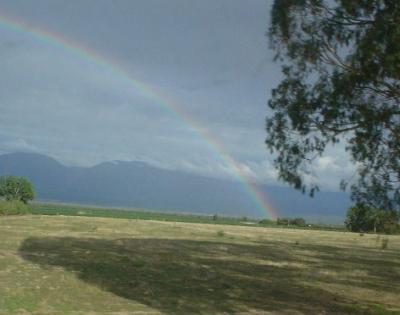
The rainbow and the tones and hues of existence

The rainbow and the tones and hues of existence

      What is it about a rainbow, that multi-coloured curved arch that stretches across the sky at the least expected moment, that causes the passerby to pause, take a deep breath and forget for a moment the tedious business of living in a world of unending squabbles? No need to find an answer to that question. Yet most of us have had that experience and wondered at the beauty of the rainbow, its uniqueness, the uniformity of its contours, and felt an inmense internal joy. Perhaps too we have shed a solitary tear witnessing its gradual disappearance and integration into the vastness of the atmosphere.

     Then, minutes, hours, days or months later, we tread the streets of vast urban sprawls, gawk at starkly cold skyscrapers, or see them on television or in the mass media, and comprehend their falseness, the frailty of an economic and social system based on accumulation, competition as a way of life, consumption as the essense of existence, production for the sake of production, the destruction of nature, devastation of indigenous culture, war and the struggle for power as the frame of the mirror reflecting this scene.

    There before the rainbow, with our breath held, our body functions operating in magic synchronization--our imagination dodging stock market crashes, wars to end wars, wars of prevention, wars against "infidels", the screech of cars, the ra-ta-ta of assasin’s bullets, the dumping of nuclear and toxic wastes in empoverished backyards, the clicking of rich men’s champaign glasses and the cries of hungry babies in mushrooming slums--we are overtaken by the feeling of being possessed by an invisible charge of positive energy.

    Is it art? Is it the ability of man to seek, to transcend, to reach out for greener pasteurs even in the midst of aridness? The artist takes his or her material and witnesses how a transformation takes place in both the material at hand and in his or her own consciousness. The scientist looks at his data with awe on the eve of a new discovery, the same kind of awe we feel as the rainbow arches before us. Will this ability to creatively transform existence be capable of outstretching our mundane drive towards destruction?

Las frases de octubre, el mes de la primavera y crisis financiera...

1. "Todos los días empezamos a vivir de nuevo. Ningún día se parece a otro."  (Montaigne)

2.  "Cuando ni siquiera la opción nuclear de un monstroso rescate de 700 mil millones de dólares puede impulsar las acciones, uno sabe que esta es una crisis global de confianza en el sistema financiero." (Economista Nouriel Roubini)

3.  "Los seres humanos sentimos sed por el chisme. La literatura es chisme de calidad, chisme que no hace daño." (Marcelo Birmajer, escritor)

4.  "Mientras se hunde el neoliberalismo, nosotros avancemos en la integración, la unidad y, de manera muy concreta, en el Banco Sur. Debemos fortalecer nuestros bancos centrales, fortalecer nuestros fondos de inversiones." (Hugo Chávez, presidente de Venezuela)

5.  "¿Cómo es posible que los pobres tengan que pagar el precio de la crisis de los ricos? En Bolivia nacionalizamos (los hidrocarburos) para que el pueblo tenga dinero; en Estados Unidos quieren nacionalizar la deuda y la crisis de la gente que tiene dinero." (Evo Morales, presidente de Bolivia)

6.  "La ironía del destino es que la crisis es de los países ricos y son los emergentes los que van a sustentar el crecimiento de ls economía mundial." (Lula da Silva, presidente de Brasil)

7.  "Pensé que una vez comentaría entre los amigos la noche que bailé con Ava Gardner, pero nadie de ellos creería que fue verdad, por lo que sólo me quedaría el recurso de contar el hecho como una página de ficción." (Germán Marín, en el relato La noche que bailé con Ava Gardner)

8.  "Robar a un hombre su lenguaje, en nombre de ese mismo lenguaje: allí comienzan todos los asesinatos legales." (Roland Barthes)

9.  "El Estado se reserva el derecho de administrar, regular, controlar y gestionar los sectores estratégicos (de la economía, es decir, las telecomunicaciones, recursos naturales no renovables, transporte, refinación de hidrocarburos, biodiversidad, patrimonio genético, espectro radioléctrico, agua...) Nueva Constitución de Ecuador

10. "Por años los países ricos y los centros financieros internacionales nos enseñaban a América latina a organizar y modernizar nuestros mercados y nuestro Estado...y memos que los países ricos, por falta de regulación, entran en crisis." Michelle Bachelet, presidente de Chile.

11. "Siempre está más oscuro antes que se ponga completamente negro." Mao Zedong

12.  "I firmly believe that whenever we exaggerate or demonize, or oversimplify or overstate our case, we lose. Whenever we dumb down the political debate, we lose. A polarized electorate that is turned off of politics, and easily dismisses both parties because of the nasty, dishonest tone of the debate, works perfectly well for those who seek to chip away at the very idea of government because, in the end, a cynical electorate is a selfish electorate." Barak Obama, Democratic party presidential candidate in an article called "Tone, truth and the Democratic party" (Sept 2005)

13. "Me da la impresión de que es como un dragón que devora su propia cola. El país marcha hacia adelante, pero lo que se obtiene como producto de ese avance es desporcionado en relación con lo que se pierde." Cinasta chino Jia Zhang-ke, sobre la modernización.

14. "Antes, ccuando marchaba como dirigente, me criticaban; cuando marchaba como diputado, me criticaban; Ahora que soy presidente, marcho. Me critican, es normal, no es extraño. Yo hice política marchando, marchas pacíficas reivindicando los intereses del pueblo. Empecé con coca, con tierra, con los derechos de los pueblos indígenas, los hidrocarburos, ahora por la nueva Constitución, la refundación de Bolivia, junto a mi pueblo, junto a esa lucha." Evo Morales, presidente de Bolivia.

15) "Un error no se convierte en verdad por el hecho de que todo el mundo crea en él " Mohandas Gandhi
 
 
16) "En la vida hay algo peor que el fracaso: el no haber intentado nada " Franklin Delano Roosevelt
 
 
17) "Es cordura provechosa ahorrarse disgustos" Baltasar Gracián
 
 
18) "No llega antes el que va más rápido, sino el que sabe a dónde va " Lucio Anneo Séneca
 
 
19) "La verdadera felicidad consiste en hacer el bien " Aristóteles
 
 
20) "No pretendas que las cosas ocurran como tú quieres. Desea, más bien, que se produzcan tal como se producen, y serás feliz "Epícteto de Frigia
 
 
21) "Oficio que no da de comer a su dueño no vale dos habas "  Miguel de Cervantes Saavedra


El documental de Pino Solanas, "La próxima estación."

El documental de Pino Solanas, "La próxima estación."

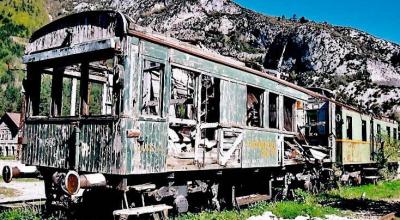
Hubo un aire enrarecido anoche mientras los espectadores en el cine Gaumont esperaban ver el último documental de Fernando "Pino" Solanas, "La próxima estación," un trabajo excelente sobre uno de los más grandes saqueos que ha habido en Argentina... Es que seguramente todos los espectadores sabían, por experiencia propia, el lamentable estado de los trenes: las demoras, los vagones rotos, la violencia...y sabían además que a pesar de la "privatización" el servicio ha ido de mal en peor. Lo que tal vez no sabían era que, como insiste Solanas, los trenes siguen siendo propiedad del Estado, es decir, de todos los argentinos.

"¡Qué barbaridad! ¿Cómo puede ser?"  protestaba una señora a la salida del cine. Otros espectadores se fueron en silencio, meditando sobre las espectaculares escenas de vagones de lujo rotros y abandonados, estaciones de gran belleza en el más completo estado de colapso, jueces que daba a entender que no sabían nada sobre las monumentales maniobras de corrupción...

En La próxima estación Solanas, director además del documental "La hora de los hornos," pone el enfoque sobre el largo y complejo proceso que llevó el esplendor de los trenes argentinos al saqueo, al abandono, al desguace y a situación actual, al borde de la desaparición de un sistema esencial de transporte.

"Los trenes se privatizaron porque daban pérdidas. ¿Pero los servicios públicos están para dar ganancias o para servir a la comunidad? ¿Deben dar renta las escuelas o los hospitales públicos? Hoy los ferrocarriles cuestan 3 millones diarios y funciona el 20 por ciento de los que teníamos antes", dispara el director en off. La así llamada "privitización" en realidad se realizó mediante contratos a empresas privadas, cediendo los derechos de uso a empresas que además recibían y siguen recibiendo subsidios millonarios.

El documental no se queda simplemente con el tema, social y político, pues tiene una muy buena estructura, excelente filmación y hay momentos de humor y escenas de la vida cotidiana argentina que hacen que el espectador pueda conectarse rápidamente con el tema.

Solanas aparece en Próxima como un gran reportero recorriendo historias, ideas y propuestas de los hombres que le dieron vida al sistema ferroviario nacional. Esas charlas —informales, aunque tienen gran valor sociológico y antropológico— funcionan como viajes dentro de viajes: al hablar, los entrevistados y el director recorren enormes espacios donde hubo talleres, estaciones, trabajo, vías, vidas y ahora, nada. Solanas recorre además temas actuales, como el tren bala o Aerolíneas. Y otros: el robo millonario de viejos materiales ferroviarios (alguien habla de ferricidio) y el estado lamentable de los servicios. Incluso muestra imágenes de violencia contra las máquinas, pero opina que la furia debería tener otro destino, porque los trenes son propiedad del Estado: "Pero nadie puede defender lo que no sabe que le pertenece", reflexiona. En otros tramos, encara a funcionarios —del sistema judicial— y los deja mal parados, a lo Michael Moore, con menos narcisismo.

El documental invita el espectador a preguntarse el por qué de semejante saque, pues no sólo fueron desactivados el 80% de las vias bajo el impulso del gobierno de Carlos Menem, sino miles de pequeños pueblos se derrumbaron, miles de personas tuvieron que immigrar a las ciudades....

Is the financial crisis more about money or geopolitics?

Is the the financial crisis more about money or Washington’s geopolitics? That may sound a bit like finding your contact lense after loosing them swimming across the Mississippi river. Yet there are growing voices that have begun to question what all of the noise in Washington and New York is all about.


To begin with, let’s start with the generally Democratic leaning New York Times. On September 29  it wrote timidly that “The ($700 billion) bailout plan released yesterday is a lot better than the proposal Henry Paoulson first put out—sufficiently so to be worth passing. But it’s not what you’d actually call a good plan, and it won’t end the crisis.”


In an article for “The Nation,” (September 26, “A Better Bailout”) Noble Prize economist  Joseph E. Stiglitz went a little bit further: “To a skeptic, Paulson's proposal looks like another of those shell games that Wall Street has honed to a fine art. Wall Street has always made money by slicing, dicing and recombining risk. This "cure" is another one of these rearrangements: somehow, by stripping out the bad assets from the banks and paying fair market value for them, the value of the banks will soar.”


He proposes an alternative explanation for Wall Street’s gleeful reaction the the staunchly conservative Bush Administreation’s push to have the government take over the mess created by financers: “the banks realized that they were about to get a free ride at taxpayers' expense. No private firm was willing to buy these toxic mortgages at what the seller thought was a reasonable price; they finally had found a sucker who would take them off their hands--called the American taxpayer.”


Stiglitz continues:

“The administration attempts to assure us that they will protect the American people by insisting on buying the mortgages at the lowest price at auction. Evidently, Paulson didn't learn the lessons of the information asymmetry that played such a large role in getting us into this mess. The banks will pass on their lousiest mortgages. Paulson may try to assure us that we will hire the best and brightest of Wall Street to make sure that this doesn't happen. (Wall Street firms are already licking their lips at the prospect of a new source of revenues: fees from the US Treasury.) But even Wall Street's best and brightest do not exactly have a credible record in asset valuation; if they had done better, we wouldn't be where we are. And that assumes that they are really working for the American people, not their long-term employers in financial markets. Even if they do use some fancy mathematical model to value different mortgages, those in Wall Street have long made money by gaming against these models. We will then wind up not with the absolutely lousiest mortgages, but with those in which Treasury's models most underpriced risk. Either way, we the taxpayers lose, and Wall Street gains.”

He then points out what he considers to be four fundamental problems in the U.S. financial system: “The first is that the financial institutions have all these toxic products--which they created--and since no one trusts anyone about their value, no one is willing to lend to anyone else. The Paulson approach solves this by passing the risk to us, the taxpayer--and for no return. The second problem is that there is a big and increasing hole in bank balance sheets--banks lent money to people beyond their ability to repay--and no financial alchemy will fix that. If, as Paulson claims, banks get paid fairly for their lousy mortgages and the complex products in which they are embedded, the hole in their balance sheet will remain. What is needed is a transparent equity injection, not the non-transparent ruse that the administration is proposing. The third problem is that our economy has been supercharged by a housing bubble which has now burst. The best experts believe that prices still have a way to fall before the return to normal, and that means there will be more foreclosures. No amount of talking up the market is going to change that. The hidden agenda here may be taking large amounts of real estate off the market--and letting it deteriorate at taxpayers' expense. The fourth problem is a lack of trust, a credibility gap. Regrettably, the way the entire financial crisis has been handled has only made that gap larger. “

Well, we should add that right on the eve of the financial “crash” or “plop” or whatever you want to call it, Bush as well as Republican presidential candidate John McCain were saying in unison that the economy was “basically healthy.” Obviously, not everyone agrees on what is healthy. With those words still dangling on the tips of its tongues people in Washington were putting on worried faces and saying that the record State bailout of private mishap was necessary to prevent something hear to doomsday.

Stiglitz goes on to express the notion that: “the administration is once again holding a gun at our head, saying, "My way or the highway." We have been bamboozled before by this tactic. We should not let it happen to us again,” adding: “The president's economic credentials are hardly stellar. Our national debt has already climbed from $5.7 trillion to over $9 trillion in eight years, and the deficits for 2008 and 2009--not including the bailouts--are expected to reach new heights. There is no such thing as a free war--and no such thing as a free bailout. The bill will be paid, in one way or another. “

According to the June congressional testimony of William Beach, director of the Center for Data Analysis, the so-called war against terrorism has cost som $646 billion to date, so you would have to add the $700 billion bailout to that and then scratch your head trying to figure out how the government proposes to pay for its self-declared war and the financial crisis. The figures go beyond anyone’s craziest imagination and can only be explained by the de facto complicity of financial interests with the war. The new defense budget, for example, tacks on another $68.6 billion for Iraq and Afghanistan next year, while the cost of a single week in Iraq is put at around $3.5 billion, or $180 billion per year.

McCain and Bush insist that the U.S. will only leave Iraq once a clear victory has been achieved. The cost of the Iraq war was once predicted by Washington officials as perhaps $50 to 60 billion, but since the costs seem to be on an endless spiral...now independent observers calculate the total cost may go to somewhat more the $800 billion. If you include indirect costs, say payments of health care and veterans benefits, etc. the figures keep on soaring.

What former President Dwight Eisenhower once warned about, the “military-industrial complex” is no more good business, apparently, on the contrary the marriage of big business to war is leading to bankrupcy. Who is going to foot the bill?

(to be continued)