Blogia

Buenos Aires Jaque Press, en inglés y español

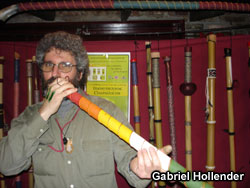
Gabriel Hollender: "La música es alimento para el alma..."

Gabriel Hollender: "La música es alimento para el alma..."

“Creo que la improvisación ata un poco a la necesidad de una exposición y de una re-exposición…Trato de recrear ideas tradicionales, de hacer mi propia versión con la esperanza de que en ese proceso aparezca algo nuevo.” - Dave Holland

Gabriel deja el mate sobre la mesa y levanta un hermoso instrumento, dos veces más largo que su propio cuerpo delgado y, con la naturalidad de quien lleva la música en los huesos, produce un sonido que parece provenir de la profundidad misma de la raza humana. Una leve sonrisa nace en las comisuras de sus labios y dice:
--Yo soy un bucanero…
--¿Perdón?
--Vivo las aventuras que yo mismo me planteo, o bien atravesando algún bosque cordillerano o transitando por una jungla de cemento.
---Entonces usted debe ser porteño.
--Así es pero llevo más de 3.000 noches acampadas, y muchos años viviendo en San Luís, también en Bariloche, a más de mil metros sobre el nivel del mar.
Gabriel anticipa la próxima pregunta:
--Estoy vivo y siento que mi vida se ilumina con la comprensión y el cariño de una compañera inesperada pero bienvenida que me ha acompañado en estos tiempos.
--¿Es usted músico?
--No soy un músico en el sentido formal de la palabra.
--¿Pero…estudió música?
--De niño, sí.
--Entonces: ¿Qué representa para usted la música?
--Es algo que necesito, un alimento para el alma.
--¿Cómo llegó a fabricar estos raros instrumentos musicales?
--Me metí en bosques llenos de elementales pinchudos, a los que sólo se lograba calmar con sonidos, sonidos que de tanto acampar se me metieron en las venas para quedarse allí para siempre…además, poniéndome en contacto con la gente originaria (mapuches, especialmente). Soy ejecutante desde hace más de una década de estos raros (para algunos) instrumentos que uso en Yoga para estimular el relajamiento, también en clases de expresión corporal, en Tai Chi Chuan, en acompañamiento de los cantos devocionales de centros Sai Baba y en las salidas de turismo místico que ocasionalmente realizo.
--Es decir, trabaja con instrumentos originarios que usted ha adaptado para sus cursos…
--Correcto. Pero he perfeccionado boquillas, formas constructivas y materiales, junto con las mixturas que por mera inspiración he logrado (por ejemplo, el didjeridoo con maraca, el didjeridoo con pututu-caracol, las maracas varilla y el udu de caña).
--¿Cuál era la función social de estos instrumentos en los pueblos originarios?
--Los instrumentos sonoros, los no melódicos, poseen entre los humanos una muy larga historia, especialmente los percusivos y los aerófonos. La mayor parte tenían y tienen un carácter hipnótico, mientras que en otros casos fueron utilizados para diversas funciones organizativas colectivas. Desde ya que en muchos casos su ejecución requería y requiere grandes habilidades, también un vínculo profundo con la mística. En otros casos su uso incluye armonización, sanación, ceremonial de todo tipo incluso funerario, la primera menstruación, nacimientos, concilios, etc.
--¿De qué manera puede un sonido producir el efecto de sanar?
--En realidad, los sonidos sin melodía no son pasibles de intelectualizar. Por lo tanto, son sonidos sentidos por un oído diferente al normal. Van diseccionados hacia lugares/memorias sin estrés…sin televisión, sin computadoras, sin mercantilismo. Es decir, son memorias intactas y prístinas, ancestrales, que se activan sin ningún esfuerzo y, al superar en organización y poder a las memorias estresadas, producen eso que hoy en día se llaman armonización.
--¿Cómo aprendió fabricarlos?
--Por inspiración…bueno, aunque no parezca creíble, ocurrió en una meditación. En ella recibí la clara orientación de que me tenía que convertir en luthier, especialmente de los instrumentos chamánicos que tanto han acompañado mis aventuras.
--Ha de ser muy difícil.
--Y…no es fácil. Si uno quiere bajar a la realidad aquello que va apareciendo en visualizaciones y ensoñaciones hay que aceptar que no es fácil.
--Entonces los fabrica y los emplea en terapias?
--Sí. Con mi compañera, los empleamos en nuestras sesiones de chamanismo, donde se utilizan para bajarle las RPM al paciente, para hacer el viaje chamánico de sanación y averiguación, como también para sellar extracciones y finalmente para reforzar los trabajos de sanación que los espíritus realizan con nuestra intermediación en los pacientes…
--¿Y qué dicen los pacientes?
--No soy yo quien debería responder. No sería ético.
--¿Puede el hombre de ciudad, bombardeado por la contaminación sonora, aprovechar los beneficios de los instrumentos primitivos?
--Por supuesto. El oído siempre está abierto. Los lugares no importan. Sólo es cuestión de entrega y sensibilidad.
--¿Trabaja usted con el didjeridoo?
--Sí. Es un instrumento mágico de 30.000 años de antigüedad y de origen Australiano, emparentado con las flautas xingusas amazónicas, la chruchruca mapuche, el erke andino, el corno alpino y las trompetas tibetanas.
--¿Lo usa en sus talleres?
--Dicto un taller de iniciación para terapeutas, alquimistas,s chamanes, reikistas, yoghis, meditadores, cantantes, circulistas, etc., sin necesidad de saber música o respiraciones especiales.
--¿De qué se trata?
--Sobre orígenes y leyendas, los tres tipos de respiración normales, ejercicios de musculación facial y respiratoria, emisión de sonidos recreativos, el didjeridoo como erke y como udu, sonidos recuperadores de la memoria de salud conquistando la vibración básica reaprendiendo las letras y los números, lo meditativo y lo guerrero, el accionar grupal, purificarse para el dar, variaciones con lengua y garganta. Al finalizar el taller se hacen reuniones mensuales de armonización.
--¿Y el contenido?
--El formato didáctico incluye lo recreativo, la mimesis, lo motivacional, lo participativo y lo místico. El taller se realiza en seis encuentros de dos horas cada uno. Luego hay un fogón ceremonial de bautismo. Incluye un didjeridoo de práctica en clase. También es posible adquirir los instrumentos que yo construyo, a un costo especial para los participantes. Por otra parte hay otros instrumentos ancestrales: potuto, lolquin, cullcull, pivilca y tambores.
:
Tel: (03488) 480-343 / 1555-085689
Email: sosgabriel@yahoo.com.ar

Rara...como encendida...

Rara...como encendida...

     Rara, como encendida, esa cara te persigue por las calles sin salida y tu corazón se agita pensando que no hace mucho la misma mueca te llenó de ternura. ¿No es hora de tomar la iniciativa?

Mad

Mad

      Your sweetheart has left you, your children have sent you to a deserted planet, and you have begun to rewrite the story but all you can do is bang your already bleeding head against the wall. Is an end in sight?

Ha muerto el sapo

Ha muerto el sapo

Trago sapos

Bebo versos.

Imagino historias.

Robo sueños.

Espero esperanzas.

Mato malhumores

Pretendo gozar.

Amo amados.

Soy la sombra.

Soy la luz.

Soy la tierra.

Soy el agua.

Me llamo tiempo.

Me llamo lugar.

Me llamo fuga.

Me llamo placer.

Vivo en las trincheras.

Vivo entre sábanas manchadas.

Vivo en la resaca

Vivo entre la vida y la muerte.

Fui subversivo.

Fui ateo.

Fui esclavo.

Fui  negro, indio.

Tomo tus palabras,

Tomo tus caricias,

Tomo tus acentos,

Tomo, tomo, tomo.

Ha muerto el sapo.

El verso quedó  rellenito y trompudo.

La historia  llegó a su fin.

No fue una historia.

Fue un sueño.

Fue un instante.

Tired of fighting over oil...what about water?


            The world has become sadly accustomed to the wars and violence so frequently associated with the industrialized world’s struggle to maintain its grip on petroleum—its life blood. What about the much less talked about water crisis?

             What would happen to factories, farms and the mouths of people all over the world should the supply of water begin to shrink as the earth’s population leaps ahead and as water supplies become increasingly contaminated with industrial wastes? What would happen if the the world’s most powerful countries should begin to consider the world’s water resources as vital to their security and development?             What would happen should the world financial institutions—the World Bank, the International Monetary Fund, etc—step up present pressure to privatize the supply of drinking water? (One aspect of unrest in Bolivia, for example, has to do precisely with corrupt practices related to the supply of drinking water).             According to UNESCO 97% of the earth’s water is salty; 2.5% of salt free water is frozen and only 0.26 percent drinkable. Meanwhile, many scientists, politicians and environmentalists are taking note of the warming up of the planet, prolonged dry spells, floods and other phenomenon which they associate with the release of gases and noxious substances related to the petroleum dependent industrial system.             Conservative leaders such as U.S. president George Bush appear unconvinced of that petroleum is the culprit in this process and continue to step up efforts to guarantee an adequate supply in the face of the every growing demand. No doubt the need to guarantee a reasonable supply of oil figured in a priority position when Washington decided to invade Iraq and Afghanistan—independently of the alleged attempt to fight against terrorism.             María Martínez, an independent Argentine documentalist, has presented an investigation on the subject of a possible future water crisis in “Sed, invasión gota a gota.” She points out that Argentina shares with Brazil, Paraguay and Uruguay the world’s third largest resevoir of potable water—the “Acuffero Guaraní.”             The area curiously corresponds in part to the “Triple Frontier” where for years Washington has been raising its eyebrows or directly warning about an alleged infiltration of Muslim terrorists. Lately, however, the concern appears to have taken a swing in another direction: the possible political influence in the area of Venezuela’s Hugo Chavez, busy signing oil and financial agreements with the Merco-Sur countries.             In this context how should one interpret Paraguay’s signing of an agreement granting immunity to U.S. troops or to the presence of U.S. forces there for joint operations or the unconfirmed rumors concerning the eventual establishment of a U.S. military base in the country?             Martínez’ documental movie won the Mention of Honor for Human Rights at the 2005 Mar del Plata International Movie Festival.             The movie begins this way:             “The earth is surrounded by water. Nevertheless, on our planet one out of five persons lack access to potable water. 97% of the earth’s water is salty; 2.5% is free of salt but disappearing. But in South America, in the four countries of the Mercosur, the “Acuífero Guaraní” sleeps quietly: a underground reserve capable of providing pure water to the entire planet for the next 200 years.”             Then something like a time bomb:             “In this context of possible scenarios, experts predict two strategies: the installation of U.S. military bases at points of strategic natural resources in the context of a worldwide reformulation of the struggle against terrorism or the privatization of water and its purification under the backing of the World Bank and other international finance organizations.”             The conclusion would appear to suggest that in the future wars will not only be for oil; increasingly violent conflicts will break out as the struggle for potable water takes the forefront.             A Unesco investigation, entitled “Is there sufficient water?” declares:             “One of the world’s biggest problems at present is the supply of salt free water, and in some aspects it is the main problem. For the next 50 years problems related to the lack of water or the contamination of masses of water will affect practically all of the world’s inhabitants.”              Gulp!

Frases para pensar...

º      "Busco las pequeñas cosas para emocionar al espectador para mostrar que mientras debatimos, e incluso mientras nuestros países se van a la ruina, la vida continúa..."

   --Abderrahmane Sissaka, director de la película "Bamako"

º     "Beauty is truth, truth beauty--that is all ye know on earth, and all ye need to know."

    --John Keats, in "Ode on a Grecian Urn"

º     "No sería exagerado decir que las mejores historias de Hemingway están llenas de silencios significativos, datos escamoteados por un astuto narrador que se las arregla para que las informaciones que calla sean sin embargo locuaces y azucen la imaginación del lector, de modo que éste tenga que llenar aquellos blancos de la historia con hipótesis y conjeturas de su propia cosecha."

      --Mario Vargas Llosa--

El mar agita el alma

Una cabeza mira, absorta, hacia adentro,  
 
hacia donde el mar agita el alma,
 
hacia la olvidada memoria pagana:  
 
contempla estupefacta la imagen propia;  
 
por tanto mirar se olvida de pensar.  

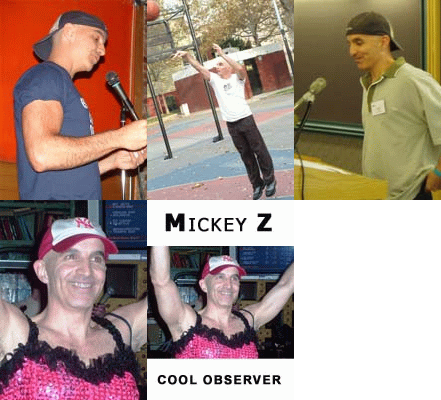
Mickey Zezima and the Myths of War

Mickey Zezima and the Myths of War

"There is No Good War: The Myths of World War II," is the name of a new book by New York writer and social iconcoclast Mickey Zeizima. Well, it does not take a phd in history to assert that the history of humanity is the blood brother of war.  Just for a starter one can think back over the past 60 years, and mention World War II, the Korean War, the War against Vietnam, a handful of U.S. invasions of impoverished Latin American countries and the present so-called "war against terrorism."

Mickey Z's latest book refers to 

the debate concerning the causes and consequences of the Second World War. We asked him about his new book and his notion that "there is no good war."

"The book is called, ’There is No Good War: The Myths of World War II’ (Voz Pop, 2006) and it’s a slightly revised paperback edition of ’Saving Private Power: The Hidden History of ’The Good War’ (Soft Skull Press, 2000). My interest in WW II grew out of my general interest in history and propaganda. The ’Good War’ myth is among the most powerful in American history and I figured it was ripe for a challenge...and still is."

"Is that myth still alive?

"Yes. Today, in the midst of a perpetual ’good war,’ it’s back-complete with a new title and cover-to reinforce the fundamental message that wars are not waged for humanitarian reasons and, as a result, require intense programs of disinformation to appear that they are."

"Do you see any link up in the rationale used by Washington to develop atomic weapons and their use against Japan and the invasion of Iraq on the argument that Saddam had weapons of mass destruction?"

"It’s interesting that in America’s endless quest to prevent other nations from possessing WMD (weapons of mass destruction)-unless those nations are Israel and India, for example-we’re not supposed to focus on atomic bombs dropped on Japan and depleted uranium weapons used in Iraq, Afghanistan, Yugoslavia. To more specifically answer your question: It’s the oldest trick in the book to hype up one’s opponent in order to rationalize the use of excessive force. Japan would never have surrendered, we’re told. Iraq was trying to create weapons to attack America, the story goes. Once these deceptions become widely accepted as truisms, it seems to follow that the American public will support the use of practically any military tactic."

"Newspaper reports indicate that the Pentagon continues investigating the use of strategic weapons in the context of the ’war against terrorism.’"

"To follow up on my last answer, the standard company line we Americans are raised to swallow is that our (sic) country is unique in its benevolence and thus can be trusted with WMD. If we (sic) utilize such weaponry, it must surely be justified because God’s country does not commit war crimes."

"How would you explain the prolonged silence in the U.S. following the 2001 terrorist attack, but recently broken with charges of abuses of all sorts?"

"If you were running the American military machine and you saw how effective it was to declare a global war on communism after WW II, you’d want your own bogeyman, right?

"You mean another bogeyman?"

"That’s right.Terrorism raises military budgets, silences criticism, increases corporate welfare, breeds conformity, transcends international law, justifies atrocities, and provides the catch-all scapegoat. This is not ’neo-conservative’ or Republican or Democrat. It crosses all party lines."

Meanwhile, the war against Iraq rages on, as does that in Afghanistan and dense clouds of confrontation loom over Iran....for more detailed information please take note of Mickey Z’s e-mails and blog:

Blog: http://www.mickeyz.net

e-mail:  mzx2@earthlink.net    /  infor@mickeyz.net


Send even more troops?

    We gladly republish a letter written by movie maker Michael Moore to President George Bush on January 10th, entitled "Send Even More Troops (and you go, too!) In retrospect, and in view of the increasing violence in Iraq, an observer with a certain amount of critical sense, might ask what this new invasion has to do with the Bush Administration's concept of " preventive warfare."  

Dear Mr. President,

Thanks for your address to the nation. It's good to know you still want to talk to us after how we behaved in November.

Listen, can I be frank? Sending in 20,000 more troops just ain't gonna do the job. That will only bring the troop level back up to what it was last year. And we were losing the war last year! We've already had over a million troops serve some time in Iraq since 2003. Another few thousand is simply not enough to find those weapons of mass destruction! Er, I mean... bringing those responsible for 9/11 to justice! Um, scratch that. Try this -- BRING DEMOCRACY TO THE MIDDLE EAST! YES!!!

You've got to show some courage, dude! You've got to win this one! C'mon, you got Saddam! You hung 'im high! I loved watching the video of that -- just like the old wild west! The bad guy wore black! The hangmen were as crazy as the hangee! Lynch mobs rule!!!

Look, I have to admit I feel very sorry for the predicament you're in. As Ricky Bobby said, "If you're not first, you're last." And you being humiliated in front of the whole world does NONE of us Americans any good.

Sir, listen to me. You have to send in MILLIONS of troops to Iraq, not thousands! The only way to lick this thing now is to flood Iraq with millions of us! I know that you're out of combat-ready soldiers -- so you have to look elsewhere! The only way you are going to beat a nation of 27 million -- Iraq -- is to send in at least 28 million! Here's how it would work:

The first 27 million Americans go in and kill one Iraqi each. That will quickly take care of any insurgency. The other one million of us will stay and rebuild the country. Simple.

Now, I know you're saying, where will I find 28 million Americans to go to Iraq? Here are some suggestions:

1. More than 62,000,000 Americans voted for you in the last election (the one that took place a year and half into a war we already knew we were losing). I am confident that at least a third of them would want to put their body where their vote was and sign up to volunteer. I know many of these people and, while we may disagree politically, I know that they don't believe someone else should have to go and fight their fight for them -- while they hide here in America.

2. Start a "Kill an Iraqi" Meet-Up group in cities across the country. I know this idea is so early-21st century, but I once went to a Lou Dobbs Meet-Up and, I swear, some of the best ideas happen after the third mojito. I'm sure you'll get another five million or so enlistees from this effort.

3. Send over all members of the mainstream media. After all, they were your collaborators in bringing us this war -- and many of them are already trained from having been "embedded!" If that doesn't bring the total to 28 million, then draft all viewers of the FOX News channel.

Mr. Bush, do not give up! Now is not the time to pull your punch! Don't be a weenie by sending in a few over-tired troops. Get your people behind you and YOU lead them in like a true commander in chief! Leave no conservative behind! Full speed ahead!

We promise to write. Go get 'em W!

Yours,

Michael Moore
mmflint@aol.com
www.michaelmoore.com

Carlos Fuentealba: ¿hasta cuando?

Carlos Fuentealba: ¿hasta cuando?

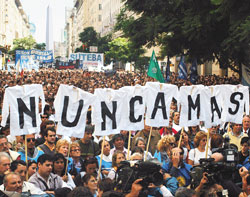
    Alrededor de 50.000 personas, mayormente docentes, llenaron las calles de Buenos Aires ayer pacificamente pero con lágrimas, bronca, y cantitos tales como "nunca más," la consigna que nació con la vuelta a la democracia en Argentina hace más de dos décadas. El docente Carlos Fuentealba fue la causa: muerto durante una protesta de docentes en la ciudad de Neuquén, por un disparo en la cabeza.

   Según la información reproducida en los medios de información, un cartucho de gas tirado a corta distancia impactó en la cabeza de Fuentealba mientras viajaba en un coche durante una protesta de los docentes en la ciudad de Nuequén. No fue el único caso: el 12 de abril de 1997, los docentes de Neuquén protestaban en Cutral-Có, debido a recortes salariales. La docente Teresa Rodríguez cruzó la manifestación y murió por una bala policia. Hasta la fecha de hoy los culpables del crimen no han sido identifados.

"No queremos la fotografía del chivo expiatorio--dijo Hugo Yasky, secretario general del sindicato de los docentes y del Central de Trabajadores Argentinos, durante la concentración en Plaza de Mayo--aquí hay responsables políticos, hay ideólogos, los que levantan la mano dura como bandera para reventar a un país a palazos, el autoritarismo de Sobosch (el gobernador de la provincia de Neuquén) lo convierte en el responsable intelectual del asesinato del compañero Fuentealba, tiene que irse y pagar con la cárcel el crimen cometido." 


¿Furcios o verdades?

¿Son furcios o expresan las verdaderas intenciones? Algunas de las expresiones de los políticos que ocupan la cima del poder nos dejan sin contestar esa pregunta.

Tomamos el caso del Presidente de los Estados Unidos de Norteamérica, George Bush.

Se sabe que Bush no deja de hablar sobre la democracia y el mercado libre...pero... “Déjenme expresarlo de manera contundente. En un mundo cambiante, queremos que más gente tenga control sobre la propia vida de ustedes” (Annandale, Virginia, 9-8-04).

Y, por las dudas:

“Soy el que comanda, no necesito explicar, no necesito explicar por qué digo cosas. Es lo interesante de ser presidente” (Washington, 4-11-03).

Luego, fue incluso más conciso: “Si ésta (EE.UU.) fuera una dictadura, todo sería endiabladamente más fácil, siempre que yo fuera el dictador” (Washington, 19-12-00).

Se sabe además que el actual gobierno en Washington no muestra excesiva preocupación por el medio ambiente pero... “Sé que los seres humanos y los peces pueden coexistir pacíficamente” (Saginaw, Michigan, 29-9-00). Sí, señor.

El Presidente Bush no vacila en aceptar que es el mensajero de Díos en la tierra y lo dice sin vueltas: “Fui elegido por la gracia de Dios”, “Creo que Dios habla a través de mí. Si no fuera así, no podría hacer mi trabajo”, “Dios me dijo que golpeara a Al Qaida y lo hice, y me indicó entonces que golpeara a Saddam y lo hice, ahora estoy decidido a resolver el problema del Medio Oriente.”

¿Usted pensó que los Estados Unidos invadió Irak debido al apoyo de ese país al terrorismo? “Una de las partes más difíciles de mi trabajo es conectar a Irak con la guerra antiterrorista” (CBS, 6-9-06), y luego... “La verdad de la historia, escuchen cuidadosamente, es que Saddam seguiría en el poder si fuera el presidente de EE.UU., y el mundo sería mucho mejor” (Saint Louis, Missouri, 8-10-04).

Si usted quiere mantenerse al tanto del pensamiento de Bush, puede dirigirse al editorial Simon & Schuster que edita cada año un volumen lleno de "bushismos."

It Ain't the Bible, it's...?

It Ain't the Bible, it's...?

     Worried about the future? Can't sleep at night twisting and turning with the end of the world dancing in your dreams? Just read the United Nation's Intergovermental Climate Change report predicting a 3% increase in temperature? Got sleeplessness thinking about that 30% of animal species that could be wiped out due to the warming up of the planet? Oh. And the hurricanes, floods and devastation that await the United States? The transformation of the eastern part of the Amazons into savannah? Did it surprise you that those affected most will be the world's poor, even in the developed counttries, or that the main contaminators, the United States, China...are doing little to amend the situation?

Una rosa, una espina...

Una rosa, una espina...

Observamos una rosa...  
                                              buscando el sol,  
derrochando su perfume...

               escondiendo sus rudas espinas.  


Observamos una rosa:  
                                            ¡Como se flagela en el viento,  


               agitando metáforas lúdicas,  
                                                                            creyendo ser imagen y forma  
del amor eterno,  
inocente y puro!  
 
¡Atención!

A la sombra, de noche... 
                                   oculta,
prepara  
el ataque mortal  
                                   contra su amante,  
penetrándolo con sus  
                                   filosoas y venosas  
espinas, albergadas  
                                  debajo de sus pacíficos  
petálos de seda.

Julio López

Julio López

     Hablan las calles de Buenos Aires, escritos, poemas de amor, pintadas políticas...s

The Whimisical Johnnie Carr

The Whimisical Johnnie Carr


“They use me and abuse me...”

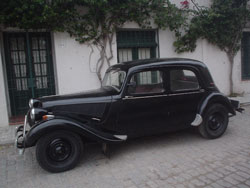
The day was almost as dark as Johnnie Carr's countenance when the shaggy haired journalist stepped hurry-skurry upon the damp sidewalk outside the quaint colonial style lodging where he had dreampt of the good old days when you could take a swing around town, waving at the girls while huddled in the rumble seat of a model T Ford. Perhaps he was wondering whether those good old days were really as good as they were made out to be. In any event, he didn't have time for such idle thoughts: he was a bit late for his interview with Johnnie Carr, so he decided to risk his life zig-zagging across a lonely street in the colonial quarter Colonia, Uruguay, where in the bye-gone days Portuguese and Spanish conquistadores would play something like an antique version of Tom and Jerry.

"Hey! You're not in Buenos Aires!" resounded the melodious voice of a driver who was obviously not an Argentine, although he might well have been a distant cousin of the great great grandfather of José Gervasio Artigas.

Judging by his clothes, he wasn't a Spanish conquistador nor did he have the penchant for goldish-yellow that obsessed the Portuguese adventurers. He was clean-shaven, wore no sword, no helmet and haad his body stuffed into a one-size-too-big English tweed coat that made him appear to slump over the wheel of what could have been a sputtering 1950 Plymouth.

"Here in Colonia we use the sidewalks. That's what they are made for." 

With that bit of practical philosophy, illustrative of the the Mercosur's present hang ups when it comes to couple relationships, the driver sped away at about 15 miles per hour, leaving the journalist's mind a twirl.

After all, maybe he's right, he thought. I mean porteños do have a propensity for forgetting that streets are for cars and sidewalks for people...but why be so dogmatic? Aren't laws made to be broken, or at least taken seriously only when the remaining variables are, shall we say, less than convenient? Or maybe its just a deep seated rivalry between the che's and the charrua's? A sort of Jung style impulse to revenge the past, when Artigas and San Martín and Guemes and Belgrano and O'Higgens and Urquiza and the whole lot of them thought they were struggling against a common enemy, only to end up plotting artificial boarders and saying this is mine and we are like this, not like you over there on the other side, across the river, over that mountain peak. I mean there was absolutely no traffic on that street, not even the street peddlers you so often see in Buenos Aires...until that Uruguayan fellow rumbled out of nowhere. Anyway, I don't think Johnnie likes Johnnie-come-laters and it's already ten after ten and on this side of the river people think they live in Switzerland or something because they always arrive on time.

Luckily, Johnnie was waiting patiently, just as agreed, near the statue of Artigas, that Uruguayan independence hero who almost always is seen in civilian clothes, no sword, an almost happy face, in sharp contrast to the more glum mugs one usually associates with the forefathers. By the way, why doesn't anyone talk about the foremothers? There probably is a pretty solid explanation: the ladies at that time had to stay home and make dinner and babies and wash diapers and gossip and iron and mend clothes and go to church on Sunday morning, so they probably didn't have time to go around lambasting Indians (who weren't even from India), shooting cannon at the king of Spain's Rambo forces or exercising their dagger jabs at the expense of guys wearing the wrong colors. Those thoughts didn't seem very apt as a platform from which to launch an ice-breaker capable of paving the ground for the interview with Johnnie Carr, but the journalist just couldn't get the idea out of his head. So he walked right up to Johnnie and blirted out the first thing that came to mind:

"Tell me the truth: are you really Johnnie?"

"Yea...well, at least here in Colonia that's what most people call me."

"I see...It's just that your're features are so delicate, so refined, almost of female softness, and Johnnie sounds so macho."

Johnnie laughed for a minute or so, wholeheartedly, exhibiting a kind of freedom that one encounters very rarely in today's globalized world. The cachinnation bubbled so wholesomely that any Tom, Dick or Harry crossing the street corner at that very moment might have been amazed to see Johnnie's blackness sparkle with every ha-ha-ha-ha-ah-ah-ha-ha. In fact, instead of beaming eyes, Mr. Carr seemed to be equiped with high beam headlights. (To tell the truth, he was secretely fascinated by the interviewer's rather unconventional information gathering technique.) 

"Let me tell you something," Johnnie said when his giggling died out. "Once I had a girlfriend who looked so much like me people thought we were twins and they would always get our names mixed up."

"Really? What was her name?"

"Lizzie...actually Elizabeth, but everyone called her Lizzie. She was a real black beauty."

"You mean a Negro, oh, pardon me, I mean an Afro-american..."

"No. She was just black like me, beautiful."

"I imagine it was only the name that led to the mix-up."

"Oh yes indeed! We were actually quite different."

"Did you, I mean...did anything...did you ever...you know...did things ever get beyond the starting point?"

The interview definitely didn't seem to be getting anywhere, or at least not to where the journalist wanted to take it. But that should not surprise anyone. Cristopher Columbus thought he was going to India, didn't he? You start out in one direction and end up someplace else but maybe the place you end up in is more exciting than the place you wanted to go to or maybe it's the place you wanted to go to but by the time you get there it has changed so much you can't recognize it as the place your wanted to go to in the first place. Anyway, it seemed the appropriate moment to change the subject.

"Tell me something about your life. For example, where were you born."

"There's a bit of confusion about that but my mother invented a rather suggestive nickname for me: De-troit."

"Sounds like like Detroit, Michigan, the hang-out of Ford, Chrysler and General Motors."

"That's right. So I always imagined that I was born there. I've never been back, though, because I hear it's a bit dirty, filled with smog and dusty smoke stacks."

"So you came to Colonia still swathed in soft white linen."

"A bit later, I'd say, but in time to become a fan of Carlos Gardel."

"Really? The bitter-sweet voice of Argentine tango!"

"He was Uruguayan, born in Taquarembo."

"French, actually."

"From Taquarembo! I swear! I used to take him around town. He'd hum like a bumble bee or practice some song he was working on and that really attracted the gals. And in those days they were really sweet. They'd put their hair up in curlers for hours, sprinkle themselves with perfumes you could smell a mile away and then stroll around the square and pretend they were more innocent than they really were and they just loved to be waved at and honestly I was a better waver than Gardel, although I must admit that my voice was no match to his. That didn't matter though because with my waving and his singing we managed to pick up some pretty enticing young ladies..."

"So your're a playboy!"

"No, I wouldn't go that far. But love is a wonderful thing. Wasn't that what Frank Sinatra once said?"

"If I'm not mistaken, rather than talking about love being a wonderful thing he sang about it.."

"O.K. You're right again. But love is super, the greatest thing ever, and I've been there."

"Would you mind telling our readers how to get there?"

"There's no address. You just stop, look and listen and you're there before you even know it."

"And you've been there. Tell me: what is love for you Johnnie?"

"It's going in the right direction, together. You feel she's beside you, almost inside your head, under your skin, right there when you need her. But you have to know how to shift gears when the riding gets rough."

"Sounds like a metaphor."

"The best things in life are metaphors. Just think of this: the first car was propelled by steam and steam is what comes out of your mouth when you kiss on a cold winter morning."

"True, but sometimes people get all steamed up and blow their tops!"

"Look! Are you interviewing me or judging me?"

Things had begun to take a nonsensical turn, so the journalist puckered up his lips and just stared at Johnnie for a full 37 seconds. Then, tired of standing, he opened the door and sat down beside him. 

"Politics...are you a conservative or a revolutionary?"

"Both."

"Both?"

"What's so strange about that? I try to place the best moments of the past in my back seat memory seat while I steer myself towards change, towards a world without beggars on the streets, without ugly skyscrapers, with green trees interspersed with houses in the form of mushrooms, and enough social equality so a guy has time to dream and laugh and play rather than always thinking of money and dollar bills and foreign debts and silly wars and struggles for power and fame and glory and stupidities of the sort."

"You know Johnnie, I think your're right there."

"As you probably have suspected, I'm no longer a youngster but I've lived through lot's of God damn horrible stuff. This thing about being the Switzerland of Latinamerica, for example, if you ask me that's quite a joke. Besides a couple of decades ago there was a dictatorship here too. Once while I was driving on the outskirts of town I saw some men grab a woman by the hair and toss her into a car. They told me later that the poor thing was lambasted like a nasty mosquito in a God-forsaken lock-up and the kidnappers got off the hook, as usual. They did absolutely horrible things in the name of their supposed defense of our republican institutions and way of life. Imagine."

Johnnie was crying. The tears rolled off his blackness and splashed onto the street. The journalist was caught off guard, not knowing what to ask, how to handle the delicate moment. Johnnie Carr suddenly seemed like another person. Who was that girl he had mentioned? Was she his loved one? And yet he still seems so full of life. Perhaps it's age, you get riper as the years go ripping by. It isn't that you forget. You get riper. Things take on a different perspective.

"Johnnie...please forgive me...in these interviews it's difficult not to touch on some sore spot. So I'll just bother you with a last question: What do you think of people?

"They use me and abuse me. But I don't care, really. I know where I'm headed. I love the way I am, the way I look, every single moment in my life and so I'm driving towards the inevitable end with pride mixted with tears. I know I could have had a better life but I've lived it to the hilt. Now I'm running out of gas, but so is the world."

"Johnnie, believe me it has been a pleasure talking with you and I wish you the best of luck...Maybe some of the people who have read this interview might want to contact you. How?"

A coy smile slipped over Johnnie Carr's face. The journalist went through the usual goodbye ceremonies, opened the door. On Johnny Carr's running board the journalist spotted a presentation card which said:

"Visit me when you come to Uruguay. My telephone is 24731.
My address: Taquarembo 246.

¿Biocombustibles: prosperidad o hambre?

     El debate está planteado: ¿la entrada en escena de los biocombustibles traerá prosperidad y aire puro o más hambre y miseria?

     "¿Dónde y quiénes van a suministrar los más de 500 millones de toneladas de maíz y otros cereales que Estados Unidos, Europa y los países ricos necesitan para producir la cantidad de litros de etanol que las grandes empresas norteamericanos y de otros países exigen como contrapartida de sus cuantiosas inversiones?" pregunta Fidel Castro en una nota el 4 de abril, 2007 en el diario cubano Gramma.

      Sostiene que los países pobres van a dedicar cada vez más de sus granos de soya, maíz cebada, sorgo, centeno, mijo y avena a la exportación para las usinas de biocombustibles, produciendo futuras hambrunas en los países más pobres.

      Castro agrega: "Decenas y decenas de países no producen hidrocarburos y no pueden producir maíz y otros granos, ni semillas oleaginosas, porque el agua no les alcanza ni para cubrir sus necesidades más elementales."

      En cambio, el principal asesor de política exterior del Presidente Lula da Silva de Brasil, Marco Aurelio García, opinó que "El hambre en el mundo no es un problema de falta de alimentos, sino de falta de renta. En segundo lugar, hemos demostrado que las tierras cultivables en Brasil para biocombustibles no son propias para producir alimentos." (Página 12, 5-4-07)

     Por otra parte, la necesidad de contar con cantidades cada vez mayores de granos ya está produciendo otro efecto que no tardará en entrar en el debate: habrá un gran aumento en el desmonte de reservas y bosques naturales para dar lugar al cultivo de los granos necesarios para satisfacer el creciente apetito de los fabricantes de biocombustibles.


El festival de cine, Buenos Aires

    Este largo y lánguido fin de semana puede servir para buscar huevos de Pascua en los lugares más recónditos; pero puede resultar más estimulante tratar en ver media dozena de las 470 películas (largos, medios o cortos) que participan este año en la Competencia Oficial Internacional del IX Bafici.

    Para ver más información y la programación completa, puede entrar en http://www.bafici.gov.ar


Tea Time!

Tea Time!

    There's a lot of gossip at most tea parties, and frankly they can be a drag. That does not promise to be the case on April 21st at the Perroandaluz bar, Bolivar 852, in San Telmo, Buenos Aires, because you'll be asked to invent stories while you are sipping tea, or maybe act them out, do a radio show, who knows, lot's of clapping, horse laughter and a menue of brand new words taken from the magical story world...Oh, and you'll take home a copy of "Tea for Two, a Tale for You!" For bookings and more information call 15 6252 1028 or write alfshopkins@yahoo.com.ar


Anbody Want a Soybean Cutlet?

Have you ever tried a nice soybean cutlet and imagined, just for a fleeting instant, that you had had a relapse to your meat eating youth?  
 
Well, the little bean has not yet become a big deal on the menu in Argentina or in most of what used to be euphemistically called the West. But there are millions in Asia that gobble up the beans--after transformation into many different nutritional products.  
 
And if you are an Argentine you most certainly are happy that a fast moving market does exist for the not-so-tasty but highly nutricious bean......because soybean production is rapidly becoming one of the country's leading export items.  
 
According to the Buenos Aires "Bolsa de Cereales" (Clarín, Jan. 4,2007) more than 16 million hectares have been planted for this harvest season and those in the know are talking about reaping some 43 or 44 million tons of soybean.  
 
There's a good reason why farmers have gone flip-flop over soybeans: prices over the past year have zoomed ahead by 20%.  
 
Just a word of caution for those who tend to look a little bit further into the future or who still have a soft spot somewhere for good old Mother Nature.  
 
º Most of the new areas under cultivation have been snatched from regions housing valuable native species or wilderness areas that will now go under extensive cultivation. What effect will this have on the soil and the climate?  
 
º Lot's of multinational firms, though still questioning the not-so-orthodox economic policies of President Néstor Kirschner, have begun to grab up cheap and rich agricultural lands.  
 
º Oddities of the market. China is perhaps the world's biggest consumer of soybeans but prefers to manufacture its own  
products. Argentina also has many factories dedicated to manufacturing soybean oils, crushed soybeans, soybean flower, etc. so...it is having a bit of difficulty providing China with the raw materials it seeks. Solution? Argentina imports soybeans from neighboring countries, such as Paraguay, and re-exports to China.  
 
º Oh, now that we are on the subject of cereals, what about corn? Due to the fuel crisis, a number of alternative energy possibilities have emerged. One is the use of corn to produce a less contaminating fuel. That means that corn farmers in the U.S. are literally speaking having a "hey day." But it also means that the price of corn is going up and up. Well....might not some wise investors also cast their eyes on Argentina, where land is, well, dirt cheap.  
 
Once again, progress and the preservation of good old Mother Nature's natural reserves seem to be on the rocks.

¡Díos mío...! (¿Qué pasa en la tierra?

       Profesor:         Buenas noches...buenas...hoy vamos a estudiar el verbo ser, en mi opinión muy importante, crucial; no podemos existir sin ser. Yo soy, vos sos, nosotros somos. Fui, fuiste, fuéramos...antes yo era, vos...Yo seré, vos serás, nosotros seremos...Yo sería, vos serías, nosotros...Debí haber sido, vos, nosotros...Si no hubiese sido por...yo hubiera, vos hubieras, nosotros hubiéramos...¡Dios mío! Richard Burbage? David Garrik? Where are you? (limpia una lágrima con un pañuelo) El verbo ser tiene que ver con el estado de la mente...¡ser o no ser: he aquí el problema! ¿Será más noble para el espíritu: sufrir los golpes y dardos de la insultante Fortuna, o tomar las armas contra un piélago de calamidades y, haciéndoles frente…acabar con ellas? ¡Morir…dormir…no más, y pensar que con un sueño damos fin al pesar del corazón y a los mil naturales conflictos que constituyen la herencia de la carne! He aquí una expresión devotamente apetecible! ¡Morir…dormir…dormir…tal vez soñar…! ¡Mierda! ¿Quién soy? ¿Dónde estoy? ¿Por qué soy lo que soy? ¿De dónde vengo? ¿Hacia dónde voy?  (El profesor se queda quieta un segundo, mirando fijo al público, luego desaparece en confusión. La luz descubre al músico y lo  enfoca. De repente vuelve el personaje, ahora como Dios. Toma asiento, entre el público, en la primera fila y dice: )           Díos:  Fue hace mucho tiempo, qué sé yo, hace 15 o 16 mil millones de años luz y allí estaba yo, tan sólo como un murciélago en medio de la oscuridad más oscura, el silencio más silencioso, el frío más frío. Nada había, tan solo el espacio curvado, el infinito sin fin, la eternidad, ni un sonido había, ni un llanto, ni una risa; tampoco gritos, chillidos. Los políticos ladrones no habían nacido, aún no habían inventado las guerras preventivas, los átomos andaban libres y sueltos, no había ni robots, ni computadoras, ni Internet ni blackberry, ni rascacielos, ni pruebas parciales, ni junk food, ni contaminación. Nada de nada. Pero de repente comencé a llorar como un baboso, a reír, a llorar, fuera de control, como un desquiciado, y mis llantos y risas rebotaron hasta los recovecos más recónditos del universo y volvían como una furiosa tempestad universal. (Se levanta y se acera al escenario) Entonces…..¡Flash! (estallido de luces) ¿Y si hago algo? ¡Eso es! Un ser para acompañarme. Pero en mi propia semejanza, no. ¡Por favor! ¿Por qué he de ser tan egoísta? Si el único cierto en el universo es el cambio, los contrastes…¡Manos a la obra! Metí las manos en el material y pronto golpeaba mi corazón de alegría y de orgullo. ¡Carumba! ¡Qué boludo! Mis criaturas no tenían sexo…¡qué aburrido! ¿Cómo disfrutar de la vida sin sexo? ¿Cómo reproducirse? Intenté de nuevo, pero no hacían otra cosa que coger. ¡Otro intento! Muy tontos…estúpidos…egoístas…violentos…de repente brotaba de la nada, en todos lados, peleándose, cogiendo, desafiándome. Entonces, decidí emprender un viaje a la tierra para  ver qué había pasado.            Habrá sido poco después del último período glacial, un frío como para congelar las pelotas, un lugar rocoso, de montaña, cansado yo de tanto caminar, de lo divisé una de mis primeras criaturas, un Neandertal. Me acerqué a él y modulando bien mis palabras le saludé:            Dios:               ¿Qué tal? Usted ha de ser…a ver…¿cómo se llama usted?            Neandertal:    Gaba—goo. Gooki Gooki. Gaba. Gordo-gamba. Gosh Gosh! Gosh!            Dios: ¿Perdón? No creo que te he entendido correctamente…¿Es que no te he enseñado el uso de la palabra? ¡No! ¡Qué pena y qué tonto de mi parte…¿No fui yo quien inventó la frase, ‘en el principio estaba la palabra y la palabra se convirtió en carne…”            (El Neandertal toma Dios por el brazo y lo conduce hacia un rincón oscuro desde donde aparece la cara de una mujer. El cavernícola gesticula y señala hacia la mujer, pasando sus manos por el rostro y emitiendo ronquidos.)            Dios:   ¿Qué decís? ¡Quieres que yo duerma con tu esposa, que yo haga el amor con una de mis criaturas! ¡Por favor! Mi misión es otra. Me parece que no has entendido mi intención.            Neandertal:    Muy por el contrario, respetado señor, le he entendido a la perfección. Sucede que usted rechaza nuestras costumbres, nuestras tradiciones, nuestros valores, nuestro estilo de vida. Para aquellas personas que no nos respecten sabrá el destino qué hacer…            Dios:               ¡Cómo te atreves a decirme eso! ¡Yo soy tu creador!            Neandertal:    ¡Ja! ¡Ja! ¡Ja! No me hagas reír. ¡Y encima te presentás como dios!            Dios:               Bueno sí, claro, es decir, ahora comienzo a dudar…pero sí, creo que son dios…            Neandertal:    ¡Impostor! ¡Farsante! ¿No te das cuenta que dios no es más que una metáfora? En todo caso si necesitamos dioses, seremos nosotros quienes los inventamos. Pero son nuestras creaciones. No aceptamos imposiciones. ¡Ahora andáte ya! Gootu! Gootu! Gootu! Gotta-go! Gotta-go!            (El Neandertal corre detrás de dios, con su bastón alzado)            ¿Qué iba a hacer yo? Rajé, preguntándome por qué carajo tuve la idea idiota de crear gente como éstos. Al poner distancia y tiempo entre yo y el Neandertal, comencé a sentir las síntomas de una aguda crisis de identidad. ¿Me había equivocado? ¿Había creado los hombres simplemente para no estar solo?             

Oh For God’s Sake!A gentle spoof for Light hearted souls 
 

(The stage is as naked as Adam. Elena One is seated towards the back of the stage, to the left, dressed in black, mourning; Elena Two to the right, dressed in black, examining a pistol. Their monologues are based on two different moments en Checkov’s “The Bear,” although the same character is played by two dfferent actrices, one in her sixties, the other in her 20’s. The musician is seated to the left, in front of the stage. When lights go on the professor enters, dragging a desk or a speaker’s podium, clears his throat, looks at his watch, searches a bit desperately for his notes, finds them, smiles self consciously, stares at someone in the audience, waves, winks at the front row and then begins his lecture.)

 Professor Jacob Awkwardminded:             Today’s lesson is on the verb to be, very essential in my opinion, crucial, irreplaceable. I am. You are. We are. I was. You were. We were. I’ll be. You’ll be. We’ll be. I used to be. You used to be. We used to be. I’ll be. You’ll be. We’ll be.I would be if…You would be if…We would be if…I should have been…You should have been…We should have been…I would have been if only…You would have been if only…We would have been if only…Oh God! (Wipes a tear from his eye) The verb to be is about …being. It’s a state of mind…To be or not to be…Oh for God’s sake! Who in the Hell am I? Where am I? Why am I what I am? Why don’t I know who I am, where I’m going, where I’ve come from? Why? Why? Why? Oh shit! I’m all fucked up!  (He looks desperately at the audience, blushes and rushes off stage. The two Elena’s look after him with  Mona Lisa smiles. Elena One brings her chair stage front. When she finishes her monologue, she remains without moving, as a statue, while Elena Two approaches, pistol in hand, to do hers. When she finishes, there is a prolonged silence. Then, they stare at each other as if understanding something for the first time, then exit, bumping into the professor, who returns, dressed as God) 

God

            It must have been some 15 or 16 trillion light years ago, more or less. There I was in the midst of the black, black blackness, as lonely as a bat without a belfry. Things were so dark so cold, so nothing, so curved, so infinite, so endless, so eternal, so silent, so…silent: not a sound. No wind. No smiles. No tears. No yells. No shouts...No groans, no moans. I had no body, no form, no size, no weight, no past, no present, no future, nothing. Time had not yet been born. There were no banks. No credit cards. No vice hungry politicians.  No war mongers. No atomic bombs. No suicide bombers. No final exams. No computers. No robots. No skyscrapers. No highways. No smog. No contamination. Nothing at all. Just sweet nothingness. Suddenly I began to cry like a nincompoop, blubbering, slobbering, gurgling, and laughing my head off. My giggling zoomed around the universe and bounced back as an eternal lament. The whole universe seemed to be splitting its guts. And then Flash! It came to me like an unexpected cosmic dust storm. Why not create something, anything, to warm these cold eternal nights? “Do it!” I said, but “please, not in your own image!” For God’s sake no! Why should I be so selfish? Isn’t change and contrast the only constant in the universe? So I eagerly set about my work, kneading my hands into the moist matter I had so painstakingly collected. And presto!             Before I knew it there they were! Beings! And I had created them with my own hands! I felt proud of my work, as proud as any creator. But I soon realized I had screwed up. They had no sex! What a drag! How could they enjoy life without sex? So I made them real sexy…but you know what? They began fucking day and night and seemed to have nothing else but sex on their minds. So I tried again: too smart! They dared to challenge me! Then I made them too stupid, too selfish, aggressive…All of a sudden they were springing up everywhere, scraping, fucking, carrying on, trying to beat me at my own game. Just imagine how I felt. So I decided to hop down to see what all the hocus-pocus was all about. That was before people invented me, when they thought I was a rock, the rain, the sun, water, fire, storms, sex: they thought the sky impregnated the earth with its moisture and making love was just part of the process of renewal.              It must have been some time after the last ice age, cold as Hell, and there I was plodding through the Alps in a muddy field when bingo! I spotted this hairy Neanderthal chap and addressed him as politely as I could:             God:               Good afternoon. Might I ask whom I have the pleasure of…(the Neanderthal comes on stage carrying a stick and dressed only in a leather cloth wrapped around his most intimate parts)             Neanderthal:  Gaba-goo. Gooki Gooki. Gaba. Goudo-gamba. Gosh. Gosh! Gosh!             God:               Oh! You must be one of my first creations. How are you getting on?              Neanderthal:  Gaba-goo. Gooki Gooki. Gaba. Goudo-gamba. Gosh? Gosh? Gosh?             God:               Hmmm. I don’t seem to understand you very well. Didn’t I teach you to talk? What an ass I was! Wasn’t it I who said ‘in the beginning was the word and the word became flesh…?’             Neanderthal:  (Takes God by the arm and leads him towards a dark spot where a woman’s face is barely visible. The caveman repeatedly points towards the woman, placing his hands to his face and making snoring sounds)             God:               What? You want me to sleep with your wife? Are you crazy? That wasn’t my intention. I’m afraid you misunderstood.             Neanderthal:  No Sir. I understand only too well. You reject our customs, our traditions, our treasured traditions. There is but one destiny for those who fail to respect us… God:               How dare you say that! I created you, didn’t I?Neanderthal: You created me? Don’t make me laugh! Who do you think you are? God? God:               Well, yea, I guess so. I mean…I am God, aren’t I? Neanderthal:  Be serious! God is but a metaphor to keep people happy. If we need gods we invent them. But they are our own creations, not impositions. Go back to where you came from! Gootu! Gootu! Gootu! Gotta-go! Gotta-go! (The Neanderthal chases after God, then himself disappears)             The fellow came after me with his club raised, so what was I supposed to do? I split, asking myself why I had ever been so idiotic as to create people like that. As I put distance and time between me and that caveman, I began to feel the symptoms of an acute identity crisis. Had I made a mistake in creating human beings? Had I done so only to satisfy my need for company? Was that a sufficient reason? What must I do to get back my self-esteem, my sense of belonging? How could I live without the love of my creatures? Meanwhile, I trudged on hoping to find more satisfying evidence of my creativity. The weather had warmed up a bit and that made me feel better. Before long a wide river zoomed into view and on its edges Shakti and Shiva were bathing in the Ganges…(God remains transfixed. Before him Shakti and Shiva are bathing ceremoniously.) God:               Hello...you must be... Shakti:            Shakti...Shiva:             no...Shiva... Shaki:             No nonsense! Shakti! Shiva:             Shiva, Shiva, Shiva, Shiva... (He continues his bathing) God:               Well, well! Shakti:            Who are you, stranger? God:               I’m God, your creator. Shakti:            That’s impossible.God:               I swear. Shakti:            Gods don’t swear. God:               I did it, I say, out of nothing. Shakti:            That’s what we are: nothing. Nothing is everything.  God:               What do you mean? Shakti:            We are nothing. We have learned how to be nothing. That’s why people respect us. Everything else is but an illusion, a metaphor. Please leave us. You have nothing to do here! (Shakti smiles like Mona Lisa and then leaps at God’s throat. God perceives the danger and escapes, while Shiva, sings:) Shiva:             Shiva, shiva, shiva, shiva, the lilly on the water reflecting the moon... 

            Well, you can imagine how I felt. Like crying. Like wishing I had never come to see my children. Why is it that the slave always rebels against the master, the creation against its creator? With no answer to that question, I continued my pilgrimage. I felt dizzy. Suddenly I came upon a knight dressed in shining armour, his sword raised, on the point of raping a woman whose head was covered in a veil. I wanted to stop the attack, but something extraordinary happened. The woman began to dance. The man remained transfixed, as a statue, his arm raised…

 Knight:           God forgive me! God forgive me! Woman:          Ala is great! Ala is great!             I walked up to the knight and touched him. Extraordinary! Instead of armour, he was dressed GI fashion, a Texas style hat tilted over his eyebrow, a bottle of coca cola in his hand and he kept repeating, zombi style: “God, democracy and the free market, God, democracy and the free market...But he was as if of stone. I looked back at the woman, she also had become a statue. I remembered what the Neanderthal had said: God is a metaphor. I wanted to cry. I felt empty inside. I was nothing. Nothing at all. I had created nothing. It had all been an illusion. Things became dark again, black, so black and I felt as lonely as a bat without its belfry. (God seems to be fainting. The Natacha’s and the Neanderthal man rush to maintain him upright, then drag him off as God chants:) I wanna caress your free breath,Feed your hungry glances, Sing sweet songs of pain,Bathe myself in lotus blossoms...Perfume your pain with my loveOh! Oh! Oh! I fell like caressing your shadow...