Blogia

Buenos Aires Jaque Press, en inglés y español

A frosty talk with a not-very-environmentalist bus driver...God save America...and the whales
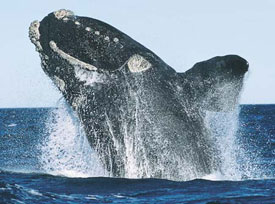
A frosty talk with a not-very-environmentalist bus driver...God save America...and the whales


It was one of those John Frost mornings. The gentle snow flakes knocked at your eyes and trickled down your neck. There you were shivering at a gas station, turned bus stop, with the twang of country music ringing your ears. That’s a logical place for a bus stop, you think, because this is U.S.A., land of the free and of cars. Cars to get to work. Cars to go to the gymnasium. Cars and super-highways to settle your mind. Or disturb it.

But once in a while, a bus does come in handy…There it is! The flashing “God Bless America” sign comes into view almost before the vehicle itself. You get on, settle down for a long ride along Pennsylvania’s western highways. You’re the only one on board, so you propose a chat with the middle aged bespectacled driver.

“looks a bit bleak out.”
“You might say so.”
“Like the economy.”
“I don’t know. The mass media is always stirring up something.”
“Well, oil is hitting the $100 mark.”
“You know what the problem is?”
“Well, I don’t know, but when oil goes up everyone seems to go bananas.”
“Thing is, those environmentalists won’t let the companies drill?”
“You mean for fear of contamination, ecological disaster, the warming up of the planet?”
“Yea, you said it! But why in the Hell should we pull our hair out when countries like China and India don’t give a whit about contamination?”
“I guess you got a point there.”
“The whole economy is based on petroleum and those nuts want us to strop drilling! That’s completely crazy.”
“Hmmm.”
“And then we have to go to place like Iraq to make sure we get oil.”
“hmmm.”
“There’s enough in Alaska for the next 200 years! All this talk about alternative energy is but chatter ‘cause even to get electricity we need oil. You can’t just drop oil. The whole world would collapse.”

The conversation came to an abrupt halt when a group of passengers get on at Alfred. It’s not cool to chat with the driver when too many ears are on board, so you pick up a magazine, the January edition of “The Progressive,” and read:

“According to some estimates, as much as 25 percent of the plante’s remaining petroleum reserves are in the Artic. The U.S. portions of the Beaufort and Chukchi Seas lie atop 23.6 billion barrels of oil, according to Petroleum News.

The article then mentions Isac Nukapigak is the president of Kuukpik, the native corporation at Nuiqsut, and then asserts:


“When ConocoPhillips wanted to put the Alpine field into production, it needed to use a portion of Kuukpik’s lands to do so. Nukapigak drove a hard bargain, nd as a result, the village corporation is flourishing. Yet he’s far from easy about the prospect of more oil leases in the waters he and his whaling crews hunt each year.”

The native residents and environmentalists are concerned about possible oil spills that could devastate the whale population—the livelihood of the population in the area. The seismic prospecting that oil companies need to determine where to drill creates loud underwater sounds that are problematic for all marine mammals. Thirty percent of the native Inupiat diet consists of mammals, another 30% fish…

Everyone in the area remembers the Exxon Valdez disaster at Prince William Sound, a spill that so devastated the lives of commercial fishermen that many have not yet rebound.

Nukapigak asks a question which neither the oil companies nor the Shortline bus driver, nor middle America dare utter: “Are we part of the U.S.? Are we citizens? Or because we are natives are we just brushed away?”

A great trip, you mutter into your beard as you step off the bus and into New York City’s slushy streets, pick up The New York Times and learn that the war in Iraq is likely to last at least another presidency and who knows how high the price of oil is going to reach and the stock market is still jittering and would it be better to reduce interest rates or...


Poetas, cantores, editores y artistas visitan Paraná

El “Primer Encuentro Paraná Poesía en Verano” arranca el 19 de enero en el Centro Cultural Gloria Montoya de la ciudad de Paraná, Argentina, con 40 poetas de BUENOS AIRES, CASEROS, CONCORDIA, CÓRDOBA, MAR DEL PLATA, PARANÁ, RÍO CUARTO, ROSARIO, SAN LUIS, SANTA FE Y SANTO TOMÉ SOBRE EL ESCENARIO.

Los poetas leerán sus textos, los músicos ejecutarán sus canciones. Pero además de poetas y músicos estarán presentes acompañando editores y artistas visuales de la región, por lo que cada reunión supondrá un punto de encuentro y de cruce de experiencias en torno a la poesía y las demás artes. La idea de este espacio creado para todos es la de convivir, aunar criterios, ser amplios, que se acerquen los creadores entre sí y con el público, intercambiar opiniones y disfrutar cada momento.Habrá cantina en todas las fechas. El cronograma de lecturas y presentaciones y música en vivo al cierre de cada noche es el que sigue:

Sábado  19 de Enero

Poetas invitados:
Daniel Durand, José Villa, Darío Rojo, Juan Desiderio, Guillermo Neo, Selva Almada, Manuel Alemián, Laura Crespi, Francisco Garamona, Damián Ríos, Gerardo Jorge, Julián Bejarano.

Músico invitado:
David Vobril y los porotos Mágicos.


Sábado 26 de Enero

Poetas invitados:
Mariano Blatt, Santiago Gómez, Tamara Demiryi, Fernando Kosiak, Juan Ponce de León, Horacio Lapunzina, Pablo Canavelli, Claudia Sosa, Marcelo Leites, Fernando Bellotini

Músico invitado:
Horacio Lapunzina.


Sábado 2 de Febrero

Poetas invitados:
Francisco Bitar, Marcos Barberis, Fernando Callero, DJ Buenomozo, Gonzalo Castelo, Marcelo Mangiante, Sebastián Bianchi, Ariel Delgado, Matías Herr, Milena Berlatzky, Maxi Sanguinetti .

Músico invitado:
Fernando Callero.

Sábado 9 Febrero

Poetas invitados:
Rudy Astudilla, Juan Meneguín, Miguel Ángel Federik, Patricio Torne, Lilian Nordio, Susana Arévalo, Graciela Gianetti, Concepción Bertone.

Músico invitado:
Silvio Godoy .

En todas las fechas presentación de editoriales y mesas de publicaciones de la región .
El costo de la entrada es de $3.


Princeton Environmental Film Festival pits people against corporate interests


            An indignant mother, Margo Pellegrino, paddles her canoe from Miaim to Main in order to draw people’s attention to the ecological threat faced by the world’s oceans, stopping off along the way to talk with  riverside residents about local  environmental difficulties.

            Mike Strizki tells how he turned his home into a wholly self-sufficient energy system based on solar panels and hydrogen batteries.

            Filmmaker Jeff Barrie took an 18 month journey across the southeastern United States—where more than six tons of coal are burned to generate electricity for the average home annually—and produced a stinging and entertaining documentary on the devastating ecological damage caused by coal mining, and its cruel effects on workers and neighborhoods. 

            These are but some of the wide variety of high quality films and talks being presented at the Princeton Film Festival, hosted by the Princeton Public library.

            In “The Water Front” Liz Miller dramatically captures a fascinating ecological, political and social struggle in Highland Park, Michigan, birthplace of the auto-industry but turned into a slum due to the exodus of factories. Market finance fanatics are paid luxurious salaries to privatize the supply of water. Unemployed and semi-employed workers receive water bills as high as $10,000…and, with the help of social workers, react. The story touches on an essential flaw in the U.S. system of government: decisions made behind closed doors with the generous help of lobbies.

            What about the boomtown of Austin, Texas? For years presented as the ultimate dream of middle class America: a nice big house, maybe with a swimming pool, a garage, a playroom, and all the latest gadgets. A super “successful” developer grabs 4,000 acres and turns them into dream suburbs. Oh, one little problem: he forgot about water. So first the town's beloved spring-fed swimming hole was tapped, a company was contracted, contamination appeared...and the water began to dry up…people reacted, winning a partial victory. Now the proud owners of houses in development suburbs wonder for how long they are going to water their lawns and fill their swimming pools.

            The festival has clearly pitted the people and submerged forms of democratic organization against multi-national corporations more concerned about profits than ecology and developers and other powerful groups attempting to dodge public responsibility.

                                       Camden 28

            Another film agenda in Princeton, sponsored by the Global Cinema Café, featured “Camden 28,” an account of how four Catholic priests, a Lutheran minister and civil rights militants opposed to the war against Vietnam managed to break into FBI offices and destroy documents and draft orders. The film shows how the movement discovered the deceptive nature of Washington’s war efforts and moved to open opposition. They spied on the FBI office and planned their break in to tear of documents. Unfortunately, an infiltrator squealed and they were brought to trial. Actually the Camden raid was but one of some 30 such draft board actions leading to the destruction of close to a million Selective Service documents.

            “I ripped up those files with my hands,” proudly proclaimed Rev. peter D. Fordi, adding, “They were the instruments of destruction.”

            The activists were motivated no only by the conviction that the war was unjust, but also their feeling of dismay at discovering the FBI was spying on people’s ideas—something not included in its legal umbrella.

            Following the film, and as coffee began to flow, protagonist Eugene Dixon discussed the events with the audience. One woman wanted to know if there were any hook ups to today’s political scene. He limited himself to saying that one civil rights activist went into politics in a local election, was successful and beloved, but resigned his political career because “politics inevitably involves compromise with the system.”

         What about the present war? Irene Goldman, chairperson of the Coalition for Peace Action, said an action such as that at Camden would be difficult in view of the great vigilance technology now in vogue. Others agreed also that the element of fear was an important factor, but the fact that blatant lies were needed to launch it reveals the distance between the aims of those in power and those who elect them...


Julio Passerini: "Trato de hacer todo posible para mejorar la calidad del medio ambiente"


Pero hay que reconocer que tenemos problemas graves, profundos: una extraña enfermedad está erosionando nuestra ética y nuestros almas...sabemos que estamos entrando en una época de vorágine, pero aún no sabemos cómo será ni qué ocurrirá."

                                                 (Martin Scorsese)


       Mide sus palabras con mucho cuidado Julio Passerini, más cuando el tema de conversación se vincula con los problemas del medio ambiente. Estamos en La Paz, un hermoso pueblo en la provincia de Entre Ríos, Argentina. Passerini conoce el tema de la contaminación de primera mano, pues se dedica a la actividad comercial de combustibles y en su tiempo libre  hace todo posible "para mejor la calidad del medio ambiente. "

Otras de sus varias actividades tienen que ver con la situación de los jubilados: 

            --Considero que los ancianos tienen que tener una vida digna en la comunidad y aquí tenemos una población muy importante de jubilados. Es que en el interior del país hay mucha gente mayor porque los jóvenes generalmente van a las ciudades para buscar trabajo.

            --Por un lado los jubilados, por el otro el medio ambiente…

            --Aquí en La Paz el problema del medio ambiente se ha agudizado últimamente a raíz de que se ha generado un cambio en el patrón de producción en la zona, con las plantaciones de soja. Por otro lado, se ha comenzado a realizar actividades ganaderas en las afueras que no son reguladas ni vigiladas.

            --¿Cómo son esas actividades no reguladas?

            --Por ejemplo, hay un método de engorde mediante lo que se llama feedlock. Es decir, se pone gran cantidad de animales en un corral para engordarlos rápidamente y, como no hay una ley que normaliza la actividad, ha habido un gran impacto en el pueblo debido al mal olor que se percibe hasta en el centro de La Paz.  Está ubicado a alrededor de 8 k del centro de la ciudad. Llegó a tener 20,000 cabeza de ganado en un espacio no mayor a 2 k aproximadamente, por eso ha hecho un gran impacto…pero también ha habido una gran reacción en el pueblo contra la empresa. Hace alrededor de 30 días el olor generado por el feedlock era insoportable debido además de la descomposición de la materia fecal—pues la empresa no emplea tratamientos para reducir el impacto.

            --¿Hace cuánto tiempo funciona el feedlock aquí?

            --Hace unos 4 o 5 años. Se hace todo a cielo abierto. Los animales apenas tienen espacio para darse vuelta, no tienen protección del sol, no hay sombra.

            --¿Qué tipo de alimento emplean?

            --Es un núcleo concentrado de maíz y otros cereales que provocan un crecimiento de animales encerrados e inactivos. El proceso de engorde dura alrededor de 60 días. Curiosamente, el tipo de carne que resulta es más blanca y se parece en su contextura a la carne porcina. Se general una grasa blanca—no como la grasa amarrilla de las vacas de campo. Y obviamente el sabor es muy diferente, en parte debido a empleo hormonas inyectadas y otros productos que estimulan el crecimiento. Hay que tomar en cuenta, además, que durante el engorde el animal vive constantemente en riesgo. No es mi especialidad pero me parece que todo esto ha de tener un efecto sobre nosotros cuando comemos la carne de esos animales.

            --¿Hay peligro de contaminación del agua?

            --Es lo que más nos preocupa, pues.

            --Ha habido casos de personas afectadas por la contaminación?

            --Sí. Ha habido casos de personas que han sufrido disturbios respiratorios, más en aquellas personas que ya tienen problemas pulmonares, también personas con asma o personas que sufren de problemas en los bronquios. Todo eso ha generado acciones de protesta y pedidos de regulación de la actividad.  

            --¿Ha habido alguna repuesta a las protestas?

            --El Consejo Deliberante de La Paz ha tomado nota de la  situación y ha mandado notas a diversos organismos políticos y legales y ha pedido un estudio sobre el impacto de la actividad del feedlock sobre el medio ambiente. Es que más allá del mal olor, nos preocupa la posible contaminación del agua porque la mayor parte del agua potable se saca de pozos de unos 60 o 70 metros de profundidad. La materia descompuesta del feedlock es sumamente concentrada y por lo tanto su posible efecto sobre el ambiente es mayor.

--¿Ha habido alguna acción legal contra la actividad?

--Hace unos años el Consejo Deliberante llegó a prohibir la actividad del feedlock en la zona pero no pasó nada. Ahora estamos esperando qué actitud tendrán las nuevas autoridades, luego de las elecciones.

            --¿Y el futuro?

            --Yo creo que el problema no se limita a La Paz. Es necesario que en todas partes del país las personas comiencen a tomar conciencia de la importancia de conservar el medio ambiente.

Contactos:       juliopasserini@cabledosse.com.ar


            --


            --


Un museo de arte ruso en Clinton, Massachusetts...

Un museo de arte ruso en Clinton, Massachusetts...

Llegaste hace apenas una hora a la ciudad de Clinton, Massachusetts, hambriento, algo doblado por la temperatura, preocupado por los pedazos de hielo que ocupan las veredas, y de repente tu sentido de realidad sufre un gran trastorno.


"Where am I," you exclaim in perfect English, remembering the phrase 'when in Rome, do as the Romans do." Pero no son romanos! Es un museo ruso. The Museum of Russian Icons.

"Is the museum open?"

"As open as the door."

"Oh...is there a charge?"

"Not if you're over 60."

"What do I look like?"

"O.K. Go ahead."

The big cheese is over there explaining to some very decent looking ladies how he travelled around the world on a bike, but missed Russia. So he went back, fell in love with icon made by religious craftsmen back in the 14th, 15th and 15th centuries. So why not set up a musuem?

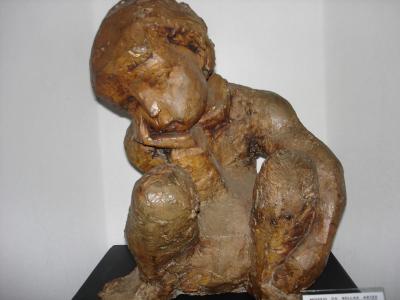
And you stare at this image, fascinated, thinking about the hands of the artist, what motivated him, and wonder how the icon seems to be saying: "time is but a fiction. Come join me on a flight to eternal nothingness!"


Mary Martin Somers' Colonial Tea House is a place to relax and get away from the hassle

Mary Martin Somers' Colonial Tea House is a place to relax and get away from the hassle

During the long winter months at Clinton, Ma, U.S.A. it's a good idea to treat the icy streets with due respect, but if you need a breather from the stress of a hard day's work the place to rest your weary body and mind is an equisite Colonial Tea House whose owner is sure to greet you with a warm smile and a tea pot wrapped in a finely decorated covering cloth.


Mary Martin Somers was fixing a tasty cup of exotic genseng tea--just one of a list of tantalizing blends of black, red, green and herbal teas--when the curious writer-visitor put words to his thoughts:

"Hi! This is a great place! What do you think about doing an interview for Jaquemate about drinking tea on a cold winter day?"

"I'd love to," she said, setting the cloth covered tea pot on the table. But before chatting the visitor slowly allowed the hot brew to surge through his blood vessels.

"So how did you get into the world of tea houses?"

"Well, I had always been interested in the idea of setting up a tea hourse but had been working at as an executive..."

"An executive?"

"Yea, in a company, doing accounting and that kind of thing. Working in corporate world means long hours away from your home and family and, to tell the truth, it's like being in a cubicle. You can't be creative in a cubicle and I wanted to be creative."

"So you gave it up."

"The business hassle is like living in a box."

"Sounds like that song by Pete Seager: 'Little boxes, little boxes..."

"Ha! Ha! I don't remember that."

"Perhaps that reflects my age!"

"Maybe. Ha! Ha! Anyway, I just got this feeling it would be great to do something different and that was when the idea of the tea house appeared. I wanted to create an environment warm enough so people could relax, feel at ease and get away from the daily hassle--no computers, no junk food--a place just to be or to read or talk with friends, relatives or your couple."

"You sure have a taste for decoration!"

"The decoration had to mesh with the idea of the relaxed environment I wanted to create, although there were certain difficulties such as the size of the windows. My intention was to develop an inviting atmosphere, not flowery, not a replica of those all-alike places, not frilly--that's for another market."

"What about your clients? Who are they? I mean there seems to be a greater abundance of pubs in the town..."

"Actually, there are a lot of companies in the area, banks too, and then women especially like tea houses."

"So the gentle ladies are your most faithful clients."

"Perhaps. But on weekends we get couples, young people, groups that come to relax and have a good time enjoying tea and our other specialties."

"For example?"

"Well, if you come in early you might want to try our morning platter--fresh baked muffins, scones, croissants, butter, jelly and a choice of tea..."

"My mouth is already drooling! Ah...tell me something: do you brew your own teas?"

"Some, but mostly we buy from venders, some of whom travel around the world to bring back exotic blends. I am always on the look out for fresh new blends."

"O.K.Hold on to your chair. Here comes a question with a tag attached: what is the secret for making a good cup of tea?"

"It has to do with the time you brew it and also the tea maker should know the properties of the tea he or she is brewing. The English tend to like their tea strong. But you don't make tea stronger by leaving the leaves in longer. A good tea takes from 3 to 5 minutes to brew."

"Would it be correct to say that tea making has to do with the quality of the water and the tea leaves? And then maybe we need to be educated in the art of tea drinking..."

"That's very true! There are some people who drink tea as if it were coffee."

"Might I ask just one more question: what effect has the tea house had on your life style"

"Quite a bit, I would say. The relaxed atmosphere helps people free themselves from hassles, and it helps me too. It allows me to be creative, to serve others, to help them, to help make them happy."

After that chat, with the warm genseng tea glowing inside, somehow the sub-zero weather outside seemed almost Spring-like.

The Colonial Tea House is at 
180 Church street, Clinton, Ma. 01510. 
Phone: 978-368 3232
Web: colonialteahouse.com
e-mail: msomers59@hotmail.com


(To be continued!)


May and Ella: two twins, two whims...

May and Ella: two twins, two whims...

It isn’t often that a wandering minstrel happens upon two twin souls just as the old year is shaking hands with the new one.

They were playing with Mega, their robot friend, when the stranger, tired after a long journey, said: “Sorry, I can’t make heads or tails out of this?”

At that an enormous robot, a full four feet high, came sauntering into the kitchen muttering: “May I be at your service?” He (or it) repeated the phrase several times, as if uncertain whether human beings were able to capture the significance of the question.

“It’s Mega!” shouted Ella.

“Our giant,” added May.

The robot was a bit awkward, perhaps embarrassed or timid, yet managed to swallow his shame by muttering in a 'here I am, it's me' kind of voice: “My name is Mega Mech.”

Well, no sooner did he say that than he (it, she) began a backward movement, you might even say it,he she tottered towards the living room, warning: “Watch out! I am backing up!”

The wandering minstrel wiped the cold sweat from his forehead, dropped his body into a chair and said: “Woh! That was a close one! Let’s take a breather…this is a bit more than I expected...ah...well...I’m sorry but I’m not sure if I can tell your voices apart.”

“I’m May and I was born on March 24th at 8:40 a.m.and I want to talk about New Year’s Eve. We have been playing heads and tails with Sofie.”

“How do you play that?” the minstrel wanted to know. “Well, if you win you get a froggie and both of us got froggies!”

“That sounds great!”

“And my name is Ella and I’m a little older than May. I was born at 9:02 a.m. I’m going to stay up to midnight to watch Sponge Bob.”

“Hmm...That must be a TV program.”

“Yea. But now it’s New Year’s day and grandma and grandpa are going to come for supper.”

“That’s sounds cool...ah…tell me something: do you like school?”

May said she liked Math, Ella expressed her preference for free time activities: “I like to play soccer, baseball, tennis, golf and basketball,” she said.

“I bet you guys like music. Who’s your favorite singer?”

They both responded in unison: "Ella Enchanted and Elvis Presley!" Then they began to dance around the table in absolute glee. And then, as if magic really existed, well, not just in story books but in real life, a gentle eyed teddy bear suddenly appeared out of nowhere and landed on the table singing a song about himself:

“…I don’t want to be a child…” (Actually, that was a stanza from a song by Elvis the Pelvis) The teddy bear broadcast the song several times. Then the conversation turned to Christmas.

“I got a giant!” the minstrel twitched his cheek muscles a bit, unsure which of the twins actually got the giant. Anyway, the scene abruptly changed again when the Mega-mech returned, marching triumphantly into the room. The minstrel explained that he couldn't stay there talking for ever and that he had some other visits on his list. Nevertheless, he figured it would be appropriate to ask one more question:

“What’s your favorite story?” Ella was the first to volunteer:

“One Christmas Eve my stomach ached and so we went out and saw Santa Clause eating a cookie at grandma’s house. She added: “I wanted to get lots of presents, so I didn’t talk to Santa.”

“That's reasonable,” replied the minstrel, the suggestion of a smile quivering at the edges of his rosy lips, but what about the story?”

May: “I was sleeping and I wanted to tie my shoe, so I asked my mother to help me because I didn’t know how to tie a shoe, and that’s the end of the story.”

Ella: “My friend Mattie and I like sweets. I told her I liked sweets and she said she did too and a sweet fairy came. Then we got all the girls in the class to play sweet fairy.”

At that the minstrel beat a retreat, offering his apologies for mixing up names and voices, and went out the door accompanied by a gust of cold air that ushered in 2008. 

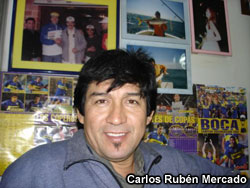
Carlos Rubén Mercado: "desde la cuna me anotaron como hincha de Boca..."

Carlos Rubén Mercado: "desde la cuna me anotaron como hincha de Boca..."


      Tiene una sonrisa contagiosa, es de Tucumán, hincha de Boca Juniors y pescador de tiburones (que suelta al agua después de la captura) y hace 25 años maneja una cerrajería en una galería a la vuelta de la Plaza Libertad, en la Ciudad de Buenos Aires.

      Yo lo ví un día tranquilo tomando café frente a su negocio y como allí adentro pude devisar unas banderas de color azul y oro y fotos de futbolistas, me acerqué con una pregunta bomba:

--Hincha de Boca, eh?

Una risa iluminó todo su rostro. Después contestó:

--Y sí, desde que nací, desde la cuna ya me anotaron como hincha de Boca, qué sé yo, ya en el hospital, apenas nacido.

--Imagino que ese hospital no está en Buenos Aires.

--No. Está en Tucumán.

--¿En la ciudad?

--No en un pueblito que se llama Alberti.

--Ha de ser lindo.

--Bueno...es un pueblito chico, a unos 120 km de la ciudad de Tucumán.

--Entonces, en ese pueblo se hizo hincha de Boca.

--Lo que pasa es que yo soy del campo y donde vivíamos todos eran de Boca.

--Su madre, su padre...

--Mis padres no, pero mis tíos sí. Todos eran de Boca y allá en el campo jugábamos con un trapo.

--En vez de una pelota.

--Claro. Pero a los 15 años vine aquí y cuando llegué fui a ver la cancha, a conocerla, y fui a ver un partido entre Boca y San Lorenzo.

--¿Quién ganó?


--Esa vez ganó San Lorenzo.

--¡Oh!

Un silencio penetró el local, tan profundo que pudo haber sido el silencio de la concentración antes de un partido contra River, el rival a vencer, siempre. El silencio en realidad duró apenas unos segundos.

--En ese partido jugaba Escata y Fisher por San Lorenzo y para Boca Ratín, Marsolini...

--Ahora quiero la verdad: ¿Por qué sos hincha de Boca y no de otro cuadro?

--Porque soy de Boca, aunque en mi provincia soy hincha de Atlético de Tucumán.

--¿Pero por qué Boca?

--Será que siempre sale campeón, por mi familia, porque la mayoría de la hinchada es de Boca. ¡Qué sé yo! Es como entrar en un negocio lleno de comida: cuántos más hinchas de Boca hay, más habrá.

--¿Pensando en los directores técnicos de Boca, cuál le parece el mejor?

--Bianchi...y Tabarez también.

--¿Por qué Bianchi?

--Será por la cantidad de copas que sacó.

--¿O por su actitud?

--Es un buen técnico y listo. Pero además tiene muy buenos preparadores físicos y para mí es muy importante tener buenos preparadores.

--¿Cuándo fue la última vez que fue a la cancha?

--Cuando Boca jugó por la copa contra un equipo de Ecuador. Pero a veces uno no va a la cancha porque no se consigue una entrada o cuando la consigue vale cinco veces más.

--¡Tanto!

--Claro. Se compran y luego se revenden. Para mí está mal. Cada vez que Boca llega al final suceden estas cosas. Uno no puede conseguir una entrada en platea o si la consigue vale $50 pesos. Una barbaridad. Para mí dan entradas a la Barra Brava que luego las revenden.

--Además está el problema de la seguridad.

--Es un tema muy complicado. Antes cuando el país estaba más tranquilo esto no pasaba, uno iba a la cancha con la camiseta y con la gorra y no pasaba nada. Pero ahora vienen hinchas de otros equipos y hay pelea, golpes. Te quitan la camiseta...entonces uno va cuando hay partidos con equipos chicos que no tienen tanta hinchada.

--¿Tiene chicos?

--Cuatro.

--¡Difícil ir a la cancha con cuatro chicos!

--Sí, es difícil. Uno va con ellos cuando Boca juega contra un equipo chico, por ejemplo Arsenal...

--¿Y ahora? ¿Cómo ve usted el futuro?

--No se sabe si Basile (el director técnico) va a seguir o no. Hablan también de los premios, que no están pagando los premios a los jugadores. Un jugador es como un obrero, pues a veces no recibe el pago.

--¿Y Maradona?

--Era bueno como jugador. No tanto como técnico, cuando era técnico en un club en la provincia de Corrientes. No pasó nada. Un buen jugador no es siempre un buen técnico y además hace falta tener un buen preparador físico.

--Bueno....cambiando el tema, veo que usted ha tenido clientes importantes...

--Sí. compré el local en 1989, pues los alquileres eran imposibles. Acá vino Chico Serna para hacer llaves y ha habido otros de Racing, de Independencia.

--Además, usted pesca.

--Tiburones, cazón...

--¡Como ese gigante en la foto!

--Un tiburón de 60 kilos pero luego de pescarlo lo largamos al agua porque está en extinción.

--Habrá sido difícil pescarlo.

--Sí, sí. Tardamos una hora y media en sacarlo.


    Entraron clientes, sacamos una linda foto y los saludos de siempre y a la calle....Pensar que ahora Mauricio Macri, ex presidente de Boca, ahora ha sido elegido intendente de la ciudad...

Carlos Rubén Mercado en Cerrito 1070, L17, Ciudad de Buenos Aires

Teléfono: (5411) 4811-1814

The guy was reading a book at Berkeley so I asked him...

The guy was reading a book at Berkeley so I asked him...


      It could have been anyone, but the fellow with the scrubby grey beard, engrossed in the reading of a thick book, seemed to be an ideal candidate for an obvious question:

     “I bet you’re a survivor of the 1960’s!”

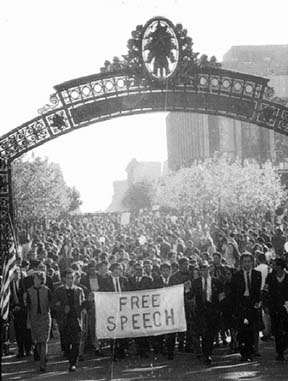
     He closed his book and relaxed his legs from the loto position he had assumed there in front of the Golden Bear at the University of California at Berkeley campus.

     “It’s pretty obvious I have survived.”

      His sense of irony fed my instinctive curiosity.

     “That’s true,” I replied “but what I meant was, well, there aren’t too many vestiges of the days when Berkeley students were lambasting the war in Vietnam and participating in protests against racial discrimination…”

      “Things have changed, true…where are you from?”

      “Argentina?”

      “You don’t say! I’m from Madrid…”

      “But a survivor of the ‘60’s.”

      “Yea. I graduated from Berkeley in ’64.”

      “Things sure have sure changed!”

      “No long haired types, no LSD, no beatniks, no anti-war rallies…”

     “And not too many far-out books, at least along Telegraph avenue...”

     “Nowadays there’re just interested in getting a degree, passing the tests and, well, they don’t have time to think.”

      “About preventive wars, the warming up of the planet...Iraq…”

      “You know why that’s not on the menu?”

      “I don’t know. Maybe because the new generation has gone Nerd.”

      “It’s more simple. During the Vietnam war, the draft still existed, the reserves too. Now they fight wars with volunteers.”

       “If you say: ‘I want to go fight for America’ what can your friends and relatives say?”

       “That’s true. But then you’ve got the multi-billion dollar defense budget, the skyrocketing debt, the mortgage crisis, dipping deep into your pockets to pay the doctor’s bill…”

        “Vaya uno a saber…”

        “Un abrazo…ha sido un gusto hablar con un sobreviviente…”

        So we parted. There was a homeless fellow seated at the entrance to the university, also a survivor of the 1960’s, at least in age. Not everyone is happy living in a suburb, two cars, a dog, a cat, a blackberry, a wife, two children and a talking parrot,” I thought to myself. I suppressed my desire to chat with the homeless chap. I had a pretty good idea of what he’d say, anyway.

Nada somos y todo, nada es todo

Repletas y suaves las brisas

    los cuerpos tibios
    en tierra de amantes ignorantes
Brisas sabias, ancianas, suculentas
    nada sucede, todo sucede
    en tierra de amantes ignorantes
Suaves soplos de viento fresco
    los cuerpos tiesos
    en tierra de amantes ignorantes
Nada sucede, nada es para nadie
    tu amando es un ser ajeno
    ignorante amante de tempestades 
Nadie eres, nada eres y todo
    un soplo de amante ignorante
    en tierra universal y mutable. 
Nada somos y todo, nada es todo.

Iraq: pretty much like a graveyard for journalists

      Some figures say more than a thousand words: of the 124 journalists and photographers killed in Iraq since the U.S. invasion, 102 were Iraqis.

      The Iraqis are badly needed by the New York Times, the Washington Post...and the numerous other international media that report from Iraq. They rely heavily on local journalists for information and contacts but the Iraqis pay a high price for their collaboration.

      An equally alarming figure: U.S. military authorities have held more than eight Iraqi journalists at detention centers for from weeks to months on suspicion of alleged collaboration with insurgent groups, according to the Committee to Protect Journalists.

    One of the arrested journalists is Bilal Hussein, who won the Associated Press's 2005 Pulitzer Prize for photography. He was held for approximately 20 months at Abu Ghraib, according to the New York Times, and now his fate hinges on the decision of just one man, an Iraqi magistrate who will act as a one man jury to decide if there is evidence linking him to the insurgency.

    If the occupation of a journalist is to collect duly verified information so the reader can come to an intelligent conclusion concerning a social or political conflict, detention on mere suspicion is a clear violation not only of the journalist's obligation to inform but of the public's right to receive objective and reliable information.

"Death and the Maiden:" Latinamerica comes to Princeton

      At first glance a play about human rights abuse in an unnamed Latinamerican country doesn't seem to be an appealing subject for theatre goers in the protected and prosperous enclave of Princeton. Yet Ariel Dorfman's "Death and the Maiden," received hearty applause when presented December 7,8,13 and 15 at the Lewis Center for the Arts.


      A senior thesis production directed by Alex Ripp, the performance was tecnically well done but left an understandably large gap in view of the distance between the clean and tranquil air of a middle to upper class U.S. college town and the sordid reality of dictatorship, torture, repression and psychological twisting in a far-away underdeveloped country.

      An actor "gets into the skin" of his or her character by diverse techniques, including what is referred to as "emotional memory." What kind of emotional memory could a youthful blond and blue eyed Glenn Brown conjure up to play Gerardo Escobar, a lawyer concerned about human rights and also his own reputation? How could Dominique Salerno as Escobar's wife, Paulina, imagine having been picked up and subject to multiple rape by a special forces squad? How could the young Dan Kublick picture his character, Roberto Miranda, a doctor who participates in torture sessions?

     In view of such a difficult to bridge gap of experiencial knowledge, the actors and director did an admirable job. Acting is a unique art which attempts to bridge gaps of this sort to reveal the naked human being in all of his frailty.

     One likewise must wonder at how the audience could come to terms with the conflicts, circumstances and shadowy zig-zags suggested in the script. Middle class America has for decades proudly declared its faith in democracy and its aversion to dictatorship. What does it know about the feel of things under strong handed regimes? Has it a notion of the process by which dictatorships come to power? The causes and interests that lead to gross violations of the most basic human rights?

    Dorfman's play is situated in what could have been any number of dictatorships in Latinamerica during the 1970's--when anti-communist regimes received more than the applause of Washington: numerous military men were trained in counter-insurgency techniques which included the rough handed treatment of persons detained under suspicion of leftist or revolutionary sympathies.

     However, reducing any situation to black and white necessarily obscures and distorts the more dialectical underlying reality.

     In Dorfman's play Dr. Miranda is presented as the apparent "bad guy." Paulina is convinced that he raped her while she was kidnapped, and so when he appears by chance in the Escobar's home she ties him up and demands he confess his guilt. 

     Everything would appear to indicate that he in fact is to blame for the blatant abuses Paulina accuses him of. Yet Dorfman, a writer with a clear notion of how to thread the yarn of dramatic conflict, sheds his story with a cloud of doubt--a cloud that also covers real life situations.

     At a certain point in the relationship between torturer and the tortured a certain ambiguity appears. Except in the case of extra-ordinary individuals, most people double up under torture and end up confessing what their torturers demand. That is why many question the "efficiency" of torture as a method of questioning. Under certain circumstances also a sort of symbiosis appears between the two parts of the equation.

     That would appear to be the director's intention in the dramatically effective conclusion of the play when he puts Escobar and Paulina. in front of an audience to denounce the crimes committed by Miranda: Perched on a high balcony, the doctor exchanges suggestive glances with Escobar's wife. 

Carlos Mange Casis: "Cuando el pago se hace canto."

Carlos Mange Casis: "Cuando el pago se hace canto."

“El arte es la inminencia de una revelación que no se produce.” (J.L.Borges)

     Al entrar en la casa del investigador musical Carlos Mange Casis, uno tiene la sensación de estar ante una persona muy apasionada, a pesar de la aparente falta de orden: cuadros sobre las paredes, libros y grabaciones en cd apilados sobre largas mesas, un reproductor, la computadora. Es una noche tibia en La Paz, Entre Ríos, tierra del gran poeta Linares Cardozo, un artista de la voz y de la palabra, que pintó el alma del músico popular  en “Desprendimiento:”

Guitarra,

Es tiempo de partir: Mis manos se aquietaron

Entre un manso crepúsculo.

Los dedos ya no pueden agitar en armonía

Tu aljibe iluminado.

Presiente el ser, una música cósmica;

El eterno sonido de la inmensa guitarra

De cuerdas estelares.

Asombrado del desprendido vuelo,

Escapando del lastre que impusiera

Un destino probatorio de valores,

Allá voy, aligerado,

Hacia la profunda guitarra de la noche.

La zafadura deja atrás

Quemándose los restos

De ese negocio existencial que pesa.

Desde la altura se desdibuja

Un muchacho costero bordeando su arroyuelo;

Los ríos del diario amor

Con su agua bienhechora,

Y el diálogo final de barcas descansadas.

Sorprendido el suindá

Alerta con el último chistido,

Porque yo voy pasando, en suave elevación

Hacia el encuentro con la dulce, infinita

Guitarra madre de la noche estrellada!!!


            Carlos apaga la grabación de la poesía, realizada con la voz profunda de Linares, y comenzamos a  charlar sobre su trabajo.


            --Aquí en La Paz, donde nací, todos me conocen como “Mange.”  He estado vinculado a la música desde los años ’60, pero en ese momento el folklore del norte se escuchaba en todos lados, “Los Fronterizos,” “Los Chalchaleros…” las hermosas poesías de Jaime Dávalos, Yupanqui…hasta que descubrimos aquí a una figura que sobresale de los demás y se llama Linares Cardozo.


            --¡Cardozo!


            --Sí, una figura muy grande. Bueno, luego comencé a trabajar en una empresa de construcción y recuerdo que iba a un comedor, creo que era en San Luís. Habrá sido en 1972 cuando el lugar se llenó de música, pues un dúo estaba cantando, y a raíz de esa experiencia me conecté con la música de la zona del literal.


            ¿Cuáles son las características de la música de esta zona?


            Nosotros estamos a no más de 90 kilómetros de la frontera entre Entre Ríos y Corrientes, zona en la cual hay una neta influencia guaraní, pues aquí se escucha Chamamé. El 29 de octubre se celebra el día de la chamarrita en Entre Ríos, es la fecha de nacimiento de Linares Cardozo. Yo tengo un programa en LT 40 Radio el día domingo de las 11 hasta las 13 horas en el cual se escucha esencialmente, música  de la región litoral.


            ¿Cuál es el origen de la Chamarrita?


            Dicen que tiene influencia portuguésa pero el asunto es que Linares Cardozo nos ha dado el ritmo específico que se escucha en esta región. Sucede que cada lugar impone su ritmo. Cuando uno escucha una chamarrita de Entre Ríos, uno nota que es distinta a la de Corrientes, por ejemplo. En cambio en Corrientes se agrega el acordeón y asume, casi el ritmo de baión. Tengo notas con muchos personajes de la música popular: Atahualpa Yupanqui, Heraclio Pérez, Isaco Abitbol, Linares Cardozo, Ariel Petrocelli, Francisco Casís, Roberto Galaraza, Ernesto Montiel (Le realicé la ultima nota que se conserva el 15/05/1975), y tantos otros. Aquí en La Paz desde hace 28 años, tenemos la fiesta provincial “Cuando El Pago Se Hace Canto”. No lo llamamos festival, sino fiesta, porque un encuentro entre músicos. Llegan músicos y cantantes provenientes de todas partes del país. Es una cosa increíble. Vienen, especialmente, de Corrientes, Santa Fe, Bs.As, Córdoba, Entre Ríos y también del norte, de Tucumán de esa geografía que impone el silencio.


            --¿Qué sucede con la música folklórica actualmente en el país?


            --Ni intentando se puede desvirtuar la esencia de la música popular, por más que pretenden quitar su ritmo o variar la armonía pero no pueden porque está en las raíces…hay programas de radio en esta zona que tratan de hacerlo pero no pueden. Tratamos de mantener la autenticidad de la música mediante nuestro programa radial y la revista “Cuando el pago se hace canto.” Además, hay muy buenos programas de música argentina, aquí y en todo el país…Hace un tiempo estuve en emisora en Hurlingham (Bs.As) que difunde programas dedicados a la música del país las 24 horas. También en la juventud uno percibe un fuerte interés por la música nacional. Acá por ejemplo hay mucha gente joven que cantan Chamamé y Chamarrita, ritmos que nos pertenecen. Es muy grande el interés generado por la fiesta “Cuando El Pago Se Hace Canto”. Vienen músicos de todas partes y no cobran ni un centavo, Nombro artistas como Ramón Ayala, Julio Lorman, Mateo Villalba, Roberto Galarza, Miguel Zurdo Martinez, Juan y Ernestito Montiel, por nombrar solo algunos. Se trata de encontrarse y reencontrarse. ¡Y qué hermosas son las sobremesas! Suelen ser encuentros más hermosos que la presencia en un escenario.


            --¡Seguro!


            --Usted puede ver aquí los cientos de libros que tengo, los videos, aquellas cajas con grabaciones. Yo grabo todos mis programas, los 15 años del programa, todo grabado…


            --¿Cómo es el programa de radio?


            --Siempre hay una nota y la gente espera escucharlas, pues siempre son documentales… la música que emito es un 90% de la región litoral y también suelen visitarme números artísticos en vivo.


            --¿Cuál es el aspecto de la música que más te apasiona?


            --A mí me gusta mucho conversar con figuras que son históricos. Uno va rescatando la voz y la imagen de los músicos porque a veces, por ser cotidiano hay cosas que no se valoran. Hay que tomar un poco de distancia para poder ver la verdadera dimensión. Me gusta guardar las charlas con los artistas, músicos, y tambien todas aquellas personas que trabajan en la cultura.


            --Una pregunta más: ¿es usted soltero?


            --Sí, soy soltero…hay un tango que dice “nunca tuvo novia…”, bueno, yo tuve novia pero soy soltero. Estoy casado con esto, mi trabajo, que me encanta, con la cultura, con la fiesta que se hace aquí, “Cuando el pago se hace canto.” Hay festivales que han desaparecido pero acá no, estamos por festejar nuestra 28º Encuentro, y vamos a seguir adelante con la ayuda de todos los músicos del país.


Contactos

e-mail: carlosmangecasis@hotmail.com

cel: 03437-15607443

LT 40 Radio “La voz de la Paz”

Acerca del arte de comer a las 13 de la tarde en un pueblo de una provincia argentina...

     "D'Comer" puede aparecer como un producto comercial pero es un boliche al estilo gaucho, con horno a barro, techo de paja, mozos terriblemente neviosos y clientes que en general exceden ampliamente dos personas de peso normal. El lugar ha sido popularizado debido a la fama de uno de los clientes más fieles: el Doctor Cipriano Delgado, reconocido especialista en dietas no convencionales.

        Es el único lugar con señal de vida a eso de las 13 horas en este pueblo perdido en la Pampa. Será por eso que el hambriento viajero puede gozar no sólo de los insólitos gustos de los platos hundidos en aceite y grasa: el aire húmedo del boliche se llena más aún con la voz de un cantante tan ancho como alto y con y con menos pelo que el papá de los Simpson.

        En mi caso particular, digo, tuve que esperar tan sólo 43 minutos para probar las dos empanadas criollas, una arabe y una "machista." Esta última consiste de varios quesos, piqantes varios, cebollas y vaya saber qué otros ingredientes. No importa. Allí estoy yo, alto, flaco, enjuto, barbudo, marcando la música con mis dedos finos y echando gestos de displicencia al mozo. ¿Qué hacer en tales circunstancias? Miro, estudio el ambiente, saco conclusiones filosóficas y culinarias. 
    
       Las panzas de la pareja en frente representan una excepción a la regla: no luchan con la estrechez de sus remeras o camisas. Ahora bien, ellos llegaron 15 minutos después de mi entrada gloriosa: el hombre todavía en sus mocedades, ella con un destello de pasión acabada en los ojos. No es lo que importa en este relato. La parrillada que llegó a la mesa--carnes sumergidas en humo, el sonido tipo canto que resulta del contacto directo del intestino de vaca con las brasas--habrá pesado al menos 15 kilos: chorizo, gorduras de varios tipos que la mujer ponía en su boca con una mirada torva. Y eso sin mencionar el montón de papas fritas, la ensalada rusa, las empanadas, las tres botellas de gaseosa, y el vino tinto.

        Más adelante capté una situación insólita en mesa: una mujer con dos hijos de alrededor de 10 años y dos hombres (¿padres? ¿amantes?). Curioso: los dos hombres se dedican a castigar a uno de los hijos, los dos empleando el conocido método del bastón y la zanahorría. Poco importaba. El hijo respondía sacando sus garras, atacando primero uno de los hombres, luego el otro. La mujer, nada. Realmente daba a pensar. ¿Quién es el esposo, el padre? ¿O son dos? A lo mejor son agentes de Ben Laden, investigando el terrendo en Nono.

    Pronto el chico subió arriba de la mesa.
    --¡Dejá de joder! (Creo que la frase fue lanzada por el padre de lentes de metal)
    --No me da la gana.
    Entonces, los dos hombres lo levantaron y lo llevaron hasta la calle, mientras el cantante suspiraba "Mi Tucumán querido." Yo, la verdad, perdí la pista de esa familia tan especial porque noté que el mozo comenzaba a volar. ¡Sí! (A cualquier mesa menos la mía) Te juro. Lo ví con estos ojos de observador nato. Volaba como una mosca, mejor dicho, como un mosquito. Pero la velocidad no le ayudaba mucho cumplir mejor con su tarea. Por ejemplo: trató de cobrar a una pareja lo que le correspondía a otra; rompió alrededor de tres vasos; sudaba océanos de liquído y si mal no me recuerdo en un momento descansó su trasero sobre la mesa de dos gordos (el hombre de 200 kilos, la mujer, 199km) y empujó a su boca ancha lo que quedaba del montón de carne asada.

      ¡Pobre vacas! Pensaba yo. En realidad lo que me preocupaba era mis tres empanadas. Pero la historia terminó bien. Creo. En fin, nada es seguro en este mundo. Llegaron las empanadas. Cuando fui para pagar, el mozo no estaba y me explicaron que tendría que esperar, pues el hombre tenía un asunto pendiente conmigo. ¡Poca cosa! Entonces, me acordé de mis técnicas de vuelo aprendidos en mi juventud y lo alcancé en medio del aire, entre el techo de paja y mi maldita mesa.

    --¿Me cobrás?
    --Sí, tenga paciencia.
    --Paciencia tengo pero me hace esperar 43 minutos para comer y ahora van 15 para pagar...
    --No seas bribón...
    ¿Yo bribón? No creo que el término sea el más adjustado a la realidad. Eso sí: D'comer es ciertamente un refugio interesante para aquellas personas de salud quebrada, con alta presión arterial, doloridas debido al artritis, todas aquellas personas que deben masticar muy bien cada pedazo de alimento.


"Reír a carcajadas hasta el final..."

"Reír a carcajadas hasta el final..."

María, la psicóloga, grandes lentes de plástico, gestos nerviosos, saltaba entre los solos y solas que estaban reunidos en la confitería en un barrio alejado del centro de Buenos Aires.

Explicaba que estaba tratando de dejar de fumar y pedía disculpas por su estado crispado. Los participantes tenían que decir qué harían si el mundo llegara mañana a su triste y esperado final.

“Reír a carcajadas hasta el final,” decía un hombre de cara abandonada y triste, “reconciliarme con mi mujer y hacer el amor con ella hasta...comenzar una novela que terminaría con el fin del mundo…”

Pero hubo propuestas aún más audaces. Una mujer delgada, muy atractiva, cabello negro largo, piel furiosamente blanca, con ojos melancólicos, propuso “hacer una fiesta de sexo, droga y rock and roll.” Luego de la carcajada generalizada, alguien le preguntó si la propuesta era en broma o en serio. “Las dos cosas,” respondió, forzando una sonrisa tipo Mona Lisa.

Un hombre gordo, de sonrisa fácil, lanzó una solución un poco más amena: preparar primero una comida con carne de primera, rozada de vino tinto, luego tomar copas hasta lograr un estado de felicidad ideal y recién después "amarnos entre todos."

Cada uno con su historia. Abandono. Rechazo. Caminos divergentes. Parejas que viven en la misma casa, pero como zombis, sin tocarse, sin besarse, cada parte deseando en secreto lo que en la práctica rechazaba...y palabras, palabras, palabras...y silencio...

¡Pobres los seres humanos! Buscan el amor con desesperación, luego actuan como si ese estado tan buscado no existiera y luego reclaman cuando el rechazo rebota en sus rostros. Apuntan con amunición gruesa al corazón y al alma, tiran, y se asombran cuando él o ella responde con balas aún más venenosas.

Cambalache, siglo 20...¿siempre ha sido así? ¿Siempre será así?

¿Es la vida misma la que nos hace jugar este sugestivo juego de "te amo" y "te odio?" Participamos en este dulce juego hasta el día cuando la negra y temida muerte reclama carne y hueso para reciclar la vida? Quizás.

Oh Gosh! What a Mess!

      You mean the National Intelligence Estimate in Washington is not certain whether Iran is busy as a bee building atomic weapons? Oh really? So what are we supposed to conclude? The Administration in Washington appears to be alarmed about the prospect of an Iranian atomic bomb, but Washington's own intelligence has put the damper on that doom's day like prospect.

Does that mean public opinion has had the wool pulled over its eyes once again--after being told, for example, that the "preventive invasion" of Iraq was to prevent that country's use of weapons of mass destruction? Weapons which curiously enough were never found...

Or perhaps you are worried about the political implications of a world in which spy agencies with shadowy budgets can beguile public opinion so easily--true, with the wink of politicians in the top nitches of power...and a good part of the mass media.

You might even dare to wonder at the implications of leaks to the press that somehow end up changing the course of political events--helping to bring about wars or putting and end to them.In this case, for example, how convenient is this information is for Moscow, which has long questioned Washington's disaster view concerning Iran's alleged intention to join the exclusive atomic bomb club (U.S., France, Russia, Israel...Pakistan...)

Here is what Mark Mazzetti wrote about the problem in the December 3 issue of the New York Times:

"A new assessment by American intelligence agencies released Monday concludes that Iran halted its nuclear weapons program in 2003 and that the program remains frozen, contradicting a judgment two years ago that Tehran was working relentlessly toward building a nuclear bomb.

The conclusions of the new assessment are likely to reshape the final year of the Bush administration, which has made halting Iran’s nuclear program a cornerstone of its foreign policy.

The assessment, a National Intelligence Estimate that represents the consensus view of all 16 American spy agencies, states that Tehran is likely to keep its options open with respect to building a weapon, but that intelligence agencies “do not know whether it currently intends to develop nuclear weapons.”

Iran is continuing to produce enriched uranium, a program that the Tehran government has said is intended for civilian purposes. The new estimate says that the enrichment program could still provide Iran with enough raw material to produce a nuclear weapon sometime by the middle of next decade, a timetable essentially unchanged from previous estimates.

But the new report essentially disavows a judgment that the intelligence agencies issued in 2005, which concluded that Iran had an active secret arms program intended to transform the raw material into a nuclear weapon. The new estimate declares instead with “high confidence” that the military-run program was shut in 2003, and it concludes with “moderate confidence” that the program remains frozen. The report judges that the halt was imposed by Iran “primarily in response to increasing international scrutiny and pressure.”

It was not clear what prompted the reversal. Administration officials said the new estimate reflected conclusions that the intelligence agencies had agreed on only in the past several weeks. The report’s agnosticism about Iran’s nuclear intentions represents a very different tone than had been struck by President Bush, and by Vice President Dick Cheney, who warned in a speech in October that if Iran “stays on its present course, the international community is prepared to impose serious consequences.”

The estimate does not say when intelligence agencies learned that the arms program had been halted, but officials said new information obtained from covert sources over the summer had led to a reassessment of the state of Iran’s nuclear program and a decision to delay preparation of the estimate, which had been scheduled to be delivered to Congress in the spring.

The new report came out just over five years after a 2002 intelligence estimate on Iraq concluded that it possessed chemical and biological weapons programs and was determined to restart its nuclear program. That estimate was instrumental in winning the Congressional authorization for a military invasion of Iraq, but it proved to be deeply flawed, and most of its conclusions turned out to be wrong.

Intelligence officials said the specter of the 2002 estimate on Iraq hung over their deliberations on Iran even more than it had in 2005, when the lessons from the intelligence failure on Iraq were just beginning to prompt spy agencies to adapt a more rigorous approach to their findings.

The 2007 report on Iran had been requested by members of Congress, underscoring that any conclusions could affect American policy toward Iran at a delicate time. The new estimate brought American assessments more in line with the judgments of international arms inspectors.

Last month, Mohamed ElBaradei, director general of the International Atomic Energy Agency, reported that Iran was operating 3,000 uranium-enriching centrifuges capable of producing fissile material for nuclear weapons, but he said inspectors had been unable to determine whether the Iranian program sought only to generate electricity or to also to build weapons.

Senator Harry Reid, Democrat of Nevada and the Senate majority leader, portrayed the assessment as “directly challenging some of this administration’s alarming rhetoric about the threat posed by Iran” and called for enhanced diplomatic efforts toward Tehran. Democratic presidential candidates mostly echoed Senator Reid, but also emphasized that Iran’s long-term ambitions were still a great concern to the United States.

In interviews on Monday, some administration officials expressed skepticism about the conclusions reached in the new report, saying they doubted that American intelligence agencies had a firm grasp of the Iranian government’s intentions.

The administration officials also said the intelligence findings would not lessen the White House’s concern about the prospect of a nuclear-armed Iran. The fact that Iran continues to refine its abilities to enrich uranium, they said, means that any decision in the future to restart a nuclear weapons program could lead Iran to a bomb in relatively short order. While the new report does not contrast sharply with earlier assessments about Iran’s capabilities, it does make new judgments about the intentions of its government.

Rather than portraying Iran as a rogue, irrational country determined to join the club of nations that possess a nuclear bomb, the estimate says Iran’s “decisions are guided by a cost-benefit approach rather than a rush to a weapon irrespective of the political, economic and military costs.”

The administration called new attention to the threat posed by Iran this year when Mr. Bush suggested in October that a nuclear-armed Iran could lead to “World War III.” Mr. Cheney also said that month that as Iran continued to enrich uranium, “the end of that process will be the development of nuclear weapons.”

Yet even as Mr. Bush and Mr. Cheney were making those statements, analysts at the Central Intelligence Agency were well under way toward revising the earlier assessment about Iran’s nuclear arms program. Administration officials said the White House had known at the time that the conclusions about Iran were under review but had not been informed until more recently that intelligence agencies had reversed their 2005 conclusion.

In September, officials said, Gen. Michael V. Hayden, the C.I.A. director, and his deputy, Stephen R. Kappes, met with Iran analysts to take a hard look at past conclusions about Iran’s nuclear program in light of new information obtained since 2005.

“We felt that we needed to scrub all the assessments and sources to make sure we weren’t misleading ourselves,” said one senior intelligence official, speaking on condition of anonymity.

The estimate concludes that if Iran were to restart its arms program, it would still be at least two years before it would have enough highly enriched uranium to produce a nuclear bomb. But it says it is still “very unlikely” Iran could produce enough of the material by then.

Instead, the report released on Monday concludes that it is more likely that Iran could have a bomb by the early part to the middle of the next decade. The report states that the State Department’s Bureau of Intelligence and Research judges that Iran is unlikely to achieve this goal before 2013, “because of foreseeable technical and programmatic problems.”

The estimate concludes that it would be difficult to persuade Iran’s leaders to abandon all efforts to get nuclear weapons, given the importance of getting the bomb to Iran’s strategic goals in the Middle East.

Intelligence officials presented the outlines of the intelligence estimate two weeks ago to several cabinet members, along with Mr. Cheney. During the meeting, officials said, policy makers challenged and debated the conclusions. The final draft of the estimate was presented to Mr. Bush and Mr. Cheney last Wednesday.

Officials said they now planned to give extensive briefings to American allies like Israel, Britain and France. Israel intelligence officials for years have put forward more urgent warnings about Iran’s nuclear abilities than their American counterparts, positing that Iran could get a nuclear bomb this decade.

Intelligence officials had said just weeks ago they were ending the practice of declassifying parts of intelligence estimates, citing concerns that analysts might alter their judgments if they knew the reports would be widely publicized.

But in a statement on Monday, Donald M. Kerr, the principal deputy director of national intelligence, said that since the new estimate was at odds with the 2005 assessment — and thus at odds with public statements by top officials about Iran — “we felt it was important to release this information to ensure that an accurate presentation is available.”

Historias ocultas

Pululan en el aire

historias ocultas

que respiran

con cada soplo de viento.

 ¡Respiramos, entonces!

Boomerang Politics or the way the world might look upside down...

Boomerang Politics or the way the world might look upside down...


    There is a well-known weapon which pre-industrial tribes used to use in Australia which can either hit a desired object or come back towards the thrower. A verbal example of that was recently used by Ecuador's president, Rafael Correa, referring to the U.S. military base at Manta, whose lease expires in less than two years.


    Correa said he would accept renewal of the base "on one condition: that they let us put a base in Miami--an Ecuadorian base. If there is no problem having foreign soldiers on a country's soil, surely they'll let us have an Ecuadorean base in the United States."


     It doesn't seem very likely that President George Bush or whoever follows him would say: "O.K. That's fine! Tit-for-tat. Why not come to Florida and set up your own military base here?"


     The base at Manta is theoretically a staging area for the "war on drugs," but as everyone knows U.S. bases are used for many purposes not mentioned in public: for example, in neighboring Colombia there is a multi-million dollar military aid program which is supposed to be aimed at curbing illegal drug traffiking but likewise is aimed at the continent's longest living guerrilla organization, the FRAC.    

     During the decade of the 1970's, that is, during the "Cold War" between the U.S. and the Soviet Union, the continent was caught in the net of an international struggle that had little to do with its own particular interests. For the past thirty-five years economist Milton Friedman's ideas--tax cuts, free trade privatized services, cuts to social spending and deregulation, etc. became the rule of the day. They were imposed to a great extent by military regimes such as that of Chilean dictator Gen. Augusto Pinochet, nudged into power with help from Washington. Other dictatorships in Argentina, Uruguay, Brazil, Bolivia and Central America followed the same pattern of "economic shock treatment."


     In an article entitled "Latin America's Shock Resistance, Naoimi Klein adds: "These economic shock therapy programs were facilitated by far less metaphorical shocks--performed in the region's many torture cells, often by US-trained soldiers in Latin America."


      Friedman has maintained that "only a crisis--actual or perceived--produces real change. When that crisis occurs, the actions that are taken depend on the ideas that are lying around." Translation: sometimes it becomes necessary to invent a crisis in order to facilitate the imposition of economic policies on the menu of international corporations.

    A glance around the continent shows towards the 1980's the replacement of military regimes with very fragile democracies, most of which continued to apply the essence of Friedman's notions. In Argentina, for example, President Carlos Menem proudly proclaimed "carnal" relations with the United States and proceeded to privitise right and left.

    The problem of shock treatment is to determine the direction to be taken following recovery. Following the 2001 debt crisis in Argentina, the country evolved towards economic policies strongly questioning the previous no-holds-barred market economics....and it has been growing over the past few years by around 8%. In Venezuela President Hugo Chavez went much further: he proclaimed his own version of socialism. 

      In November 2006, Ecuador's presidential elections turned into an ideological battleground between Rafael Correa, a 43-year-old left-wing economist and Álvaro Noboa, a banana tycoon and one of the richest men in the country. Correa called for the country "to overcome all the fallacies of neoliberalism" and won. By the time he took office Bolivian President Evo Morales, of indigenous extraction, was already approaching the end of his first year in office and advanced towards recuperating oil and mineral resources for the State.

      There are many other examples of boomerang politics--and there will certainly be more in the future.


Is racism disappearing or changing faces?

    She has very lively blue-green eyes, sandy blond hair and her skin is sparkling white. You might even mistake her for Snow White.   

“There’s one thing I just cannot understand,” she tells a fellow English teacher in Buenos Aires, while waiting for a student to appear.  

“What’s that?”  

 “I’m from Brazil.”  

 “Really? 

 “Yea. I learned English on an exchange program. They sent me to live with a family in Texas.”  

“Texas, the land of the cowboys…and Bush…”  

“Look, my father is black, well, dark, mulatto, but I never even stopped to think that he was Negro until I arrived in Dallas.” 

“What happened?” 

“Well, I was looking at some photographs of my father and the mother of the family I was staying with asked me who the man in the photograph was. When I said he was my father and the woman’s face wrinkled up and she said: ‘you mean your father is a Negro?’ Until then I had never even thought of my father as Negro. That made me realize what it means to live in a racist society.”   

The teacher's comment raises the question: Is the united States still a racist society—in spite of  some dark cream colored politicians who have lately appeared in some important government offices? That depends to a great extent on the measuring stick used to determine what is “racism.”  

According to Gary Kamiya in the Salon news letter, more than a third of black Americans no longer believe that blacks are a single race.

There would appear to be a sort of de-emphasis of racial issues as the never-ending “war against terrorism” drags on and on.

“It’s hard to believe, “ writes Kamiya, “that just a few years ago, issues of black vs white dominated the national discourse. The Rodney King riots and the O.J. Simpson case inspired endless discussions and reams of editorial soul-searching.  Affirmative action and racial preferences, multiculturalism, and political correctness were fraught topics. The  twin towers fell, and suddenly we had a completely new enemy to worry about.”  

True. The U.S. has had a long history of enemies and the wounds of its own Civil War are but patches of a protracted process of social struggle and change.  

And the country’s wars inevitably end up influencing race and social structures on the home front. During the Second World War blacks went north to man the factories short of manpower…and when high technology began to shelf manual labor slums began to haunt northern cities.   During the Vietnam War blacks occupied the front lines in a blatantly outrageous proportion to whites. The present war against Iraq and Afghanistan, on the other hand, shows a great percentage of soldiers of Latin American origin.  

Getting back to the blue eyed daughter of a Brazilian mulatto: It certainly isn’t that race discrimination does not exist in Brazil. Discrimination still appears deeply engrained in Brazil and throughout most of the world. But, according to the English teacher, in multi-racial countries such as Brazil people don’t deal with each other on the basis of their color.      

Scientific Love or the way people are...

Scientific Love or the way people are...

He assumed her love.

She presumed his love.

His assumption was fallacious

Her presumption was outrageous.

He sought a new love.

She awaited a new love.

He assumed again.

She presumed again. 

His assumption was fallacious.

Her presumption was outrageous.

He returned to his past love,

She re-encountered her past love.

His past love was also fallacious.

Her re-encountered love outrageous.

He became a poet of himself.

She turned into a poet of herself. 

The two selves became poet-lovers.

The hers and the hims, lover-poets.

The theory was assumed,

The practice resumed.

 ‘How I love my assumption’, he exclaimed.

‘How I love my presumption,’ she proclaimed

The theory was assumed,

Practice resumed. 

Again he assumed her love.

Again she presumed his love.

His assumption was fallacious.

Her presumption was outrageous.

 He abandoned all his theories.

She gave up all her queries.

‘After all love is a science,’ he brooded.

‘And science is love,’ she concluded.