Blogia

Buenos Aires Jaque Press, en inglés y español

Cabezas y nosotros...¿qué cara debemos poner ante el mundo?

Cabezas y nosotros...¿qué cara debemos poner ante el mundo?

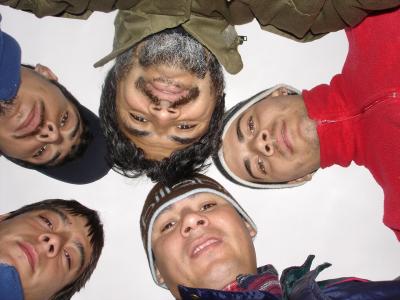
Cabezas, rostros, caras... ¡Cuánta expresión encontramos en los contornos faciales de una persona!

El amor, el odio, la frustración, el enojo...todo depende de la curva que va tomando el labio inferior, la tensión en las mejillas, el brillo de la piel, de los ojos, el color del rostro...pues hay caras que funcionan como imanes, otras que nos producen rechazo, otras que nos llenan de espanto...ese hombre sentado al lado tuyo en el colectivo: ¿es un ladrón? ¿Un agente secreto? ¿Un torturador? ¿El hombre que te va a amar hasta los últimos días de tu vida? ¿Qué esconde detrás de su aparente tranquilidad? ¿Será capaz de llevarte en brazos hasta el hospital si explota tu corazón en mil pedazos?

¡Cuántas cosas hay en un rostro que no captamos, cuyos códigos ignoramos! Digamos, si ese rostro que contemplas en este momento fuera de tu esposa, tu novia, tu mejor amigo: ¡Qué poco sabemos incluso de las personas que forman parte de nuestro entorno más íntimo?

Está bien. No se trata de ponerse nervioso, temblar paranoícamente. Pero, tomando la cuestión con más calma...¡cuánta diversión pensar en todas las posibilidades humanas, la increíble variedad de la especie humana...pensar que entre los casi 4 mil millones de homo sapiens sapiens no hay ni una cara igual a otro, no hay nadie que tiene la misma voz, el mismo carácter... ¡Menos mal!

María Neder: "Puerto Almendro, un lugar donde la gente puede anclar."

Construirte /montar cada palabra
Sobre el falo de ti misma
Hembra macho brutal espada poesía
Voz /sonido en el aire
Explosión quebrándome los huesos
Aquí me tenés, renga, viciosa
Lamiéndote y desaforada
Por escribir / darte en el centro
Con este lápiz
Con la palabra-siempre la misma sed-
Derramarme en oídos de otra lengua
Seguir en la respiración alucinada
Sin hallar el lugar donde el pie se apoye 
Exhausta
Yo mujer mi hacedora
¡si pudiera!

-María Neder, del su libro "Fisura de boca."


"Puerto Almendro" es el sueño provocador y seductor de María Neder, una creativa porteña de enrulados cabellos negros e inquietos ojos oscuros. Es, además, una innovadora que nunca se ha dado por vencida. 

Un puerto, como se sabe, es un punto de llegada o de partida, un lugar abarcador que huele a sal y sudor; un lugar en el cual existe un intercambio continuo y obligado de objetos, ideas e información. En cambio, el almendro también denominado "Amygdalus dulces Mill," es un árbol originario del oeste de Asia, encorvado y apreciado por la belleza singular de sus flores y por su fruto, la almendra. 

María es escritora, música, poeta y novelista; además, en su programa popular de radio en Merlo, provincia de San Luis, hace lectura de cuentos acompañada de jazz, piezas de folklore o música clásica. 

En "Puerto Almendro" uno puede tomar un café servido con un estilo único, contemplar las cercanas sierras de los Comechingones, pasar un rato leyendo cuentos, novelas, revistas de poesía o indagar sobre la historia de la región. En el jardín, rodeado de especies nativas de árboles, el visitante puede participar en charlas, debates, reuniones, talleres de escritura. A la noche el salón principal se llena a menudo de aficionados a la música, pues tocan los más variados conjuntos.

Golpeamos la puerta de Puerto Almendro, casi un arco iris colores, y preguntamos a María sobre el nombre del lugar.

--En realidad el nombre nació como programa radial. Pero vamos al principio. A poco tiempo de venir a Merlo comencé a trabajar como Directora de Turismo y desarrollé el proyecto turístico que ahora se está llevando a cabo. No hay uno nuevo. Se está trabajando sobre el proyecto que yo armé en 1996. Tiempo después me di cuenta de que trabajar en la función pública no era lo que yo quería. Había venido aquí para buscar otro tipo de vida, dedicarme más a la escritura, a la docencia no formal, dar talleres, charlas en bibliotecas. De repente, un día me pidieron que fuera presidenta de una biblioteca en Merlo que se estaba fundando en Cerro Oro. Mi mayor impulso allí fue que la gente siempre tuviera contacto con el libro, entender que una biblioteca no es una estantería muerta. Pero antes había hecho radio en Puerto Iguazú, un programa de cultura para Radio Nacional y allí también fundé la biblioteca "Puro cuento," de modo que había un antecedente en radio y en biblioteca.

--¿Y "Puerto Almendro?"

--Bueno, llegó el momento de renunciar a mi puesto en Turismo y yo me dije: '¿cómo voy a encarar esto?' Escuché a otros programas de radio y me di cuenta de que casi todos eran charlas, comentarios. Por eso opté por un programa de lecturas. Pero: '¿cómo hago esto para atrapar a la audiencia?' La repuesta fue: con música, pues también soy profesora de música y aprendí a tocar el piano antes de leer o escribir.

--¿En serio?

--Mis manos no llegaban del do al sol, pues tenía tan solo cinco años. Pasé mi infancia tocando el piano y la música me ha quedado como parte de mi vida, no como ejecutante sino como acompañante de mi trabajo literario. 

--Entonces, la música acompaña la lectura de cuentos en el programa radial…

--Sí, pero tenía que buscar un nombre al programa y mientras iba pensando qué iba a hacer en el programa comencé a trabajar con papel y lápiz, tal como se hace en la preparación de un cuento. '¡Ah! Yo quiero que la gente ancle, porque de este modo van a estar tranquilos, entonces voy a rotar entre música y cuento.' Puerto. ¿Qué es un puerto? Necesitaba un calificativo y encontré almendro. Fue un hallazgo porque lo que buscaba como adjetivo lo ganó el sustantivo: Puerto Almendro y este lugar tenía que llevar el mismo nombre. El año siguiente se publicó mi tercer libro y hago la presentación aquí en Villa de Merlo y viene mi editor y recorre el pueblo. Había una librería muy chiquita pero la gente a cargo de ella no sabía de literatura, muy poco sabían. Entonces, digo 'algo comercial no quiero, pero sí una casa con reuniones y charlas,' en realidad la misma idea que había tenido en Puerto Iguazú. 

--¿Cómo encontró el lugar?

--Comencé a buscar, y buscar lo que podía alquilar. Se me cerraban muchos lugares pero de repente me encontré con esta casa, totalmente abandonada, de un artista plástico, y cuando comenté mi proyecto me prestó mucha atención. Pasamos unos cuantos días conversando. Vio que tenía todo definido: cómo iba a servir el café, que todas las mesas iban a ser diferentes, que a mí no me interesaba comprar sillas iguales y poner un bar, no; me interesaba la forma, la idea de cómo poner las cosas. Entonces, el pintor propuso un alquiler por tres años, ínfimo, para que yo pudiera hacer las reformas que quisiera. 

--¡Una suerte!

--Sí. Como se puede ver, muchas de las cosas parecen desordenadas pero sucede que hay toda una intención en el desorden aparente. Es una intención: salir fuera de lo establecido, incluso en eso de poner un color, después otro. Es que cada objeto no representa el objeto en sí mismo sino que tiene un símbolo más. Por ejemplo, esta mesa con recortes de diarios y frases tiene la intención de no ser solamente una mesa sino de provocar al pensamiento. La función de mesa está, pero estéticamente representa un objeto de un modo particular. 

Han pasado por "Puerto Almendro" una destacada lista de poetas, escritores, músicos, hombres y mujeres de las letras y actores como Juan Vitale que "se enteró del lugar y vino para leer…para muchos escritores y músicos este lugar los impulsa a decir: 'esto es lo que yo siento." Creadores como Juan Gelman, M. Isabel Pazos, Laura Cerrato y, desde sus retratos y escritos fijados en la pared, Roberto Juarroz, Juan L. Ortiz, Julio Cortázar y Humberto Costantini, para mencionar sólo algunos, han "entendido" perfectamente la idea de que cada objeto representa más de lo que aparenta, pues ellos "han dejado" bellos mensajes sobre las blancas paredes del salón de actos.

María conduce al periodista a la sala de entrada y le muesta los escritos fijados sobre las paredes, luego retoma su relato:

--La casa se abrió al año siguiente del inicio del programa radial. Y empezó a llegar mucha gente en coincidencia con el gran crecimiento de Merlo, pues es un lugar muy bello y muchos han venido para vivir aquí y esto ha hecho que el pueblo se haya ido transformando. La biblioteca se llama 'La Aldea,' y contiene muchos y variados materiales que uno puede consultar. Pero además funcionan talleres grupales e individuales, siempre de escritura; hay talleres sobre pintura y música pero siempre que algún profesor o profesora haya querido venir hasta aquí. Ahora, muchos de ellos ya tienen sus propios talleres. Lo bueno de todo esto es que funciona como un disparador. Lo importante es que la gente comience a leer.

--¿Influye el medio ambiente de Merlo en su propia escritura?

--Comencé mi actividad en Merlo con una presentación en la Casa del Poeta Agüero y habiendo leído a Esteban Antonio Agüero, y habiendo escuchado a la gente hablar del poeta, me di cuenta de que no lo conocían. (Agüero es un poeta que nació en Piedra Blanca, cerca de Merlo.) Entonces, fue óptimo hacerles entender que no habían leído a Agüero. Hablaban mucho de Agüero pero no lo conocían. Entonces, comencé a copiar en mi computadora poemas del poeta y en cada reunión regalaba fotocopias de sus versos. Esto me permitió hacer todo un trabajo. Es que cuando llegué a Merlo lo más importante era la pintura; ahora es la poesía. Entonces, yo siento un regocijo interior muy grande, pues hay gente a quien no le gustaba a la poesía que ahora viene a las reuniones para leerla. Estoy fascinada: estoy viviendo una transformación. 

--Se define usted como poeta, cuentista o novelista…?

--A mí la poesía me fluyó siempre por mi orientación musical y por la orientación de mis lecturas. De chica lo que me interesaba era la mitología griega, luego comencé a leer poesía latinoamericana y española. Pero no quise ser poeta. El cuento en cambio me parece el género perfecto. Me fascina la poesía y la narrativa pero el cuento me parece un desafío mucho más grande.

--¿Por qué?

--Porque el cuento exige las mismas características de la poesía: poder de síntesis, sugerencia (en un cuento breve no se puede hablar de detalles), en fin, el cuento es como alguna vez dijo Julio Cortázar: 'como el punch en el boxeo.' En mi primer libro tengo 17 cuentos y 13 en el segundo-no me animé a poner algunos. Además he escrito una novela breve de 120 páginas, pero mi desafío es el cuento. (Sus obras incluyen "Fisura de boca," poesía, "Reading Edge: lectora a domicilio," novela, "Contra corazón, "Entre los huecos" y "Cuando octubre.")

--¿Su estilo?

--Yo escribo verso libre en poesía pero me considero bastante realista. No obstante, me obsesiona el cuento fantástico, como así también el tema de los desencuentros entre los seres humanos.

--¿Cómo 'nacen' sus cuentos y poesías?

--La poesía, como decía, nace de una música que siento en mi cabeza. El primer verso suena y yo lo escribo según el estado en que estoy. En cambio, con los cuentos, es una conversación que me hace pensar en un suceso. Puede ser sencillo pero me provoca a crear una historia en la cual algo hay atrás.

--¿Es usted intuitiva o trabaja con estructuras prefijadas?

--Yo armo la estructura primero. La idea global la tengo de antemano. Soy intuitiva en relación al momento de escribir. Es que muchas personas tienen historias gloriosas en la cabeza. Pero el arte es cómo contar las historias. '¡No sabés la historia que tengo!' dicen. Pero el escritor no escribe la historia: su tarea es crearla-cómo está escrita, quién la cuenta, en primera o tercera persona, cómo son los personajes físicamente…Entonces, el trabajo del escritor es sentarse a escribir y es realmente un trabajo duro. No es sólo inspiración. No es que las ideas vienen del aire. Escribir es un trabajo exigente.

Direccion:Puerto Almendro, Avenida Norte 2512, Merlo, Provincia de San Luís. 
Tel: 02656 476679 
Email: marianeder@merlo-sl.com.ar , marianeder@yahoo.com.ar 
Web: http://www.biblioteca.sanluis.gov.ar

Change, that fickle passing thought

Change, that fickle passing thought

     The guy sitting on my left is looking at his laptop screen with a grim face. Next to him a woman with exciting legs is half smiling into her blackberry. On the other side of the row a young chap wearing a "Patriots" cap--the "in" football team--is tapping his foot to the beat of the rap music plugged into his ears. Behind them two guys who have a sort of business air about them are talking politics:

     "Obama  says he's for change."

      "You really think so?"

     "Yea, I mean there isn't going to be any change with McCain, that's for sure, and Clinton...she's part of the party machine."

     "O.K. But a black president? The guy's got charm, even says he's for capitalism, but all this talk about green economics...do think it can work?"

      "Well, what about a woman in the White House? The problem isn't being black or a woman. Who can take us out of this mess? That's the problem. Do you really think Obama is going to do what he says?"

     "You got me. Everybody's talking about change these days, but can we really pull out of Iraq, switch to green energy..."

     The question went unanswered. A row behind them on the New Jersey Transit line a man was reading the news: Hmmm. The Pentagon is asking for a $515 billion dollar debt, $70 billion for Iraq and Afghanistan...the public deficit could reach $410 billion this year...the housing mortgage scandal...

      So just imagine the guy with the laptop. He gets home, kisses his dear wife, pats his two children on the head, plays with the dog and sits down to munch his TV dinner. Later that evening, a few hours after hitting the sack, he screeches furiously in the midst of a horrible nightmare. On the train he reads the banner headlines:

  "America has crashed and become a third world country!"

     "Calm down," conforts the sweet wife, "it was just a dream."

     "But could it happen? I mean the way things are going it could, couldn't it?"

     The dear lady thought it better not to answer, or to answer with silence. But her husband's fear no doubt is going to accompany him for some time. After all, empires rise and fall..don't they? Well...

Love with the fragrance of lavender...

Love with the fragrance of lavender...

    Love hides its face

    in deep lavender valleys,

    awaits the unsuspecting,

    laughing, crying, struggling.


   Love is an endless sigh

   of ectasy and grief,

   of something born

   and something in transit.


   Grasp it as a lavender bouquet

   grab it, swallow it,

   Caress its possessiveness

   Purefy your greed in it.


  Loves flies free on windy wings,

  hovering at unknown ports of entry 

  singing, shouting, fretting, wiggling,

  weeping, whining, wanting...waiting!


Segundo encuentro y feria de publicaciones barriales en San Luis, Argentina

Segundo encuentro y feria de publicaciones barriales en San Luis, Argentina

     Ya se sabe: con el paso del iempo los medios de comunicación señalan senderos y abren nuevas perspectivas. De los dibujos en las cavernas a los anuncios en papel parché; los escritos en las paredes de Roma; los juglares; el descubrimiento de la imprenta; la radio; la televisión...internet...los blog...en fin, las nuevas tecnologías reflejan cambios profundos en la sociedad.

     En Argentina, como en la mayor parte de los países del mundo, los medios de comunicación se encuentran concentrados en pocas y cada vez menos manos, y en las de emprendedores que emplean técnicas de mercado para "informar" y a la vez ejercer fuerte presión sobre el contenido e interpretación de los datos comunicados, en última instancia en defensa de sus intereses particulares.

     En Argentina una alternativa muy activa a este monopolio de información ha aparecido en los últimos tiempos a través de las publicaciones barriales, que informan no sólo sobre lo que sucede en el barrio: a menudo proyectan orientación importante sobre los grandes temas actuales del hombre.

     Así es que cobra gran interés el "2º Encuentro y Feria de Publicaciones Barriales" que se realizará el próximo 8 de marzo de 2008 en el Paseo de los Artesanos de la localidad de Juan Koslay, en la provincia de San Luis, según nos ha informado Luis Vilchez, de la revista "El Viento y la Sopapa Literaria."

     Este encuentro se realiza tanto en conmemoración del "Día Internacional de la Mujer" como de los 9 años de vida de la Revista Cultural (guteralmente hablando) "El Viento, publicación barrial que nace el 21 de septiembre de 1999 en Juan Koslay, El Chorrillo.

     Están invitadas a participar todas las publicaciones barriales, independientes, alternativas (revistas, libros, etc) como también la comunidad en general.

     La cita es el 8 de marzo de 18 a 24 horas "al aire libre" en el Paseo de los Artesanos, Ruta 20 y calle Primero de Mayo, El Chorrillo, San Luis.

     "El Viento" ha sido ganadora del "Primer Concurso Nacional de Publicaciones Barriales" (Callejeras) a través de la resolución SPSyDH Nº 395/2007. El concurso fue organizado por el Ministerio de Desarrollo Social de la Nación Argentina y la Subsecretaría de Organización y Capacitaciión Popular (2007).

Las actividades:

º     Feria de publicaciones barriales (libros, revistas, folletos, etc)

º    Concurso de poesía, narrativa y dibujo. Tema: "Identidad Naciona." Se entregarán previos a todos los participantes. Dichos premios son: obras de autores putanos y la posibilidad de publicar (por orden de méritos) en la revista "El Viento."

º     Exposición de cada medio de comunicación que participe sobre temas relacionados con el trabajo que realizan en sus medios de comunicación. Todas las obras se expondrán en un stand, que prepararémos para ellos especialmente.

º      Muestra en gigantografía de todas las tapas y contratapas de la revista cultural "El Viento."

º      Recital poético musical: presentación del libro "Poemas de amor para una olla vacía," tercer libro publicado por Luis Vilchez, escritor y poeta puntano. Los libros son edición del autor, impresos y diseñados por él mismo. Tapas en enchapado de maderas de roble, pino y cedro. Y serigrafía. (20 horas)

º     Entrega de reconocimientos por su labor cultural en San Luis a distintos artistas lugareños (21 horas)

       "Queremos compartir nuestra alegría y nuestro fervor y amor por el arte popular, y convocar a todo aquel medio de comunicación que quiera compartir su obra o intento de...con la gente, en la calle, como tiene que ser," dice Luis Vilchez.

    Quienes desean inscribirse o pedir más información deben dirigirse a la siguiente dirección de

    e-mail: lasopap'aliteraria@yahoo.com.ar


Agustín Romano: "La palabra constituye la herramienta más maravillosa que ha creado el hombre."

Agustín Romano: "La palabra constituye la herramienta más maravillosa que ha creado el hombre."


El tiempo es tan efímero como el viento, como las palabras, como el amor, como la vida misma. Es dueño, señor, actor, díos, presencia, sujeto y objeto. ¿Será por eso que cada escritor tiene su tiempo, su vínculo concreto con el paso de las horas, los días, los años, los siglos? Pero…habría que preguntar cómo sería un mundo sin palabras.


Hablamos con el escritor Agustín Romano, ensayista, profesor en filosofía, investigador de la obra de Borges y presidente de la Sociedad de escritores de San Martín, Argentina, sobre la magia del tiempo, las palabras, la literatura, la creación…


--Dicen que en el principio estaba la palabra y la palabra se convirtió en carne. ¿Es tu caso o es al revés?


--Juan, el evangelista, fue el que afirmó que en el principio era el ‘logos,’ es decir, la palabra. Pero sucede que Juan creía en la existencia de alguien que fuera capaz de emitir palabras anterior al hombre. Cosa que no es mi postulado. Por lo tanto, no puedo contestar esta pregunta dado que los fundamentos que la sostienen no están en la línea de mis preocupaciones. Lo que sí pienso es que la palabra constituye la herramienta más maravillosa que ha creado el hombre y que puede, como toda herramienta, estar al servicio de la vida o de la devastación…


--¿Cuáles fueron las circunstancias que te hicieron decidir por la escritura?


--Las circunstancias que me llevaron a la escritura son varias, ya que para mi es una casa con varias puertas. Por mi condición de filósofo entré en ella por tareas que tienen que ver con la investigación y la exposición de sus resultados. Por mis gustos literarios, ingresé a la escritura para dar mi pequeño aporte a eso que todavía se sigue llamando belleza, y finalmente ingresé a la escritura como periodista para crear nuevos paradigmas de convivencia en esta parte del mundo que me toca vivir.


--El “oficio” de escritor es algo muy variado que cada cual debe construir según sus necesidades y preferencias. Considero que las principales dificultades que tiene un escritor son con respecto a su formación y al logro de la pericia necesaria para realizar con dignidad su ejercicio. Con respecto a la difusión de sus obras, gracias a las tecnologías actuales, las trabas que tradicionalmente existían han sido eliminadas. Cualquiera que se lo proponga puede alcanzar un horizonte mundial. En cuanto al público, depende de su elección y capacidad de relacionarse.


--¿Es la escritura un arte o un oficio? ¿Cuáles son las habilidades que un escritor necesita para escribir?

--La escritura, para mí, es un arte, un oficio, una técnica y es también una ciencia. Por suerte es cada vez más difícil escribir. Digo esto porque considero que al igual que la ciencia, existe un progreso constante que obliga al que la practica (lo mismo que al científico) a tener que buscar nuevas formas para mantenerse al nivel de lo que se hace y a estar al día en el área que haya elegido para escribir. Las habilidades que requiere un escritor--y a esto yo agregaría los conocimientos--son incalculables, dado que cada cual debe, como ciertos héroes antíguos, forjar sus propias armas o herramientas. Pero, eso sí, a partir de los conocimientos profundos de lo que ya ha realizado en el campo que se elija. En primera instancia, para dominar básicamente ese campo y luego para intentar nuevos aportes. Si no, correremos el riesgo de inventar la pólvora o creernos genios cuando en realidad lo que estamos haciendo son soberanos desatinos.

--¿Cuál es la relación entre el entorno y la escritura? Es decir...¿de qué modo puede afectar a la escritura una crisis social, la represión, un ambiente libre...las relaciones personales...?

--Pienso que es necesario tener en cuenta las instancias del acto de escribir: la primera es la del inconsciente. Es por eso que siempre decimos más de lo que creemos estar diciendo. La segunda instancia es la de la propia inteligencia, por ejemplo, si somos novelistas, no podrémos hacer que nuestros personajes sean más inteligentes que nosotros. La tercera instancia es la de la cultura que poseemos. Ella nos provee del lenguaje y de todas las materias primas que habrémos de utilizar. La cuarta instancia es la histórico-social. Es decir, nuestro entorno nos afecta permanentemente, ya sea para estimularnos o para inhibirnos. Y por último, escribimos desde nuestra propia historia personal y de acuerdo con los valores que asumimos y a las experiencias que nos han forjado. Es por eso que el viejo Aristóteles afirmaba en su Poética  que cada cual elige el género literario de acuerdo con lo que cada cual es. Por lo tanto, la escritura es una totalidad que moviliza no sólo instancias personales, sino también las histórico-sociales. Un gran escritor es aquel que puede utilizar y armonizar todos estos recursos.

--¿En tu opinion cuáles son las características específicas y particulares de la literatura argentina? ¿Qué tienen que decir los autores argentinos que se diferencie de otros países de América, por ejemplo?

--La Argentina es un país típicamente de inmigración que la prepara para integrarlas más las variadas incluencias culturales. De hecho, en mayor o en menor medida, se han registrado las influencias de todas las tendencias europeas, pero también se han dado algunas novedades de importancia. Aquí se cultivó un génergo singular compartido tan sólo con nuestros hermanos uruguayos, que fue el gauchesco, que dio en el siglo XIX algunas obras relevantes como el Santos Vega, de Hilario Ascasubi o el Fausto Criollo de Estanislaw del Campo y sobre todo esa obra maestr que es Martín Fierro, de José Hernández. En nuestra literatura, con frecuencia, se han dado "novedades" que luego se difundirían en otros países. Así, en Roberto Art podemos reconocer la problemática del hombre arrojado a un mundo que no entiende y que más tarde habrían de tratar los existencialistas franceses, cuando hablan del hombre yecto.

--O como en el caso de Bioy casares...

--Sí, pues en él podemos reconocer el objetivismo que ulteriormente estaría de moda en los sestenta. Otra novedad es la non-fiction, esa crónica periodística novelada, cuya creación es atribuida a Truman Capote. La podemos datar varios años antes en la obra de Rodolfo Walsh. Y si nos esmeramos un poco, podrémos rastrear esta forma en la obra de Sarmiento, especialmente en aquellas dedicadas a Facundo, Félix Aldao y al Chacho Peñaloza. Si bien estas "novedades" a ceces son comentadfas tímidamente por nuestra crítica, existen otras que parecen pasar inadvertidas. Seguramente lo que voy a decir podrá parecer una petulancia. Pero no los es así. Es en la Argentina donde el policial tal vez haya alcanzado su más alto desarrollo como género.

--¿Por qué?

--Sin duda, Edgar Allan Poe fue su creador. Pero mientras él y todos sus seguidores construyen sus obras de un modo lógico y realista, será Bio Casares quien montará muchas de sus ficciones al modo policial en las cuales la lógica se conserverará estrictamente per con una variante: si no aceptamos un componente fantástico--como la existencia de mundos paralelos o la posibilidad de que el tiempo se detenga--el enigma no podrá ser resuelto ni comprendida la historia. Es decir, Bioy reelabora el policial fundiéndolo con otros géneros. En esta misma línea, Jorge Luis Borges dará otra vuelta de tuerca al fundir también el género policial con el fantástico, pero con un agregado que cambiará gran parte de la literatura. Borges quitará algo clásico del policial: la explicación final.

--Hmmm

--De este modo, el contrato de lectura se transformará radicalmente, ya que habrá de ser un juego de inteligencia entablado entre el autor y el lector. Cada trabajo borgeano pasará a ser un enigma que a su vez formará parte de un enigma mayor que es toda su obra. Es por esto que me arriesgo a decir que Borges creó de este modo el policial al cuadrado, puesto que lo cifra en obras que pertenecen también a otros géneros, como es el caso del Poema Conjetural que está lleno de enigmas para que sean discifrados por el lector. Aquí uno de tantos ejemplos: ¿a quién alude Borges cuando dice: "como aquel capitán del Purgatorio/que, huyendo a pie y ensangrentando el llano/ fue cegado y tumbado por la muerte/donde un oscuro río pierde el nombre...? Por último y volviendo a Borges, es él quien rompe con el centralismo de las literaturas europeas e integra a la suya toda la literatura universal, en la que las culturas "marginales" están presentes. De este modo, el judaísmo, el islamismo, la cultura helénica, la romana, la cultura españóla, francesa, inglesa, hindú, precolombina y tantas otras están presentes en un sólo haz que abarca todas las épocas y todo el planeta.

--¿Podría dar algunos ejemplos del policial argentino?

--Sí. El policial argentino, por suerte, no se ha quedado quieto. En la actualidad dos borgeanos, Alejandro Vaccaro y Guillermo Martínez, están practicando lo que yo llamo el policial epistemológico. Es una variante que parte de la incertidumbre del conocimiento que se deriva de las teorías de la física quántica (Vaccaro en El manuscrito Borges) o de la teoría de la no decidibilidad de la razón, tal como lo plantea Godel (Martínez en Crímenes imperceptibles).

--¿Tiene usted algún método de escritura? ¿Escribe desde la emoción a la lógica? ¿Prepara los conflictos de antemano o aparecen en el proceso?

--Tengo varios. Dependen de lo que tenga que escribir. En cuanto a que si escribo desde la emoción o la lógica debo decir que también depende de lo que tenga que escribir. Particularmente creo que si dejamos a la emoción solita, salen los peores mamarrachos que uno puede conocer. Por último, trato siempre de seguir el consejo de Poe de tener el final resuelto, pero que si aparece en el proceso una idea mejor no dudo en modificar lo que haya que modificar.

--¿Pratica usted alguna actividad para estimular a su escritura, por ejemplo, yoga, boxeo, la respiración profunda...?

--Creo que la mejor preparación que tiene la escritura es su propio ejercicio, acompañado de muchas lecturas. No puedo imaginar cómo el boxeo pueda ser un estimulante para el arte de escribir.

--¿Es difícil vender libros escritos de autores no conocidos? ¿Cómo es el negocio de publicar libros?

--El negocio de publicar libros es algo muy complejo pero creo que por suerte está en un momento de crisis. Existen todavía grandes editoriales, emprersas internacionales, a quienes lo único que les interesa es vender sin importarles la calidad. Lo cual no impide que editen cosas importantes, que también pueden tener interés comercial. Tienen bajo contrato a determinados escritores o instauran premios que les sirven de promoción para el surgimiento de algunos autores desconocidos que llegan a vender muy bien, ya que los jurados que los premian son prestigiosas figuras en el orgen nacional e internacional. Por otro lado, existe una buena cantidad de editoriales que se encargan de editar a escritores desconocidos, quienes deben financiarse sus libros de pequeñas tiradas, cuyo destino, en general, es convertirse en obsequios para amigos y familiares.

--Es decir, la misma manera de editar parece estar en crisis...

--Esto es verdad con respecto a esta manera de editar. Las nuevas tecnologías como Internet y los nuevos soportes, como son los disquetes, CDS, los Blog, etc. permiten una difusión insospechada, con un horizonte que es todo el planeta. Esto a su vez crea nuevos problemas. El más importante tal vez sea el problema de los derechos de autor.

--¿Cuál es su cuento, poesía o novela favorita?

--Si bien es difícil e injusto decir un solo título, le puedo dar un ejemplo de cada género. En cuento y poesía, El Aleph y el Poema Conjetural, ambos de Jorge Luis Borges. En novela, el Ulises de James Joyce.

Los lectures que desean comunicarse con Agustín Romano pueden dirigirse a la Sociedad de Escritores de San Martín Argentina:

                                            e-mail:  sesam_literatura@hotmail.com

                                            Web:   http://lacoctelera.com/revista-sesam.

El llanto del pequeño, pequeño que corre y corre

El llanto del pequeño, pequeño que corre y corre

El llanto del pequeño pequeño

    corre, corre y corre

Salpicando su bello rostro radiante de rubor.


Grita obtusas obscenidades al viento

       viento contra viento

       hombre contra hombre


Se restrega el pequeño pequeño buscando su

        mareada madre mamada,

        mamada en marañas.


Niño pequeño pequeño

     pequeño no eres

     pequeño son ellos.


Ella mama el amor perdido en el viento

      amor en vano, amor,

     viento vasto, valiente el amor.


Pequeño pequeño niño perdido en el viento


Susan Conlan: "Environmental questions cross all social and cultural lines."

Susan Conlan: "Environmental questions cross all social and cultural lines."

Attending environmental film festivals can reveal a lot about what is taking place on society’s “underbelly,” so we decided to talk to Susan Conlan, the Teen Services director at Princeton (New Jersey) Public Library about an exciting event last January which brought together films from different parts of the country.

“Must have been something of an adventure organizing the festival!”

“Yes, it was. This is the second year we have done the festival, although we there have been similar activities at the new library building, whose ample facilities greatly enhance our efforts.

In fact, the library is a focal point for cultural activity in this small community—tucked in the wooded landscape of New Jersey, openly and almost proudly multi-cultural in spite of having been the sight of bloody battles for the independence of the colonies from British rule.

“The library was previously located in an historic building which unfortunately didn’t have a community room like the one we have here in the new library. The building was specifically designed with a multi-purpose community room on the first floor. So once we got into this new space we began showing a wide range of films, documentaries and so forth. We’ve done some retrospectives with specific themes in mind, one on Jimmy Steward, for example, but a festival is different.

“So that’s how the idea of the environmental festival was born.”

“Three years ago I began showing a series of documentaries. I would usually research interesting films, and then contact people so they could come and talk about specific topics. In the process I discovered a whole lot of people here in Princeton interested in films, although sometimes I felt there was an overlapping in the different subject areas in the series we organized.” “Were most of the films shown in the environmental festival done by professionals or…”

“Oh, there was a mix, but let me explain that my job is working specifically with teenagers, designing and implementing programs and services. One of the kids was very interested in the films and so one day he said: ‘why don’t we do an environmental festival?’ The idea came from a project he was doing at his High School. So I said: ‘O.K. Let’s see what’s out there. We went to the web sites and found a lot of material. The first year it went more or less well, because people were not on to the subject yet. For last January’s festival we picked up films that had participated in other festivals. I also got about six films through the link on our web site, of which we showed three. The result was a wide range in terms of topics and also in professional experience.”

“The festival was a great way to get to know what’s happening in the country.”

“What I wanted to avoid was putting experts out there to tell people what the situation was all about. We didn’t have scientists or technicians, although there were people who had thoroughly researched their subjects. That makes the people who attend feel more a part of the event, more disposed to make a comment or ask a question.”

“This of course is a university community—hosting the University of Princeton, whose library has 6.5 million books—so I don’t suppose it is representative of the U.S. in general. But would you say there is a growing interest in contamination, environment, the heating up of the planet?”

“I think it goes beyond the specific subjects people are interested in. It isn’t something you can choose to be involved with: we are all involved whether we like it or not. The environmental question crosses every social and cultural line. It affects everyone. One the one hand, you have the government, the corporations, and on the other the people.

“Business is no doubt more interested in profit than environment.”

“Yes, but I think both business and government will respond if the people tell them what they want. If the public does not demand change, nothing is likely to happen. Business is basically interested in making money, now, not in the future. Perhaps from the monetary point of view they see no reason to change their way of doing things. Their responsibility is profit. But people can’t act effectively to demand changes unless they are educated concerning the issues at stake. That’s the interesting thing about this festival, it allowed people to open their minds a bit. So you show the films and then open things up to opinions and that allows people to see things which perhaps they had not realized before.”

“Little moments of enlightenment…”

“I think people saw in each situation lot’s of connection with things happening in their own communities. It served as a sort of link up to bring people together.”

You can contact Susan at:Princeton Public Library

65 Witherspoon Street

Tel (609) 924 9529

Web: http://www.princetonlibrary.org

She woke up and climbed down the stairs feeling thirsty and in want of fresh air...

She woke up and climbed down the stairs feeling thirsty and in want of fresh air...

     That day--actually it was about three in the morning--his beautiful, full breasted wife rolled off the bed, unsatisfied, and said: "this is it, buddy. I feel thirsty, in want of fresh air, it`s been good but no more sex, life is much more than a grunt and a sigh." And she opened the window as if she were the star in a droll performance, as if her integrity were unassailable, and stumbled down the fire escape of the Lower East Side apartment.

       Walter, that was his name, reached after her half-heartedly. Where there is a will, there is a way. Love is as fickle as a Spring flower. When it's there, the sun shines golden and inexhaustible. Then it vanishes in a click and leaves but befogged thoughts, like the steady drone of traffic on 5th avenue. He blinked, rubbed his eyes, gazed dumbfoundedly at a book lying at the side of the bed:

      "A revolution is not a dinner party, or writing an essay, or painting a picture, or doing embroidery; it cannot be so refined, so leisurely and gentle, so temperate, kind, courteous, restrained and magnanimous..." The words were those of Chairman Mao. He was talking about social upheavals. But perhaps, mused Water, perhaps love is something like a revolution...

Mary A. Hamilton: "Rising from the Wilderness: J.W. Gitt and his legendary newspaper, the Gazette and Daily of York, Pa."

Mary A. Hamilton: "Rising from the Wilderness: J.W. Gitt and his legendary newspaper, the Gazette and Daily of York, Pa."

“Be simple. Simple as Hell. The trouble with too many historians and philosophers is that they get buried under their own rhetoric.” (J.W. Gitt)

Snow flakes gently knock on the windows of Mary Hamilton’s home in  Pennsylvania, as the journalist is flipping through the pages of her recently published book: “Rising from the Wilderness: J.W. Gitt and his legendary newspaper, the Gazette and Daily of York, Pa.”

“Hello Mary could we talk a bit about your book?”

“I'd be delighted.”

“I see. Well…how did you get into writing?”

“I read a lot as a kid and one of the books I read was one about Nelly Bly, a reporter back in the late 1800`s. She disguised herself to go into insane asylums and write about the horrible conditions there. She also took a trip around the world, in just 72 days, sending back newspaper articles.”

“What a woman!!”

“That was how I connected with the outside world. I grew up in a small rural town in the United States, in Pennsylvania but about 85 miles south of Buffalo, New York. I had a very nice childhood there but I knew that I didn’t want to stay there the rest so my life.”

“So you set out to see the world.”

“First I attended Saint Bonaventure university, where they have an excellent journalism department. But I knew that when I graduated I would head for the big city and I did.”

“New York?”

“Yes and my first job I got was advertising production manager at a magazine called "Aerospace Engineering" and my job was calling the big companies, such as Boeing and Lockheed, to get them to advertise. The best part of the job was that the offices were located on 5th avenue, right across from Central Park. After a bit more than a year I got very bored with my job, but I fell in love with New York City and resolved to return to live.

“So you stayed on…”

“No. I applied to Syracuse University’s graduate school of journalism and completed the course work in just one year.”

“Was it there that you did your master’s in journalism?”

“This is what happened. The man called Dr. Roland Wolseley chaired the master’s program and he was a good liberal. He encouraged me to do a history of ‘The Nation’ magazine—which at that time was almost 100 years old.”

“That brings us to the York Gazette and Daily.”

“Wait a minute! There was journalism professor at Syracuse university who had been the wire editor at the Gazette and he was the one who first mentioned the independent minded paper to me. But before working for the Gazette I felt I needed more journalism experience, so I took a job at a newspaper in Bradford, Pennsylvania, where I did the police beat and things like that. Then I went to Washington, D.C to work for a Methodist church publication which had an ecological and anti-war approach. I was in Washington at the time of the Cuban missile crisis in October of 1962. My roommate and I decided that if anything were to happen we were gonna stand outside and eat ice cream."

“Ha! Ha! Ha!”

“By that time I felt I had had enough experience, so I applied at the York Gazette. That was in late April of 1963 when Jim Higgins was the assistant editor. The Greyhound bus which I took from Washington, D.C. broke down when I was on my way for the job interview. Anyway, they managed to repair it and, well, I went to work for the Gazette.”

“Must have been a challenge!”

“Yes, I consider it to be the most formative period in my life. Once word got around that I was interested in anti-war issues, they had me cover the peace movement, civil rights and other events of that nature. For example, I remember covering a speech of Norman Thomas, the Socialist party presidential candidate. Probably the most important event I covered was the Selma to (Alabama) Montgomery civil rights march in March of 1965. We rode down with an integrated group from Franklin and Marshal college in Pennsylvania. There was one black professor and also a black school teacher. This was after the demonstrators were turned away…”

“That was certainly an enriching experience for you…Could we turn to your book about the Gazette?”

“After leaving the Gazette I went back to New York City, as I had vowed, that must have been in 1966, and got a job as a staff writer at the National Guardian Newspaper. I knew that J.W. Gitt, the owner of the York Gazette and Daily, had had an important role in the founding of the leftist oriented Guardian. I also new that the first issue of the Guardian was printed by the York Gazette and Daily, which featured very interesting editorial page and published writers who had been blacklisted during the period of McCarthyism, in the late 1940`s and early 1950`s.”

“I see…”

“Then I went to England in 1974. I hadn’t yet finished my master’s degree. So the next year I wrote a letter to my journalism professor at Michigan State University. He immediately offered me an assistanship position. I was also fortunate because the director of the department of journalism at Michigan State University, where I was to work on my doctor’s thesis, was a man named George Hough, whose brother had worked for the York Gazette and Daily.”

“How did the idea of the book come about?”

“Because I had worked at the Gazette and at the Guardian, and Gitt had had connections with both. I wanted to finish something I had not finished before. So I went to graduate school at Michigan State and I entered a doctoral program in journalism and American studies. I realized that I wanted to do something on the Gazette for my doctoral dissertation. Professor Hough advised me to choose just one decade. I chose the post-World War II decade because I knew that that included the 1948 Progressive Party campaign."

“How did you go about writing the book?”

“I wrote a letter to Gitt´s widow, Elizabeth. But it was Polly Martin, a peace activist, who introduced me to Mrs. Gitt. That was in August of 1976. We met in her huge house and she ushered me into the living room—there was an enormous library too—but all the data was stored in the living room. And she said: ‘here it is. All his papers and correspondence.’ “

“Did you have the book organized in your head before you started writing?”

“Of course not! I didn’t even know what the boxes held! There were folders and folders and they were labelled, say, 1939, but the majority of the letters were written between 1943 and 1950. There were letters from well-known persons such as Albert Einstein, Roosevelt… Henry Wallace…and all of that would have gone to the trash! You hear over and over again how newspapers don’t save their files. “

“Files that gave you an insight into the workings of the paper.”

“That’s right…There were strikes at a time when the paper was losing a lot of money so what happened was that Gitt himself closed the door and said that was the end. He wanted workers to take a 10% cut to save the paper, but they wouldn’t accept that so the paper was shut down.”

“While writing the book was there anything you discovered that really opened your eyes?”

“Remember that the book is about Gitt, who was state chairman of the Progressive party in Pennsylvania and the Gazette and Daily was the only commercial newspaper in the United States that supported the Henry Wallace campaign. “

“In your book you mention the editorial in the first edition of the book, on June 24, 1918: ‘…we shall stand fearlessly for right and justice, under all circumstances and toward all persons, no matter how powerful the forces on the other side may be.’”

“It was in fact a very liberal newspaper, published in a very conservative community. Gitt felt very strongly that the main purpose of the paper was to educate its readers. He thought that if he continually brought to light discrepancies or policies of the United States, such as the war against Vietnam, the public would comprehend those situations better. However, I must admit that he ended up being pretty discouraged. He felt towards the end of his life that the paper had had very little impact.”

“Hmmm”

“York itself was known as ‘the southern most city north of the Mason-Dixon line.’ “

“Nevertheless, the newspaper was able to subsist and do reasonably well.”

“That was largely because Gitt put his money into it. Also because it was a morning newspaper and reached out into the hinterlands of York county and had an excellent sports desk. It carried information on marriages, agricultural news, about the hogs…it was really only on the first page, the second, a little bit of the third page and the centre fold with Gitt’s editorials and feature stories that reflected its non-conformist stance. People subscribed to the paper because they could get it the same day and also because they were scrappy Pennsylvania Dutch and they loved to have something they could argue about. In contrast the York Dispatch was an afternoon paper and they never photographs, it was very drab. “

“So what impact has it had on the community?”

“I think there have been some changes in York. There hasn’t been a black mayor, but there was a black police chief some years ago...and there was a really great journalist who worked for the Gazette, Bob Maynard..."

"That must have stirred things up at a time with the civil rights issue was exploding!”

“Yes, but I often ask myself whether there has been any real change as a result. Who knows? The problem in small towns in the United States is that most of the news media, not just the newspapers, is in the hands of the conglomerate media firms, for whom the bottom line is making money, not going against the wind. “

“It appears that most of the progressive media in the country are funded by a handful of progressive minded individuals…is there any room today for independent minded journalism?”

“Well, there is a tendency towards more independent expression on the internet, which is also much cheaper. You don’t have to have a huge enterprise, hire printers, workers, staff, and you can publish a small paper of any political inclination. Furthermore, you can’t put people into easy categories. Whenever I get out of my shell and visit people I am always amazed at how liberal people can be on some topics…Do you remember when Barry Goldwater was the Republican presidential candidate?”

“Well...hmm…Yes, of course.”

“Gitt would not authorize any advertising whatsoever from the Goldwater campaign. He said ‘I don’t think that Goldwater is a fit candidate to be president and I won’t accept his money.’ The local Republican party very strongly criticized that but what I found interesting was that Gitt´s daughter, though also very liberal minded, criticized him for not accepting the Goldwater advertisements. She felt the paper was too slanted, too biased in not accepting the ads and not publishing more about the conservative campaign. Gitt also had a strong line in not accepting alcohol and tobacco advertising. “

“Have you organized a signing for your book?”

“Yes, on April 26, in York, at the York County Heritage Trust, 250 East Market street. It was the Trust that published my book.”

“Do you have any special comments for your readers?”

“This biography illustrates how J.W. Gitt in both his professional and personal life promoted positive goals by insisting on independence of thought and action …you might see it as ‘a voice in the wilderness,” yet not as one calling in a vacuum, but rather as a leader marshalling Americans toward the creation of a just and peaceful world.”

Those readers who are interested in ordering the book may do so by contacting the publisher: York County Heritage Trust, 250 East Market street, York, Pa. 17403.

Web: http://www.yorkheritage.org

You can contact Mary A. Hamilton at: mahamilton@mailstation.com


Mamá estoy en un agujero negro...¿Qué hago?

Mamá estoy en un agujero negro...¿Qué hago?

    --No veo nada, Mamá estoy en un agujero negro...¿qué hago?

    La madre escucha con paciencia incaíca, piensa, deja caer su laptop, recoje el choclo de la tierra humecida, pasa un pañuelo Johnson y Johnson por su sudorosa frente y organiza su repuesta, palabra por palabra.

     --No importa, niño, al final de cada nebulosa negra siempre aparece un rayo de luz. Si todo fuera negro...

    --Pero Mamá aquí no, aquí no veo ninguna luz, no miento, no hay nada, todo es negro...ni tu cara veo.

    --Entonces hagamos una cosa: te leo un cuento, un cuento que cuenta el nacimiento de la luz.

    En realidad la madre no leía el cuento: lo contaba, pues ella tampoco veía nada.

     "Una vez no había nada de luz. Todo se encontraba en la oscuridad más absoluta. Todo era como un enorme agujero negro, sin fin, sin comienzo, sin razón de ser, como el carbón, como los cuervos, como las ovejas negras, como la noche sin estrellas, sin luna, sin luz, todo apagado..."

      --¿Y qué pasó?

     --Nada, niño, pero nació una hermosa luz brillante, blanca, pura, en la fracción de una fracción de un segundo.

    --¿Por qué nacio?

    --Nació porque el cuento cuenta como nació la luz y nació de la nada, de la oscuridad más absoluta.

     --¡No entiendo!

     --Tal vez no. ¿Pero al escuchar el cuento pudiste imaginar la luz?

     --Sí, sí, claro, Mamá, claro que sí.

     --Si puduste imaginar la luz, sin lugar a dudas ella existe. Ahora salí de ese agujero sucio...¡tu cena está sobre la mesa!

      --¡Qué rico! Veo hasta el helado de vanilla!

      --Has dicho la verdad, niño, hay que usar la imaginación. De lo contrario, todo se presenta negro, oscuro, sin forma, como si nada existiera. ¡Con la imaginación inventamos el mundo!  

"Honey, I wanna get married in a big white car and whizz along at pretty close to the speed limit"

"Honey, I wanna get married in a big white car and whizz along at pretty close to the speed limit"

    She wasn't used to driving around in circles, so that evening, just after he flashed the diamond ring before her dancing blue-green eyes, she whispered into his ear:

   "Honey, I wanna get married in a big white car and whizz along at pretty close to the speed limit."

    "You're talking to the man who'll make your dreams come true."

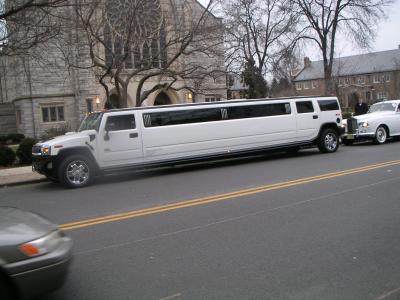
     And sure enough, the groom drove to the wedding ceremony in the longest vehicle you could imagine, a bit like a shimmery white worm but equiped with everything inside to make any bride drool.

     The idea was to break a bit with convention, so they drove the machine from the snow banks of Vermont to the endless white sands of Death Valley. That's where they made love for the first time: surrounded by complete white silence.

     "Will you always love me this way?" she whimpered after their bodies surrendered from eternal but too short-lived ecstasy.

     "I guess so," was his laconic reply.

     "You guess so! That's all you can say! You've deceived me. You've lied! You've cheated. You've led me into a dark tunnel..."

      And she jumped into the driver's seat and shot the vehicle into such savage motion that it took off, a rocket launched into outer space...and that, my friends, was the last anyone heard of that dear couple. So you see what promises of eternal love can do. 

Una hilera de luz negra...

Una hilera de luz negra...

Una hilera de luz negra

Camina sobre hielo

Entre el fogón y el azafrán 

¿Por qué gritan los lobos? 

El tiempo transcurre

Placido en el comienzo

Apura su paso con el andar

Termina marcando nada. 

Nada. Nada. Nada de tiempo.

No avanza la hora,

Tampoco corren los minutos

Todo queda inmovible. 

Invisible, unido a la hilera,

Hilera negra, oscura, quieta, eterna

Perdón: nadie puede ver, oír:

el silencio devora todo. 

Budgets, wars and some clues on how things work...

Budgets, wars and some clues on how things work...

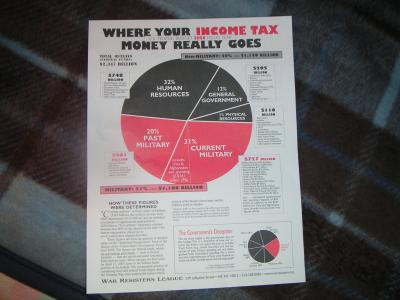
    There you are visiting a quaker church in Pennsylvania and, after the usual coffee and cookies, this red and white sheet of paper catches your eye. It says 21% is for past military spending, 31% for present military spending, 33% for human resources, 12% for general government and a mere 5% for physical resources.

     Well, if you add 21 and 31 you get 52, that is, more than half of the budget goes for some form of military spending!

     For a minute we might wonder about the precision of the data presented, but the general idea is clear enough. What is lacking are the millions spent on the "preventive" wars against Iraq and Afghanistan, the millions spent in paying off loans--many from foreign governments or banking institutions--in part to pay off the loans to cover the expense involved in reducing taxes...especially those paid by industrial giants... 

     And then you read about the threat of recession, how the sale of homes in the United States fell by 40.7% over the past year, how untold numbers of home buyers are pulling their hair out trying to figure out how to pay their mortgage payments, and you hear Republican presidential candidates advocate even more tax reductions for big business, about the $600 dollar checks the government is going to send tax payers so they "buy more" and beef up the economy...

    That leads you to ponder what people are really talking about when they glibly chat about "globalization." Then you learn that an unending string of corporations are leaving the country to exploit cheap wages and natural resources abroad, and in the midst of those meditations you stop by a store in Princeton, New Jersey, selling clothes and other objects to university students.

    You're looking a some key chains. A group of Chinese tourists approach. One of them picks up a key chain, turns it over, reads "made in China," smiles and nudges his companion in the ribs. They both smile. "Made in China."

George Washington, el aborto y las guerras de no acabar...

George Washington, el aborto y las guerras de no acabar...

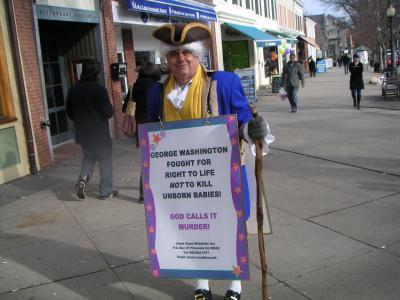
    Es un señor que se pasea por la calle principal de Princeton, New Jersey, pero cabe aclarar que no es aquel George que mandó  al mar a los ingleses en la guerra de 1776, tampoco el otro George, George Bush, el señor que por ahora habita medio preocupadito una enorme mansión blanca en Washington, capital de los Estados Unidos de América, luego de invadir a Irak por cuenta propia y causar unos cuantos escalofríos, sin hablar de los muertos...

     El cartel del George de la calle Nassau, en Princeton, dice: “Luchó George Washington por el derecho de vivir, no por el derecho a matar fetos. Eso Díos lo llama asesinato.”

     Pues cada cual con su tema. Pero si de Díos se trata, ha de andar bastante triste por los desastres provocados por sus criaturas, por la incesante lucha por el poder,  por la destrucción del medio ambiente, por las guerras, por la producción de armas nefastas, mientras niños mueren de hambre y se atrevan a evocar su nombre para llevar a cabo sangrientas lucha por el dominio de los recursos naturales…


This thing called theatre or what the eye sees when seduced by a mysterious impulse

This thing called theatre or what the eye sees when seduced by a mysterious impulse

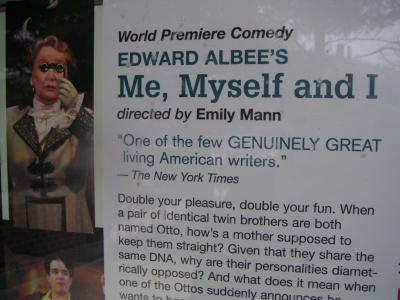
Eduard Albee: "Me, Myself and I"

Eduard Albee: "Me, Myself and I"

Edward Albee once called his work "an examination of the American Scene, an attack on the substitution of artificial for real values in our society, a condemnation of complacency, cruelty, and emasculation and vacuity, a stand against the fiction that everything in this slipping land of ours is peachy-keen."

That would be equally valid for the recent debut of his “Me, Myself and I,” at Princeton’s McCarter theatre. In the program he “explains:”

“I tend to become uncooperative—and occasionally downright hostile—when people ask me what my plays ‘are about,’ especially the new ones, about which I’ve usually not assembled a provocative yet vague enough short paragraph to avoid answering the question, yet seeming to.

“What is ‘Me, Myself and I’ about? Oh, about 2 hours, including intermission. Will that do? No; I guess not, though I do like it as an answer, for any play that can be explained (or properly described) in the desired sentence or two should be no longer than its description. A play is, after all, about everything that happens to the characrters from the beginning of the play to the end and (unless the author has killed them all off by curtain) the characters’ lives before the play begins and after it ends.”

The fellow seated next to this writer during the January 21 performance, seemed a bit wary of what was about to happen:

“I ain’t got no twin brother, so I just don’t know, but I’m damn glad I don’t.”

Silence. The curtain reveals Thomas Lynch’s very simple and effective set design: an almost empty stage, thread thin golden columns, a light blue back drop and a bed temporarily housing the mother (Tyne Daily) and the doctor ((Brian Murray).

You get a pretty good idea that there’s going to be a search for identity when one of the twins (Machael Esper and Colin Donnell) appears and the mother wants to know who he is.

“Don’t you know?”
And then: do you love me? Hate me?

One of the twins is typically the ‘good boy,’ the other the ‘bad boy,’ one wants to flee home, become Chinese, one doesn’t want to recognize the other, one has a sweet and pretty girl friend, Maureen (Charlotte Parry) and that’s where things get really ‘complicated,’ or opague, in Albee’s opinion. The ‘bad’ Otto takes advantage of the confusion of identities to make love to her, but then the other Otto, the girl’s real girl friend arrives…

By that time the fellow next to me was gritting his teeth.

“Woh! That’s too much! If that happened to me I’d kill the bastard!” Then he rushed off, as soon as the applause had died down. I presume he was talking ‘metaphorically!’

Later, over coffee, the following weekend, or whenever, you might well get your gang together and chat about how often there are mixed up roles in families, how love is blurred over with rejection or even hate, how little words and trifles suddenly burst into rife of the first degree…

Would Socrates have asked: "Is the U.S. economy being 'latinamericanized?"

    Sometimes innocent sounding questions may elicit surprising and revealing responses. Maybe Socrates got it right in his question-answer philosophy.  Let’s try one: is the U.S. becoming ‘Thirdworldized?” Or, closer to home base: ‘Latinamericanized?”
    
    By now even the least informed inhabitant south of the Rio Grande knows that for decades foreign firms have been gobbling up businesses and land from Mexico to Tierra del Fuego. It is also almost folklore that every country in the area is trapped in an unending cycle of astronomical and un-payable debts, for which more debt is created in the vain attempt to pay them off.

      So what should we conclude when we read in the January 20 New York Times that last year foreign investors got a record $414 billion in securities stock in U.S. factories and properties?  

    Good old-fashioned financial giants, such as Merrill Lynch, the Citigroup or Morgan Stanley have sold multi-million dollar stakes to entities in Germany, Asia or the Mid East.
    The so-called Sovereign Wealth Funds (SWF) have put some $70 billion on the U.S. market over the past few weeks, according to Bloomberg.com. The SWF are giant pools of capital controlled by governments, which invest in private markets.
    None other than Frederick Kempe, president of the Atlantic Council, wrote quite optimistically in a recent Bloomberg column that:
 “Our economic problems will multiply without foreign investment and our continued openness toward it. International purchases of Treasuries not only help finance our national debt, but foreign-owned businesses employ some 5 percent of the U.S. workforce and account for almost 6 percent of output, 20 percent of U.S. exports, and 10 percent of all U.S. investment in plant and equipment. Beyond that, overseas companies pay wages 30 percent higher on average than their U.S. counterparts.”
    Suggesting that the present financial crisis somehow has its roots in the globalization of the world’s economy, he added: “SWFs are another sign of the dramatic structural shift sweeping the global economy that we can shape but not reverse. The U.S. share of world output will continue to decline, as will its portion of annual global growth. And that's for the best as billions of people embrace capitalism and global markets. If we can keep attracting foreign capital and access global markets, we'll continue to lead.”
    His conclusion sounded like a gentle chide with respect to Washington’s present policies:
“We still must press for global policy responses to avoid abuse. Unilateral action won't work, whether by us or our European friends. We should push for voluntary multilateral agreements that already are in the works.”
    So there you have the voice of an authorized financial pundit. But let’s get back to the dizzy  question at hand. According to Brian Williams of the NBC Nightly News, Citigroup and Merrill Lynch had to go shopping abroad for some $20 billion to stay afloat and ward of the surging mortgage crisis in the U.S.
       Who might some of the saviors be? Well, there’s the Saudi Prince, Awaleed bin Talal. His offer to boost New York Mayor Rudolph Giullani’s reconstruction efforts after the September 11 attack were turned down. But if you’ve seen Michael Moore’s movie, or watched the news, you realize that Saudi Arabia is on President Bush’s list of friendly nations. And then there’s Kuwait—which raises some other questions concerning why the U.S. invaded Iraq…Perhaps China should also be put on the list: despite its communist politics it has used its economic surpluses to bolster the Uncle Sam’s deficit ridden economy.
     Five million Americans now work for foreign companies, according to Deputy Treasury Secretary Robert Kimmitt, and since 2001 the U.S. has lost three million manufacturing jobs. Does that sound familiar? I mean if you live south of the Texan border?
    Then there’s the downhill spin of the stock market, as the U.S. eases into what is likely to be a hard-hitting struggle for the White House in next November’s presidential elections.
The financial outlook appears to be something like this:
    --A good part of the international financial community looks with tilted eyes towards President Bush’s tax rebate stimulus program, putting around $800 dollars in the hands of taxpayers in the hope that they will go on a spending spree capable of boosting the country’s sinking economy.
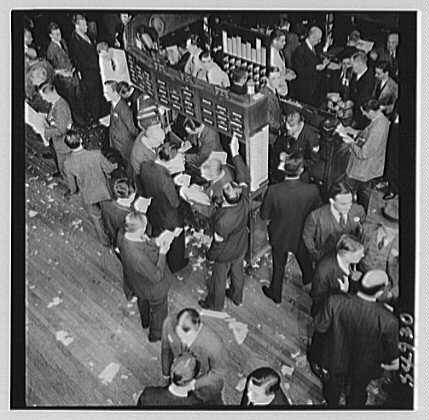
    --Even Wall Street is a buzz with talk about the possibility of getting financial help from abroad.    
    --Today’s interest rate reduction may be but the first of a series, aimed at there attracting foreign investment and making it easier to get credits (to pay off debts).

    Thus, we come back to the initial question: is the U.S. becoming latinamericanized, or is this but another process in the globalization of the world’s economy?

Who is going to be calling the cards from now on?

As capital goes bananas or seeks gorgeous profits will it concern itself with where the whole process is headed? Is this a rational process?

Will political and social organizations be able to put a reign on the appetite of profiteering financial institutions?

Is there no economic or social alternative to a system that ends up not only filling its own pockets but marginalizing the majority of the world’s population?

In view of the present industrial system’s roots in petroleum and its devastating effects on the environment, what will be the end result for the well being of the world’s ever growing population?

Siglo de siglos...cambalache...Wall Street...y...vaya uno a saber...

Siglo de siglos...cambalache...Wall Street...y...vaya uno a saber...


Un viento furioso arrasa y dispersa la apuesta,

Llantos solitarios se alzan y mueven el andar,

Todos los gestos se dirigen al billete verde,

Y ustedes se quedan mirando, admirando, suspirando,

de brazos cruzados, piernas entrelazadas,

se quedan mirando, admirando, suspirando, mientras

explota el mercado, en llamaradas, cabeza agachada,

(y sólo quedarán cenizas)

una voz desde la tumba, ronca, grita :

"comprar, comprar, producir, comprar, el cielo abre sus brazos a los compradores."

(luego, el silencio, algo se mueve al otro lado de esos muros negros,

refugio de aquellas almas alegres que no compran,

seres de otros mundos que viven, simplemente. "

The pub, progressives, conservatives, eight hundred dollar rebates and motley vibes...

The pub, progressives, conservatives, eight hundred dollar rebates and motley vibes...

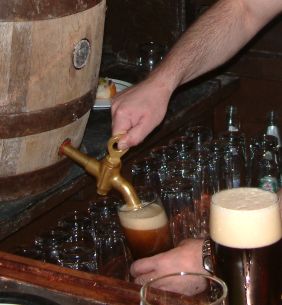
      You can call it a pub or an inn or whatever you like. They pop up all over the U.S., way out in the sticks or in the slick nick and crannies of academia. There are several threads that knit them together. Beer from the insipid Miller's variety to the most exotic imports. Football. Football. Football, northamerican style, featuring players that look like gladiators, projected on several screens, while drinkers sip the tarnish colored brew.


      There's a picknic spread out on the table of an inn at the snowy cross-roads not too far from Buffalo, New York. Fried chicken, finger dips, oh, and some dainty choclate cakes dressed with red, white and blue frosting. The event is in celebration of the departure of some young soldiers for a second tour of duty in Afghanistan. They pose for the flashing digital cameras, before a hand written sign that says:

     "The object of war is not to die for your country, but to make the other BASTARD die for his." Signed: Gen. patton. Gulp! Gulp! Gulp! Gulp!

     A rough-n-ready type, retired, big hands, deep blue eyes that jerk right and left engages you in a chat. You can't hear very well because of the loud blasting microphones that transmit the country music twangs of the lone singer.

    "Yea, things are tough, that's true, but they're gonna get better. You'll see.
    "You mean in Iraq?"
    "In Iraq and at home."
    "I don't know about that."
    "Hard to fight against guys that have no qualms in blowing themselves up, killing innocent people. But we're gonna win this, you can bet on that."

    Your host gives you a nudge, as if to say its time to hit the road. To the other side of town, to a gathering of university types at a beautiful colonial style home, no TV, no football, nobody spends more than a minute talking about it. There is an excellent collection of wines, red, white and rose, and on the tables a belly warming asortment of tasty ingredients.

     "Clinton represents the establishment. That's clear, no matter what she says about change."

     The speaker is a youngish and attractive university professor, whose English lacks that typical Mid-western twang.

     "Well, they all talk about change, don't they," puts in a jovial faced academic.

     There's a bit of music in the background, but it isn't country, it sounds like Vivaldi, although from time to time a mellow voiced crooner goes on about that fleeting never entirely understood feeling: love.

      It's hard to find anyone in the crowd willing to say anything nice about President Shrub, and they are wary about the Democrats, but woh! When has there ever been an Afro-american candidate (Barack Obama) for the presidency, confronting a woman (Hillary Clinton)? Sounds great. But then, this primary system is not very democratic, ventures a youngish type, who could be a student. I mean, you might get almost as many votes as your opponent but not get a single delegate for the national convention. And then: who chooses the candidates? How many millions do you have to spend to get elected? From what lobby groups...what compromises imprison you even before you take office?

     It's snowing out, when you leave the gathering. You turn on the radio. Talk about change! It seems even the government is worried about a possible recession. Nearly 7% unemployment in Michigan, for example. The car industry going elsewhere, the price of globalization. Millions without medical care. And try going to a doctor! Around $70 just to see him. And another round if you want your prescription renewed. Unless you have a solid medical insurance plan...Well, in a consumer society how do you get things going? You get people to consume more, say the pundits.

     So why not take one percent of the GNP, that's around $145 billion, and give everyone a rebate so they can buy more and get the dollars rolling? (By the way, this is the U.S.A., not Argentina, not what used to be called the Third World...) That government proposal would send $800 dollar checks to everybody, $1,600 for couples. An injection of optimism in the face of Wall Street jitters. Financial scandals. Home mortgage fiascos. Escalating oil prices. And if you've got a business, tax reductions so you can invest in new equipment. And, well, a rosy incentive on the eve of the November elections...

     Woh! Just imagine! In a couple of months the mail is going to be flooded with letters containing $800 or $1,600 dollar checks! You come home from a hard day's work at the office or factory and see an envelop with the unmistakable markings of the Federal Government. The check has arrived! 

    For a moment let's forget about the cost of printing and sending all those checks. Will there really be an upsurge in purchases? What kind of society is it whose well being is based on buying more and more things, independently of their real usefulness? Is progress only measurable in terms of what you can buy? Are you measured up by others on that standard? If people were just to live with the essentials, would that provoke an economic disaster?

    Let us know if you have an answer to any of those questions. In the meantime, what about another beer at a pub? At least it is a very chummy place, where you can shoot the breeze or maybe even score in on...