Blogia
Buenos Aires Jaque Press, en inglés y español

Noticias (News)

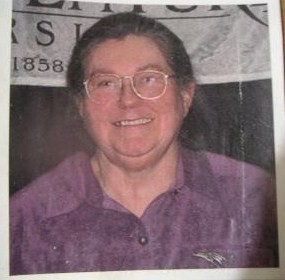
Journalist Mary Hamilton has received Book of the Year Award

Journalist Mary Hamilton has received Book of the Year Award

Former York Gazette and Daily journalist Mary Hamilton has been awarded the Book of the Year Award, American Journalism Historians Association, 2008, for her recently published book: “Rising from the Wilderness: J.W. Gitt and his legendary newspaper, the Gazette and Daily of York, Pa.”  A painstaking work of investigative journalism the book is about the newspaper’s no holds barred editor, J.W. Gitt, who was state chairman of the Progressive party in Pennsylvania when the Gazette and Daily was the only commercial newspaper in the United States that supported the Henry Wallace campaign, a very difficult task in view of the predominantly conservative environment of York Pennsylvania during the 1960’s

“It was in fact a very liberal newspaper, published in a very conservative community," Hamilton told Jaquemate. "Gitt felt very strongly that the main purpose of the paper was to educate its readers. He thought that if he continually brought to light discrepancies or policies of the United States, such as the war against Vietnam, the public would comprehend those situations better. However, I must admit that he ended up being pretty discouraged. He felt towards the end of his life that the paper had had very little impact.”

She added: "The problem in small towns in the United States is that most of the news media, not just the newspapers, is in the hands of the conglomerate media firms, for whom the bottom line is making money, not going against the wind."

Those readers who are interested in ordering the book may do so by contacting the publisher: York County Heritage Trust, 250 East Market street, York, Pa. 17403.

Web: http://www.yorkheritage.org

You can contact Mary A. Hamilton at: mahamilton@mailstation.com


’ 


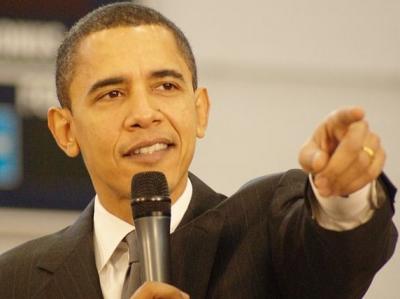
La Casa Blanca se prepara para recibir a Barack Hussein Obama

Hay cosas que suceden que parecen romper los preconceptos, espejos que rompen, aguas turbias que se vuelven limpias gracias al aire puro, para luego contaminarse nuevamente... Es que entre 1792 y 1800 un arquitecto Irlandés, Jones Hoban, llevó esclavos negros, Tom, Peter, Ben, Harry, entre ellos, a construir lo que fue bautizado en 1901 por el Presidente Theodore Roosevelt como la "Casa Blanca." Ahora Barack Hussein Obama, de padre africano y madre blanca norteamericana, presidente electo de los Estados Unidos, se prepara para ocupar las más de 100 habitaciones de la mansión. Según cuentan las planillas de la Historical Association de la Casa Blanca, los terrenos ahora ocupados por la mansión presidencial fueron cedidos por los estados esclavistas de Maryland y Virginia.

Unos cuantos de los primeros presidentes del país también llevaron sus esclavos domésticos a la Casa Blanca--cocineros y servientes. Por ejemplo, el tercer presidente, Thomas Jefferson, conocido como autor de la Declaración de Independencia, llegó con esclavos de su quinta de Monticello y hubo rumores de sexo y otras actividades no muy en línea con los grandes ideales de la declaración con la que el país buscó su independencia de Inglaterra. El cuarto presidente, James Madison, llegó con Paul Jennings, un esclavo que luego escribió sus memorias sobre la vida de un esclavo en la Casa Blanca.

¿Cuáles han de ser las sensaciones de Obama y su familia al tomar poesesión de la Casa Blanca? Las de los afro-americanos que recién en los últimos años están comenzando a gozar de muchos de los derechos negados durante décadas debido a la discriminación? Las de la gran mayoría del pueblo noretamericano abrumado por la crisis de Wall Street?

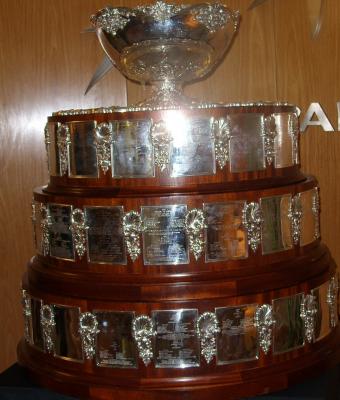
The Davis Cup is resting in an Argentine bank...

The Davis Cup is resting in an Argentine bank...

She is resting here on the ground floor of an Argentine bank, willing to pose for clients who have come to extract money--or, if they are a bit more lucky, deposit it. Argentines hope the century old Cup will stay in their country after the upcomming match with Spain. But let’s not get too optimistic. Anything can happen at the Davis Cup matches. Oh. If you don’t have a ticket, you’d better hurry up!

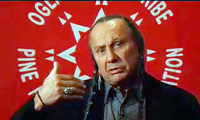
Opinión del fundador del Movimiento Indio Americano sobre la elección de Obama

Opinión del fundador del Movimiento Indio Americano sobre la elección de Obama

Russell Means, fundador del Movimiento Indio Americano, tiene una opinión crítica sobre la elección de Barak Obama a la presidencia de los Estados Unidos: "Se hace creer a los votantes que, tras el desastre presidencial de Bush, todo volverá a ir bien. En los últimos años prácticamente han desaparecido los derechos individuales. Demócratas y Republicanos son casi iguales. Y ahora nos dicen: ’Mira, ahora pudimos escoger a un negro, qué gran país somos.’ Ah, los Estados Unidos son el peor chiste de la historia de la Humanidad." (según citado por Página 12, del 7-11-2008)

Un poco amargo el hombre, por cierto. No obstante, sus opiniones nos obligan a repensar muchos aspectos de la política y la lucha por el poder en los Estados Unidos y alrededor del mundo.

Según los informes periodísticos, Means ha sufrido cinco intentos de asesinato y ha conocido la cárcel; sin embargo, trabajó en Hollywood, poniendo la voz de Pocahontas, actuando en El último mohicano....y sigue con su fuerte crítica: "Ahora los poderes ocultos, los años del capital, las corporaciones como Morgan, Dupont y Rockefeller, o el grupo Titan, se han unido en una economía incestuosa y han formado un tejido mucho más poderosos e implacable. Ahora han escogido a Obama. Desde los años ochenta los banqueros, los amos del mundo, se fijaron en él. Pero el imperio americano está colapsando como acaban haciendo todos los imperios, desde dentro. El sistema linberal capitalista se está muriendo."

Conceptos fuertes para quienes todavía festejan el sueño de Obama, los afro-americanos, los latinos, las minorías y las millones de personas alrededor del mundo disconformes con la era Bush. Entonces, de alguna manera las palabras del dirigente indígena contienen advertencias que deben ser escuchadas.

Todos los gobiernos, por ejemplo, y especialmente en los EE.UU.,  tienden a fijar la vista más en la figura del presidente y menos en los nombres de los personajes que lo rodean, sus asesores, ministros, etc. Si son los nombres de siempre, los que han ostentado posiciones de poder en otros gobiernos, uno tiene derecho a preguntar hasta dónde puede llegar la promesa de cambio. ¿Son las caras conocidas, aunque del otro partido? ¿Figuran personas que compartían las políticas rechazadas del gobierno anterior? ¿Pueden actuar de otro modo, más allá de los intereses sectoriales?

Uno de los temas muy enfatizados en el proceso electoral giraba alrededor de la "experiencia." Obama, joven (47 años), afro-americano (¿por qué se menciona la raza cuando un líder no es blanco?), estudioso, con una visión reformadora, fue atacado frecuentemente por su falta de experiencia. En lo que parecía una repuesta a esos ataques, Obama aceptó como candidato a vice presidente a un político que apoyó la invasión a Irak. También visitó y declaró su apoyo a Israel, algo casi un ritual para los gobernantes norteamericanos. Matizó su postura en favor de una retirada de Irak con el respaldo a una intervención más vigorosa en Afghanistán.

En la campaña el candidato del Partido Republicano, John McCain intentó insinuar que aumentar los impuestos a los ricos--una propuesta de Obama para enfrentar la crisis financiera afectando especialmente la clase media--era una medida "socialista." Ya presidente electo, Obama comenzaba a elegir sus colaboradores y entre ellos figuraban muchos nombres muy cercanos al ex-presidente Bill Clinton, cosa entendible, pero cabe preguntar: ¿hasta qué punto estarían dispuestos a encarar los cambios profundos prometidos en la campaña?

Sucede que una cosa es el poder real y otra es la voluntad de un presidente de producir reformas o cambios en la sociedad. Hay interestes instalados muy fuertes en los EE.UU. vinculados al petróleo y la energía, la guerra (pues, durante la mayor parte de su historía siempre ha habido guerras o intervenciones), y las mega corporaciones financieras y empresas multi--nacionales. También otros intererses, por ejemplo, los que rodean la medicina--privada y terriblemente costosa, con millones de personas sin cobertura...

Entonces:¿en medio de las grandes expectativas de cambio social...cuál será el rol del poder real? Podrá un presidente torcer la historía y convencer el poder de la necesidad de efectuar un importante cambio de rumbo? Responder a las demandas de las capas sociales empobrecidas en el país, organizar un cambio importante en el orden mundial, incorporando realmente todos los países en la discusión sobre la economía, las finanzas, los derechos humanos, la lucha por la justicia y la paz? Una cuestión cuya repuesta no va a ser fácil.


Obama and whether a torn page can be turned over (a point of view)

Obama and whether a torn page can be turned over (a point of view)

Pages can get yellow and tattered and they can also be ripped out of books. The virtual election of Barack Obama to the presidency of the United States promises to turn a very spotted page but the question has more to do with the dynamics of the power structure than the good will of the 47-year-old would be reformer. It was none other than former president General Dwight Eisenhower who warned several decades ago about the dangerous power machine of the "industrial-military complex."  What Eisenhower was worried about was the defacto alliance following World War II between big business and the Pentagon, whose influence he saw as capable of swaying the will power of the decisions made by the executive or legislative branches of power. History has since then backed up Eisenhower’s  causes for worry.

Throughout history empires or big powers or whatever you want to call them have traditionally maintained one attitude inward, for citizens, and another quite different for outsiders or "barbarians." During the Cold War with the ex-Soviet Union, for example, there was an unprecedented growth in economic prosperity in the United States along with the development of weapons of mass destruction, relatively low scale military interventions abroad (such as the invasion of numerous countries in Latin America, the war against Korea and Vietnam...the military coups against allegedly left-leaning governments...)

The consumer society had been born and along with it the notion of deficit economics, as if it did not matter how much indebtedness Washington stacked up. Economists argued that going in debt was a way to stimulate the economy and, anyway, at that time, the debt was mostly within the country’s national boundaries. Of course, the banks and financial institutions did not hesitate a moment in granting questionable loans to impoverished governments around the world, charging inflated interest rates...

While the consumer society was developing in the U.S., and as its citizens began criticizing the war against Vietnam, blacks and minority groups in the country began to demand the rights established in the constitution but denied to them by means of racism, discrimination, separatism and the scant registering to vote of the minorities. Martin Luther King, Malcolm X and many other afro-american leaders began to recognize the contradiction between the alleged U.S. claim to being a free and democratic country and discrimination at home and war abroad.

Skipping ahead in time, President George Bush--a former alcoholic, turned evangelical--found in the September 11th terrorist attack just the excuse he was waiting for to launch the country into yet another military adventure abroad and clamp down on basic civil liberties at home. After more than five years of war in Iraq, more than 4,000 U.S. soldiers killed in battle, hundreds of thousands of Iraq citizens killed, massive destruction of their homes, with the rich US citizens having a heyday (in 2005 the richest one percent of US people had 18% of otal income), an astronomical deficit of close to $15 billion...and the bombardment via paranoic propaganda mixed with outright lies related to the terrorist danger, the justification of cruel abuse and torture against political prisoners, with the systematic use of fear as a political instrument to keep people and the press from questioning the government’s policies...boom! A financial crash explodes right on the eve of presidential elections!

Although John McCain, the Republican presidential candidate, tried to differentiate himself from Bush, he turned out to be a faithful follower in at least two key areas: the need to achieve "victory" in Iraq and the time-worn recipe of tax reductions for big business to deal with the financial crisis. Curious. It was precisely tax reductions and lack of financial controls that had turned the economy into an enormous casino.

Obama, whose father was from Kenya, who also bears the family name of Hussein, who spent his childhood in far away places such as Indonesia, who studied political science at one of the better US universities (Colombia) was a relatively unknown but respected politician until he launched himself into the presidential race. Perhaps because of his background, perhaps because of his charism, his intelligence, his demand for change without shouting insults at his opponents, Obama began to appear as the "dark horse" and, in fact, stacked up an incredible series of victories, first getting the Democratic party’s approval, then virtually winning the election against McCain.

To get there, though, he had to make a number of compromises. Obama had always opposed the invasion of Iraq but not so his running mate, Joe Biden. During the heat of the campaign, Obama took a trip to the war zone and came back saying the US should get out of Iraq and step up its anti´terrorist activities in....Afghanistan and Pakistan. On the domestic front, he proposed tax increases for big business in order to finance New Deal type economic recovery plans, something that led McCain to accuse him of sympathy for socialism!

Question: in view of the Military-industrial complex, and the US notion of its strategic interests, will an Obama government be able to do anything to the Pentagon’s dislike? An aspect of Obama approach to change is to use dialogue instead of confrontation (something dear to the Pentagon and the Bushites), that is dialogue with Europe, dialogue in the Mid East, dialogue with Venezuela, with Iran, to solve the potentially explosive problems the US must confront in the years to come. Question: to what extent will that expression of goodwill be underminded by the political-military-economic status quo?

People in the US and around the world expect to see Washington more intensely concerned about human rights (including its own abuses), cooperation in the search to turn down the world’s warm-up due to its reliance on petroleum based fuel, the inclusion of more of the world’s countries in the talks on reforming the present financial and trade institutions...

Sometimes old yellow or torn pages can be restored and turned over but it is not an easy task and will take much time, effort and patience. It also will demand the effective participation of the millions of persons not now represented in the world order.


Jublilarse, ser jubilado, haber sido jubilado, haber optado por la jubilación privada...

Hay todavía algunas sociedades, muy pocas y la mayor parte en sociedades que no han descubierto aún el díos mercado, que veneran a los ancianos por su experiencia de vida, por su sabiduría acumulada y por lo que significa estar en vísperas de la muerte.

En cambio, las sociedades en las cuales se alienta el consumo conspicuo viven en la juventud y el “merchandising” y sus actividades apuntan a captar la voluntad de quienes no han experimentado aún la crisis de los sesenta años. 

No obstante, en Argentina y en todo el mundo existe una situación potencialmente muy explosiva respecto a la relación entre la mano de obra activa y la población pasiva y el aprovechamiento que los diferentes gobiernos y estados hacen de los fondos de los jubilados.

(A continuar)

Slashing out at dragons as election day approaches in the U.S.

In war and in politics there is a point when the threat of defeat causes less than rational reactions. That appears to be the case with the most out-and-out rightwing supporters of John McCain, obviously not very happy about the possibility of seeing a non WASP (white anglo-saxon protestant) open the doors of the White House. After eight years of evangelical conservativism under the George Bush administration, it is understandable that a young, blackish, progressive minded intellectual should cause a stir in conservative hearts.

Yet the accusations in the form of verbal blasts from McCain’s followers appear to suggest more than anything else the fear that defeat is around the corner. Curiously, at the same time Democrat Barak Obama is taking strong steps towards incorporating numerous "establishment" figures into his camp--something which raises the question concerning how deep the proposed "changes" will actually go. The latest: Colin Powel, the sort-of-black architect of the Bush Administration’s Iraq policies, like McCain a veteran of the U.S. war against Vietnam.  Powell describes one revealing action in his "My American Journey,"  recounting his reaction when he spotted his first dead Viet Cong: “He lay on his back, gazing up at us with sightless eyes,” Powell wrote. “I felt nothing, certainly not sympathy. I had seen too much death and suffering on our side to care anything about what happened on theirs.”

The incorporation of figures like this in Obama’s campaign wagon certainly suggest that the rightwing accusations against him are exaggerated, but in politics as in war the players frequently overact.
  The conservatives--with such diverse forces as "rebirth" Christians, the so-called free market freaks, gung-ho nationalists at a time when the world is being globalized and those from "middle America" with a viseral dislike for big government--see their continuation in power under serious threat and therefore have resorted to efforts to delegitimize their opponent.

This was clear in the last TV debate when McCain confronted his opponent with the "Bill Ayers" charge. Ayers was associated with the leftist "Weather Underground" movement active during the struggle against the U.S. invasion of Vietnam. McCain is a veteran of that war and in the debate demanded that Obama’s alleged ties with Ayers--now an education expert--be cleared up.

The tactic was clear: smear the opponent with a now non-existent radical movement to then question Obama’s loyalty to the "American way of life," to depict him as an untrusty politician outside the American mainstream. 

On the fringe of the Republican party campaign, however, there are rightwing groups that are going to even greater extremes to blast Obama. There is an oufit called the "National Republican Trust Political Action Committee, for example, which has sent out e-mails to potential conservative donors calling Obama dangerous and bringing up an appropriate issue, Obama’s support for allowing undocumented aliens to obtain driver’s licenses. According to the rightwing group, this would constitute a sort of plot to kill thousands of Americans, suggesting Obama doesn’t understand the dangers facing the country and may even help terrorists destroy the country.

Then there is the charge that Obama is "socialist," a very bad word in U.S. politics, evoking the furious anti-communism of the 1950´s This attack stems from the plan of Obama to raise taxes on the well-to-do to help finance tax cuts for the middle class and is termed "class warfare." Richard Viguerie, chairman of the Conservative HQ.com and a founder of the modern conservative movement, goes even further, saying Obama’s economic policy can be summed up as "Marxism/Socialism."


Power, that seductive illusion that attracks and traps

Power, that seductive illusion that attracks and traps

Let's face it. "The times, they are a changing," as the song goes. And the endless grappling for power goes on, endlessly. Let's take the U.S. elections as a starting point. Wasn't it Senator Barak Obama who said President George Bush's invasion of Iraq was wrong, that the unilateral approach to foreign affairs should be replaced by dialogue? That's what he said before and as the presidential campaign was getting underway. Not a few U.S. voters, and those who don't feel represented by either the Democrats or the Republicans, began to perk up their ears and think: well, maybe this guy is going to be different.

But power has a foundation that is very difficult to alter without causing the whole structure to come crumbling down. Not strange then that even the more critical voices begin to change once the illusion of power appears on the road map.

As long ago as last June Obama made it clear that he was not going to do anything to damage one of the traditional rallying points of U.S. foreign relations: Israel. In a speech on June 4th he assured anyone who might think otherwise that he considers Israel to be "sacrosanct" for Washington, and he even went so far as to mention an aid package of $30 billion to maintain the sacrosanct relationship.

Then there was a gradual erosion of the notion of "dialogue" for a more aggressive approach, more in line with traditional Democratic party think tanks. As the campaign began to heat up, with insinuations on the part of Republican candidate John McCain that Obama lacked experience or was even soft on terrorism, there was a gradual but evident change. For example, during the first TV campaign debate and in the context of the conflict in Georgia, Obama first criticized both parts (that is, Georgia and Russia) and called for a cease fire; later, in line with the more traditional Democratic veterans of the Cold War, he began to say Russia had acted without justification; and he ended up pulling the basic line in Washington of support for Georgia against Russia.

Although he has continued criticizing the war against Iraq, the Democratic party candidate has repeatedly stated (in line with certain Pentagon officials) that the real conflict was in Afghanistan and Pakistan, suggesting a shift of anti-terrorist military efforts from Iraq to those countries accused of housing Ben Laden militants. The traditional U.S. foreign policy since the Cold War has been to strongly support so-called "friendly" nations (which frequently are far from democratic). Under Bush this notion was turned into the "axis of evil," and a sort of Hollywood notion of good guys and bad guys. Pakistan has long been on the list of  the "good" or "friendly" nations, in spite of having rather undemocratic regimes and having the atomic bomb...

As Obama approaches power the drift towards the traditional thinking pattern will no doubt continue. If Bush, an arch-conservative, has introduced the most interventionist policies in decades to "save" the very financial interests greatly responsible for the present financial crash, it is reasonable to conclude that once in power Obama will also have to accomodate his more daring reforms to satisfy the demands of the "establishment." Thus, power seduces but more frequently than not ends up turning rebellious reformers into obedient servants.

En medio del crash, unas cifras que dan para pensar...

En medio de la crisis financiera más grande desde el crash de 1929, los medios de prensa y los políticos hablan como si fuera el problema de todos...cuando en realidad es un asunto de un grupo muy reducido de operadores que durante años han hablado contra la intervención del Estado y ahora aprovechan la intervención gobernamental para...

Según Michael More los "estdounidenses más ricos... tienen más que los 150 millones de estadounidenses de abajo. Cuatrocientos estadounidenses ricos tienen más guardado que la mitad de todo el país. Su valor neto combinado es 1,6 billón. Durante los ocho años del gobierno de Bush, su riqueza se ha incrementado por casi 700 mil millones, el mismo monto que ahora están demandando que les demos para su ‘rescate’. ¿Por qué mejor no gastan la plata que ganaron con Bush para rescatarse a sí mismos? Aún contarían con casi un billón de dólares para compartir entre ellos. ¿Por qué razón se nos ocurre dar a estos barones rateros más de nuestro dinero?”

Mike Lupica, columnista del New York Daily News, agrega otro concepto cuando escribe: “En momentos de crisis el liderazgo del país es una vergüenza... Hablan de miles de millones y billones a gente que se está ahogando en deudas de tarjetas de crédito, que no logra conseguir préstamos para ir a la universidad, y menos pueden pagarlas, que ya no tienen con qué pagar la nafta para sus coches... Ya nadie les cree más”.

Según la revista  Mother Jones, la campaña del republicano John McCain’s incluye un grupo de por los menos 83 personas que han trabajado recientemente para la industría financiera, cuyos clientes incluyen la aseguradora en crisis AIG, Lehman Brothers, Merrill Lynch, Fannie Mae, Freddie Mac, y Citigroup....

Asimismo, el guru económico de McCain es is Phil  Gramm, vice-chairman del banco de inversiones UBS, que según el web site Politico.com aceptó  más de $18 mil millones de operaciones altamente riesgosas...

¿Y el candidato Barak Obama del partido Democrat, supuestamente progresista? Durante tiempo ha confiado como asesor económico en UBS chairman Robert Wolf. Además, durante un encuentro de emergencia la semana pasada para tratar el tema de la crisis, cinco de las nueva especialistas que le ayudaría en encontrar repuestas a la crisis jugaron roles importantes en la crisis que ahora pretenden arreglar:

** Ex secretarios del tesoro de Presidente Clinton Robert Rubin (ahora un ejecutivo del Citigroup) y Lawrence Summers.

** William Daley, que deseñó proyectos durante la administración Clinton acuerdos como la NAFTA y ahora es un ejecutivo importante en J.P. Morgan Chase.

** Gene Sperling, un asesor clave de Clinton que abogó por la deregulación de las normas que regían las operaciones de Wall Street.

** Paul O’Neill, antes Secretario del Tesoro del Presidente Bush.

Si bien figura economista Joseph Stiglitz, Obama se encuentra bastante fuera del contexto de los demás asesores que no distan mucho de los especialistas conocidos en el "mercado."

Entonces, todo parece indicar que los mismos grupos financieros que aprovecharon de la teoría de la "libertad del mercado" ahora cuentan con el Estado--con multimillonarias intervenciones--para solucionar la crisis que ellos mismos causaron. Y a pesar de algunas medidas para sauvizarla,  quienes no especulan, los que trabajan y pagan sus impuestos serán los que pagarán los costos de la crisis.

Third party candidates lie in wait in the U.S. presidential election

Although politics in the United States traditionally divides into supposed liberal verusus conservative oposites, reality—as usual—is a bit more complex. Actually, aside from Democrat Barak Obama and Republican John McCain, there are six other presidencial candidates in the race for the presidency.


Most of these candidates are actually conservative o liberal splinter groups and they are treated with complete disdain by the mass media, in view of the notion that only a two party system can operate effectively in accordance with the country’s history and tradition.

Although this year's elections appear to offer more clear choices--a progressive minded Democratic candidate representing a minority group versus a somewhat non-conformist conservative of  traditional background--once in power the differences between Democrats and Republicans tend to be fogged over.


The outsider parties are generally referred to as third party candidates. Sometimes they have played a significant role in shifting the focus on issues the two major parties have ignored.


Here are the off-beat parties and their candidates.


Constitution Party: (rightwing sonservative) For this party the 2008 Third Party Candidates contesting for the elections are Chuck Baldwin, Jim Gilchrist Don Grundman, Alan Keyes, Bryan Malatesta and Diane Beall Templin

Green Party: (progressive)
Jared Ball, Elaine Brown, Jesse Johnson, Paul Kangas, Jerry Kann, Cynthia McKinney, Kent Mesplay, Ralph Nader, Gail Parker, Rebecca Rotzler, Average Joe Schriner and Kat Swift are the Green Party US Presidential Candidates.

Libertarian Party (rightwing) The Libertarian party US Presidential Elections 2008 candidates are Jim Burns,
Dave Hollist, Dan Imperato, Bob Jackson, Mike "Jingo" Jingozian, Steve Kubby, Alden Link, Robert Milnes, George Phillies, Wayne Allyn Root, Christine Smith, Ed Thompson.

Prohibition Party: (rightwing)
Gene Amondson and Earl Dodge are the Third Party candidate from the Prohibition Party contesting for the US Presidential Elections 2008.

Socialist Party: (socialist)
Stewart Alexander, Bruce Burleson, Eric Chester, David Frey, Evan Gelobter, Norma J. F. Harrison, Stanley Hetz, Linda McKinney, Brian Moore, Dusten Retcher, Constantino "Tino" Rozzo, Dwight Welch are the US Presidential Elections 2008 Socialist Party candidates.

Although none of these candidates have the slightest possibility of winning, they may be decisive in tilting the scales towards Obama or McCain—who are actively courting them. An important number of voters are also described as “independent,” although that term sheds little light concerning their voting preferences.

¿Un mar de dólares pueden curar el enfermo?

      Y...finalmente el Congreso de los Estados Unidos aprobó un paquete de unos...$700.000 millones de dólares para las empresas que quedaron mal paradas en medio de la crisis financiera global... y sin embargo parece que "los mercados" no salen de su incertidumbre.  La cuestión es: ¿quién pagará semejante cuenta para curar el enfermo? Si al lector le resulta muy difícil imaginar esta cifra,  habría que agregar que al mencionado monto habría que agregar otras elevadas sumas de intervención estatal previamente inyectadas en favor de otras empresas "enfermas."

    Todo parece indicar que el exceso de especulación--cause principal de la crisis--será pagado no por el capital sino por quienes pagan impuestos, si bien el proyecto incluye algunas medidas que disimulan en algo la carga: la devolución de algunos impuestos, tope en las garantías para ahorristas, protección a los propietarios de viviendas que corren el riesgo de ser embargados, ayuda a los pequeños bancos comunitarios afectados por la crisis...en fin, un plato cuyo deseño ha sido del gusto de los dos candidatos a la presidencia del país.

     Nota: No será nada extraño leer en los informes que algunas personas vinculadas a las empresas en pelígro sean convocadas por el propio gobierno para "encontrar soluciones" a la crisis más grande del sistema desde la caída de Wall Street in 1929.

     Después uno no puede dejar de preguntar cómo hará el gobierno para seguir acumulando mega deudas, cómo hará para intentar seguir su auto-proclamado rol de líder mundial en un mundo cuya economía se está "globalizando" rápidamente, qué hará el próximo presidente para sacar el país de la inevitable recesión, qué políticas encargará Washington con las economías emergentes, qué pasará con los nuevos bloques de poder que crecientemente cuestionan el rol hegemónico de Washington...

Is the financial crisis more about money or geopolitics?

Is the the financial crisis more about money or Washington’s geopolitics? That may sound a bit like finding your contact lense after loosing them swimming across the Mississippi river. Yet there are growing voices that have begun to question what all of the noise in Washington and New York is all about.


To begin with, let’s start with the generally Democratic leaning New York Times. On September 29  it wrote timidly that “The ($700 billion) bailout plan released yesterday is a lot better than the proposal Henry Paoulson first put out—sufficiently so to be worth passing. But it’s not what you’d actually call a good plan, and it won’t end the crisis.”


In an article for “The Nation,” (September 26, “A Better Bailout”) Noble Prize economist  Joseph E. Stiglitz went a little bit further: “To a skeptic, Paulson's proposal looks like another of those shell games that Wall Street has honed to a fine art. Wall Street has always made money by slicing, dicing and recombining risk. This "cure" is another one of these rearrangements: somehow, by stripping out the bad assets from the banks and paying fair market value for them, the value of the banks will soar.”


He proposes an alternative explanation for Wall Street’s gleeful reaction the the staunchly conservative Bush Administreation’s push to have the government take over the mess created by financers: “the banks realized that they were about to get a free ride at taxpayers' expense. No private firm was willing to buy these toxic mortgages at what the seller thought was a reasonable price; they finally had found a sucker who would take them off their hands--called the American taxpayer.”


Stiglitz continues:

“The administration attempts to assure us that they will protect the American people by insisting on buying the mortgages at the lowest price at auction. Evidently, Paulson didn't learn the lessons of the information asymmetry that played such a large role in getting us into this mess. The banks will pass on their lousiest mortgages. Paulson may try to assure us that we will hire the best and brightest of Wall Street to make sure that this doesn't happen. (Wall Street firms are already licking their lips at the prospect of a new source of revenues: fees from the US Treasury.) But even Wall Street's best and brightest do not exactly have a credible record in asset valuation; if they had done better, we wouldn't be where we are. And that assumes that they are really working for the American people, not their long-term employers in financial markets. Even if they do use some fancy mathematical model to value different mortgages, those in Wall Street have long made money by gaming against these models. We will then wind up not with the absolutely lousiest mortgages, but with those in which Treasury's models most underpriced risk. Either way, we the taxpayers lose, and Wall Street gains.”

He then points out what he considers to be four fundamental problems in the U.S. financial system: “The first is that the financial institutions have all these toxic products--which they created--and since no one trusts anyone about their value, no one is willing to lend to anyone else. The Paulson approach solves this by passing the risk to us, the taxpayer--and for no return. The second problem is that there is a big and increasing hole in bank balance sheets--banks lent money to people beyond their ability to repay--and no financial alchemy will fix that. If, as Paulson claims, banks get paid fairly for their lousy mortgages and the complex products in which they are embedded, the hole in their balance sheet will remain. What is needed is a transparent equity injection, not the non-transparent ruse that the administration is proposing. The third problem is that our economy has been supercharged by a housing bubble which has now burst. The best experts believe that prices still have a way to fall before the return to normal, and that means there will be more foreclosures. No amount of talking up the market is going to change that. The hidden agenda here may be taking large amounts of real estate off the market--and letting it deteriorate at taxpayers' expense. The fourth problem is a lack of trust, a credibility gap. Regrettably, the way the entire financial crisis has been handled has only made that gap larger. “

Well, we should add that right on the eve of the financial “crash” or “plop” or whatever you want to call it, Bush as well as Republican presidential candidate John McCain were saying in unison that the economy was “basically healthy.” Obviously, not everyone agrees on what is healthy. With those words still dangling on the tips of its tongues people in Washington were putting on worried faces and saying that the record State bailout of private mishap was necessary to prevent something hear to doomsday.

Stiglitz goes on to express the notion that: “the administration is once again holding a gun at our head, saying, "My way or the highway." We have been bamboozled before by this tactic. We should not let it happen to us again,” adding: “The president's economic credentials are hardly stellar. Our national debt has already climbed from $5.7 trillion to over $9 trillion in eight years, and the deficits for 2008 and 2009--not including the bailouts--are expected to reach new heights. There is no such thing as a free war--and no such thing as a free bailout. The bill will be paid, in one way or another. “

According to the June congressional testimony of William Beach, director of the Center for Data Analysis, the so-called war against terrorism has cost som $646 billion to date, so you would have to add the $700 billion bailout to that and then scratch your head trying to figure out how the government proposes to pay for its self-declared war and the financial crisis. The figures go beyond anyone’s craziest imagination and can only be explained by the de facto complicity of financial interests with the war. The new defense budget, for example, tacks on another $68.6 billion for Iraq and Afghanistan next year, while the cost of a single week in Iraq is put at around $3.5 billion, or $180 billion per year.

McCain and Bush insist that the U.S. will only leave Iraq once a clear victory has been achieved. The cost of the Iraq war was once predicted by Washington officials as perhaps $50 to 60 billion, but since the costs seem to be on an endless spiral...now independent observers calculate the total cost may go to somewhat more the $800 billion. If you include indirect costs, say payments of health care and veterans benefits, etc. the figures keep on soaring.

What former President Dwight Eisenhower once warned about, the “military-industrial complex” is no more good business, apparently, on the contrary the marriage of big business to war is leading to bankrupcy. Who is going to foot the bill?

(to be continued)

¡Hand over the bread now, or else!

Just to use a vivid image, you might say that a hold-up is taking place in Wall Street...or in the White House. The message of the Bush Administration to Congress: give us $700 billion to fix up this financial mess...or take the blame for whatever might follow. Rarely have there been bailout plans as audacious as that of Treasury Secretary Henry Paulson’s: it puts the brake on any progressive agenda, makes democratic structure tremble and promises little to the tax payers who will have to foot the bill.

Consider this from Section 8 of the published versíon of the bail out plan: "Review. Decisions by the Secretary pursuant to the authority of this Act are non-reviewable and committed to agency discretion, and may not be reviewed by any court of law or administrative agency." Why can’t there be any review? No lawsuits allowed by aggrieved investors, nor American taxpayers, no complaints later from poor citizens who didn’t know that this was all about or who they voted for. It’s a take it or leave it offer. What will the Democrats or Republicans in Congress say about this? What will they do?

Well, first of all there are only two political parties. and both will certainly end up bending over because they don’t want to be accused of doing anything that would perturb Wall Street, that would be too risky and after all they are responsible political parties.

Why did  Paulson, Bernanke and the Bush Administration take such an iron clad position? One reason might be that previous efforts  to restore investor confidence didn’t work out very well and rather hightened global panic. Maybe the Federal Reserve began to wonder where it would get more money to pump into the system: it’s portfolio loaded down with junk, such as the mortgage securities and other rotten assets it so gentlemanly put on its  balance sheets. Isn’t there an echo here of how disgraced the central bank became in the midst of the 1929 crash?

The billions of dollars talked about sound gargantuan but the money is mainly aimed at relieving the major banks and investment houses of the pains they are going through due to their own mistaken investment polocies.

Pumping government money into the system--something that contradicts conservative economics--might pull the top and tottering firms back from the brink--but what guarantee does it provide for a return to normal lending activity, not to mention investment? The political argument of bankers and the government is that, well, this is going to be hard but if everyone is patient they should get their money back in the course of time...By the way, if you are an Argentine all of this probably sounds quite familiar,,,

In any event, the problem will be thrown into the lap of whoever wins the November presidential election. Wall Street and the banks would probably rejoice with a victory of John McCain, on the theory that not much would change, government would continue to bail them out in case of trouble and lower taxes and controls to make things easier for them. If Barak Obama wins they might have to raise an eyebrow or two, but the system certainly has its own built in reflexes, rapid enough to neutralize any too far reaching change of direction. 

Let's face it: the problem is basically political. Well, that's our opinion. You are welcome to object, if you see things differently. But...didn't the Bush Administration give big business and the banks a boost with tax reductions? And more lenient financial controls? The theory: if you give such benefits to big business they will invest. Well, first they accumulated enormous profits, then saw housing as a great opportunity, provided very low interest rates to buyers, speculated, and now some of these same interests--adamant defenders of free market economics--are begging money from the State to save them and the whole economy from bankrupcy...And then, globalization. There has been a rush of multinational business to the furthest corner of the earth, seeking ideal conditions: low wages and worker benefits, investment incentives, the "right" to send profits back to home offices...If the economy has become globalized, so has its ups and downs: there are stock market bubbles and mortgage storms in numerous other countries around the world...


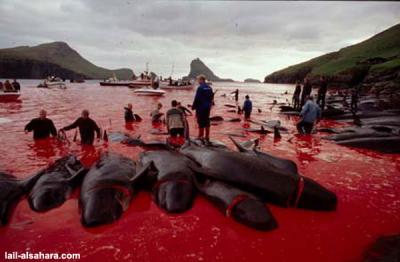
A bloody massacre of dauphins in the Feroe Islands

A bloody massacre of dauphins in the Feroe Islands

Every year the waters of the Feroe Islands are covered with blood and the bodies of great numbers of dauphins are attacked savagely. The ritual is carried out by youths who, by attacking the dauphins, supposedly try to demonstrate that they have arrived at adulthood. The dauphins, a very intelligent species, show their good will by approaching the shore to curiously observe human beings. Bloodthirsty beings who show no remorse in murdering as many as they can.

This is not Iraq, not any one of mankind’s cruel wars, although the savageness is if anything greater. The Feroe Islands belong to Denmark, a member of the European Union, with a reputation for its advancements in education and culture...and its love and respect for nature.

????????????????????????????


Frases de un mundo al revés

l.  "La hora ha llegado. EE.UU. debería aceptar algún tipo de control de parte del FMI."  Yashwant Sinha, ex ministro de Economía de la India

2.  "Querido Estados Unidos ¡Bienvenido al Tercer Mundo!" Rosa Brooks, Los Angeles Times. Agregó: "Queremos reconocer el progreso que hizo en su evolución desde superpotencia económica a caso perdido económico. Normalmente, un proceso de este tipo puede demandar 100 años, o más. Con su oscilación entre el extremismo de libre mercado y la nacionalización de empresas privadas, sin embargo, Ud. logró en muy pocos años, muchos de los arributos de las economías del Tercer Mundo.

3. "La prensa siempre me pregunta ’presidente, ’y la crisis?’ Yo les digo que le pregunten a (el presidente estadounidense, George W.) Bush, la crisis no es mía."

4. "George W. Bush, un presidente que se reivindica como discípulo de Reagan, acaba de admitir en Washington, que solo el Estado es capaz de extraer a su país de los resultados de la tormenta que atraviesa el sector financiero."  Oscar Raúl Cardoso, editorialista del diario argentino, Clarín.

5. "El rescate financiero del Tesoro a Freddie y Fannie es socialismo para los ricos, los que tienen contactos y Wall Street. Es la continuación de un sistema corrupto donde las ganancias se privatizan y las pérdidas se socializan." Nouriel Roubini, economista norteaméricano.

6. "La sobreespeculación y sobreproducción de prácticamente todos los artículos o instrumentos usados por el hombre...millones de personas desocupadas, porque lo producido (anteriormente) por sus manos había excedido el poder de compra de sus bolsillos...Bajo la inexorable ley de la oferta y la demanda, los bienes ofrecidos llegaron a sobrepasar de tal manera la demanda que podía pagarlos, que la producción debió frenarse bruscamente. Como resultado de ello: desempleo y fábricas cerradas. Esos fueron los trágicos años de 1929 a 1933." Presidente Franklin D. Roosevelt.

7. "Ocho años de políticas que destruyeron las protecciones del consumidor, flexibilizaron la supervisión y las regulaciones y alentaron bonificaciones gigantescas para los directivos mientras ignoraban a los estadouidenses de clase media, nos han puesto en la crisis financiera más seria desde la Gran Depresión," Barak Obama, candidato presidencial de Partido Demócrata.

8. "Vienen siete años de gran hartura en Egipto. Pero después sobrevendrán siete años de hambre y se olvidará toda la hartura en Egipto pues el hambre asolará el país."  Génesis 41

9. "Mi primer instincto fue dejar actuar al mercado, hasta que me di cuenta tras ser informado por expertos, de lo importante que se había vuelto el problema. Entonces, decidí intervenir e intervenir audazmente." Presidente de los EE.UU. George Bush.

 10. "Yo aún tengo confianza en EE.UU. Pero lo que creo es que se ha cometido un gran error político que empezó con Ronald Reagan, con el fundamentalismo de mercado. Luego con Bush, con el Bush actual, tratando de usar nuestra superioridad militar para imponer sus dictados al mundo. Ese ha sido un error terrible." George Soros.

11. "El problema no es el capitalismo en sí sino que se perdió de vista que un mínimo de reglas es indispensable para que las cosas funcionen." George Soros

12. "Durante los últimos siete años, Afghanistan e Irak han pasado de ser regímenes que promovían activamente el terrorismo a ser democracias que lo combaten." Presidente George Bush de los EE.UU. antes las Naciones Unidas, 23 de septiembre, 2008.

13. "A pesar de que hoy el presidente Bush ha defendido, ante esta asamblea, la lucha contra el terrorismo, nada dijo ni denunció cuando hubo actos terroristas en Bolivia contra mi gobierno...El gobierno de EE.UU. llegó a llamarme el Bin Laden andino y comparaba a los campesinos bolivianos con los talibanes...El embajador norteamericano alentaba abiertamente a la gente a no votarme. Decía que si ganaba, EE.UU. no daría más ayuda a Bolivia. Cuando yo llegué al Palacio Presidencial, la CIA tenía una oficina dentro y hace poco EE.UU. intentó entrar armas al país...Hace poco recibí una carta del presidente Bush en la que decía que si yo no era su amigo era su enemigo. Yo soy amigo de la gente de los EE.UU. y no me preocupa el presidente." Evo Morales, presidente de Bolivia en las Naciones Unidas, el 23 de septiembre, 2008.

14. "Esta crisis es el resultado de la voluntaria y sistemática falla del gobierno en regular y monitorear las actividades de banqueros, prestamistas, fondos de inversión, aseguradores, y otros actores del mercado. Jugaban apuestas de poker muy alta con el sistema financiero, sin la adecuada transparencia, y supervisión." New York Times, septiembre de 2008.

15. "Está en pelígro el bienestar de miles de millones de personas, pero sobre todo el de los más pobres entre los pobres." Ban Ki-Moon, secretario general de la ONU, sobre la crisis en las finanzas.

16. "Las calificadoras son principales sulpables. Los bancos no pudieron hacer lo que hicieron sin su complicidad. Convirtieron muchos bonos hipotecarios riesgosos en clase A." Joseph Stiglitz, premio nobel, sobre la crisis en las finanzas.

17. "No atinan los expertos del imperialismo a dar pie con bola. Dondequiera que los principales del capitalismo reinan, la sociedad retrocede. De ahí el cuidado extremo que debemos tener cada vez que el socialismo se vea obligado al uso de mecanismos capitalistas." Fibel Castro.

18. "Ahora se produce la intervención estatal más formidable de la que se tenga memoria precisamente desde el lugar donde nos habían dicho que el estado no era necesario, en el marco además de un fenomenal déficit fiscal y comercial." Cristina Kirschner, presidenta de Argentina, sobre la crisis en las finanzas.

 

Unasur asegura su respaldo al gobierno de Evo Morales

Luego de cinco horas de debate en Santiago, Chile, los presidentes de Unasur el 15 de septiembre, Unasur declaró "su más pleno y decidido respaldo al gobierno constitucional del president Evo Morales, cuyo mandado fue ratificado por una amplia mayoría en el pasado referendo."

Además rechazan "enérgeticamente y no reconocerán cualquier situación que implique un intento de golpe civil, la ruptura del orden institucional o que comprometa la integridad territorial de Bolivia."

° "Condenan el ataque a instalaciones gubernamentales y a la fuerza pública por parte de grupos que buscan la desestabilización de la democracia, exigiendo la pronta devolución de esas instalaciones como condición para el inicio de un proceso de diálogo.

°"Hacen un llamado a todos los actores políticos y sociales q que tomen las medidas necesarias para que cesen inmediatamente las acciones de violencia, intimidación y desacato a la institucionalidad democrática, al orden jurídico establecido.

° "Expresan su más firme condena a la masacre que se vivió en el departamento de Pando y respaldan el llamado realizado porf el gobierno boliviano para que una comisión de Unasur pueda constiturise en el país para realizar una investigación imparcial, que permita esclarecer a la brevedad este suceso y formular recomendaciones de tal manera de garantizar que el mismo no quede en la impunidad.

Unasur y la creciente lucha geopolítica en sudamérica

Unasur y la creciente lucha geopolítica en sudamérica

La cada vez más aguda lucha geopolítica en sudamérica, expresada mediante el retiro de embajadores entre La Paz y Washington, la creciente violencia en Bolivia en las provincias no indígenas en repuesta a los intentos del Presidente Evo Morales de introducir importantes cambios sociales y legales, los aireados reproches entre Washington, La Paz y Caracas y la sombra de crisis en las finanzas de un mundo cada vez más "globalizado," sin mencionar el condimento de la campaña electoral en los Estados Unidos, ha producido un renovado interés en la Unión de las Naciones Suramericanas (Unasur).

Detrás de la lucha ecabezada por diferentes sectores sociales y políticos en Sudamérica, y la incidencia o no de intereses foráneos en los acontecimientos, el continente parece emerger con un rol más importante en el conflictivo mapa mundial. Los problemas de cada país en la región comienzan a tener consecuencias más allá de las actuales fronteras nacionales. Si bien es difícil saber hasta qué punto la expulsión de los embajadores norteamericanos en La Paz y Caracas obedecen a "conspiraciones" y hasta qué punto obedecen a cortinas de humo, está claro que son acciones que sirven como reflejos de la realidad subyacente.

Hace largos años en el continente se ha hablado del sueño de una unión de los países al sur del río grande y si bien sigue siendo un sueño, la actual situación política, económica y social parece acortar los pasos. En el Tratado de la Unasur, firmadado el 23 de mayo de 2008, los representantes de Bolivia, Brasil, Colombia, Chile, Ecuador, Guyana, Paraguay, Perú, Suriname, Uruguay y Venezuela ratificaban que "tanto la integración como la unión suramericanas se fundan en los principios rectores de: irrestricto respeto a la soberanía, integridad e inviolabilidad territorial de los Estados; autodeterminación de los pueblos; solidaridad; cooperación; paz; democracia; participación ciudadana y pluralismo; derechos humanos universales, indivisibles e interdependientes; reducción de las asimetrías y armonía con la naturaleza para un desarrollo sostenible."

El mapa de los conflictos que han surgido, en parte en respaldo al gobierno boliviano del President Evo Morales luego de la expulsión en La Paz del embajador norteaméricano Philip Goldberg, acusado de conspiración contra el gobierno, y en parte debido a situaciones previas que vienen agudizándose, incluye: la postergación de la acreditación del nuevo embajador de EEUU en Honduras;la no renovación en Ecuador de la base militar norteaméricana de Manta; el anuncio del presidente de Nicaragua, Daniel Ortega, de que podría expulsar también al embajador norteaméricano en ese país; la expulsión en Venezuela del embajador norteaméricano en Caracas; el desagrado público expresado por el presidente de Brasil, Lula Da Silva por la reactivación de la Cuarta Flota de los EEUU en la región; la inclusión del futuro embajador paraguayo ante Washington, Alejandro Hamed Franco, en una supuesta lista negra, complicando su nombramiento...

En otros tiempos de conflicto en la región, tuvo activa participación la Organización de Estados Américanos (OEA), pero como los EEUU ejerece fuerte influencia en su seno, la Unasur aparece como una alternativa diplomática. Además, el conflicto mismo es motivo suficiente como para empujar los miembros de Unasur hacia un funcionamiento más unificado.

Luego de una reunión de urgencia mañana en Santiago, Chile, habrá seguramente un comunicado de respaldo decidido a las instituciones democráticas de Bolivia. Recientemente hubo un pronunciado a favor de Bolivia que lamentó: la prolongación de las acciones de grupos civiles que conducen a pérdidas de vidas humanas, a personas heridas, a destrucción de bienes públicas y privados, al debilitamiento institucional y riesgo para la democracia y que podrían amenazar su unidad e integridad territorial."

Si bien Evo Morales cuenta con el apoyo de cerca del 70% de la población, las zonas ricas y de clase media blanca se enfrentan cada vez más abiertamente al gobierno central de La Paz, con tomas de sedes gubernamentales, aereopuertos, ataques a canales de televisión, destrucción de mercados populares, apaleando a campesinos y en Pando bandas armadas de los "civiles" incluso participaron en un ataque a campesinos con un saldo de alrededor de 15 muertos, según el gobierno central y los medios de comunicación.

Los que se oponen a Morales están molestos porque el gobierno central impuso un recorte promedio del seis por ciento en las transferencias a las prefecturas para poder así pagarle una modesta jubilación a los más pobres; los "civiles" dicen que quieren autonomía pero subyacen en la lucha un fondo de racismo (la mayoría de los bolivianos son de origen indígena), xenofobia, macartismo, y ultra nacionalismo. Politicamente, los "civiles" se identifican con la derecha, desplazada del poder debido a la elección de Morales.

"La decisión oficial de declarar persona no grata al embajador Philip Goldberg," escribe Horacio Verbitsky,en Página 12 el 14 de septiembre. Conocido por sus amplios contactos, Verbitsky agrega que Goldberg antes se desempañaba en Kosovo--donde hubo no sólo una lucha geopolítica sino una guerra. Además, el conflicto con los EEUU en La Paz tiene antecedentes: "desde la exhortación del ex embajador Manuel Rocha al pueblo boliviano en 2002 a no votar por Evo, hasta la expulsión del encargado de seguridad Vincent Cooper, que intentaba reclutar a becarios estadounidenses como espías sobre las actividades de cubanos y venezuelanos en Bolivia."

La situación se volvió difícil además cuando, luego de clausurar la agencia estadounidense de cooperación internacional para el desarrollo (USAID), Evo reclamó en Washington que se ampliaran las preferencias arancelarias para sus productos de exportación al mercado estadounidense, de acuerdo con la Ley de promoción Comercial Andina y Erradicación de la Dropa (Atpdea), que vence a fin de año.

En repuesta a la decisión de declarar al embajador Goldberg persona no grata, el subsecretario de asuntos sudamericanos de Washington, Thomas Shannon, mencionó la posibilidad de congelar cerca de cien millones de dólares en ayuda para el así llamado combate contra los narcóticos y no renovar las preferencias arancelarias para los productos bolivianos...

Llama fuertemente la atención que los dos candidatos a la presidencia de los EEUU, John McCain y Barack Obama, han expresado su total apoyo a la política del gobierno del President George Bush en la región. Después de años de prestar muy poca atención al continente, debido al conflicto en Irak y Afghanistan, todo indica que Sudamérca emerge como una zona de gran interés en la geopolítica de Washington.

Would John Stewart Mills or Adam Smith have done what George Bush did?

Would John Stewart Mills or Adam Smith have done what George Bush did?

Just imagine for a moment that Adam Smith or John Steward Mills, the forefathers of free enterprize economics, should wiggle in their graves, stretch, leave their tombs and glance at the morning paper, say, in Washington D.C.

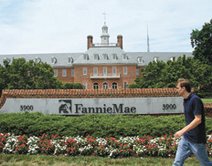
"Hey! What’s going on!" you can hear Adam exclaim in dismay, "I thought those guys in Washington were conservative economists...but what’s this about the Federal government dishing out $200 billion to keep Fannie Mae and Freddie Mac from going under? " Smith would inquire.

The basic notion of free market economics, so in fashion these days, is to cut down government interference in economic processes to an absolute minimum and stimulate competitive conditions among producers. True, when Mr. Mills wrote his thesis the world did not have mega-corporations, nor staggering monopolies, nor globalized banks and financial institutions; capitalism was just a raudy teenager shouldering its way out of the remains of the mercantilistic system.

Are we facing the entrance on the scene of a sort of State capitalism--the kind free market pundits have belittled for so long? With George Bush’s approval, Treasury Secretary Henry Paulson has once again broken the rules of conservative economic dogma. And, coincidence or not, the move to save Freddie and Fanny comes when the political scene in the U.S. is warming up, and when the state of the economy is one of the main concerns of voters.

Not to make comparisons, but regimes such as that of Benito Mussolini and Germany by Adolf Hitler ushered in their own particular forms of state capitalism, with the political coverage of fascism: in both cases the declared aim was to bring about a significant increase in prosperity, however repugnant their other teachings and practices. They did so among other reasons to shore up undisguised economic slumps eating away at Italy and Germany. They resorted to state capitalism also to enhance the pasting together of a supposed "union" between capital and labor, sealed together with flag waving nationalism, war mongering and ethinic genocide. On the other side of the ideological fence, Stalin developed a sort of bureaucratic State capitalism in substitution of socialist means of production, and ended up likewise in edifying a profoundly repressive system.

The bailing out of Fannie and Freddie is by no means the only case of government intervention on behalf of staggering or mismanaged business enterprizes in the United States, but it is probably the biggest and involves an essential ingredient of the economy: housing. Having a house is part and parcel of the "American Dream" but in order to make that dream come true an array of easy credit and mortgage arrangements appeared on the scene...until buyers realized that they would have to pay through their teeth or loose they newly bought home.

We might mention just a few other recent well-known cases of government inspired bail outs: the Lockheed Aircraft Corporation, Penn Railroad, Chrysler, the propping up of savings and loan associations in the 1980’s, the $15 billion subsidy Congress approved for airline companies in the wake of  September 11th...

Is it "right" or "wrong" for the State to intervene in favor of private businesses that get into difficulties? That obviously depends on one’s economic and political views. What is clear, however, is that political and economic conservatives are publically opposed to the intervention of the State. Their view in fact is that the role of the central government should be reduced to a minimum expression. Nevertheless, under the Bush Administration--clearly conservative economically, politically and socially--certain areas of government activity have increased enormously: defense, internal security...Big business has received tantalizing tax reductions, the State has stacked up record deficits--even having to go abroad to get loans to pay them off.

The crash in 1929 appeared at a time when conservatives were also opposed to market controls...and it led to the New Deal policies which injected enormous amounts of money into the economy to deal with wide spread unemployment and economic depression. The result  appears to be that the policy of "non-regulation" inevitably ends up in State intervention to shore up the economic or private business exercising an enormous influence over the economy.

P.S.     What did the grandaddies of free market capitalism (Adam Smith, Ricardo, John Stewart Mills) say about this? Well, they were not exactly receptive to the State saving the neck of private businesses plagued with mismanagement. According to Smith State intervention would but distort economic growth and hinder social equality. 


Wait a minute! Now McCain, the champion of change?

      "Words, words, words," muttered Hamlet, still a bit unclear about how to proceed in the face of his growing suspicion that his father, the King of Denmark, had been murdered by his uncle. Words. A genuine human invention. With them we do business, pray, seduce, try to solve our own problems or those of others...and yet they have this nasty habit of back-firing.

     Take the word change. That seems to suggest a new course of action, although it might just mean that your shirt is full of sweat so you go home to put on a freshly washed and ironed one, changing one shirt for another. Is there any way of knowing whether the new shirt will be any better than the old one? Well, maybe. If you know that the clean shirt is new, made better, fits better, is more appealing to the eye...

    In politics, though, talk about change can be a very thorny issue. To begin with, change assumes a different meaning according to your ideology. It means one thing for a U.S. conservative, such as John McCain, something quite different for a liberal or progressive, such as Barak Obama.

     Then there is a more practical, or maybe even ethical problem: once you have pronouced yourself for change, how can you make sure that your promises come true? If you incorporate "change" on your campaign menu and are elected you've either got to do what you promised or do an about face. But there is an additional problem: what the politicians understands when he or she talks about "change" to get votes may not coincide with what takes place once installed in the seat of power and surrounded by powerful lobbies, the Pentagon, the "Establishment," bombarded by pressure from multinational banks and corporations...

    We might ask therefore whether individual politicians, motivated by high ideals and ethical values, can really introduce any profound changes in a system that operates on the basis of its own laws of behavior. We need not mention the traumatic events that surrounded the end of slavery under the presidency of Abraham Lincoln; what happened when President John Kennedy attempted to respond to popular protests demanding equality of opportunity for minority groups; how diverse movements in the l960's and 70's were either absorbed or repressed: the women's rights movement on the one hand and black nationalism on the other.

    Of course you might argue that the end result was change. True. But the changes came about rather as a need of the whole system to adapt itself to changing circumstances than any fundamental break with the status quo.

    The U.S. economy is in the midst of one of its periodic slumps, and therefore both candidates are going to offer proposals for "change." The conservative Republicans, at least officially, base their economic and social notions on a sort of marriage between evangelistic Protestant thinking and the "free market." There is supposed to be as little meddling of the State as possible in economic affairs, to allow for free competition, big business is tantalized with enormous tax reductions--on the theory that if they pay less taxes they will invest more, and the resulting productivity will "trickle" down to the common citizen. But in practice, these policies end up in support of monopolistic practices and make competition from small enterprizes extremely difficult. Furthermore, everytime any important economic groups get into trouble due to speculation or administrative mal-practice the Federal Government is there to bail them out: this is clear in the present case involving  $200 billion dollar injection to save mortgage financers Freddie Mae and Fannie Mae. So...what has happened to the conservative notion of free market? In the past there have been numerous other cases where the State, unloved by most conservatives, came on the scene to bail out mega-corporations: Lockheed Aircraft, Penn Railroad, Chrysler, just to mention a few.


(To be continued)

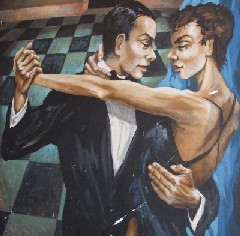
Seis mil personas bailaron el final del 6° Mundial de Tango en las antíguas tiendas Harrods

Seis mil personas bailaron el final del 6° Mundial de Tango en las antíguas tiendas Harrods

Y...ganaron Tango Escenario los jóvenes bonarerenses Melody Celatti, Lanús, y José Fernández, Claypole, bailando "Recuerdo," de Osvaldo Pugliese. También ganaron 12.500 pesos y una gira por Japón el año próximo, patrocinada por una empresa nipona. En Tango Salón el premio fue para Cristina Sosa y Daniel Nacucchio.