Blogia
Buenos Aires Jaque Press, en inglés y español

Revista (Magazine)

Las frases más jugosas del mes

1) Umberto Eco:    "La memoria es nuestra identidad, nuestra alma. Si perdés hoy la memoria, ya no hay alma, sos una bestia."

2) Umberto Eco:  "Con la globalización y el fin de las ideologías, ya no se presentan tantas posibilidades de transformación, porque la transformación es planetaria, y hay que esperar las grandes tragedias ecológicas."

3) Amendment IV (U.S. Bill of Rights) : "The right of people to be secure in their persons, houses, papers and effects, against unreasonable searches and seizures, shall not be violated, and no Warrants shall issue, but upon probable cause, supported by Oath of affirmation, and particularly describing the place to be searched, and the persons or things to be seized."

4) Albert Camus, "El hombre rebelde."El esclavo se alza por todas las exigencias al mismo tiempo cuando juzga que con tal orden se niega algo que hay en él y que no le pertenece a él solo, sino que constituye un lazo común en el cual todos los hombres, hasta el que le instulta y le oprime, tienen una comunidad preparada."

5) Scheler: "No hay en el mundo bastante amor para que se malgaste en otro que el ser humano."

There's a snake waiting to swallow us up: a conversation that could be true...

There's a snake waiting to swallow us up: a conversation that could be true...

     You thought this might be about reptiles, didn't you? Maybe it is, but not directly. Let's proceed. Then, dear reader, you can decide for yourself if the subject of this piece is snakes...or something closer to a species called homo sapiens.

     The fellow was clean-shaven, dressed to the hilt, and there was a look about him that seemed to say: "here I am." He was seated at the only table facing the window, in the quite posh bar around the corner from a statue of a starkly naked woman, probably carved by some world re-known artist. Who knows? So many things are reproduced these days...you never know. Anyway, our character is wearing a serious face today in anticipation of an important encounter.

    "Are you George?" The question brought the clean-shaven fellow back to the real world.

   "Anthony? You're a bit late."

   "I'm sorry. Let's get started. So you think the war against Iraq is a good thing?"

   "I wouldn't say good, but necessary. We must fight against terrorism so democracy and liberty can triumph."

   "Hmm. Even after 4,000 U.S. soldiers have died and hundred of thousands of civilians..."

   "It's the price we have to pay."

   "What if we don't want to pay it?"

   "What are you suggesting?"

   "What if the people of the United States were to say no: no more tax money to support a war we didn't ask for."

   "We didn't ask to have those terrorists kill thousands in the attack against the twin towers..."

    "So you think that one evil act can be rectified by another more devastating act?"

    "I didn't say that."

    "No, but it is implied by what you just said."

    "Who are you to determine the implacations of what I say? Only God knows the truth."

   "I have never seen God, so how do I know he exists?"

   "It's a question of faith."

   "I'm sorry. I operate on the basis of what I see, hear, feel or taste, condimented with a generous dosis of reason."

   "You don't believe in God?"

    "Should I?"

    "Of course."

    "Listen. I am a free thinker. I don't belong to any religion, club or political party, I try to see things from different perspectives and then come to a conclusion."

     "A free thinker? Ha! Ha! Like those communists used to say, those that advocate free love..."

    "That's not a bad idea. The problem is the adjective. Why do we have to say that love is free or not free?"

    "Oh come on! You know what I mean. Having sex just for sex and not for love."

    "What's wrong with that? Love is much more profound than making love."

    "It's against God's will to have sex with someone you don't love."

    "What is God's will?"

    "That men and women marry, have children, be faithful to each other, love and cherish each other until the end of their days."

    "What if that love disappears?"

    "It's a duty to love and be faithful to your wife."

    "I don't have a wife."

    "Maybe you should. Maybe if you had a wife you would understand what I'm talking about."

    "I've been in love several times and it was great. But it didn't last forever. She went her way and I went mine. She is a wonderful person and I love her. She certainly loves me too. But we were only able to share a certain time together, not all our lives."

    "My friend, you need help. Let's pray together. God has mercy on sinners who confess their sins."

    "Wasn't the invasion of Iraq a sin? First that talk about so-called weapons of mass destruction, then the supposed threat of an arrogant dictator to blow up the civilized world, then the sermon of bringing democracy after bombing the country...aren't those sins? Doesn't the Bible say you are not supposed to kill? That's what I don't understand about people like you. You say killing is wrong but go to war as if it were to save mankind."

     "Killing is wrong but wars are often necessary."

     "Oh. So there are exceptions to the rules, to the commandments..."

     "I didn't say that."

     "That was implied in what you said..."

     "Look, this is getting nowhere. Waiter! The bill please."

     "I'll pay... You haven't answered me."

     "I smell a snake. It makes no sense to answer snakes. They understand nothing."

     At that moment the waiter appeared. He was wearing a multi-coloured vest with tiny flashing images of a snake with its mouth open, ready to strike. It was only a flashing image. But might we not suppose that there is a viper in human beings? Strange, though. Snakes and other animals attack only when they need food or when they feel threatened. No animals go to war. That's the stuff homo sapiens are made of and aren't homo sapiens supposed to be the highest form of life?




Es la nueva joya del mercado, pero...

Es la nueva joya del mercado, pero...

     Luego de escuchar los discursos en favor y en contra del Lockout de los productores en Argentina, conviene respirar profundamente y formular varias preguntas. ¿Las repuestas? A lo mejor los lectores pueden ayudar.

     1. Hasta los mismos productores admiten que el problem no tiene mucho que ver con las ganancias. Según INDEC, ha habido un crecimiento de alrededor de 55% en las exportaciones agrícolas durante la primera mitad del bimestre pasado, con precios en alza por un 30%. Hay empresas como Molinos Río de la Plata que informan sobre ganancias de hasta 400%. Las retenciones anunciadas por el gobierno claramente achican esas ganancias, especialmente en el rubro soja. Entonces: ¿Cuál es la razón por el lockout? ¿Realmente estan al borde del colapso o es que tienen miedo a perder su actual nivel de ganancias? ¿Es cierto que sus gastos de infra-estructura han aumentado considerablemente y hasta el punto de poner en pelígro sus ingresos? ¿Por qué la situación de los pequeños y medianos productores parece haber sido dejado de lado en la política de retenciones?

     2. Un "lockout" no es un paro. Lo que hacen los obreros cuando dejan de trabajar para protestar sobre las condiciones del contrato de trabajo se llama huelga o paro (hay discrepancias sobre el término). Lockout es cuando la empresa no permite que los obreros trabajen. En este caso los dueños de las empresas agrarias realizan la protesta tratando de bloquear en envía de sus mercancías a los mercados. Si bien la producción agraria en Argentina está en manos privadas y funciona según los conceptos de la economía de mercado (capitalismo), es evidente que sus productos son necesarias para toda la población. En un sistema capitalista puro el capital se ocupa de producir ganancias y tiene poco interés en el contexto social, pero: ¿no constituyen los productos alimenticios productos esenciales para toda la población? ¿Por qué en gran parte de los países "desarrollados" el Estado subsidia la producción agraria- (mayormente controlada por multi-nacionales)?

    2. El anuncio del Ministerio de Economía apunta a establecer variantes en las retenciones para compensar la diferencia entre los precios internaciones y los domésticos y de alguna manera frenar el crecimiento de la soja a expensas de otros granos. Pero muy pocos hablan de otra situación, curiosamente señalada por uno de los más importantes protagonists del Lockout--Eduardo Buzzi, de la Federación Agraria: "Nosotros no somos ni gorilas, ni queremos otro 20 de diciembre. Tampoco vamos a ser funcionales a las 2.200 empresas que manejan el 60% del negocio de la soja en el país." (Clarín, 28-3-08). Cabe agregar que el negocio de la exportación de los productos agrícolas en Argentina está casi exclusivamente en manos de empresas multinacionales. La pregunta: ¿Por qué no re-establecer la Junta Nacional de Granos para que el Estado pueda regularizar el mercado? Muchos países productores de granos, incluso los que tienen políticas económicas "de mercado" tienen estructuras similares. Según Pino Solanas, del Proyecto Sur, "El conflicto por las retenciones a la renta agraria está dejando de lado a uno de los principales protagonistas de la crisis: el sector exportador y las multinacionales del cereal, que son los que mandan y fijan los precios."

    3. ¿Por qué no existen retenciones en otros sectores? Por ejemplo, se sabe que las empresas que exportan oro, plata y otros minerales no pagan retenciones y gozar de muchos otros beneficios. Asimismo: ¿por qué la recaudación de las retenciones termina en manos del gobierno federal? Como la situación económica-social de cada provincia es única, con diferentes resultados según el patrón de producción en cada provincia, ¿no sería razonable que cada provincia retenga un porcentaje de las retenciones?

    4. Agregamos que el mundo se enfrenta a una crisis alimentaria. Lo dice Ban Ki-Moon, secretario general de las Naciones Unidas: "El precio de los alimentos aumenta. La amenaza del hambre y la desnutrición crece. Millones de las personas más vulnerables del mundo corren peligro. Hace falta una repuesta urgente." (Clar-in 28-3-08) Agrega: "El precio de los productos básicos--trigo, maíz, arroz--alcanzó niveles sin precedentes y aumentó un 50% o más en los últimos seis meses. Las reservas globales de alimentos están en el nivel más bajo de la historia. Las causas van desde el aumento de la demanda en grandes economías como India y China hasta cuestiones relacionadas con el clima. El elevado precio del petróleo impulsó el costo del transporte de alimentos y de los fertilizantes. Algunos especialistas señalan que el surgimiento de los biocombustibles redujo la cantidad de alimentos." ¿Quienes van a sentir más el efecto de la crisis? "Es inevitable que sean los mil millones más pobres los que se vean afectados, gente que vivie con un dólar diario o menos."

    5. ¿Por qué el gobierno argentino tomó la medida de incrementar las retenciones y variar su aplicación, sin consultar previamente a todos los sectores y sin haber formulado una política agraria global? La política de retenciones ha existido durante muchos años en Argentina, incluso bajo las dictaduras, variando según el momento y la política del gobierno central. Lo que no ha habido es una política global agraria contemplando la situación de cada actividad, la explotación de la tierra, la ecología, la distribución de la tierra...etc.

Shall we?

Will you? said he.  
Will I what? she said.  
Will you do it? said he.  
Do what? said she.  
What we always do, said he.  

What do we always do, said she.  
Well...you know, like this, said he.  
Not like this and not like that, said she.  
Then you won't do it, said he.  
Not unless you will, said she.  
I will if you will, said he.  
Will you? said she.  


Well, I quess I will, said he.  
Well, if you will,let's do it, said she.  
Do what? said he.  
Let's do what you want and I don't, said she.  
I don't like to do what you don't want to, said he.  
And I don't like to do what you do like to do, said she.  


You don't? said he.  
Actually, I do and I don't, said she.  
Then let's put the does and the don'ts together, said he.  
O.K...if you don`t mind doing what you don't want to, said she.  


We should do it if we want, said he.  
What if we don't want to? she asked.  
I don't know but maybe we should anyway, said he.  
Where there's a will there's a way, she said.  
Have it your way if you will, he said.

Colombia donde la realidad supera la ficción

Hay muchas clases de asesinos, pero pocas veces, siquiera en ficción, ha habido un relato tan cercano a las tripas que la aventura amorosa-periodística del periodista Jason Howe publicado en The Independent.


Marylin,  mujer joven, amante del inglés, bella y apasionada en la cama, mataba informantes supuestamente vinculados a los guerrilleros de las FARC, aunque a veces actuaba como asesina free lance:


“Una mañana, Marylin me contó que la noche anterior había convencido a un amigo de que la ayudara a decapitar y desmembrar a una mujer. Esta vez no era una informante: una amiga la había contratado para que líquidara a una amante de su novio,” explica Howe.


Tiempo después, el periodista logra filmar su confesión:


“Cuando maté por primera vez me asusté, tuve miedo. Maté para ver si podía hacerlo. Pero es obligatorio matar, si uno no mata, lo matan. El primero fue muy difícil porque estaba de rodillas, rogando, llorando y pidiendo que no lo mataran por sus hijos. Por eso fue tan difícil.


“Pero si no lo mataba, otro de los paras me mataba a mí. Después de hacerlo una se queda temblando, no se puede comer ni dormir, ni hablar con nadie. Me encerré en mí misma. Pero con el tiempo una se olvida. Mis superiores me decían que la segunda vez ida a ser más fácil. Pero una sigue temblando.


“La segunda vez resultó un poco más fácil. Es como dicen por aquí, si matas una vez, matas muchas veces. Hay que ir perdiendo el miedo. Ahora sigo matando y no siento nada, todo es normal. Antes me mandaban a matar, era una obligación. Pero desde que dejé la organización lo hago por dinero y nada más.


“Maté a uno de mis amigos porque si no iba a matarme a mí. Mis amigos me contaron que trabajaban para el otro bando, por lo que eran ellos o yo. Confirmé con las Autodefensas que efectivamente eran guerrilleros y pedí permiso para matarlos.


“Fue muy doloroso. Fui a su velorio y su entierro. Fue muy difícil ver a su madre llorando, sabiendo que yo era responsable por ese dolor. Pero eran ellos o yo y en las Autodefensas te enseñan que primero hay que cuidarse uno. Hasta ahora, maté a 23 personas.” (La traducción del texto es de Página 1223-3-08)


Según el periodista, Marylin encontró su propia muerta a manos de su propio grupo a través de una lapidación, el castigo de los para-militares  para los “sapos,” es decir, las personas sospechadas de ser informantes.


El periodista pudo salir de la situación y contarla y continuar su vida cubriendo atrocidades en Afganistán y otras guerras.


Nos llama la atención el relato, pues en los grandes medios de prensa se gastan mucha tinta en acusar a los guerrilleros de ser “terroristas,” poco o nada para la descripción netamente terrorista de los para. Las actividades y modos de trabajar de grupos como las Autodefensas son moneda corriente entre las autoridades militares colombianas y el gobierno. Los Estados Unidos también sabe perfectamente cómo funcionan los grupos paramilitares y suministra millones de dolores en ayuda y entrenamiento al gobierno y a las fuerzas armadas colombianas, supuestamente para la eliminación de las plantaciones de coca pero también para la lucha contra la guerrilla.


En el reciente conflicto bélico cuando las tropas colombianas entraron en Ecuador para matar un grupo de las FARC, Bogotá ganó el entusiasmado respaldo de Washington sobre su supuesto derecho a atacar “terroristas” incluso fuera de sus propias fronteras. Pero prácticamente el resto de los países en América Latina no aceptaron el término “terroristas” porque sabían perfectamente que daría lugar a la posibilidad de una eventual acción similar contra sus territorios en nombre de la mal llamada “guerra contra el terrorismo,” que en realidad es consecuencia directa del concepto de “guerra preventiva” de la Administración Bush.

 (Es decir, guerras relámpagos concebidas para debilitar un eventual enemigo, debilitando su capacidad de reaccionar. En realidad, la intención parece ser más  geo-política que preventiva…)

Cabe agregar además que por más crítica que puede caber a las FARC por el secuestro de personalidades y los asesinatos de personas tildadas de enemigos, su lucha sigue siendo por un cambio social; en cambio, organizaciones como las Autodefensas operan como asesinos a sueldo y su única fin es acabar con las FARC u otros grupos que de alguna manera alzan sus voces contra el estatus quo.


(Howe afirma que las raíces de la guerra civil en Colombia “se hunden en las diferencias económicas y sociales que pernean el país, con una enorme clase baja que vive en la pobreza y una ínfima clase alta que tiene el 90 por ciento de la tierra, la industria y los negocios.”)


Entonces, en este mundo al revés hay que preguntar quién realmente fomenta el terrorismo y quién realmente lucha por su eliminación. Pues acciones de terrorismo financiadas y realizadas por el Estado son actos doblemente condenables porque implican el respaldo del Estado por acciones criminales: es lo que pasó en Argentina durante la dictadura militar de 1976-82.

She sighed and pined; so did he

She sighed and pined; so did he

    She sighed and pined and sighed and pined.

           He sighed and pined and sighed and pined.

                Their love was forever or never:

                         It was for never,

                             A very short endeavor. 

Ausencias que también son presencias en el Centro Cultural Recoleta

Ausencias que también son presencias en el Centro Cultural Recoleta

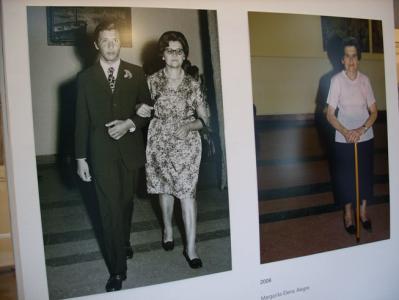
    "Con enorme sensibilidad, con tacto, no sin una sobrecarga emocional fuerte, el trabajo del fotógrafo argentino Gustavo Germano, residente en Barcelona, traslada con el solo salto del tiempo transcurrido vivencias y ausencias a un mismo lugar," explica Antoni Traveria, director general de las Casa América Catalunya, que patrocina la exposición que los porteños pueden apreciar en el Centro Cultural Recoleta de Buenos Aires.

     En la foto a la derecha aparece Jorge Emilio Papetti del brazo de su madre Margarita el día de celebración del final del cursos de bachillerato. Estaba haciendo el servicio militar el 16 de marzo de 1977--a un año del sangriento golpe militar del 24 de marzo de 1976--cuando es detenido mientras hacía guardia. Fur torturado en el mismo regimiento, luego trasladado a la represa de Salto Grande, donde es interrogado y torturado nuevamente, luego a la cárcel de Concordia, luego al centro clandestino de detención del Escuadrón de Comunicaciones Blindados II de Paraná, y finalmente es llevado a la cárcel de Paraná. Muere en un último sesión de tortura.

Frases que duelen, frases que provocan, frases que piden repuestas...

1) Reed Brody, vocero y asesor jurídico de Human Rights Watch: "Si uno mata a una persona, va a la cárcel. Si uno mata a 40 personas, termina en un asilo de insanos. Pero si uno mata a 40,000 mil personas, termina en un confortable exilio con una cuenta bancaria en otro país...si es cierto que Pinochet mató a más de 3.000 personas, también es cierto que el gobierno de Estados Unidos lo apoyaba. Y no podemos disociar los dos acontecimiento. Aun cuando no podemos llevar a Henry Kissinger a un tribunal, faltamos a nuestro deber si no hablamos del lado norteamericano...Estados Unidos tiene una gran facilidad para dar vuelta la página. Con muchos criminales juzgados ellos saben decir: eso fue el pasado, ahora es distinto."

2) J.P. Satre: "Nuestras víctimas nos conocen por sus heridas y por sus cadenas: eso hace irrefutible su testimonio. Basta que nos muestren lo que hemos hecho de ellas para que conozcamos lo que hemos hecho de nosotros mismos."

3) Hegel:   "Por lo que a la raza humana se refiere, sólo quedan pocas descendientes de los primeros americanos. Han sido exterminados unos siente millones de hombres."

4) J. P. Feinman: "Hegel nosabía nada. No tenía datos...acaso la cifra total llegue a cinquenta millones."

5)  Bartolomé de las Casas: "Estais en pecado mortal y en él vivís y moris, por la crueldad y tiranía que usáis con estas inocentes gentes...¿con qué autoridad habéis hecho tan detestables guerras a estas gentes que estaban en sus tierras mansas y pacíficas?

6) Hugo Chávez: "Su Santidad el Papa no puede venir a negar el halocausto indígena."

7) Mariano Moro, director teatral: "Creo que el cuerpo se mueve porque quiere y ese hecho pone en primer plano al deseo, antes que la forma o la idea."

8) J. L. Borges: "El arte es la inminencia de una revelación que no se produce."

9) Francisco de Quevedo y Villegas (1580-1645) "La soberbia nunca baja de donde sube, porque siempre cae de donde subió."

10) J.P. Feinman: "El capitalismo es globalización por definición."

 11) Conde de Volney: "He visto amontonados los recursos en pocas manos, desnuda y pobre la muchadumbre. He visto concentrados en ciertas clases todos los derechos y todo el poder, pasiva y precaria la generalidad del pueblo." 

12)   Mariano Duffau, sobre la muerte de su hermano, Gastón Duffau, luego de su detención por la policía en Ramos Mejía, Argentina:

      "Los policías lo golpearon brutalmente, lo torturaron y después armaron una historia para tapar todo...cuando mis tíos fueron a la seccional les intentaron hacer comer la torta que habían preparado: que mi primo había tenido un accidente de tránsito. Esa fue la primera mentira. Como se les cayó rápido sostuvieron que había tenido un brote psicótico en el McDonald's de Ramos Mejía y que los evidentes golpes que mostraba su cuerpo habían sido provocados por un accidente vial días anteriores..." (Clarían 1-3-2008)

13)  Juan Lorenzo Barrionuevo, apodo "Jeringa" del campo de concentración de ESMA durante la dictadura militar, según confesó a José Luis Díaz, guardia del hospital de Ushuaia ante la Justicia:

     "Tenía miedo de que cuando llegara el momento no me iba a animar a empujar a la gente (presos políticos) desde el avión. Pero me animé. En ese momento me sentía Díos, estaba en mi mano la vida o la muerte. Podía sentir la vibración de los cuerpos por los temblores que causa el miedo." (Página 12, 29-2-2008)

14)   Gustavo Germano, sobre su muestra "Ausencias" en el Centro Cultural Recoleta de Buenos Aires, imágenes de desaparecidos y sobrevivientes en un mismo lugar, 30 años después:

      "Partí de una necesidad expresiva personal de ponerle presencia a la ausencia, pero al mismo tiempo de buscar aportar a la memoria." (´Clarín, 27-2-2008)

15)    Tsai Ming-Liang, sobre su película "La nube errante."

       "Cuando se vuelca una salsa espesa sobre un plato de fideos de arroz frito, da la impresión de ser una nube llena de deseos."

16)    Boris Izaguirre, escritor, en una entrevista sobre su novela "Villa Diamante."

       "El futuro es una idea muy latinoamericana. Latinoamérica es siempre el futuro, pero el futuro no existe, siempre nos da la espalda. Es una situación literaria cruelmente hermosa el hecho de que apuestes y mantengas una esperanza que nunca se materializa." (Página 12, 2-3-2008)

17)    Shunryu Suzuki: "Si tu mente está vacía, está siempre lista, abierta a todo. En la mente del aprendiz, hay muchas posibilidades; en la del experto hay muy pocas...Este es el secreto de la maestría del vivir: ser siempre un aprendiz." 

18)   Alicia Bonet, viuda de Rubén Bonet, fusilado el 22 de agosto de 1972 en la Base Almirante Zar:

"Morir moriremos todos pero nos diferencia el orgullo que tenemos y que contiuamos transmitiendo de generación en generación por haber tenido un familiar al que ustedes mataron por querer un país más justo y libre y solidario."   

19) Bertold Brecht: "Cuando la verdad sea demasiado débil para defenderse tendrá que pasar al ataque."


Cuento acerca de un pelado y su mantra

Cuento acerca de un pelado y su mantra        El señor pelado tarareaba su mantra sentado el un bar a la esquina de su casa, su cuello doblado hacia las botellas de vino en el estante que asomaba sobre el mostrador  

        "En el agua los peces, en el cielo mi espejo, y yo vagando por el ciberespacio como un leon sin dientes."

    Tenía un corte de pelo tipo taza, párpados caídos, y las arrugas que salían de la comisura de sus labios vibraban cuando vociferaba el verso.    

De repente se escuchó la voz de un hombre que parecía saber de cosas más mundanas:       

--"¡Todos al piso!"    

--¡Oh! ¡Ah! ¡Mira!    

Afuera un chico corría por la calle accionando una pistola al viento, o al azar, o a vaya saber hacia qué objetivo y detrás de él asomaba un pequeño ejército de policías o poli-ladrones, también con pistolas, también tirando al aire, al viento, o al supuesto ladrón.    

--¡Qué barbaridad! ¿Será posible?    

--A lo mejor son traficantes...    

Fueron las expresiones de dos hombres vestidos en sacos de color gris, listos para ser vendidos en alguna feria americana, es decir, los sacos, a los hombres les quedaban unos añitos más de vida. En cambio la moza, de muy generosas caderas, pechos y demás atractivos femeninos, con la cara más fresca que una primavera en París, dijo:    

--¡Se me fue un cliente sin pagar!    

Quien escapó sin pagar no fue el señor pelado. En realidad seguía allí tarareando su mantra.      

El reloj sobre el mostrador, arriba y a la izquierda de las medialunas recién hechas, marcaba las 10:30 de la mañana.      

No sabemos, pero es perfectamente posible que el pelado, al informarse sobre el incidente de los ladrones y policías, habrá recordado una frase del escritor Ernesto Sábado:    

"La vida cobra valor porque la espera la muerte, que es un hecho trágico y trascendente y misterioso. No sabemos en qué consiste la muerte. Nadie ha vuelto de allí."      

Aunque, pensándolo bien, a lo mejor ninguna bala entró en el pecho del pelado precisamente porque durante el murmullo de su mantra se había olvidado pensar en la muerte, hábito que practicaba regularidad cada día a la hora de tomar el café.  Es que uno va transitando por las calles de Buenos Aires, o las de Bagdad, de París o...sin darse por enterado: el señor muerte en cambio siempre está allí haciendo burla, orgullosa, con su cara de asco, su olor a podrido, feliz en su intento de tapar los pensamientos eróticos, filosóficos y filantrópicos de los seres humanos únicos e irrepetibles que pasean por la vida y por sus ineludibles y sucesivos procesos.

Que la bala que sale de la pistola de algún ladrón enfurecido no entre en el pecho de algún desprevenido cliente es pura y exclusivamente una cuestión de porcentajes, de cifras, probabilidades, incógnitas. En realidad, la acción fue tan veloz que el pelado nunca dejo de vociferar su mantra:

"En el agua los peces, en el cielo mi espejo, y yo vagando por el ciberespacio como un león sin dientes.”

Nature, beauty in form and content, loved and abused by consumer society's obsession with production at any cost...

Nature, beauty in form and content, loved and abused by consumer society's obsession with  production at any cost...

     There still are poets who see in nature a beauty, a struggle and a synthesis. They lift their pens in vain as the smoke stacks spit out fumes and cover leaves and flowers and walls and buildings and the air with life killing particles. Nature still sings in concert with the seasons and the tide and the cycles of the moon and the budding of flowers and the birth of new life and the eternal circuit of birth, growth, death and renewal. Produce! Produce! Produce! The bespeckled economists bend over computers in offices and invent theories to justify their generous salaries. Produce, invent new gadgets, convince people to buy more things, things, things...what is a person in this world of consumption but the things he possesses? And yet when swamped and exhausted, the consumper society chiefs go to the beach and play with the waves, or wonder at the bark of the sea lions or seek the ever vanishing nature reserves to renew their bodies and spirits with energy. They destroy and then wonder why the forests disappear, why the air is filled with noxious particles, why the fish float bloated and lifeless at the shores of lakes and rivers...

Patricia Calabrese presenta sus poesías en la Sociedad de Escritores de San Martín

      La poeta y ensayista Patricia Calabrese se presenta el 15 de marzo a las 18 horas en un café literario organizado por la Sociedad de Escritores de San Martín en Camed, calle Ramón Carillo 2476, San Martín, provincia de Buenos Aires.  

      Los que concurran al café podrán entrevistarla y habrá además una ronda de lectura de textos breves, propios o de escritores admirados a cargo de los presentes.

         Una poema de Patricia:

       Tiempo que es respiración intensa

     en un cuerpo que a veces es surco

     o ahuecado hueso que canta su canción.

Obama, Hillary, the hawks and a lot of difficult-to-answer questions...

                Throughout most of its history, the United States has based its foreign policy on expansionism (the “Westward Movement,” the 1998 Spanish-American war) or interventionism, cloak and dagger activities, preventive wars (the Big Stick in the Caribbean, military adventures in Mexico, Nicaragua, Granada, Dominican Republic, etc. ) and trade blockades such as the more than four decade throttling of trade with Cuba.               

               As it has gradually grabbed a growing portion of world power, Washington has to varying degrees applied an evangelical sounding branding of nations into “friends” or “enemies,” establishing categories such as  “outlaw” nations or—under the Bush Administration-- “axis of evil.”               

           Now, with presidential elections approaching, inability to produce a clear victory in its “preventive” war against Iraq, skyrocketing public deficit and about-to-burst stock market and housing bubbles, the political environment in the United States has discovered the word “change” and has begun to apply it to foreign as well as domestic policies.               

           In the primary elections for the Democratic party presidential nomination Hillary Clinton has repeatedly attempted to sell her supposed “experience” in foreign affairs—in part due to being the spouse of ex-president Bill Clinton—by assuming a hard line position with respect to issues such as the blockade against Cuba, the possibility of military retirement from Iraq and the advisability or not of talking to leaders of the so-called outlaw nations.                

             In contrast Barrack Obama has been lambasted in the press as “inexperienced” for asserting that if elected he would meet with leaders of Cuba, Iran, North Korea, Syria or Venezuela—the most outstanding “enemies” of the United States. In contrast, Clinton’s more establishment oriented stance aimed at conditioning talks to U.S. approved “reforms” has been described as “sophisticated.” That “sophistication” led her to back the Bush Administration’s 2002 Iraq war resolution, based on falsified and clearly manipulated information concerning the existence of weapons of mass destruction in the oil rich country.               

            For example, during the administration of Hillary’s husband there were no meetings with Fidel Castro, Hugo Chavez nor with leaders of Iran, Syria or North Korea; yet there was a clear sides taking in the military and political intervention in the genocidal violence that followed the break up of the socialist regime in Yugoslavia; and the “outlaw” nations were subject to policies aimed at isolating them from the international community.                

           That represented an absolute bi-partisan continuum with respect to U.S. foreign policy.  And although the policies of President George Bush have been more extreme (and simplistic) there has been no basic alteration in the basic goals.  One result not a few commentators have pointed to: the Cuban Revolution has gained influence in Latin America, Chavez has become even more dynamic in his anti-Americanism and no end is in sight to the so-called war against terrorism.                

           Although Syria’s Bashar Assad was forced to withdraw its military forces from Lebanon in 2006, the regime of Bashar Assad is as firmly entrenched in power as his father was; Iran’s Ahmadinejad carries more weight in the Middle East than it did during the 1990’s…the wars in Iraq and Afghanistan drag on and on with more and more death and destruction and no end in sight.            

           This brings to light a number of pertinent questions:

          1)      Why has the U.S. maintained a trade block against Cuba, while openly supporting dictatorial, strong man or authoritarian regimes in clear violation of human rights—such as those in Pakistan, Indonesia or Colombia? Although it once gave strong military and economic aid to Iraq, during the war against Iran, it subsequently imposed a trade blockade and then invaded the country.  

             2)      Why have human rights violations been pinpointed in countries on the “enemy” list while abuses in friendly countries have been pushed under the carpet—as in Turkey, Saudi Arabia or Thailand?

           3)      Why is it that on the one hand globalization has been praised as the political and economic solution for the future, yet political, legal and physical walls (such as that between the U.S. and Mexico) have been raised to limit the influx of persons from poor areas of the world to “developed” countries?          

        Has this policy of economic, political and military pressure enhanced the situation of the U.S. in the world? Has it improved that of those who live outside the carefully designed perimeter of the U.S.? Has it lessoned the danger of atomic warfare? Has it really done anything significant to reduce terrorism, poverty and exploitation in the world?       

         What is behind the criticism in the mass media and among conservative and even liberal politicians of Obama’s call for meeting with countries such as Cuba “with preparation but no preconditions?”  Perhaps the answer is precisely fear of change. The traditional notion that power can only be retained by force. That sharing it—through non-conditioned dialogue—would suppose the need to make concessions.       

          This situation, however, also raises an extremely thorny question: can this historical continuum in U.S. foreign policy be changed? Should Obama or anyone else really propose an about face how would the Pentagon react? Multinational corporations? The oil industry? The consumer society itself?         

         What would happen if authentic negotiations should be carried out among all of the world’s nations on issues ranging from military interventionism, trade blockades, fair trade, ecology, the warming up of the planet, contamination and the viability of continuing the present model of economic and social development?

Believe it or not! Florida has finally discovered evolution!

Believe it or not!  Florida has finally discovered evolution!

   With just a little imagination you can imagine the echos that bounced from wall to wall in the Florida Board of Education a few days ago--aah, ack, aha, aw, baa, boo, eek, hmmm, oof, oomph, peugh, pshaw, tut-tut, ugh, wow, yikes, yoikes, yck, zap--as the honorable members voted 4 to 3 to adopt new science standards what would require public schools to teach evolution.

    That's right. In the State where there was a lot of funny business concerning the legality of President George Bush's election, the word "evolution" was not on the books, not on the lips of school teachers and in a country that prides itself on science and technology school authorities have been using such vague terms as "biological changes over time" to avoid that Darwinian expression.

     The board members say new standards are intended to "make science learning more in depth" and "improve the understanding of science by Florida students, who do poorly in the subject area when tested."

     Perhaps they have reason to be concerned:  a 2005 national review failed Florida's science standards precisely due to their superficiality in the treamtnet of evolutionary biology. Still a bit reluctant to accept evolution, and under strong pressure from religious conservatives, the board managed to partially side-step the question by asserting that the subject would be taught as "the scientific theory of evolution."

     The objections put forth by many evangelical and conservative groups was that evolution has not been proved and that teaching it would therefore contradict the beliefs of those who oppose the theory developed by Charles Darwin and subsequently enriched by scientific research. Others demanded the subject be dealt with in the context of notions such as "creationism" or "intelligent design" which basically attribute everything that has happened on earth to the conscious design of a deity (God).

     There are of course still those who believe the Bible literally, that one day God decided to create Adam and Eve. Taking a wider view of the notion of creation, one finds numerous versions, legends and myths--with quite varying explanations for how mankind appeared on the surface of the earth. Just as an example, we might mention the belief by the indigenous Mayas in Central America, who believed that men were created of corn and that God made many mistakes before he was able to rest back relatively satisfied with his job of creation...


Cabezas y nosotros...¿qué cara debemos poner ante el mundo?

Cabezas y nosotros...¿qué cara debemos poner ante el mundo?

Cabezas, rostros, caras... ¡Cuánta expresión encontramos en los contornos faciales de una persona!

El amor, el odio, la frustración, el enojo...todo depende de la curva que va tomando el labio inferior, la tensión en las mejillas, el brillo de la piel, de los ojos, el color del rostro...pues hay caras que funcionan como imanes, otras que nos producen rechazo, otras que nos llenan de espanto...ese hombre sentado al lado tuyo en el colectivo: ¿es un ladrón? ¿Un agente secreto? ¿Un torturador? ¿El hombre que te va a amar hasta los últimos días de tu vida? ¿Qué esconde detrás de su aparente tranquilidad? ¿Será capaz de llevarte en brazos hasta el hospital si explota tu corazón en mil pedazos?

¡Cuántas cosas hay en un rostro que no captamos, cuyos códigos ignoramos! Digamos, si ese rostro que contemplas en este momento fuera de tu esposa, tu novia, tu mejor amigo: ¡Qué poco sabemos incluso de las personas que forman parte de nuestro entorno más íntimo?

Está bien. No se trata de ponerse nervioso, temblar paranoícamente. Pero, tomando la cuestión con más calma...¡cuánta diversión pensar en todas las posibilidades humanas, la increíble variedad de la especie humana...pensar que entre los casi 4 mil millones de homo sapiens sapiens no hay ni una cara igual a otro, no hay nadie que tiene la misma voz, el mismo carácter... ¡Menos mal!

Change, that fickle passing thought

Change, that fickle passing thought

     The guy sitting on my left is looking at his laptop screen with a grim face. Next to him a woman with exciting legs is half smiling into her blackberry. On the other side of the row a young chap wearing a "Patriots" cap--the "in" football team--is tapping his foot to the beat of the rap music plugged into his ears. Behind them two guys who have a sort of business air about them are talking politics:

     "Obama  says he's for change."

      "You really think so?"

     "Yea, I mean there isn't going to be any change with McCain, that's for sure, and Clinton...she's part of the party machine."

     "O.K. But a black president? The guy's got charm, even says he's for capitalism, but all this talk about green economics...do think it can work?"

      "Well, what about a woman in the White House? The problem isn't being black or a woman. Who can take us out of this mess? That's the problem. Do you really think Obama is going to do what he says?"

     "You got me. Everybody's talking about change these days, but can we really pull out of Iraq, switch to green energy..."

     The question went unanswered. A row behind them on the New Jersey Transit line a man was reading the news: Hmmm. The Pentagon is asking for a $515 billion dollar debt, $70 billion for Iraq and Afghanistan...the public deficit could reach $410 billion this year...the housing mortgage scandal...

      So just imagine the guy with the laptop. He gets home, kisses his dear wife, pats his two children on the head, plays with the dog and sits down to munch his TV dinner. Later that evening, a few hours after hitting the sack, he screeches furiously in the midst of a horrible nightmare. On the train he reads the banner headlines:

  "America has crashed and become a third world country!"

     "Calm down," conforts the sweet wife, "it was just a dream."

     "But could it happen? I mean the way things are going it could, couldn't it?"

     The dear lady thought it better not to answer, or to answer with silence. But her husband's fear no doubt is going to accompany him for some time. After all, empires rise and fall..don't they? Well...

Love with the fragrance of lavender...

Love with the fragrance of lavender...

    Love hides its face

    in deep lavender valleys,

    awaits the unsuspecting,

    laughing, crying, struggling.


   Love is an endless sigh

   of ectasy and grief,

   of something born

   and something in transit.


   Grasp it as a lavender bouquet

   grab it, swallow it,

   Caress its possessiveness

   Purefy your greed in it.


  Loves flies free on windy wings,

  hovering at unknown ports of entry 

  singing, shouting, fretting, wiggling,

  weeping, whining, wanting...waiting!


El llanto del pequeño, pequeño que corre y corre

El llanto del pequeño, pequeño que corre y corre

El llanto del pequeño pequeño

    corre, corre y corre

Salpicando su bello rostro radiante de rubor.


Grita obtusas obscenidades al viento

       viento contra viento

       hombre contra hombre


Se restrega el pequeño pequeño buscando su

        mareada madre mamada,

        mamada en marañas.


Niño pequeño pequeño

     pequeño no eres

     pequeño son ellos.


Ella mama el amor perdido en el viento

      amor en vano, amor,

     viento vasto, valiente el amor.


Pequeño pequeño niño perdido en el viento


She woke up and climbed down the stairs feeling thirsty and in want of fresh air...

She woke up and climbed down the stairs feeling thirsty and in want of fresh air...

     That day--actually it was about three in the morning--his beautiful, full breasted wife rolled off the bed, unsatisfied, and said: "this is it, buddy. I feel thirsty, in want of fresh air, it`s been good but no more sex, life is much more than a grunt and a sigh." And she opened the window as if she were the star in a droll performance, as if her integrity were unassailable, and stumbled down the fire escape of the Lower East Side apartment.

       Walter, that was his name, reached after her half-heartedly. Where there is a will, there is a way. Love is as fickle as a Spring flower. When it's there, the sun shines golden and inexhaustible. Then it vanishes in a click and leaves but befogged thoughts, like the steady drone of traffic on 5th avenue. He blinked, rubbed his eyes, gazed dumbfoundedly at a book lying at the side of the bed:

      "A revolution is not a dinner party, or writing an essay, or painting a picture, or doing embroidery; it cannot be so refined, so leisurely and gentle, so temperate, kind, courteous, restrained and magnanimous..." The words were those of Chairman Mao. He was talking about social upheavals. But perhaps, mused Water, perhaps love is something like a revolution...

"Honey, I wanna get married in a big white car and whizz along at pretty close to the speed limit"

"Honey, I wanna get married in a big white car and whizz along at pretty close to the speed limit"

    She wasn't used to driving around in circles, so that evening, just after he flashed the diamond ring before her dancing blue-green eyes, she whispered into his ear:

   "Honey, I wanna get married in a big white car and whizz along at pretty close to the speed limit."

    "You're talking to the man who'll make your dreams come true."

     And sure enough, the groom drove to the wedding ceremony in the longest vehicle you could imagine, a bit like a shimmery white worm but equiped with everything inside to make any bride drool.

     The idea was to break a bit with convention, so they drove the machine from the snow banks of Vermont to the endless white sands of Death Valley. That's where they made love for the first time: surrounded by complete white silence.

     "Will you always love me this way?" she whimpered after their bodies surrendered from eternal but too short-lived ecstasy.

     "I guess so," was his laconic reply.

     "You guess so! That's all you can say! You've deceived me. You've lied! You've cheated. You've led me into a dark tunnel..."

      And she jumped into the driver's seat and shot the vehicle into such savage motion that it took off, a rocket launched into outer space...and that, my friends, was the last anyone heard of that dear couple. So you see what promises of eternal love can do. 

Una hilera de luz negra...

Una hilera de luz negra...

Una hilera de luz negra

Camina sobre hielo

Entre el fogón y el azafrán 

¿Por qué gritan los lobos? 

El tiempo transcurre

Placido en el comienzo

Apura su paso con el andar

Termina marcando nada. 

Nada. Nada. Nada de tiempo.

No avanza la hora,

Tampoco corren los minutos

Todo queda inmovible. 

Invisible, unido a la hilera,

Hilera negra, oscura, quieta, eterna

Perdón: nadie puede ver, oír:

el silencio devora todo.