Blogia
Buenos Aires Jaque Press, en inglés y español

Revista (Magazine)

Benigno López: "Argentina no cuenta con una política de desarrollo rural sostentable..."

El conficto político-económico entre el gobierno argentino y las entidades agrarias no terminará mañana con el voto en el Senado sobre el proyecto de ley sobre las retenciones móviles. El problema tiene tantos matices que se impone escuchar a todas las voces.

En ese sentido son de mucho interés los conceptos de Benigno López, del Movimiento Campesino de Formosa, ante la Cámara de Diputados de la Nación:

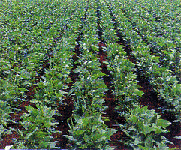
"Nosotros queremos dar nuestra posición como lo hacen otros sectores y esta es una oportunidad histórica de la cual no hay antecedentes.  Sostenemos que estamos atravesando esta situación conflictiva porque la argentina no cuenta con una política de desarrollo ruarl sostentable, sino más bien se esta dependiendo de las recetas de las multinaciones que operan principalemente en el sector cerealero. Esto hace que la Argentina se este convirtiendo en una gran chacra, un gran campo donde se produce principalmente soja. Los Argentinos deberíamos aprovechar esta oportunidad para avanzar en las sanciones de leyes que aporten al desarrollo de una política de desarrollo rural sustentable." 

Now is the time to snuggle up to Jupiter

Now is the time to snuggle up to Jupiter

    Let’s face it. The moon has lost its once glorious romantic appeal. When was the last time you took your babie on an evening stroll to gaze in sheer admiration at the silvery whiteness of that suspended globe? Forget it! At least for this evening.

   It’s time to try your luck with Jupiter. Well, not as cool as the moon, a bit more machista, in fact, at least in popular mythology, but think of this: if you are an Argentine, you’ll have a unique chance to contemplate him (her?) ’cause only some 623 million kilometres will separate her (him?) from your terrance.

   You might take her (his) arm at around 6 p.m. and say: "Darling, this is going to be a very special evening."

He (she)   Really?

He (she)   Yea...come, let’s go the, well, I mean, to the terrance...

He(she)    (to him/herself)  If this is a marriage proposal...gazing at the moon...?!?

He(she)   Look towards the heavens.

He(she)   My God! Oh darling! (to her/himself) What has come over hims/her? Moon struck?

He(she)  It’s Jupiter! Can you see it?

He(she)  Oh yes! What a gas!

He(she)  Exactly, helium, I think, mostly, it’s very light, like you, and bright, like your loving eyes that kill me!

He(she)  Oh darling! You are a genius!

    So, a few hours later, after having practiced kissing and hugging and petting and, maybe, even love-making, under the astute eyes of the planet, there is a sudden pause, a moment of profound silence. It must be 9 p.m. by now, when Jupiter is most visible.

He(she)   You are my everything.

He(she)   Am I really? Oh, darling, you are my Jupiter!

At that point both have forgotten about the moon, and the concern about marriage has probably been put off for a more appropriate moment.

In darkness was I born, in darkness die

In darkness was I born, in darkness die

In darkness was I born,

     in darkness die,

Light is but a refuge

Before the deluge.


Once I did believe

   day was night and night day,

Now all I can say

   is I'm here to stay.


Kiss me, love me, kill me,

   All in one, one in all.

but please, take your war

  to a distant door.


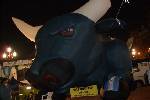
What? A bull ready to charge into the Argentine Congress?

What? A bull ready to charge into the Argentine Congress?

He isn't very talkative, a bit bull headed, but he's great material for digital fans--and what's more is the day-n-night guard of the farmers and agricultural businesses who have set up a tent outside Congress. "Who me? Pay more export duties? Not on your life," he seems to bellow.

Tango...bursts upon you at the corner, when you least expect her...

Tango...bursts upon you at the corner, when you least expect her...

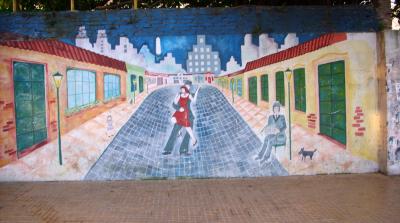
She moves in and out, sliding her shoes on the dazzling dance floor; her knees encounter momentary hiding places between the legs of her gallant male partner; sometimes she seems to hang seductively from firm macho hips. Tango must be a woman, although they say it is a ’machista’ dance because the lady must take orders from the man. She is in dance halls, she whines on the radio, in record stores...perhaps that young girl with the bag over her shoulder is headed for a ’milonga.’ You might also find her on naive wall paintings, such as this one at Belgrano avenue and Bolivar street...

Las poesías de Aída Brunetti

Las poesías de Aída Brunetti

Ella juega con las palabras, son espejos en transformación constante, brisas con dirección variable, caricias recomfortantes. Recitó el sábado en un encuentro de escritores de SESAM, en el municipio de San Martín. Aquí publicamos dos de sus poesías:

1) Arte poética

Los ojos rumiantes,

colgados

      de anaqueles

me desnudan

   mariposas.

Reclamo colores

astillando los prismas.

Las letras, resbalan

       suave

en muecas sin texto,

luego

descuelgo palabras,

y el abismo

    memoria

se suicida

   en mi tinta.

2) Otoño

Sosiego dorado

     ocre que estalla

Sutil

   me cautiva

Me tienta

   me sigue

                  me acosa

Festeja

   ocultos enojos

Titubea

   me toca

      Lo esquivo

      le escapo

Me atrapa

   me habita

      me amarrona

         me amodorra

Me entrego

      Se instala.

What fun to tell a pun on the run, in the sun when the day is done...

What fun to tell a pun on the run, in the sun when the day is done...

    We use language to communicate our ideas, feelings...or to exchange information...and also to make fun of ourselves and our fellow homo sapiens. So, if today the sun is not so bright over your head, you might take in these word plays, the supposed top puns of the moment, and allow a laugh to warm up your insides. Oh. We would appreciate receiving your own puns!    


1.  A vulture boards an airplane, carrying two dead raccoons.  Stewardess looks at him and says, ’I’m sorry, sir, only one carrion allowed per passenger.

2.  Two fish swim into a concrete wall.  The one turns to the other and says, ’Dam!’

3.  Two Eskimos sitting in a kayak were chilly, so they lit a fire in the craft.  Unsurprisingly, it sank, proving once again that you can’t have your kayak and heat it, too.

4.  Two hydrogen atoms meet.  One says, ’I’ve lost my electron.’  The other says, ’Are you sure?’  The first replies, ’Yes, I’m positive.’

5.  Did you hear about the Buddhist who refused Novocain during a root canal?  His goal: transcend dental medication.

6.  A group of chess enthusiasts checked into a hotel and were standing in the lobby discussing their recent tournament victories. After about an hour, the manager came out of the office and asked them to disperse.  But why, they asked, as they moved off.   ’Because,’ he said, ’I can’t stand chess-nuts boasting in an open  foyer.’

7.  A woman has twins and gives them up for adoption.  One of them goes to a family in Egypt and is named Ahmal.  The other goes to a family in Spain; they name him Juan.  Years later, Juan sends a picture of himself to his birth mother.  Upon receiving the picture, she tells her husband that she wishes she also had a picture of Ahmal.Her husband responds, ’They’re twins!  If you’ve seen Juan, you’ve seen Ahmal.’

8.  "Stop beating around the bush!" yelled the furious Democrat at a party rally. "I’m not beating around the bush," replied the politician with the tranquility of the Dead Sea, "I’m beating Bush!"


9.  Mahatma Gandhi, as you know, walked barefoot most of the time, which produced an impressive set of calluses on his feet.  He also ate very little, which made him rather frail and, with his odd diet, he suffered from bad breath.  This made him (Oh, man, this is SO BAD, it’s good) a super calloused fragile mystic hexed by halitosis.

10.  And, finally, there was the person who sent ten different puns to friends, with the hope that at least one of the puns would make them laugh.  No pun in ten did. But it sure was fun!

11) This isn't exactly a pun, and it isn't fun. When John McCain, the Republican party presidential candidate, was asked for his opinion, during a press conference, about the increase of U.S. exports to Iran, especially in cigarrettes, he replied that selling more cigarrettes would be "a way to kill them." Then, realizing his slip of the tongue, added that he was just joking, that he stopped smoking 28 years ago. 

(Watch out! This list will be continued--with your help!)


A man, a woman...

A man, a woman...

A man, a woman, the flapping of wings,

A cry, a sigh, the whisper of the wind,

A question that goes ever unanswered,

A sparking blaze flickering in the dark,

A dying flame ever flickering back,

A million years of time and  yesterday.

A man a woman, everything and nothing.

Doctrinas de shock y métodos poco democráticos para salvar la democracia...

Ya se sabe: el "pensamiento" único que promociona el poder central tiene una noción muy particular sobre la democracia, la libertad, la cultura, el medio ambiente y el mercado. Emplea métodos que a menudo poco tienen que ver con los valores que dice defender. Por ejemplo, la libertad de mercado. El Estado ha de retirarse del mercado, dice el pensamiento único, dejando que el mercado encuentre las soluciones a los problemas que surgen inevitablemente--salvo que la crisis sea demasiado importante. Por ejemplo, en el caso de las estafas inmobiliarias en los Estados Unidos. Se dice a coro que los países pobres deben implementar políticas de libre mercado y sin embargo los países centrales siguen imponiendo subsidios y otras intervenciones para regular la producción y comercialización de los los productos del campo.

Más grave aún: en la mal llamada guerra contra el terrorismo se emplean métodos como la tortura con la supuesta finalidad de salvar vidas, cuando las leyes de la mayoría de los países y las Naciones Unidas condenan claramente dichas prácticas. En su libro, "La doctrina del Shock," la escritora Naomi Klein menciona el caso de los presos en Guantánamo--que no gozan del derecho de ser juzgados y defendidos por abogados, y soportan fuertes mal tratos. Klein observa que la finalidad del mal trato es "desvertebrar la personalidad de los presos hasta convertirlos en seres sumisos y sin voluntad."

¿No es que la democracia tiene ideales diferentes a los de las dictaduras, de los gobiernos que aplastan al individúo, del "Mundo Bravo y Nuevo," de los enemigos contra los cuales lucha? Durante la década de los años 70 los militares que derrocaron gobiernos civiles en América Latina--a menudo entrenados en la Escuela de las Américas--también decían que su misión era proteger la democracia, el cristianismo y el "estilo de vida" de Occidente. Pero empleaban para sus fines el secuestro, la tortura y el asesinato de militantes de izquierda u otros que pensaban de un modo diferente. 

(A continuar)

A tongue in the cheek, dancing cheek to cheek!

A tongue in the cheek, dancing cheek to cheek!

    "Words, words, words," mutters Hamlet, a bit garbled by his own fantasies.

   We might add: you’re right! We sure do get mixed up, tangled and upturned as we avail ourselves of words to express our inner impulses. We use them to seduce, to win over that special person; to sell; to delude and sidetrack a competitor; to confuse the police or the judges; to say black is white and white is black; to get the votes we need to take power; to justify the unjustifiable; to say going to war is saving the peace; to get innocent citizens to wag flags and invade other countries in the name of God or democracy or heaven or any other nice sounding phrase; to say that mistreating someone is for someone else’s own good...!!!

     We collect words and phrases all of our lives and use pet phrases to avoid saying what we really think. And then we spend endless hours trying to explain to our couple, our superiors, our subordinates or our friends what we really wanted to say. In the process, believe it or not, we build up a new version of what we did, a new "truth" which we defend with clenched teeth. And so we go, endlessly seeking the truth, endlessly defending lies and endlessly trying to get others to forgive our own conscious or unconscious falsifications. Words, words, words. If only our bodies could speak!

El campo argentino:"Sí señor" (una charla imaginaria)

El campo argentino:"Sí señor" (una charla imaginaria)

(En una charla imaginaria un productor agrario argentino discute con un campesino el conflicto que hace más de un mes enfrenta al gobierno de Cristina Kirschner con entidades agrarias.)

Productor:

Es el colmo, sabe. Esa gente en el gobierno no entiende nada y pretenden con las retenciones quitarnos la posibilidad de seguir trabajando.

Campesino:

  Sí, señor.

Productor:   

¡No se dan cuenta de nada! Con nuestros productos el país se salva de la ruina. No podrían ni comer ni hacer nada sin nosotros. Siempre hemos aportado para el bien del país.

Campesino:

Sí, señor.

Productor:    

Los ingresos que el gobierno retiene de nuestras exportaciones sirven para pagar los platos rotos de ellos...pues, con sus retenciones e impuestos el gobierno da a comer a unos cuantos que ni siquiera trabajan...

Campesino:

Sí, señor.

Productor: 

Además Argentina está produciendo comida para los hambrientos alrededor del mundo. Países com la China y la India necesitan la soja que producimos aquí a precios muy competitivos...

Campesino:

Sí, señor.

Productor:

Y todo esto a un gran costo y con mucho sacrificio. Estamos modernizando el campo, introduciendo el cultivo intenso de la tierra, el uso de semillas genéticamente superiores, fertilizantes que dan más rendimiento. Es un programa que exige inversiones. ¿Qué inversiones podemos hacer si nos cortan en pedazos nuestras ganancias? Nuestro esfuerzo hace posible ganar mercados, competir con otros países y pensar que nuestros productos terminan en los platos de mucha gente pobre...

Campesino:

  Sí, señor.

Productor:

 Y encima nos acusan de desmontar bosques naturales y quitar la tierra a los indios, que de todos modos tienen sus terrenos improductivos.

Campesino:

Hmm.

Productor:

¡Es el colmo!

Campesino:

Lo que el señor dice es totalmente cierto. Nos quitan nuestras tierras a los pueblos originarios, desmontan nuestros bosques, usan fertilizantes que introducen toxinas...

Productor:

Está bien. ¿Y qué? Nosotros estamos trabajando la tierra con las últimas tecnologías y los indios...¿qué hacen?

Campesino: 

Perdón, señor, no somos indios, los indios son de la India. ¿Se acuerda? Colón se equivocó. Somos pueblos originarios. Antes de la llegada de los blancos cultivábamos estas tierras sin químicos, sin desmontar los bosques, sin...

Productor:

Esta bien, pero con papas y poco más...

Campesino:

Si, señor, con papas y con maíz, que ahora se lleva para hacer bio-combustibles, y con zapallo y con gallinas y porotos y...

Productor:

Está bien. Pero nosotros estamos dando a comer a todo el país, exportando para aliviar el problema del hambre en el mundo.

Campesino:

Quitándonos lo que nos pertenece, nuestros bosques naturales, nuestras tierras, imponiendo la soja y el monocultivo... llenando las panzas de los consumidores con tóxicos, contaminando el globo, alterando el clima...

Productor

Está bien, pero estamos produciendo el progreso y ustedes: ¿Qué hacen? Unas papas aquí, un chancho allá, toman mate....

Campesino:

La madre tierra es la compañera del hombre. No debe ser usada para producir ganancias fabulosas que al final y al cabo arruinan la tierra...

Productor:

¡Ja! ¡Ja! Usted no entiende nada.

Campesino:

Puede ser. Usted tiene el dinero, la tecnología, los mercados, los tractores, pero supone que la tierra es algo que se compra, se vende y se tira, como cualquier otro producto de su sociedad de consumo. Para nosotros la tierra es nuestra alma y el alma hay que respetarla.

Productor:

Usted no entiende nada. Yo hablo de producir y usted habla del alma.

Campesino:

En realidad, entiendo demasiado, señor, y me pone triste que usted no entiende que lo suyo es de poca duración; en cambio nuestra actitud tiene que ver con una visión del hombre, del universo, de nuestra razón de ser...

Productor:

¿Así? ¡Basta de hablar pavadas! Es hora de trabajar.

Campesino:

Para usted no voy a trabajar más.

Productor:

¿Qué dice?

Campesino:

Vuelvo mañana al rancho en mi comunidad.

Productor:

Vaya no más. (Subiendo a su 4 por 4) ¡Esa gente no entiende nada!

The do's and the don'ts, lo que se debe hacer y lo que no hay que hacer nunca y punto

The do's and the don'ts, lo que se debe hacer y lo que no hay que hacer nunca y punto

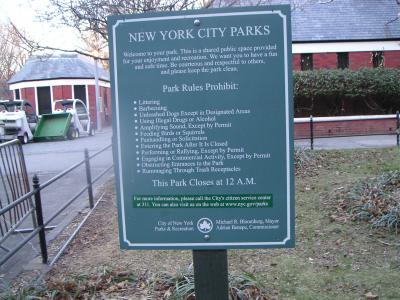
  Es cierto. Hay menos violencia en las calles de Nueva York. Y...una lista larga de cosas que no se puede hacer, por ejemplo en una plaza:

1) No littering. Bien. No se debe dejar caer papeles. This is not Buenos Aires.

2) No barbecuing. Pues, Nueva York no es Argentina. Nada de asados. No "chorizo" sandwiches for employees on their lunch hour!

3) Don’t unleash dogs. Los perros siempre tienen que estar bajo control. No reason to worry about what soft undesireable stuff you might be stepping on!

4) No illegal drugs. Claro, nada de fumar ni olfatear drogas.

5) No excessive sounds (unless you ask for a permit). Nada de sonidos que pueden molestar. Pardon, but it isn't too clear exactly what sounds are prohibited.

6) Don’t feed the birds or squirrels. Nos se trata de Plaza de Mayo, donde uno da a comer a las palomas...In Buenos Aires they have gotten nice and fat, although feeding them has gotten a bit expensive because the corn is being sent to the U.S. to be turned into bio-fuel...

7) No panhandling or solicitation. Nada de actividades ilegales y punto. That's fine. Still panhandling can mean so many different things that, well...

8) Don’t enter after the gates are closed. No se puede entrar una vez que las puertas hayan sido cerradas. Pue logic.

9) No performances or rallys. No se puede actuar, cantar o bailar o organizar reuniones...What a shame. It looks like Buenos Aires is one of the few places left where actors and singers and dancers and painters can practice their art on streets and squares...

10) No commercial activity. No se puede vender nada, pues para eso Wall Sreet espera no lejos...To tell the truth, the Stock Market isn't doing too well lately but even so there should be no reason to fear competition...

11) No obstructing the entrances. No se debe obstruir las entradas. Clear as mud, Watson.

12) No rummaging in the trash. Claro como el agua. No se puede buscar comida o algo de valor en la basura. Nevertheless, you would be amazed at what you might find in the garbage bags in those garbage bags...

War, that ever-present human disease (a point of view)

War, that ever-present human disease (a point of view)

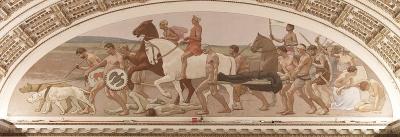
    The painting by Garl Meichers, "Mural of war" (1896) is perhaps an apt figure to bring forth the unanswerable question: why is war such a widespread practice among human beings? Just two years after the painting was finished the United States invaded  Cuba, accusing islanders of setting off a bomb in a U.S. ship harboured in La Habana. That served as a convenient excuse for U.S. forces to curb Spanish colonial power.

   Isn’t it strange that practically all wars are fought in the name of God, freedom, liberty, democracy or any other nice sounding ideal, while time and a little patience indicates that the real motives were such mundane things as taking over territories to expand national bolundaries, getting hold of natural resources, securing geo-poliltical advanage points, making sure the flow of oil keeps factories churning out the products of modern ’civilization.’

    So who should be shocked to read in the New York Times or in other U.S. mass circulation papers that a new "cold war" is developing, insinuating that now instead of the ex-Soviet Union the culprit might well be Iran? And how convenient the timing: coinciding with presidential elections in the U.S. Is it going too far to ask if wars--independently of their apparent justification--are not convenient tools to perpetuate political and economic interersts?

    Oh. If the Republicans win, President George Bush's 'war against terrorism' will certainly drag on and on and perhaps develop new focal points. After all, in announcing the war Bush mentioned an "axis of evil" including Irak, Afghanistan, North Korea, and Syria...

   Oh, who know what might happen should one of the Democratic party candidates win. Mrs. Clinton has only recently realized that the war was a mistake and her compromise to end it doesn't seem to convince the growing number of U.S. voters critical of the war.

   Obama? Will he be able to convince the "military-industrial" complex to look through glasses of another colour, will he be able to resist the pressure of those vested interests accustomed to war, as if it were a natural by-product of the system?

She opens up her arms and sings the song of life...

She opens up her arms and sings the song of life...

Her perfume is her soul,

Her stretching, endless, eternal soul,

Stretching and seeking, seeking and stretching,

Seeking the unknown, the unfathonable,

Sinking her roots in the warm good earth,

Her eyes her tinged perfumed  blossoms,

Her arms giving and taking,

Her song, the song of life.


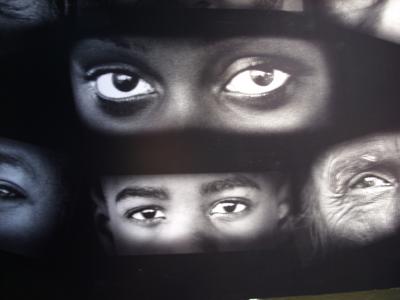
What is behind that eye, what thoughts, what intentions, what mystery?

What is behind that eye, what thoughts, what intentions, what mystery?

An eye opens, views the world,

thinkingly, sadly, longinly, lovingly;

An eye peers out of fathomless darkness,

Seeking, searching for light, enlightenment.

Is not the eye the keyhole to the soul?

To the unraveled and untold mystery?

To the undiscovered, the undiscoverable..?

Sunday in San Telmo, Argentina, "Che" and thoughts about other times...

Sunday in San Telmo, Argentina, "Che" and thoughts about other times...

    You're staying at a youth hostel a few blocks from the flea market in San Telmo and your head is still a bit woosey from the wine and dancing that escorted you gently to some relatively unknown somewhere. Outside someone is singing the tango as if Carlos Gardel had not died. So, blurry eyed and all, you wander towards the "Plaza Dorrego," almost bumping into a fellow dancing with a doll, a young man playing with a ball as if he were Diego Maradona, an ancient looking lady rendering "the saints go marching in" on an asortment of home-made instruments...until finally you stop in your tracks in front of a poster featuring the most famous Che.

    The revolutionary leader, killed in Bolivia in the late 1960's, seems to be still alive and kicking--although perhaps not the way he might have imagined. You can buy T-Shirts with his face on it, buttons, photographs, and, well, in this motely collection of popular faces his stern yet affable image seems to be a must. How the world has changed since then! And Argentina! And America! Well, wait a minute! After all maybe he might be happy that all over the continent governments seem to be sprouting that remember him with varying degrees of enthusiasm. And they talk about political and economic union, throwing off the legacy of the pro-U.S. military dictatorships which mushroomed in the area when Che's guerrillas took up arms in Bolivia...

    Then you leave the Plaza, buy a newspaper and order a "cafecito" at a nearby bar. What? Fernando Lugo, a progressive leaning former Catholic priest, booted out of robes by Rome, elected president of Paraguay? Hmmm. You fold your paper up carefully, sip the last drop of your coffee, and go back to take a more carefull look at that poster. It's true, you mumble to yourself, change is something that lot's of people crave for but it never comes the way you expect it to.

Argentina, en paz, Irak en guerra: muertes que esperan a la vuelta de la esquina

Las calles y rutas de Argentina, un país en paz, son cada vez más peligosas a pesar de todas las leyes aprobadas para ordenar el tránsito; Irak, en guerra desde la invasión de las tropas de los Estados Unidos, no vislumbra aún un fin de la violencia. Es que los informes periodísticos sobre accidentes de tránsito en Argentina se parecen cada vez más al conteo de los muertes en una zona de guerra.

Durante la última fin de semana, por ejemplo, se anunció la muerte de ocho personas, entre ellas una nena de tres años y otra de ocho, en accidentes en Capital Federal y las provincias de Buenos Aires y Córdoba.

En efecto, Argentina ya tiene la triste fama de figurar como uno de los lugares de tránsito más peligrosos en el mundo. ¿Las causas? Las malas condiciones de las autopistas y calles, la no observación de las reglas de tránsito, la ausencia de control policial, las maniobras de riesgo, el cansancio de los conductores de micros y camiones debido a exceso de trabajo, la no utilización de los cinturones de seguridad...


En la Ciudad de Buenos Aires muere una persona cada 63 horas en accidentes de tránsito, según la Defensoría del Pueblo, y el año pasado murieron 138 personas--aunque las cifras son incluso superiores ya que los datos sólo toman en cuenta a las personas que murieron al momento del accidente.


Más llamativo aún: según el informe, los peatones fueron las principales víctimas, 44% de los muertos. Existe en el código de tránsito el concepto de derecho de paso del peatón, pero cruzar una calle a menudo es un desafío grande, ya que los conductores impacientes no sólo se olvidan de los derechos de los peatones: ¡pueden insultarlos!


Curioso: Argentina, en paz, enfrenta un incremento sin cesar de muertes en accidentes; Irak, en guerra también.

A flower and words, words...

A flower
blooming on the battlefield;
A soldier's torn flesh
The wind,
The rabid sounds of fury;
The wind whispering a child's cry;
And words, and words and words.

A flower
playing hide and seek with the sun;
A woman's hands touching gently
provoking, wanting
A man advancing in the dark;
The steady breath
The absence of time
And then words, words, words.


--------------------------------------------------------------------------------

Ted Turner, se sabe, es un pez no tan fácil de dominar

Ted Turner, se sabe, es un pez no tan fácil de dominar
Está bien, dicen muchos, si un magnate viene a comprar medio país, que lo haga y listo…¿Si paga o no los impuestos? Bueno, pero hay que pensar en las inversiones, en los turistas que van a venir, dicen.

¿Qué? Usted piensa que está mal que un extranjero como Ted Turner, dueño de CNN y señor de unos cuantos otros negocios informáticos, compre (en 1998) un terreno como “La Primavera,” de unos 5.000 hectáreas de belleza natural en Parque Nacional Nahuel Huapi, en la patagonia argentina, y diga luego que ningún Che pueda entrar a pescar. Y…

Bueno, bueno, está bien pero hay que ser realista, el idealismo ha quedado atrás, dicen, y además conviene fijar en el apellido del comprador. Ya se sabe: estamos en una etapa curiosa de la historia conocida como la “globalización,” que permite que los grandes peces devoren a los pequeños…

Igualmente, y como un ejercicio de lógica, sería interesante saber qué pasaría si, digamos, Macri decida comprar 5.000 hectáreas en Yellow Stone Nacional Park en los Estados Unidos de Norteamérica. ¿Sería recibido con los brazos abiertos? ¿Podrá la “Internal Revenue Service” hacer una excepción, tomando en cuenta que luego llegarían otros inversionistas argentinos? A lo mejor se podría construir una pista para el aterrizaje de aviones llenos de turistas argentinos con termos y yerba mate y edificar un mural electrificado para evitar que los norteamericanos intenten ingresar para pescar a observar a los osos. Total, ya existe un mural así allá por el Río Grande...

Turner compró la finca atraído por la posibilidad de practicar pesca con mosca en el río Traful, que desemboca en el extenso lago homónimo, a 80 kilómetros de Bariloche, el principal centro turístico de invierno de Argentina, y a 1.700 kilómetros de Buenos Aires. Además, el magnate también es dueño de otra gran finca en esa zona y en la provincia de Tierra del Fuego, en el extremo austral de la Patagonia argentina.

Parece que los pobladores de Villa Traful, Turner ha tratado de mantener una buena relación con sus vecinos e incluso colaborando con iniciativas ecologistas, pero en los últimos años hubo incidentes por el acceso al Traful, considerado uno de los mejores lugares para la pesca de truchas y otros salmónidos.

Pues, para Parques Nacionales (argentinos) "en el pasado" estaba prohibido el acceso a ríos y lagos a través de terrenos privados así como también la práctica deportes náuticos. Pero…¿si esos terrenos “privados” están ubicados en lugares que pertenecen a los parques nacionales?

En los últimos años hubo múltiples incidentes por la negativa de empleados de Turner a permitir el acceso al río Traful por terrenos de la "La Primavera" y hubo incidentes similares en otras fincas de la zona, lo que provocó quejas de vecinos y de grupos ecologistas que cuestionan la propiedad privada de bellos paisajes naturales.

I looked up and saw the sun...

I looked up and saw the sun...

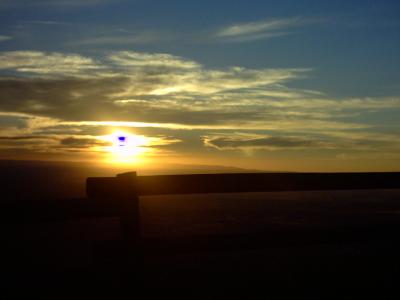
    I looked up and saw the sun,

   Blinded, even on the run,

   Why do we see yet see not?

   Why does the sun ever set,

   Guarding memory in regret?