Blogia
Buenos Aires Jaque Press, en inglés y español

Revista (Magazine)

A cien años de la muerte de Frida Kahlo...el dolor persiste y se esconde en la creación...

A cien años de la muerte de Frida Kahlo...el dolor persiste y se esconde en la creación...

    "Soy hija de una revolución, de eso no hay duda, y de un viejo díos del fuego, que adoraban mis ancestros," decía Frida Kahlo alguna vez, con la cálidez que la caracterizaba.

     Nació el 6 de julio de 1907, en Coyoacán, México, pero su vida artística tuvo un salto hacia adelante a partir de un hecho trágico: En 1925 sufrió un accidente entre un omnibus y un tranvía. Terminó con la columna vertebral rota en tres puntos de la zona lumbar; también se fracturó la clavícula y dos costillas. Para paliar el aburrimiento durante la convalecencia se dedicaba a pintar.

     Asímismo mantenía una relación amorosa, desmesurada y conflictiva con el pintor Diego Rivera.  

    Algunas frases que explican la profundidad de Frida y su relación sumamente subjetiva con el mundo y con Diego Rivera:

  "La única cosa que sé es que pinto porque necesito, y pinto lo que pasa a través de mi cabeza sin ninguna otra consideración. "

    "Mi pintura lleva con él el mensaje del dolor.

    "Yo no puede hablar de Diego como mi marido porque ese término, cuando está aplicado a él, es unaabsurdidad. Él nunca ha estado, ni él estará siempre, cualquiera marido.


About being not very objective concerning money left in the John...

     You might leave lot's of things in the John. We need not go into detail. But the other day someone found a wad of money in the Argentine Economic Minister's special bathroom. As you can well imagine, that stirred up a hornet's nest, although perhaps that expression is not the most apt. Anyway, somebody will likely get stung.

     Felisa Miceli was quick enough to point out that the bundle of around $100,000 (more or less according to the source,. Clarín, Página 12, La Nación, Pérfil, the police...) was due to a real estate deal that fell through. Still, one might ask what in the world does buying real estate have to do with dealing with the country's economic woes?

     Ah. A more pertinent question, as expressed buy lawyer Miguel Bootello, who has asked that the case be investigated for possible funny business (to use a popular but not very legal term): "in view of the fact that there are two safe boxes in the office why did the minister leave the money in the bathroom?"

     Indeed a rather nice question. I mean, the bathroom is not generally considered the appropriate place to keep money. Of course, maybe it was taken there on a sort of urgency and then left when more important economic matters appeared on the daily agenda.

     And then: can you imagine the faces of the firemen who were alerted by someone who apparently thought the little (well, no so little) bundle might have been a bomb or something....

     Forgive our jolly tone. Anyone can make mistakes. Even public officers. They can also be the subject of complex political manoevres. But the the fact itself is ripe enough for this tongue-in-cheek comment, don't you think?

Pájaros, birds, y acerca de por qué love flies on the waves

Pájaros, birds, y acerca de por qué love flies on the waves

      Los pájaros en pleno vuelo

     pocas veces piensan en el peligro de caer.

     Si alguna vez fuiste pájaro,

    si alguna vez soñaste con volar,

    tocar el sol con tus labios,

   cantar una cantata a 10 años luz de la tierra,

   si alguna vez despertaste con el cuerpo hecho un temblor, 

   then you certainly know how to dodge the bombs,

  direct yourself towards that faltering perfumed signal

  beckoning in the humid shadows of the darkest hours.

Is Love Really Blind?

      They've said it for centuries, maybe even since the last Ice Age: love is blind. Is it really? A little bit yes, and a smack no. The scientific response to the love syndrone is to say that when you feel those butterflies buzzing about in your belly, and when you say "woh!" when you see her hips weave from side to side, or when you feel his rough beard sting your dainty cheek, it's because certain zones in your brain have been inhibited, preventing a more critical thinking pattern.

     As usual, you can back this up by studies, studies and more studies. Some of them indicate that the love bird also de-activates brain circuits responsible for negative feelings. So a strong emotional Romeo or Juliet attack prevents the neurons involved from carrying out a more critical evaluation of the situation. And you end up stressing the loved person's positive, rather than negative characteristics.

    Perhaps we could say that being in love is something like eating chocolates: a neuro-transmitter called dopamina is activated and leads you to want more and more and more. Until some unforseen conflict ocurrs. Then you end up singing: "Yesterday all my troubles seemed so far away, now it seems as though they're here to stay..."

Rescatando el muralista méxicano Siqueiros en Buenos Aires

Rescatando el muralista méxicano Siqueiros en Buenos Aires

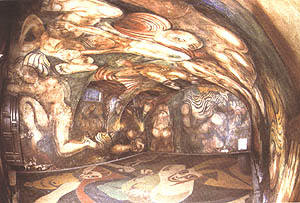
      Un sótono húmedo y abandonado de Buenos Aires alberga una historia rica en forma, color y pasión. La directora Lorena Muñoz acaba de ponerla en la pantalla grande.

     Ejerciendo su estilo único, Siqueiros pinta un mural estupendo, con toda su vibrante imaginación, destacando el cuerpo desnuda de su mujer. Pero la histora es más compleja: el dueño de la casa, Natalio Botana, fundador de la revista 'Crítica,' se convierte en el amante de la mujer del pintor.Para inaugurar la obra arma una fiesta...pero...

    El mural quedó encerrado por muchos años en el solitario sótano,abandonado y llena de humedad y muho.

    Gobernaba Agustín P. Justo, no muy amigo de las ideas izquierdistas de Siqueiros (miembro del partido Comunista mexicano), y no parecía muy interesado en apoyar el deseo del muralista de dejar un mural en Buenos Aires. Botana sí, y le iba a pagar. Tenía un sótano, una bodega. Siqueiros le hizo sacar a todas las botellas y le pidió cuatro colaboradores: Antonia Berni; Lino Enea Spillimbergo; Juan Carlos Castagnino y el escenógrafo uruguayo Enrique Lázaro. Pintaron el techo y las paredes y se destacaba el cuerpo desnudo de la mujer de Siqueiros, Blanca Luz Brum.

     La revista siguió la evolución de la pintura, pues escribieron sobre él Eduardo Mallea, Oliveiro Girondo y Raúl González Tuñón.

     La relación entre Siqueiros y Blanca distaba mucho de la pureza del mural. Tomaban, peleaban a gritos. Ella rompe con Siqueiros e inicia una relación amorosa con Botana, secreta pero sabida.

     Después de aquella fiesta cuando el pintor terminó el mural, Siqueiros apoyó una helga, le descuelgaban los cuadros de la exposición que hacia y se fue a Nueva York. Botana y Blanca Luz se quedaban juntos un tiempo más. 

     Cuenta el escritor Alvaro Abós: "Cuando Botana murió, en 1941, la familia entró en litigio y se perdió el patrimonio."

     La película está en el Cosmos de la calle Corrientes, a las 13:50 y 19:00 horas. 

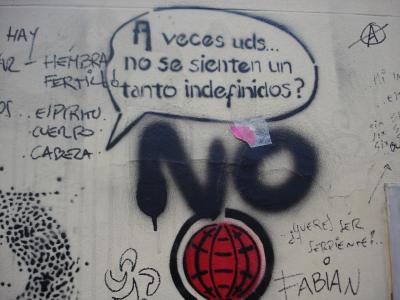
¿A veces usteds no confunden pies con manos?

¿A veces usteds no confunden pies con manos?

    Es realmente comfortante cuando un ser solitario encuentra en una calle igualmente solitaria un escrito que da cuenta de cuán absurdo es la existencia. ¡Realmente! ¿Tiene sentido vivir? A ver. Don Pedro es de pensamiento positivo. Es católico, contrario al aborto, hace el amor en la oscuridad, no le parece bien la eutanasia, dice que el marketing es la bendición de Díos y opina que trabajar dignifica.

     ¿Tiene sentido vivir?

    La pregunta es de María Petrona, a pesar de su apellido, ella es una ampliamente dotada moza de 20 años, atea, amante de una mujer 40 años mayor, practicante de artes marciales, estudiosa de la vida sexual de las hormigas, auto-empleada.

      --¡Por supesto! ¡Qué pregunta más tonta!

     --Y...no sé. Allí en aquella pared alguien ha escrito: "¿a veces uds no se sienten un tanto indefinidos?

      --¡Basta! Somos los servidores de Díos y Díos sabe que la vida tiene sentido. No debemos nunca ser indefinidos.

     --¿No? ¿Te das cuenta? El autor de la frase se tragó el signo de pregunta antes de 'a veces,' y ese lapus ciertamente agrega un elemento de indefinición.

     --María, María, me estás cansando con tus preguntas y postulados redículos. La vida tiene sentido. Lo que no tiene sentido es discutir si tiene sentido o no.

     --¡Ah sí! Bueno, ahora creo que entiendo, un poco.


Habla la calle y dice lo que dice desde el corazón...

La calle habla, respira, canta y nosotros la escuchamos, sabiendo que las paredes siempre tienen alma.  
 
º Con presos políticos no hay  
democracia.  
 
º Que la torta se da vuelta, que  
los ricos coman mierda, mierda...  
 
º Te están Kagando otra vez.  
 
º No violencia es fuerza.  
 
º Pucho y Totona se aman para  
siempre.  
 
º Pobreza es violencia, la  
desigualdad general violencia.  
 
º Con presos políticos no hay  
respeto a los derechos humanos.  
 
º Racing te quiero  
 
° Si el amor se cae, todo alrededor  
se cae.  
 
° Sos mi chica ideal.  
 
° Justicia por los pibes de  
cromañong.  
 
° Buenos Aires tiene Lepra.  
 
º Te quiero y amo  
 
º Sos la razón de mi vida  
 
º Las urnas diluyen lo que la lucha  
construye  
 
º Fuego al estado y al capital  
 
º Monos en bolas  
 
º Un solo puño contra la represión  
 
 
º Ema y Jésica  
 
º Te quiero y te amo  
 
º Dale globo  
 
º Sólo el amor salvará este mundo  
 
º Here, there and everywhere  
 
º¡Saquen sus rosarios de nuestros ovarios!  
 
º Liberación nacional y poder  
popular.  
 
º ¡Muerte al estado!  
 
º ¡Revolución ya!  
 
º ¡Ni Díos, ni alma!  
 
º Todo estado es represor.  
 
º ¡Despenalización del aborto ya!  
 
º Aborto libre y gratuito  
 
º María: ¡Te amo, te adoro!  
 
º ¡No al IMF! ¡La patría no se negocia!  
 
º Mucha polícia, poca diversión.  
 
º Aumento salarial.  
 
º ¡Dale globo!  
 
º ¿Qué les pasa?  
 
º ¡Nunca más 1976!  
 
º ¡No lea más Clarín!  
 
º Tome tang  
 
º Lori: ¡Te amo!  
 
º ¡Usá forro!  
 
º ¡Revolución!  
 
º Sí al voto optativo!  
 
º ¡Por la derrota del imperialismo!  
 
º ¿Díos? ¿Està allì?  
 
º ¡Basta de persecución a Esteche!  
 
º Las borrachas de San Telmo  
 
º Te quiero con ternura,  
Te quiero con locura,  
Pero más te quiero  
Con una pieza oscura.  
 
º Algunos nacen con suerte, otros  
en Argentina.  
 
º El cielo, las estrellas en el  
campo, y las espinas en el  
medio de mi pecho.  
 
º ¡Fuera yankees de Irak!  
 
º ¡La abuela no miente!  
 
º ¡A Diego lo mataron la policía!  
 
º El cielo nubla cuando no te veo.  
 
º ¡Dicen que llueve y la prensa  
nos mea encima!  
 
º Andrea: ¡Te amo!  
 
º ¡Patria sí! ¡IMF no!  
 
º Gastón: ¡vas a ser mío!  
 
º Pibes chorros  
 
º Haga vida sana: fume mariguana  
 
º ¡Comunismo!  
 
º A veces hay que mentir,  
A veces ha que decir la verdad.  
Otras veces hay que matar,  
perdonar, y otras veces hay que  
olvidar y reir.  
 
º ¡Sos mi único heroe en este lío!  
 
º No a la ley federal de educación  
 
º ¡Libertad a los presos por luchar!  
 
º Respeten los derechos de los niños a expresarse  
 
º Tu poder es tu conciencia  
 
º Biblioteca popular de Barracas:  
comisión por la memoria, la  
verdad y la justicia  
 
º Robo putas  
 
º ¡Patría, pan y poder al pueblo!


Never to Old to Love

   After living 111 years Tomoji Tanabe doesn't have too many hairs left. He's the world's oldest living man, but there's a woman, also Japanese, called Yone Minagawa who is 114 and going on 115. We don't know whether they know each other. But just for the fun of it we might imagine the following conversation, maybe on the beach of some vacation resort with a view of one of those famous Japanese volcanoes.

   "Hi there! My name is Tomoji. What's yours?

   "Don't be rude young man. What business is it of yours to know what my name is?

   "Well, I just saw you lying on the sand and, well, I thought you might want to share a bit of small talk with an old fuddy-duddy like me."

   "You fresh little youngster! Go back to where you came from!" 

   "You think I'm young looking? Thanks! I'm 111. How old are you?

   "Women are not supposed to reveal their age."

   "Oh come on! That might be the rule up to 100 but I imagine you must be..."

   "One hundred and fourteen."

   "Woh! Really? This calls for a celebration!"

   "Celebrate what?"

   "Your age, life, love..."

   "I don't go out with men anymore."

   "Why not?"

   "Love used to be a many splendid thing, as the song goes, but I'm beyond all that now."

   "It's never too late to give it a try."

   "Yes it is."

    "Look I had nine wives. The first ran off with a millionaire. The second died of a heart attack. I couldn't get along with the third, fourth and fifth, so I went to the courts. The sixth, seventh and eighth  were  were killed when the Americans dropped those atomic bombs on us and the nineth died happily of old age."

    "I'm sorry."

    "It was horrible, I mean the bombs."

    "I know. I lost three of my ex-husbands too in the mushroom."

   "You see, we've got a lot to talk about...and a lot to celebrate...after all, look at the sad state of affairs in the world and yet here we are...."

   "I don't want to talk about it. I just want to look at the moon and eat fish."

   "That's great! My favorite passtime is reciting poems in the moonlight...Come on! Be a good sport! Why don't we get together tonight? I've got some sea weed and baby shark at my place...and a magnificent view of the moon from my balcony."

   "O.K. I give up. But no funny business."

   "I think I'm falling in love Yone."

   "With the moon?"

   "No! With you!"

   "Silly man! We can love the years we've lived but nothing more."

  "They say love is like wine: the more aged, the better."

  Yone is moved. She bends slowly towards Tomoji and kisses him on his chapped lips. They embrace there on the sand. The sun is setting. The moon has not come out from hiding yet.  Their bodies remain tangled together on the beach, motionless but in peace as the first mysterious beams of the moon caress their remains.

Un rayo de luz sobre una sombra

Un rayo de luz sobre una sombra

    Le parecía muy raro lo que pasó ese día. Volvía una y otra vez sobre el suceso, días, meses y años después, sin entender nada. ¿Debemos entender todo? No. Pero somos curiosos, pensamos, buscamos el por qué de las cosas, no aparece la explicación,  cerramos los ojos, rogamos, fumamos, tomamos café, conñac, y luchamos contra nuestra ignorancia.

     La sombra estaba allí, extendiéndose sobre la tierra, su existencia no estaba en duda, la tarde la hacía cada vez más larga y nada perturbaba el silencio pulcro e inpenetrable que imponía su sello en el lugar. Sentado sobre un tronco, Milo Saenz descansaba, el serrucho sobre sus piernas. Con una mano secaba el sudor que corría de su frente.

      Mantenía los ojos clavados en la sombra del pino, erguido, sólo y único en medio del bosque de cerezas. Pensaba en un país lejano, imaginario, poblado de hombres y mujeres enamorados que cantaban en todos los ámbitos: en la cocina, en la calle, en las oficinas,en los baños, en los basurales. Comenzaba a imaginar rostros, olores, palabras imposibles de pronunciar, cantos, una mano suavemente húmeda que aquietaba la tensión en su piel. Abrió los ojos sobreexitado y giró la vista hasta captar la imagen de la sombra. ¡Estaba partida por un rayo!

     Huyó aterrorizado pero en su apuro hizo un mal movimiento y se cayó sobre el borde de la sombra. Intentaba levantarse pero la pierna derecha no respondía. "¡Mierda!" Preso del espanto, pidió socorro. En vano porque el silencio cubría todo. El dolor de la pierna rota le hundía en un sin fin de especulaciones. ¿Cómo volver? El libre movimiento del cuerpo es hermoso, es la ilusión de la libertad, pero ahora era prisonero de su propio cuerpo. La palabra, esa invención humana tan antigúa como bella, tan útil para expresar los sentimientos, para organizar las tareas, para enseñar a los niños, no le servía para nada. Sus gritos se perdían en el silencio más absoluta que le rodeaba. 

     Habrá sido por el particular ángulo del sol detrás de las montañas cercanas, o por algún motivo ajeno a nuestra comprensión, no sabemos, pero el rayo se agrandaba lentamente hasta iluminar las piernas del hombre. Es cierto. Hay quien identifica la luz con alguna fuerza divina, la sombra con los poderes del mal. Nosotros no sabemos, nos mantenemos al márgin de la disputa. Claro está, con la inquietud en la conciencia. 

    Un repetino soplo de viento cálido despertó el hombre de su ensueño. Se puso de pie, como si no hubiese lastimado la pierna, agarró el serrucho con fuerza y corría sobre el dibujo que dejaba el rayo. Corría y corría porque el rayo parecía no terminar nunca. Ya cuando el sol hizo un guiño a la luna seguía corriendo. Todos sus sentidos parecían abrirse de par en par. Lloraba, cantaba, sonreía, hablaba, gritaba de puro placer, cortaba las yerbas salvajes al borde del sendero de luz, y seguía su corrida.   

To be is not to have...but is to have to be?

The teacher:  
To be or not to be that is the question.  
 
Student:  
Why not to have or not to have?  
 
The teacher:  
Because the question is not to have. It is to be.  
 
The student:  
To be what?  
 
The teacher:  
Don't ask silly questions.  
 
The student:  
Don't make silly comments.  
 
The Teacher:  
They are not silly.  
 
The student:  
You don't say! What would you call them?  
 
The teacher:  
Decisions, nasty decisions...Jesus H. Christ...I really don't know...ah....you're getting me confused...orders, that's it, you could call them orders, like the ones I received from my mother and my father and my uncle and my teachers and....  
 
The Student:  
Oh that's great! You mean according to your warped reasoning I have to be. Be what?  
 
The Teacher:  
You should just be. That's all. No questions asked. Just be. Like me.  
 
The Student:  
God help me! You want me to be like you? Should I really? You want me to be like you? Not if I can help it!  
 
The Teacher:  
Of course you have freedom of choice. That means you can be or not be.  
 
The Student:  
How's that?  
 
The teacher:  
It's in the book.  
 
The Student:  
In what book?  
 
The Teacher:  
In my book.  
 
The Student:
 
There's the problem! Your book is different from my book.  
 
The Teacher:  
That can't be!  
 
The Student:  
Why in the Hell can't it be?  
 
The Teacher:  
Because when I was a student my teacher said to be or not to be and if he said to be or not to be it by no means can be to have or not to have.  
 
The Student:  
Unless the teacher hasn't got the foggiest idea about why frogs are born in the water or why the pink panther is a Western sex symnbol or why being in love is something like being lost and being lost is not knowing where you are and ipso facto to be must be the explanation for why teachers insist with a total lack of logic that to be is the contrary of not to be because in order not to be you must know what to be is and if not to be means that you do not exist there is no way of finding out whether you are or are not.

Un pequeño genio que canta en el ascensor...(ficción)

Subiendo en el asensor de mi casa el otro día me encontré de repente con un pequeño genio que fumaba una pipa hecha de choclo rojo que liberaba un humo color ocre. Al verme, sus ojos pardos, insertados profundamente en su rostro, crecieron tanto que su cuerpo parvo parecía desvaneserse.  
 
Curioso, acerqué mi boca a uno de sus orejas para hacerle conocer mi opinión sobre los asuntos varios del día. Abrió la boca y enseguida quedó transformado en un astro extraviado de alas negras y cantó liberado de todas las convenciones, con voz barítono y eximio, volando por el techo del ascensor:  
 
"albergo tu cuerpo como un pájaro su nido/  
 
y canto y canto y canto y canto /  
 
hasta que el amanecer boreal /  
 
se desvela boracho de vida /  
 
desnudo y sin plumaje /  
 
revolviéndose casi sin darse cuenta /  
 
como vino patero, como vino tetra-brick /  
 
tan añejo como etéreo y eterno.  
 
Me quedé encantado con la canción, asombrado, con las palabras atrapadas en la garganta. Entonces, respirando hondo, giré mi cabeza hacia el genio y le dije:  
 
--¡Vos sos un genio y lo que has cantado es una genialidad.  
 
--¡Pará! No es para tanto. Lo genial hubiera sido cantar en blanco.  
 
--No entiendo bien la técnica de cantar en blanco.  
 
--Tampoco hace falta entenderlo.  
 
En ese mismo instante el genio desapareció. Lo busqué en todos los rincones del ascensor, no estaba, lo llamé, lo reclamaba, hice mil manifestaciones de enojo, bramaba como un toro viejo tinto pero lo único que noté fue un leve zumbido en mi cabeza.  
 
--¿Será el genio? me preguntaba, sin repuesta. Después me puse a pensar: y, claro, los genios andan medio ocultos. Están y no están. Nadie sabe realmente si están porque la gente común no tiene los conocimientos necesarios para siquiera reconocer un genio. Entonces ¿cómo van a saber si están ante un genio genial que acaba de hacer una genialidad? Imposible, digo yo.  
 
Bueno, yo estaba densamente comprometido en esas digresiones cuando lo de mi cabeza ya no era un zumbido. Era un dolór, como esa espantosa sensación que uno tiene después de una curda, después de tomar medio litro de vino tinto tipo tetra-brick en una peña o en un boliche como aquellos que tienen la parrilla en la vereda, que echan el humo en la cara del pobre hambriento que anda pasando cerca...  
 
Bien. No es para criticar. Hay gente que toma una marca de vino como "toro viejo" toda la vida, lo sé, pero no me parece un tema digno de un debate mayor. Lo que sí quiero decir es que cuando un zumbido se torna un dolór, tiene que significar que algo importante espera el momento para entrar en el escenario, aunque un dolór no siempre es lo que uno piensa que es.  
 
Es que para mí el genio ha transformado el zumbido en dolór, y lo ha hecho porque quiere llamar mi atención a algo...¿Qué será?  
 
 
"¡Qué genio! Emplea muchos trucos para burlarse de mí.Nada extraño en eso, pues es un genio. De todos modos pienso que juega con mi inocencia. ¡Pobre! No sabe de qué soy capaz cuando me propongo una acción clara, decidida y justa.  
 
Yo sé que es él la causa del zumbido y del dolór y creo también tener armas geniales para hacerle frente. Por ejemplo, respiro lo más profundo, sacando el aire de mis pozos interiores, mando el aire como una flecha a mi cabeza, limpio todos los neurones y pongo la mente en blanco. ¡No podrá resistir el ataque! Es una táctica digna de consideración, aunque las tácticas siempre deben ser realizadas con tiempo suficiente y con mucho cuidado.  
 
¡Santos demonios! He perdido toda noción del lugar que ocupa mi cuerpo. Es como hubiera perdido peso, que la ley de gravedad hubiese dejado de existir. Veo todo y nada al mismo tiempo, pero no vislumbro el genio en ninguna parte.  
 
Lo más raro es el silencio, un silencio total y sin embargo lo percibo como una música celestial. ¿Es posible que el silencio más absoluto sea a la vez una sinfonía barroca, una samba, un tango, un blues? Es la sensación más impactante que uno pudiera imaginar: el cuerpo inexistente o liberado totalmente de sus límites, la mente en blanco y cargada de una energía sublime, y el silencio superador...  
 
Tengo un sólo y único miedo: ¿cuánto puede durar este estado y, además...¿qué debo hacer si el genio vuelve nuevamente...?"

Is it Slang or just a Big Bang?

The guy looks like a nerd, but with a sort of throw-back style to the 1960’s. Anyway, he is supposed to be the lecturer and he’s supposed to know a bit about the subject: slang. So, dear reader, we have taken the pains to copy his presentation--just in case you might want to get a sniff of what many consider questionable use of language...which sooner or later will enter as the "King’s" or the "Queen’s" or the "president’s" English. By the way, why do people suppose the king or the queen or  the president speak any better than, say, a philosopher or a bio-chemist in love with his neighor's wife?

                                        "Hello there Nerds and Geeks and Dorks!
                                         Welcome to getting a whang out of slang!

Sound like a class in science fiction? Maybe. But hold your horses! How dare you start a spiel on slang talking about subculture types hip to science, math, cybernetics, today’s eggheads, the natural inheritors of the bookworms and squares of antiquity! Well, evolution breds strange bedfellows, doesn’t it? And language accompanies what Darwin once described as the struggle of the fittest. People’s inventiveness puts new expressions into the nest, throws others out and redefines still others.
Geeks probably wear reading glasses, maybe have greasy hair and on the social life scale they make their mark. They are into high technology, art, science fiction, comic books and video games demanding high I.Q’s and have evolved in the wake of internet.

A similar species is the Nerd, more sharp in math and science but real loosers on the social scenario. Their left side brain preference and obsession with systems allows them to memorize tons of data, not realizing that the fictional aspect of reality is just a pretext. You may run across a Nerd running his Linux on his personal computer, unaware of the Easter parade right out the window.

If the nerds are on the top of the intellectual scale, the Dorks are a couple of steps below, sort of proto-geeks or nerds, lacking social skills. Their superiors consider them as smelly, awkward, embarrassing tagalongs.

All of this brings us to our subject. “The use of slang,” said Oliver Wendell Holmes, “is at once a sign and a cause of mental atrophy.” Yet slang has made its way into every household and become a puzzling yet essential part of the English language. The introduction of “questionable” figures of speech into “acceptable” speech reflects the dynamic and ingenious attempt of speakers to fit language to reality.

Many of these expressions contradict the rules of grammar, (he ain’t got nothin’) yet language inevitably builds upon the experience of those who speak it. Slang is a valid, meaningful and provocative communicational tool and a motor for the evolution of language itself.

Thank God language is not a science...or is it? One of the many stumbling blocks for learners of English is its ample collection of idioms, slang, jargon, street talk, dirty language and other not quite official means of communication. Indeed, it has become increasingly difficult to put each one of these forms of speech into solid and coherent categories. In any event, our intention here is but to take a first step into yet some of the mysteries underlying formal English expression.

For lack of a better definition, let us assume that “slang” consists of those expressions people invent to deal with the varied and unpredictable events of everyday existence. It encompasses those codified words and idioms used in best sellers, mass circulation magazines, television, the movies, songs...Not a few of them have to do with our senses and therefore are powerful image provokers. For example, we have a vast array of expressions involving food, cooking, gymnastics, numbers, names, colors, our bodies, birds and animals, the weather, health...cars and machines...The vast majority of these expressions are of Germanic origin, reflecting the historical background that has played such a vital role in the evolution of English. This was clearly present during Shakespeare’s days, for example. An entire book has been written on Shakespearian slang. (“Shakespeare’s Insults,” Wayne F. Hill and Cynthia J. Ôttchen, MainSail Press, Great Britain, 1991) Not so correct expressions were aimed at the “groundlings,” while more refined language was directed towards the upper classes. Side by side with expressions such as “he freaked out” we might also find expressions of Latin or Greek origin utilized by intellectuals or the upper classes, for example: “would you be of a mind to participation with me in a “compernoctation?” That is, would you like to spend the night together?
By the way, should we consider four letter words as slang? Not an easy question to answer. English speakers seem to have an obsession with body functions. , screw, shit, just to mention the most popular, have entered everyday speech whether we like it or not. you curiously enough is an insult while a in’ job refers to a very boring or senseless work activity. If the boss gets angry he might say: stop screwing around. Shit has clearly negative implications, more so according to the variety. For example: is a lie or an improvised answer, while chicken shit might mean a cowardly person or a very small amout of something. is something quite undesireable.

There are also a number of alterations affecting accepted grammar structures. For example, in a question the using the present or past continuous the helping verb is omitted: “Gonna have a blast at the big bash?” Or: “Been to the flicks?”

Likewise, and especially among the lower classes and less educated groups, there is a tendency to end words with vowels instead of consonants:

“Wow! Ten O’clock! Gotta split!”
“Ya gonna take the test?” “Dunno.”
“How didja do it?”
“Sorry...hafta go!” “Gotta go.”
“Get outta here!”
“Wachya doin’?”
“Wanna get lost?”
“Wudn¡a done that if I were you”
“Why’dy’a work so hard?”
“Are you going to quit? Dunno.”
“Gimmie dat book!”

The “th” which language teachers struggle so hard to teach foreign students of English, very often becomes a variation of the “D.” Although this is perhaps more strickly speaking a phonetic characteristic, it complicates comprehension. “How didja do it?” Likewise, the “o” becomes and “a.” “I’m sorry. Shouldn’a done that..” “He’s sorta strange.” She parked in fronna the house.”
Perhaps you got straight “A’s” in English but find this typical piece of street talk pure Greek:
“I couldn’t cut it with what’s-’er-face, ‘cause she got all bent outta shape and read me the riot act jus’ ‘cause I showed ten minutes late. Man did I get ticked off! I betcha never met anyone as freaky as this broad. She bugs me at times but what a hot bod!”

An important source of slang is youth, especially university students. Something which is excellent can be great, sweet, a killer, bad, cool, awesome, far out, groovie; a socially inept person is a dweeb, a geek, a turkey; a drunk is wasted, trashed, tipsey, soused; relax is to chill or veg out; kiss passionately to make out, grub, or hook up; have a good time is to jam or swing.

Should slang be taught in the classroom? If so, how? It is comprehensible that most teachers of English as a foreign language oppose teaching slang. Nevertheless, it is as much a reality as internet, the cell phone and the blackberry. For those daring enough to take it on, we suggest the following activities.

(The following dialogues may sound excessively aggressive. They are intended only to illustrate slang vocabulary and do not pretend to reflect real life situations.)

I. Role play. Divide the class up into groups and provide each with dialogues on situations which include a heavy dose of slang expressions. The problem is not just the meaning, but also the pronunciation and the attitude of the speakers. Slang is accompanied by more clearly pronounced body gestures and the consonants—so carefully cultivated in formal English—become softer and more vowel oriented.

II. Movies and books. You might want to work with movies, recordings or popular literature to understand the context under which slang expressions are used. You can then do retelling, trying to incorporate slang when you emply direct speech.

III. Internet. There is ample information available on the web and searching for background information on slang expressions may enrich the student’s understanding of the subject.
IV. Comparative study. It is revealing to compare slang to standard informal and formal English structures and to indicate under what circumstances each may be used. For example, a university professor may speak one way in front of his class but quite differently after a few drinks at a bar.

I. SLANG AND STUFF: at school

George: Man what a drag!
Mary: Yea, that egghead teach thinks he’s hot stuff.
George: Gets under my skin.
Mary: Pisses me off!
Jim: Knock it off, will you?
George: Shut your trap lardo!
Jim: Oh Wow! It’s Mr. Pea brain on a brainstorm!
Mary: Hey guys! Get a load of that! The teach’s making a pass at Susan.
Jim: Why not? She’s got a hot bod.
Mary: Might try hustling’m or he’ll up and flunk you!
George: Oh yea! Don’t give a hoot. Got me?
Mary: Who gives a damn anyway?
Jim: About what?
Mary: About this whole scene.
Jim: What are you getting at?
George: Let’s ditch.
Mary: Yea, let’s split before all Hell breaks loose.
Jim: None of you got any guts.
George: So what fat-so? You ain’t got no grey matter upstairs!
Jim: off, will you!
Mary: We’re splitting but if you mouth off you’re a dead pigeon!
George: Scram! Get ya n’ ass outta here!
Jim: He’s gonna blow in any minute now.
Mary: Cool it you guys.
George: Cool ain’t got nothin’ to do with it.
Mary: Give the poor whimp a break. Can’t you see he’s all googgle eyes for the prof.?
Jim: Get off my back, will you all?
Mary: What a gook you are!
George: I wager he’s a gonif.
Jim: A what?
George: A homo. You’ve gone ape shit about the prof.
Jim: Your’re full of it!
Mary: You know what you are Jimmie? Your’re a drip, a slimmy grunge, a gung-
ho grotty, a pinhead, and just for the record your’re a would be groupie, an
apple polishing grunge, a , a pock faced maricon…a nerd!
Jim: How poetic you nasty snot picker!
George: Here comes the honcho! Its now or never!
Teacher: What’s going on here? Up to monkey business again? Well shape up or ship out. This is a school, not a slap-happy hide out for good-for-nothing bums and slimies.


II: Slang: at school again

Mary: What a cranky eggheaded prof you are!
Teacher: Think you’re hot stuff, do you? Well, I have my stock phrases too.
Jim: Don’t sweat it prof. They’re just trying to winnow out of the exam.
George: Exam? Are you nuts?
Mary: Nobody can pull the wool over our eyes.
Teacher: Maybe not but get your pens and paper ready.
George: Nix it!
Mary: Cut it out!
George: The old fart ain’t gonna get away with it.
Teacher: The exam is on English, not four letter words.
Jim: I have a niggling feeling that you guys are in for shit.
Mary: Get lost you little fairy!
George: Go gawk at Mary’s knockers. Maybe that’ll wipe the cobwebs out of your
sexual identity crisis!
Teacher: Stop shilly-shallying or I’ll flunk the whole lot of you!
George: Wasn’t this supposed to be a class on slang you snickery minded leach!
Teacher: Stop ragging and get out your pens and pencils.
Mary: George is a smart ass. Thinks he’s got it made in the shade.
Jim: If you ask me he’s just got a one track mind.
George: If you got rubbed the wrong way, it’s your own fault.
Jim: I’ve got a sneaking suspicion that this whole discussion is going nowhere.
Mary: We were suckered into it.
George: Badgered into it.
Teacher: I’m all wiped out. Let’s call it a day. Forget the exam.
Mary: Now your’re talkin’
George: How ‘bout takin’ a spin around town.
Teacher: Okey-dokey. But remember tomorrow we take on Shakespeare’s insults.
Mary: Shakespeare? Did he use bad language?
Teacher: Yea, if I were William I’d call you all nothing but dull and muddy–mottled rascals, foul bawd-born Cony-catching rascals. Oh! Don’t forget the test tomorrow on the Tempest! Class is over.
(The teacher leaves)
Mary: Hey guys. That test sounds like a slide.
Jim: Quite cheezy, if you ask me.
George: What-cha expect if the dude’s a granola.
Mary: With those specs he looks more like a Nerd.
George: Or a Geek.
Jim: A real smart cookie
Mary: A Nerd, a Geek, a Dork...who knows? Just hope he ain’t no tough cookie.
Jim: Don’t sweat it. The guy is a nuttuy as a fruitcake.
George: All we hafta do is .
Mary: You’re n’ right about that!


III. SLANG AND STUFF: at the party

David: How ya hangin’ Alice.
Alice: I’m in the pink.
David: What cha think ‘bout the big bash?
Alice: Yea. It’s gonna be huge.
Bob: Way out, cool man, cool. I’m all revved up for it.
Susan: O.K. We’re off!
Bob: Why not scarf out on some chow before we go.
Susan: You mean there ain’t gonna be no grub?
Bob: Lot’s of booze but no grub.
Susan: That ticks me off. Hell-of-a bash with no grub!
David: Come on dudes! Let’s make a bee line for the door. I’m history!
Alice: Hey guys! What if it’s a drag?
Bob: Yea, you said it! Hate to blow it big time
David: Well...if it’s a looser we can booze it up and heave to.
Susan: Strike me off. I’m in no mood to get loaded.
Alice: You loaded! That’d be a scream!
Susan: Are you kiddin’?
Bob: I’ve got a set of skins. Hop in. Let’s check it out.
Alice: Got a screw loose?
Bob: No way. I’m on the level. Been invited so why not?(At the party)
David: Man…you call this a big bash? Let’s split.
Bob: It ain’t so bad. Take a look at that chick. Struts her stuff like a hen in love.
David: Doesn’t turn me on.
Bob: Got a great bod but if you ask me she’s butt ugly.
Alice: Get off it you male chauvinist S.O.B.!
David: Cool it!
Alice: Yuck! You guys make me heave.
Bob: Forget it! Let’s zero in on the booze.
David: Got something better. Let’s get outta here and take in a flick.
Alice: Sounds like a blast.
Bob: Count me out. I’m all wiped out.
David: Oh get off it!
Alice: Yea. This place is too highfalutin for us.
David: Ain’t exactly a humdinger...
Alice: What a bunch of newts!
Bob: Besides, all the flicks in town are bombs.
Alice: So let’s grab a bit at a burger joint and then go to my pad.
David: Ain’t got a cent. My pockets are dry.
Bob: Don’t have a cow. It’s on me.
Alice: The last time I ate that slop, I almost lost it.
David: O.K. then. Let’s hit the road.

V. Slanging with colors, body parts, fruits, numbers

John: See that Jock over there? He’s bananas.
Jane: That’s weird. He’s top banana at my office.
John: You don’t say! Looks like a bean brain to me.
Jane: Oh come on! He’s as cool as a cucumber, a real Nerd.
John: Perhaps a bit fruity.
Jane: By no means. He’s straight.
John: Really? Must be your pumpkin!
Jane: Get off my back!
Albert: (Interrupting) Hey! I’ve got a bone to pick with you guys.
John: What is it?
Jane: Get it off your chest.
Albert: Are you all ears?
Jane: Fire!
Albert: The boss says you’ve been flapping your gums instead of working and who
gets the axe? I do.
Jane: So now you’ve come to bite our heads off.
Albert: Of course because heads are going to roll.
John: Is that why you look green around the gills?
Albert: It’s just I feel like I’m behind the eight ball.
Jane: So you’re taking it out on us, giving us the third degree.
Albert: Right! Can’t you clam up just for a day, a week, forever?
Jane: What’s eating you?
Albert: I ain’t no spring chicken. I need this job.
John: Maybe you ain’t a spring chicken but you sound a bit hen pecked, if you ask
me.
Albert: That’s the last straw!
Jane: Holy cow! You’re the one who’s gone bananas!
Albert: Don’t be pig headed. You guys are young. Give me a break.
John: It’s a deal. We’ll toe the line but on one condition.
Albert: What’s that?
John: ust get outta our face!
Albert: Gotta cha.
Jane: We’ll stop mouthing off...and now let’s celebrate!
Albert: Celebrate what?
Jane: Dunno. Maybe we’ll all be in the gravy and maybe the boss isn’t bananas and maybe this whole chat has been too gross for words!
Albert: And maybe you guys give me a pain in the ass.
Jane: Jesus H. Christ!
John: The dude up and freaked out!


Missing persons, the ever present shadows

Missing persons, the ever present shadows

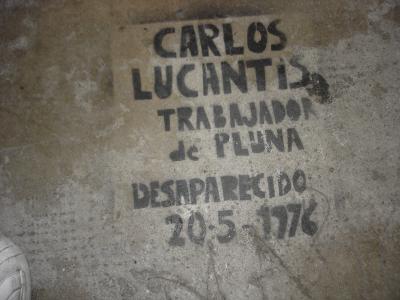
      Buenos Aires is filled with vestiges...on its walls, abandoned buildings, sidewalks...this one, at Taquarí and Mexico streets, is a tribute to Carlos Lucantis, a Pluma worker nabbed and whisked away into oblivion on May 20, 1976. Yet another of the estimated 30,000 persons kidnapped and "disappeared" by the military Junta that grabbed power on March 24th of that same year.  The victims were taken to "detention centers," a sort of euphemism for concentration camps, where they were subjected to abuse of all sorts. Some of those who died in captivity later appeared as "NN," unidentified corpses found in graveyards. Other prisoners were thrown from planes into the Rio de La Plata river basin. These actions were carried out in the context of the Junta's struggle against leftist and Peronist and other opponents of military rule. With the return to democracy in 1982, following the war over the Falkland islands, some of the top military leaders were brought to trial and jailed--later freed by presidential decree, then again subject to judicial action. Mothers, parents and relatives of missing persons are still claiming for their disappeared loved ones.

Carlitos, That Name Nobody Can Forget

Carlitos, That Name Nobody Can Forget

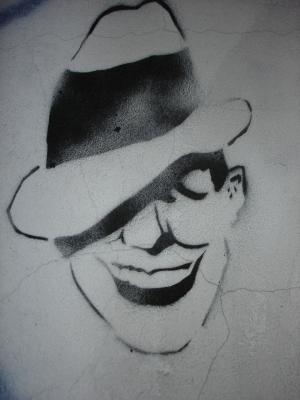
    "Buenos Aires, mi querido Buenos Aires..." ¡Pobre Carlitos! Buenos Aires ya no tiene ese aire tan especial de los años 50. Y sin embargo hay esencias que no cambian nunca. La voz de Carlos Gardel, por ejemplo. Está en el corazón de los "porteños," incluso en el alma de aquellos que no bailan el tango, que no cantan, no escuchan, que no bailan los ritmos del  dos por cuatro.

     Además, hay paredes que hablan todavía, dibujantes sin nombre conocido que andan por las calles dejando sus marcas. Este Gardel apareció en un barrio bastante querido por el cantante: Buedo.

A Bus, Buenos Aires and God only Knows What Lies in Wait

A Bus, Buenos Aires and God only Knows What Lies in Wait

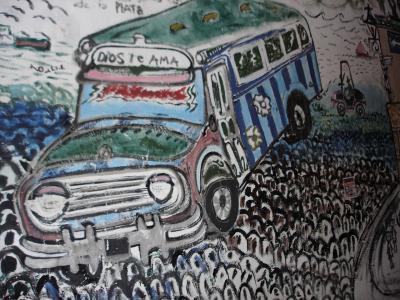
    One of the pleasures Buenos Aires exhibits are its wall paintings, some vestiges of times of struggle and social conflict, others the product of ingenuity. Perhaps we might also interpret these paintings, drawings, scribblings and sloganeering as a sort of throw-back to one of the first forms of journalism, which appeared on the walls on Rome when the empire was busy consolidating its power...

     Here's one on Mexico street, not far from the colonial district of San Telmo. If we were to go back in time, perhaps the wall was a witness to the English invasions of Buenos Aires at the birth of the 19th century...

What if Dad Says You Should? (a gentle jab at the way things are)

    O.K. You are not behaving very well. So what does the Old Man do? He says this is an "either or" world, good guys against bad guys and, well, there are prizes for those who keep their noses clean.
This sounds like a very weird way of talking about a very serious subject. But maybe putting the edge of your tongue in the edge of your cheek, from time to time, may help serious things from getting more serious. Who knows?


The thing is that in Buenos Aires the other day 51 of the country’s 52 senators voted in favor of an anti-terrorism law. So what? What does that have to do with the Old Man? By the way, it is up to the reader to figure out who the old man is, although everyone has one. Don't you think? As for what the old man has to do with the senators, you might think not much, maybe very little, nothing, perhaps, and yet...well...


It so happened that just before the vote an organization called the International Finance Action Group (just by chance dominated by thseven of the world's most powerful nations) suggested--according to Página 12, that if Agentina didn’t approve the measure it would be considered an untrustworthy place for (foreign) investors. Oh, just in case you wondered, the United States had been pushing the approval of measures like this since or after the September 11th terrorist attack against the Twin Towers.


The one and only senator who said no was Socialist Rubén Giustiniani, who pointed out that attempts to increase efficiency often end up sacrificing constitutional guarantees. Well, the definition of who or what a terrorist is has not been made too clear and in law and politics ambiguity does not usually respect non-conformist groups.


Well...one might ask how many laws are passed here, there and anywhere in this planet just because some economic big wigs stir up a hornet's nest and then announce that proper behavior  might bring in juicy rewards, whereas rocking the boat might well cause more than a splash, mabe even a tidal wave.

Will you or Will you Not?

Will you? said he.  
Will I what? she said.  
Will you do it? said he.  
Do what? said she.  
Do it like this, said he.  
No, not like that, said she.  
Well...like this, said he.  
Not like this and not like that, said she.  
Then you won't do it, said he.  
Not unless you will, said she.  
I will if you will, said he.  
Will you? said she.  
Well, I quess I will, said he.  
Well, if you will,let's do it, said she.  
Do what? said he.  
Let's do what you want and I don't, said she.  
I don't like to do what you don't like to, said he.  
And I don't like to do what you do like to do, said she.  
You don't? said he.  
Actually, I do and I don't, said she.  
Then let's put the does and the don't together, said he.  
If that means you don`t mind doing what you don't want to, said she.  
It means we will do it if we want, said he.  
What if we don't want to? she asked.  
I don't know but maybe you know, said he.  
Where there's a will there's a way, she said.  
Have it your way if you will, he said.

¡Hola mundo bravo y nuevo!

     
    Hace algunas décadas Francia luchaba en Algeria, con métodos que pasaban por alto muchos de los conceptos básicos de la cultura nacida en la revolución francesa, y el escritor Jean Paul Satre respondió: "Nuestras víctimas nos conocen por sus heridas y por sus cadenas: eso hace irrefutable su testimonio. Basta que nos muestren lo que hemos hecho de ellas para que conozcamos lo que hemos hecho de nosotros mismos."
       Pasan años, otra guerras, otras invasiones de Occidente a países en la perifería del poder mundial, Vietnam, Santo Domingo, Panamá, los golpes de estado en América Latina, Irak...los inmigrantes buscan asilo o medios de sobrevivir en Europa y los Estados Unidos...estalla la llamada guerra contra el terrorismo...y en Francia gana Nicolás Sarkozy, inmigrante blanco, y establece un ministerio de la inmigración y la identidad nacional. Anuncia la intención de expulsar a los aproximadamente 25.000 inmigrantes sin permiso de residencia en Francia.
      Gracias a internet cualquier persona puede, por ejemplo, leer el "Informe sobre la situación y las tendencias del terrorismo en la UE 2007", en http://www.europol.eu.int que dice que la mayor parte de los ataques terroristas en Europa fueron perpetrados por grupos nacionales independentistas, anarquistas o de extrema derecha o extrema izquierda....pero...."La violencia de extrema derecha se investiga principalmente como extremismo de extrema derecha y no como terrorismo de extrema derecha."
      ¿Qué quiere decir eso? Sucede que de los 706 arrestados, 257 son ciudadanos de países islámicos pero de los 498 atentados, hubo uno sólo por islamitas. ¿Será que todavía existe discriminación según el color de la piel o la religión?
      El poder manda, se sabe. Pero incluso en Europa se cuestiona algunas prácticas realizadas por los E.E.U.U. en su guerra contra el terrorismo. Por ejemplo, el gobierno de Alemania ha pedido a Interpol la detención de 13 norteamericanos sospechosos de participar a finales del 2005 en el secuestro, el traslado a Afganistán, la tortura y la violación del ciudadano alemán Khalid el Masri. El tribunal estadounidense correspondiente ha rechazado semejante pretensión. El Parlamento Europeo también ha acusado a Gran Bretaña, Italia, Polonia y otros países de complicidad con la CIA a raíz del traslado de (en alrededor de 1.254 vuelos secretos) a prisones clandestinas de terceros países.
      Es que cuestionar las acciones de la CIA no es para cualquiera. Por algo Washington ha intentado negociar tratados de inmunidad para sus tropas cuando actúan en la perifería. Los países que han aceptado tratados de este tipo son mayormente pobres o naciones que calculan que aceptar la inmunidad supondría beneficios económicos y políticos...

Frases felices y no tanto

º  "Mi pueblo es gente humilde, que ha sobrevidido a masacres, usurpaciones e invasiones y que en 13 mil años de existencia conservamos en el siglo XXI valores que nos hacen humanos...Las mujeres wichí venimos del cielo, somos celestiales. En nuestra religión, el hombre es terrenal; alguna vez fue animal y para convertirse en humano tuvo que unirse con las mujeres. Ese es el valor que tiene la mujer dentro de la concepción wichí. "

               Octorina Zamora, autoridad de una comunidad Wichí, Argentina )Página 12,2-7-07


º "Mi trabajo es tomar decisiones. Yo soy la decisión. Si me trabajo tuviese una definición es la de tomar decisiones. Y tomo muchas decisiones grandes y muchas decisiones pequeñas."

                             --Presidente George Bush--

º "Elegí cumplir mi misión desde Italia, porque allí se estaba produciendo un ensayo de un nuevo socialismo de carácter nacional. Hasta entonces, el socialismo había sido marxista: internacional, dogmático. En Italia, en cambio, el socialismo era sui generis, italiano: el fascismo."

                                     --General Juan Perón-- 

º "En realidad hay que salir un poco de si para no ser demasiado infeliz.  
(I. de Charriere)  
 
º "Las palabras de un hombre muerto se modifican en las entrañas de los vivos."  
W.H. Auden.  
 
º "¿Por qué necesariamente debo permanecer en un estado maltrecho, destruído, de sobreviviente lamentoso? ¿Acaso esto, este estado, es lo que él (el objeto) me ha dejado? ¿Por qué no podría estar, por ejemplo, contento de que haya vivido, de lo que me ha dado, y festejarlo, en consecuencia, al modo del homenaje?"  
(Jacques Lacan)  
 
º "Una gracia en las maneras, la chispa de nuestros ojos, el tono de voz, una viveza y una vibración generales expresan quienes somos mejor que las palabras."  
(Alexander Lowen)  
 
º "La respiración es vida y si respiras bien tendrás larga vida sobre la tierra."  
(proverbio sánscrito)  
 
º "Siento un poco de vértigo. No estoy acostrumbrado a la eternidad."  
(J. L. Borges)  
 
º "Pero hay que reconocer que tenemos problemas graves, profundos: una extraña enfermedad está erosionando nuestra ética y nuestros almas...sabemos que estamos entrando en una época de vorágine, pero aún no sabemos cómo será ni qué ocurrirá."  
(Martín Scorsese)  
 
º "El trabajo del escritor tiene mucho de embaucador, claro que sin una connotación moral."  
(Antonio Benedetto)  
 
º "Las posibilidades para decir algo en una sola frase son tantas...no me animaría a decir que son infínitas, pero son muchas."  
(Alicia Steimberg)  
 
º "Es cierto que hay una idea cuando me pongo a escribir, pero también tengo lacostumbre de dejar que la mano escriba sin pensar demasiado."  
(Alicia Steimberg)  
 
º "Para mí la música fue un hobby hasta que cumplí 15 años y me di cuenta de que ya viviía de la música pero que precisaba formarme como profesional."  
(Dave Holland)  
 
º "Creo que la improvisación ata un poco a la necesidad de una exposición y de una re-exposición...antes disfrutaba haciendo una música formalmente más abierta o incluso sin forma...trato de recrear ideas tradicionales, de hacer mi propia versión con la esperanza de que en ese proceso aparezca algo nuevo."  
(Dave Holland)  
 
º "Los idiomas tienen una franja que va de lo lunfardo a lo académico, y no hay nada en el medio para hacernos sentir más cómodos. La sociedad reprime el lenguaje en las zonas de actividades fundamentales de la vida, como la sexualidad."  
(Ivónne Bordelois)  
 
º "Los hombres están solos en la tierra, ésta es su tragedia."  
( Dostoyevski)  
 
º "Cuando trabajamos sobre los impulsos, todo queda enraizado en el cuerpo."  
(Jerzy Grotowski)  
 
º "Los impulsos preceden a las acciones físicas, siempre...es como la acción física, todavia invisible desde el exterior...si sabes eso, al preparar un papel, puedes trabajar a solas sobre las acciones físicas..."  
(J. Grotowski)  
 
º "Antes de una pequeña acción física, hay el impulso. Allí reside el secreto de algo muy difícil de aprender, porque el impulso es una reacción que empieza detrás de la piel y que es visible sólo cuando se ha convertido ya en una pequeña acción. El impulso es algo tan complejo que no se puede decir que sea sólo del dominio de lo corporal."  
(J. Grotowski)  

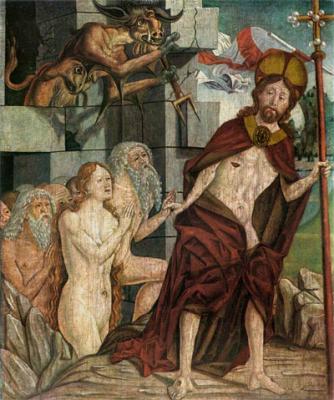
No More Limbo...What about Purgatory?

No More Limbo...What about Purgatory?

      "I'm in the limbo," the bald headed professor confessed, tilting his head vaguely towards some unknown point at the end of the universe, pretty close to one of those black holes, the ones whose existence or not has stirred up a ruckus in the world's most erudite circles.

       "Don't sweat it," I said, "because the limbo no longer exists."

       "You mean there's no longer a stopping off place for poor lost souls?"

        "Nope! That's what somebody said in the newspaper, some big wig in the Church, said that actually there never was a limbo, that it was just a popular invention."

        "You don't say! And all these years, all these centuries, thinking you could take a deep breath in the limbo and play with the souls of babies before having to come to terms with your fate. Well, well...What a novelty! It certainly takes some of the heat off..."

       "Sorry, there is no evidence there was ever much heat in the limbo. I fear you are getting it mixed up with Hell."

       "True. I mean somebody might get angry and send you to Hell to burn to death but I've never heard of anyone getting uptight and sending you to the limbo. Nevertheless, something bothers me: What if  Hell was (is) also a popular invention?"

      "How dare you say that! That's blasphemy!"

      "So...you don't think they'll do away with Hell?"

     "Quite impossible, I'd say."

     "Why?"

     "That's where we are."

      "Oh."